Article
CBRE Outlook: Atlantic Canada Real Estate Will Continue to Strengthen in 2026
November 10, 2025 4 Minute Read

The economy might be on shaky ground but CBRE’s Atlantic Canada outlook foresees a resilient region with resurgent commercial real estate markets that will continue to strengthen in 2026, with sectors such as tech, energy, infrastructure and defence driving growth.
Halifax emerged as the top-performing city in Canada for commercial real estate returns in 2023 and 2024, according to the REALPAC Canadian Property Index. As of June 2025, Halifax had posted a total investment return of 10.6%, far outperforming other Canadian markets.
Halifax was also the only city to record positive capital growth across all commercial real estate asset classes. This strong performance is attributed to Halifax’s diverse economy and resilient fundamentals, including low exposure to struggling office assets, robust demand in retail and multi-residential sectors, and stable income returns.
“The city’s steady population growth, balanced supply pipeline, and strengthening investor confidence has positioned Halifax as a safe haven for capital in a volatile economic landscape,” says CBRE Halifax Sales Management Manager Edwina Govindsamy. “This is making it increasingly attractive to institutional investors seeking stable, long-term returns.”
Retail Remains Strong
Availability of retail space remains extremely limited, especially within grocery-anchored and essential retail centres. New construction of retail space is almost non-existent due to high building costs.
Hudson’s Bay closures left significant vacancy but there’s already demand for these prime retail spaces. This is an opportunity to welcome new users and concepts to the market.
Health and wellness is booming, with demand for gyms, clinics, and wellness services at an all-time high. Urban streetfront and waterfront locations have been strong performers, too, and several new restaurant and retail concepts have opened over the past year.
Big box retail remains stable and discount retailers like No Frills, Value Village and Dollarama are actively looking for space throughout Atlantic Canada, especially in secondary and tertiary markets.
Suburban retail continues to thrive as community and neighbourhood centres dominate the demand for value-focused and service-based tenants.
Office Reaches Turning Point
After several challenging years things have reached a turning point for the office market. Leasing activity is picking up, tenant confidence is returning, and vacancy rates are trending down.
Halifax ended the third quarter with positive net absorption of 165,000 sq. ft. of office space – the most since 2017. Nearly 100,000 sq. ft. of that was in Class A buildings, signaling continued demand from tenants for quality office assets.
Halifax in Q3 recorded the lowest vacancy rate in Canada at 10.8%, significantly lower than the national vacancy rate of 18.4%. And Halifax’s suburban vacancy rate is the lowest it has been since 2012 and is considerably below the national rate of 17%.
The strength of the suburban office market will continue due to cost efficiencies, accessibility and parking, and a shift to hybrid work models reducing the need for larger centralized downtown offices and prompting companies to move closer to where employees live.
Halifax Emerges as Tech Talent Leader
Halifax is gaining traction as a Tech Talent leader. CBRE’s most recent Scoring Tech Talent report ranked Halifax #2 among North American emerging tech markets, up from #5 in 2024.
Over the past year Halifax has added over 6,500 new tech jobs, with total tech employment now reaching more than 22,000 employees.
Halifax is seeing growth across the technology sector, from start-ups to established companies — especially in the areas of AI, clean tech, financial services and ocean technology.
Institutions like Dalhousie are leading in AI research, and innovation hubs like Volta, The Pier, and Cove are helping to turn that research into real-world solutions.
“This growth does not happen by accident,” says Govindsamy. “It is a result of a strong talent pipeline, a collaborative ecosystem and a city that is actively investing in innovation.”
No New Industrial Supply
While new industrial supply has been non-existent in 2025, Halifax is seeing an uptick in its industrial construction, with over 184,000 sq. ft. currently being built.
The Trump administration’s tariff policy has resulted in more goods being routed through Canadian seaports like Halifax and Saint John. This shift could lead to increased reliance on maritime trade routes, greater investment in port infrastructure, and a diversification of trading partners.
For Halifax, another positive is the federal government's increased military spending. This investment is expected to drive significant economic growth and industrial activity over the next decade.
Recent Insights
-
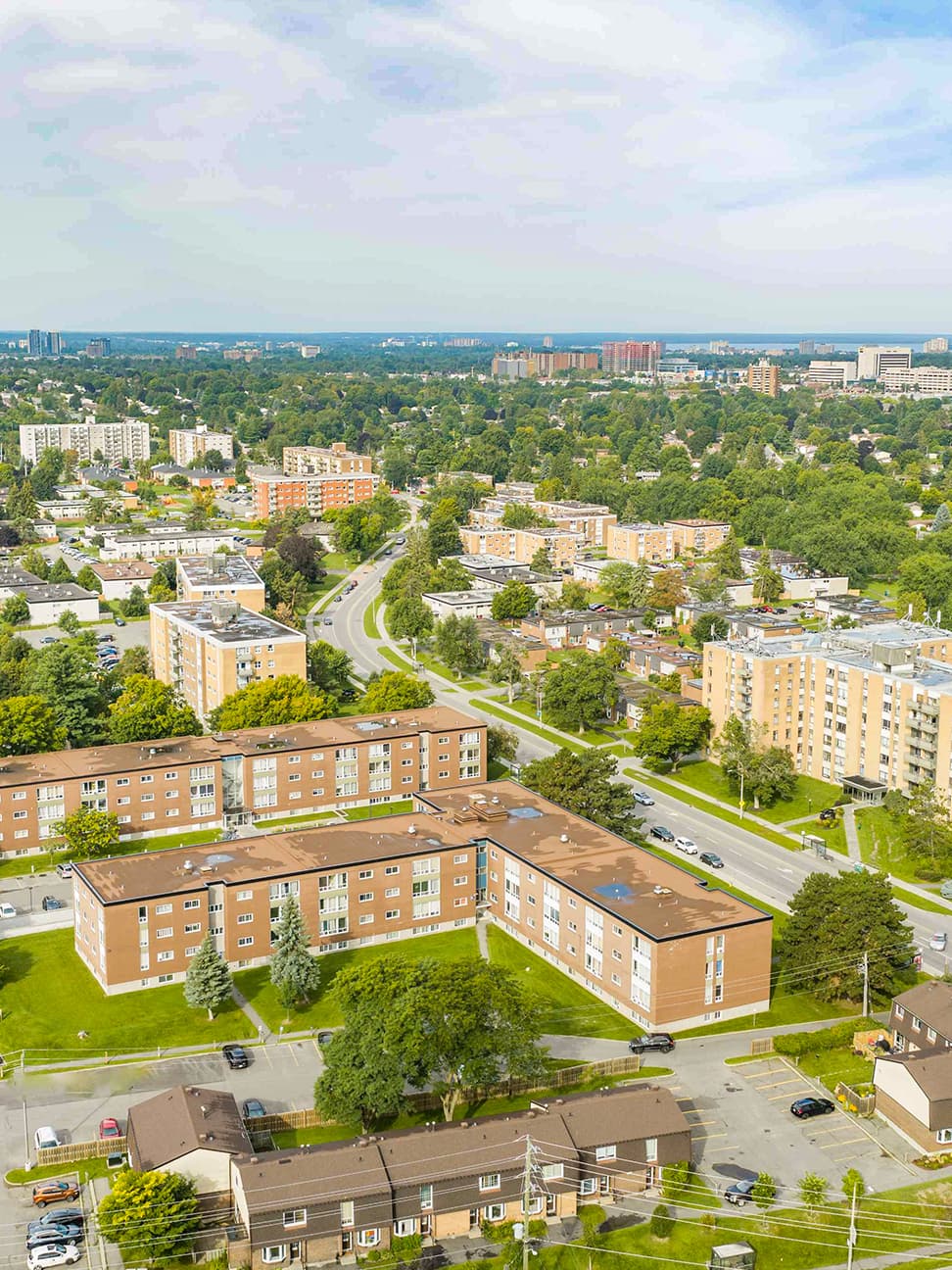
CBRE brokers the $189M sale of Parkwood Hills in Ottawa to Woodland Capital, reflecting strong investor demand for stable multifamily assets.
-

Canada’s Q3 2026 commercial real estate shows robust momentum: national office vacancy dropped and industrial absorption hit a 5-year high.
-

CBRE’s Mackenzie Sharpe helped financial services firm Wealthsimple secure 90,000 sq. ft. across three floors at 460 Front St. W., part of Allied Properties REIT and RioCan REIT’s The Well development.
Stay In The Know
Subscribe today and join hundreds of professionals who get the latest blogs delivered straight to their inbox.