Article | Intelligent Investment
Business Insights | The closing window: Decisions facing European logistics leaders before 2027
September 30, 2026 8 Minute Read

Overview
For the past few years, Europe's largest logistics operators held back. That is changing.
Drawing on insights from 109 of Europe's largest warehouse occupiers across sectors, CBRE's European Logistics Occupier Survey 2026 explores the factors shaping logistics network, location and real estate decisions across Europe. After several years of caution, growth expectations are returning, with many businesses planning to expand their logistics footprints. However, securing suitable sites, modern buildings, power capacity, and labour is becoming increasingly challenging.
At the same time, organisations are seeking greater flexibility in their real estate portfolios through more adaptable lease structures and a broader mix of locations and building types to respond to changing demand patterns and supply chain requirements. The findings point to a narrowing window for supply chain leaders to assess whether their current network and real estate strategies remain deliverable, and to secure the locations, capacity, and flexibility needed to support future growth.
What happens when market conditions move faster than your planning cycle?
Many of Europe's largest warehouse users have taken a cautious approach despite having a real estate market generally in their favour. Warehouse networks were held largely static, new commitments were delayed, and the priority was to extract more from existing space. This was a logical response to uncertain macroeconomic conditions. Companies that used this period to address building obsolescence, power constraints, or specification gaps are likely to have a stronger starting position as demand and competition for space increase.
For those that have not, timing is becoming the main risk. Real estate decisions typically move on multi-year cycles, while market conditions can shift within months. By the time a network review is completed and a real estate decision is approved, the market those plans were designed around may already look different.
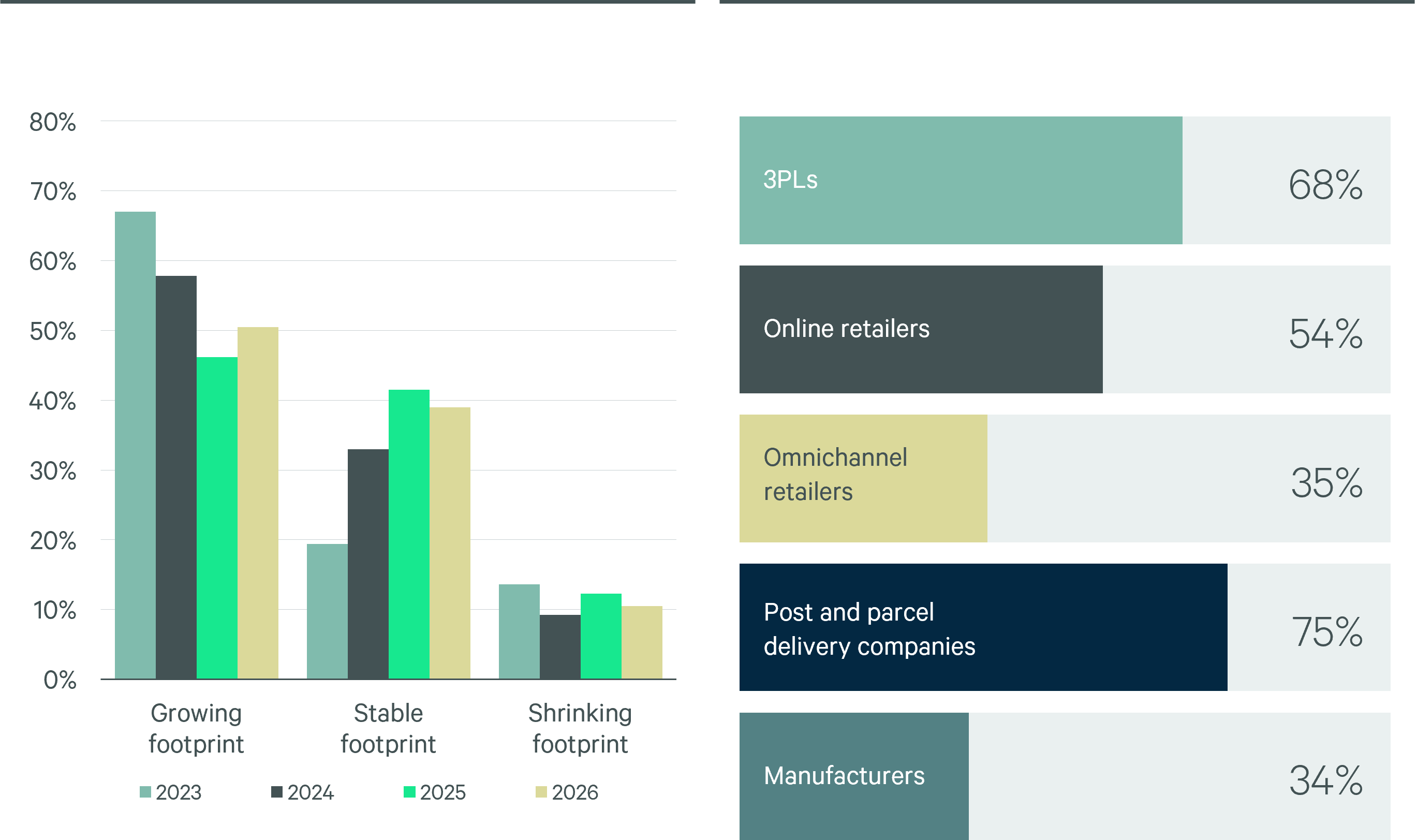
This risk becomes more critical as demand begins to recover. More than half of Europe's largest warehouse users expect to expand their networks within the next three years, marking the first increase since 2023 (Figure 1 and 2). Post and parcel operators and third-party logistics providers are leading this recovery, with online retailers following closely behind. Manufacturers and omnichannel retailers remain more cautious, reflecting continued pressure from energy costs, competition, and margin constraints.
Figure 1: Three-year expansion plans & Figure 2: Share of respondents reporting expansion intentions by sector
As activity returns to the market, the challenge is not just that good sites become harder to find, but that the planning process itself creates a structural lag. Finding the right site already requires trade-offs between labour availability, building specification, power capacity, logistics fit, and cost. Of these, labour is consistently the factor that is hardest to substitute. A building can be upgraded but access to the right workforce and required proximity to suppliers and customers cannot be changed. Those trade-offs become harder as competition for space increases, and a planning process that takes 12 to 18 months to reach a decision further compresses the window to act.
In a market where conditions can change faster than real estate decisions can be made, flexibility is becoming a competitive advantage. Businesses are increasingly responding by building flexibility into their real estate portfolios through shorter lease terms, break clauses, or a mix of owned and leased assets. The objective is to ensure networks can be adjusted as requirements change, without having to wait for the next full review cycle.
Planning implication
Understanding whether your current network plan remains achievable, given tightening constraints on sites, power, and labour, is a useful starting point before committing to the next phase of growth.
When does an ageing warehouse start limiting your network?
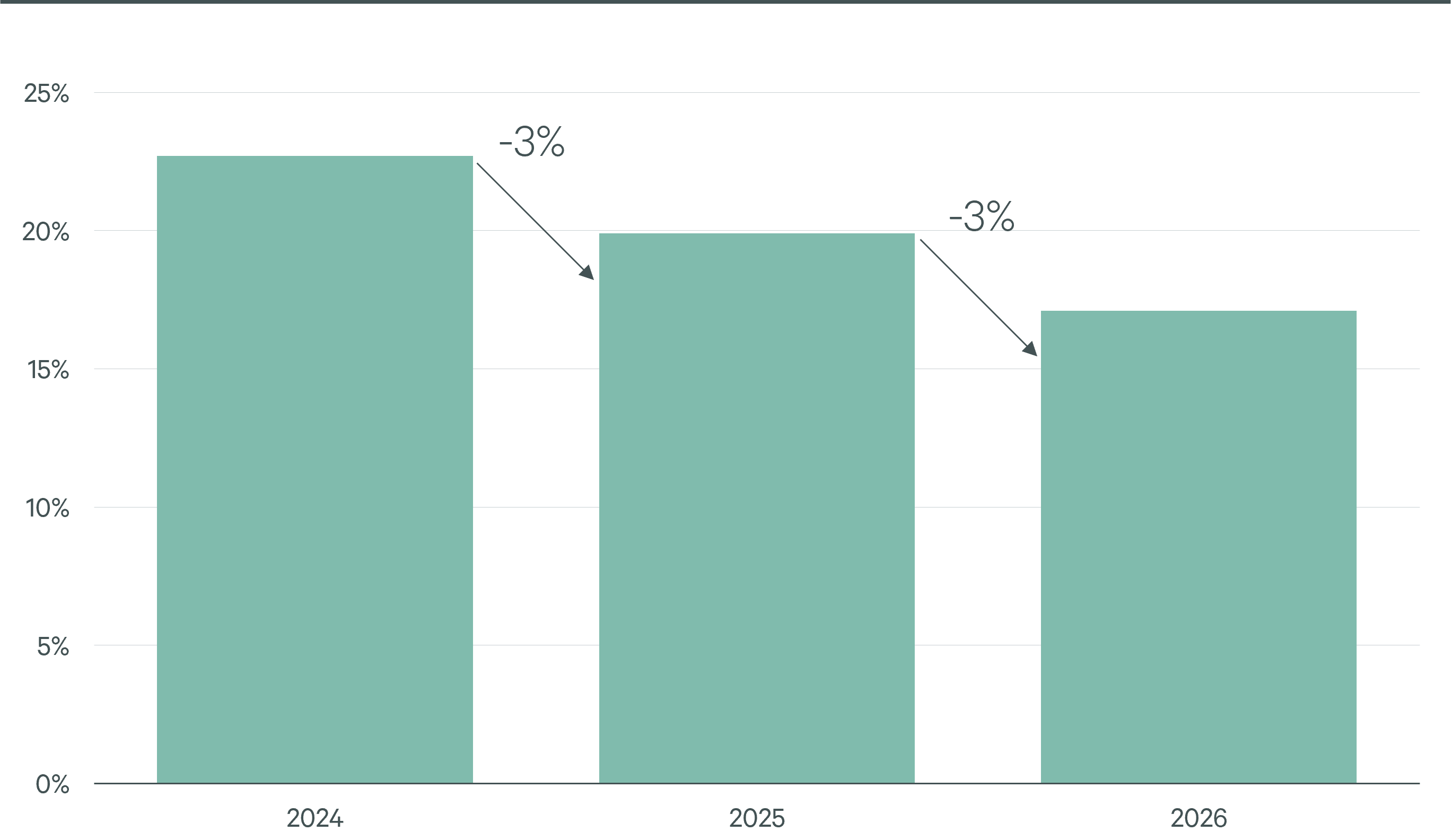
The latest occupier survey data indicates that occupiers still have 17% of their occupied portfolio at risk of becoming obsolete by 2030 (Figure 3). This share has been falling by c. 3 percentage points per year, which suggests end users are acting on c. 3% of their warehouses each year to prevent them from reaching a point where they are no longer suitable. Across Europe, this equates to c. 12m sq m of warehouse space each year undergoing either significant investment or replacement, yet c. 68m sq m still needs to be acted on before 2030.
These are facilities that can no longer support modern automation, do not meet tightening energy requirements, or cannot access the power capacity operations increasingly need. These buildings rarely become obsolete overnight. They may still be operational, but over time they can start to limit network performance. They may restrict automation, increase operating costs, reduce flexibility, or make it harder to meet customer and sustainability requirements.
Figure 3: Weighted average share of occupied portfolio that is at risk of becoming obsolete by 2030
For a supply chain director managing 10 or 15 sites, this is a practical issue rather than a theoretical one: at least one or two buildings in a typical network may already be approaching this point, even if they remain technically operational today. The risk is not sudden failure but gradual constraint, arriving at the point where action is unavoidable just as market conditions make it hardest to act.
The decision is therefore not simply whether to act, but how. In some cases, the right answer will be to invest in the existing building. In others, it may be to work with the landlord or logistics service provider on improvements or to relocate before better-specified alternatives become scarce. Each option can be valid, but the right decision depends on the building’s future role in the network, the investment required, and the alternatives available in the market.Network implication
Whether to invest in an existing building, work with your landlord on upgrades, consolidate activity into better-specified sites, or relocate depends on each location's future role in your network. That assessment is where a structured review adds most value. A site-level assessment can help determine both building readiness and the future role of each location in the distribution model.
How is power availability reshaping warehouse site selection in Europe?
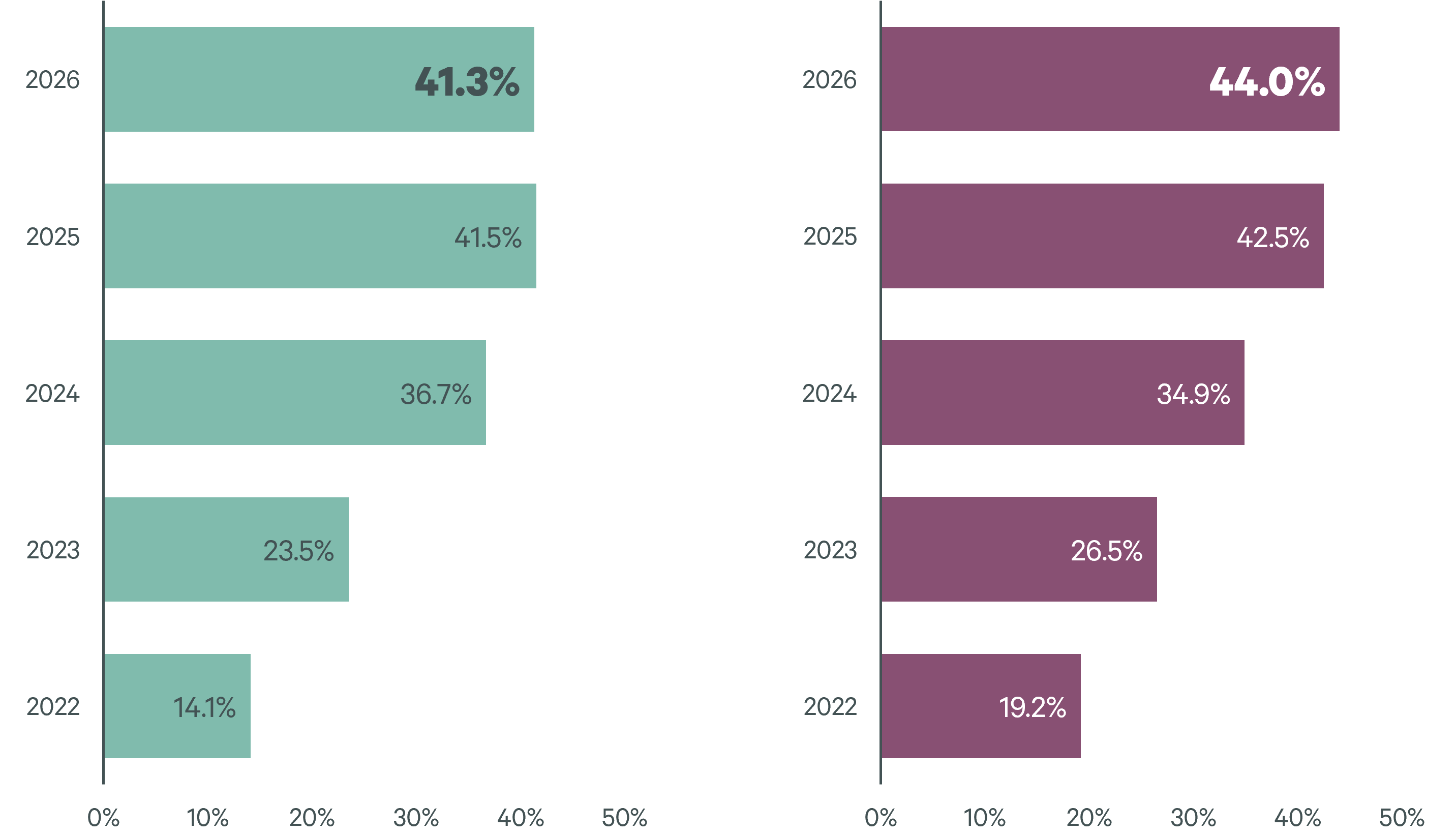
The criteria used to select warehouse space are changing quickly. In 2022, power supply was still a secondary consideration for many companies. Today, nearly half of Europe’s largest warehouse users rank it as one of their most important building requirements. Its importance has more than doubled in less than four years (Figure 4).
This shift is not only driven by sustainability commitments, although these remain important. Power is increasingly an operational constraint, as automated picking and sorting systems, EV charging infrastructure for delivery fleets, and temperature-controlled storage all depend on reliable and sufficient capacity. As investment in automation and electrification accelerates, buildings that cannot support these requirements are becoming a constraint on network performance.
The challenge is not evenly distributed across Europe. In markets such as the Netherlands, Germany, the UK, and Ireland, and in specific logistics locations elsewhere, companies can face delayed grid connections, limited available capacity, and long lead times for upgrades. As a result, developers are increasingly treating power availability as a primary site selection factor, which is already influencing where new supply comes forward. For logistics and supply chain teams, this means testing future network decisions against power availability before locations are prioritised.
Figure 4: Percentage of warehouse users considering sustainability ratings and power supply and reliability as a key factor for their warehouse selection process
Site-selection implication
For organisations with lease decisions or new site requirements coming up, validating power capacity against five-year operational requirements (before locations are shortlisted) can avoid committing to a building that constrains future operations. For existing sites, the question is whether any gap can be closed, how long it will take, and whether the site still supports the future operating model.
How long does the current window for European logistics organisations last?
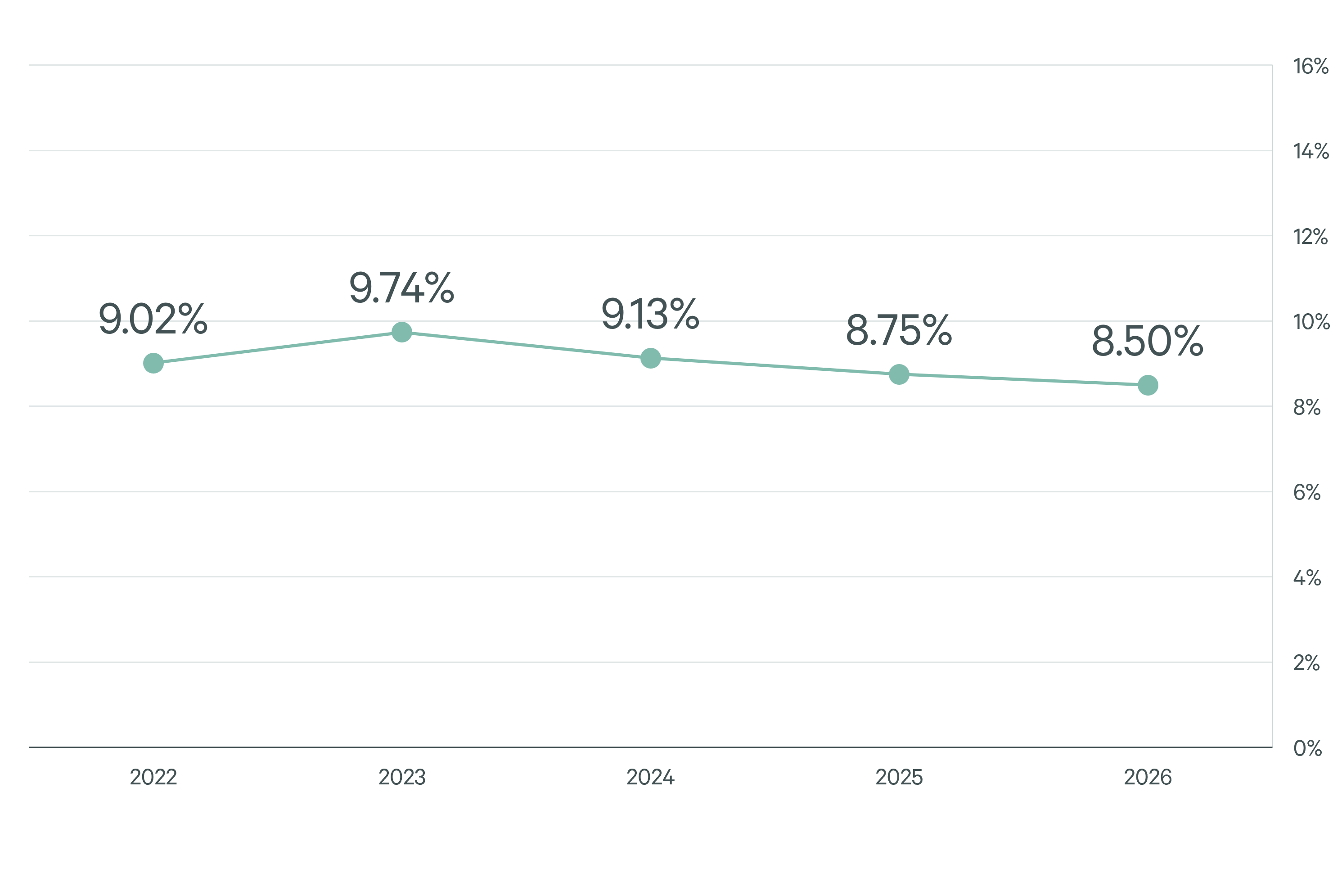
The CBRE European Logistics Occupier Survey 2026 describes the market as an “occupiers’ market”, meaning that for warehouse users, current conditions continue to offer a window to secure beneficial terms. Landlords remain willing to negotiate in several markets, incentives such as rent-free periods or capital contributions toward innovations are still available, and rents as a share of total operating costs are estimated by warehouse users themselves at around c. 8% to 9%, following several years of rising occupancy cost pressure. Inbound and outbound transport typically represents between 40% and 70% of those same costs. The location of a building has a direct impact on that cost, reinforcing why real estate decisions and network strategy need to move together.
Figure 5: User’s estimated percentage of total annual operating costs related to logistics buildings (rent and service charges)
That window is unlikely to remain open indefinitely. New warehouse construction across Europe has fallen to less than half the level seen at the 2022 peak, as developers have slowed activity to stabilise vacancy. At the same time, logistics demand is beginning to recover. When lower new supply meets renewed demand, market conditions can tighten quickly. Some major European markets are already seeing vacancy rates fall year on year.
This shift is also visible in market-level vacancy forecasts. Across nine European industrial markets analysed, negotiating power remains broadly with users through 2026 and 2027 before the balance begins to rotate back toward landlords from 2028.
This points to a period in which logistics teams can still review their networks, identify buildings that are becoming constraints, and secure better-specified space on today’s terms. Companies that act while conditions are still generally favourable may benefit from lower occupancy costs, improved building performance, and greater long-term flexibility. Those that wait are likely to face fewer options and less favourable terms.
The question is not whether to act, but which decisions are worth making now while there is still time to align the network with what it needs to support by 2028 and 2030. That distinction is what separates deliberate network management from reactive real estate.
Lease portfolio implication
Lease decisions are easy to process one at a time, but decisions made in isolation rarely add up to the network a business actually needs. A lease signed today can shape flexibility, investment options, and location decisions for years to come. Taking a portfolio-wide view helps ensure each decision supports a clear long-term direction rather than simply responding to the immediate needs of an individual site. That wider perspective can reveal opportunities and risks that may not be apparent when sites are reviewed in isolation.
Lease decisions due in the next 18 to 24 months are worth treating as strategic review points, not just renewals to be processed. The current market still offers room to negotiate, but that window is narrowing. It is also worth identifying which sites may be candidates for early exit and comparing that cost against the cost of remaining in a building that is moving toward obsolescence. Where a third party operates the site, it is important to be clear about who holds the lease. A five-year lease alongside a three-year operator contract can create uncertainty over who controls the building when the contract is retendered. The property portfolio itself can help fund network investment. Landlord capital contributions and incentives for facility upgrades can reduce the upfront cost of automation and infrastructure upgrades. For organisations building the business case for automation, the way their real estate strategy is structured can determine whether that investment delivers the expected return.
What this means for your network
The findings highlight a narrowing window to secure the locations, capacity, and flexibility needed to support future growth. The key question is not whether market conditions are changing but how exposed your logistics network is when they do.
CBRE's logistics and supply chain experts can help you assess the implications for your network strategy, identify potential risks and opportunities, and plan for future growth.
Get in touch
Contact our team to discuss what these trends mean for your business and how they could shape your logistics strategy.




Related Insights

For the first time since 2023, more occupiers plan to expand their European logistics portfolio – a key finding from CBRE's survey of 109 decision-makers.