Article
Global Economic Uncertainty Could Benefit Canadian Real Estate in 2026
December 8, 2025 5 Minute Read
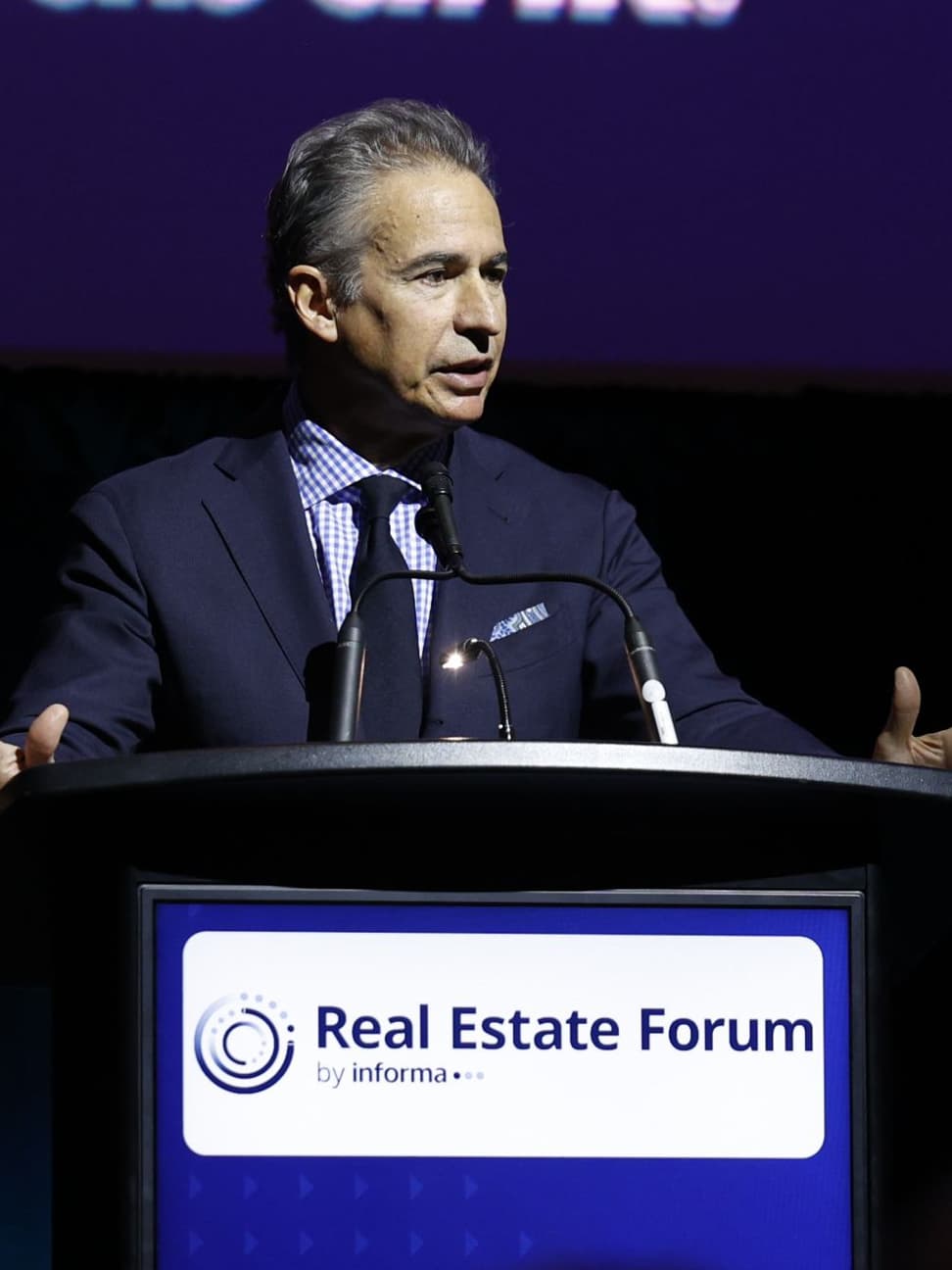
An uncertain global economy might work to Canada’s advantage in the year to come, and commercial real estate could be a chief beneficiary of renewed investor focus on this country. That’s the forecast CBRE Canada Chairman Paul Morassutti had for his Toronto Real Estate Forum audience.
Watch Paul's 2026 Canadian Commercial Real Estate Outlook
“If 2026 turns into a year where the clouds part, we will all be happy,” he said. “But if you agree that we are entering an extended period of heightened uncertainty and volatility, not just here but globally, then logically there will be demand for investments and markets that reduce overall volatility. Premiums will be paid for qualities like safety, stability and predictability. And in that regard, Canada screens well.”
Investors Will Make Decisions
Closing real estate deals can be a challenge these days but Morassutti noted that CBRE’s investment pipeline is strong and investment activity in 2025 should be similar to investment volumes in 2019, “universally considered to be a great year for real estate.” One major exception would be office. “Although sales have been steadily increasing and investors are now leaning into this asset class that only a short time ago was a no-fly zone.
“The depth of bids on most investment deals is deeper than it was 12 months ago, and the animal spirits of the market have improved,” Morassutti added. “And those investors who have deferred decisions cannot continue to do so forever. Capital markets are healthy, and deal flow is improving and buyers and sellers both want to transact. If we can just get a bit of clarity around the economy, real estate is well set up for a robust recovery.”
Office Recovery Continues
There is more good news than bad in the office sector and its recovery continues, Morassutti noted. “Office leasing revenues are up sharply amid increased activity. Trophy buildings are largely full. Q3 absorption was above historical averages. Hard hit markets like San Francisco and Manhattan are rebounding. And new supply is at a 20-year low. “This is by far the most important ingredient in the office recovery,” said Morassutti.
“And if you add even a modest level of demand to a market where tenants have far fewer options, rents will go up and vacancy will go down sure as night follows day.”
Return to office mandates have provided “a much-needed shot in the arm to office demand, as companies scramble to ensure that they have enough space to move to office-first strategies.” he noted. “However in many cases these mandates are a correction from having cut space too dramatically post-COVID.”
Rather than being a longer term and ongoing trend, much of this activity is temporary in nature. But, Morassutti stressed, “organic demand for office space is growing.”
Retail Marches On
The retail consumer and the sector march on despite any economic challenges. “There has not been a material drop in tenant demand and rents across the country are flat or up,” Morassutti said. Lack of new supply has played a role in stabilizing the sector. And consumer spending has been resilient.
“Retail’s outperformance is a good reminder to us all: If a pundit declares an asset class to be dead, you can be pretty sure that it isn’t,” he added. “Failed tenants have been replaced by stronger, better retail formats. And the integration of digital and physical presence is better today than ever before.
“All of these fundamentals are reflected in investment sales. Grocery-anchored retail continues to offer the best liquidity of all asset types. And even enclosed malls – declared dead 10 years ago, then again during COVID – have rebounded. In 2019 you couldn’t give away enclosed malls. In the past three years there have been 11 sales.”
Multifamily Faces Challenges
The combination of a glut of unsold condos and purpose-built rental development, plus pullback in immigration, has resulted in a year of poor rental market performance, albeit mainly in newer product, noted Morassutti.
“I agree with the experts who are all forecasting a stronger market three to four years from now once all the unsold condo inventory gets cleared out. But it won’t look like it used to. The first victim will the 60- and 70-storey buildings because you simply won’t be able to achieve pre-sales. Eventually perhaps, but not anytime soon. As we recover, smaller projects appealing primarily to end user will be the first to come online.”
How to get projects built in the meantime? “The most impactful approach would be to waive development charges,” Morassutti said. “That would be a game changer and likely result in getting shovels in the ground immediately.”
Industrial Is Improving
For many years industrial supply could not keep pace with demand. Rents rocketed up and vacancy plummeted. “In recent years,” Morassutti said, “the situation has flipped.” New supply has come on stream just as demand was pulling back. The result today is higher vacancy across the board and rents that have fallen from their peak.
“The good news is that the market is already improving. Some markets have already troughed – Vancouver for example. While others like Toronto are expected to stabilize in 2026.”
Recent Insights
-
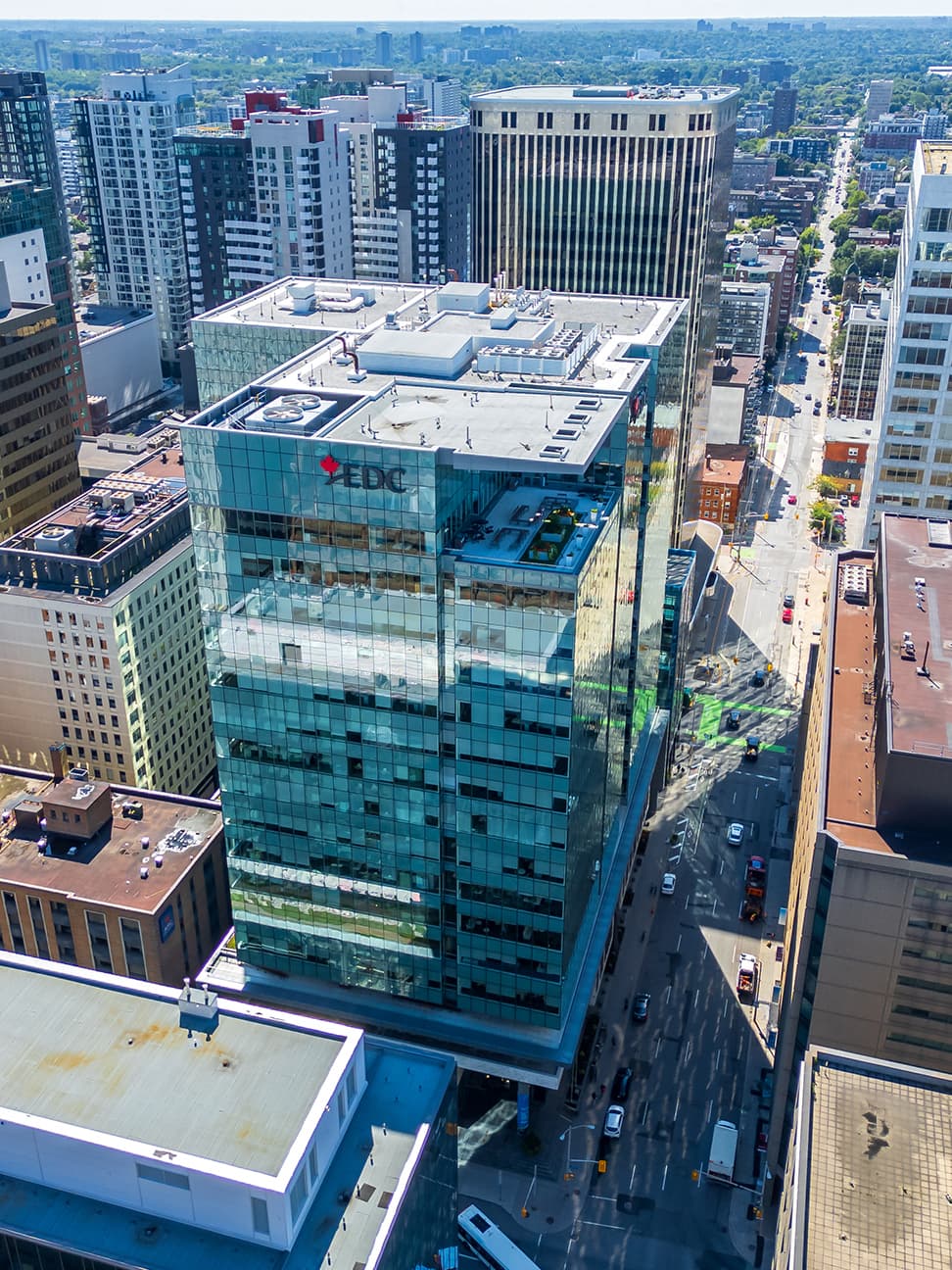
CBRE recently brokered the sale of 150 Slater St., a 447,448 sq. ft., Class A office tower in the heart of the capital’s financial district.
-
Article
CBRE Canada CEO Jon Ramscar: Investors Have a Golden Opportunity to Access Vancouver Real Estate

Jon Ramscar told the Vancouver Real Estate Forum today that there is a compelling reason to have renewed confidence in the city’s prospects: Access.
-

The seven-storey office building is being built on top of a restored former 100+ year old warehouse, combining the aesthetic of a century-old brick and beam structure with the functionality and sleekness of new, state-of-the-art office space.
Stay In The Know
Subscribe today and join hundreds of professionals who get the latest blogs delivered straight to their inbox.