Valuer Insights
Business Insights | Hong Kong's Luxury Housing Market
A Wealth Magnet in the New Economic Wave
April 2, 2026
Contact
Eddie Kwok
Executive Director, Valuation & Advisory Services, Hong Kong

Hong Kong's luxury housing market has always been a global wealth indicator, and in recent years it has formed a subtle symbiotic relationship with the rise of China's new economy, stock market volatility, and IPO fundraising activities. This small island's high-end residences are becoming the top choice for asset allocation for newly rich individuals in fields such as technology, artificial intelligence, new energy vehicles and biomedicine, while the scarcity of market supply further drives up their value and attractiveness.
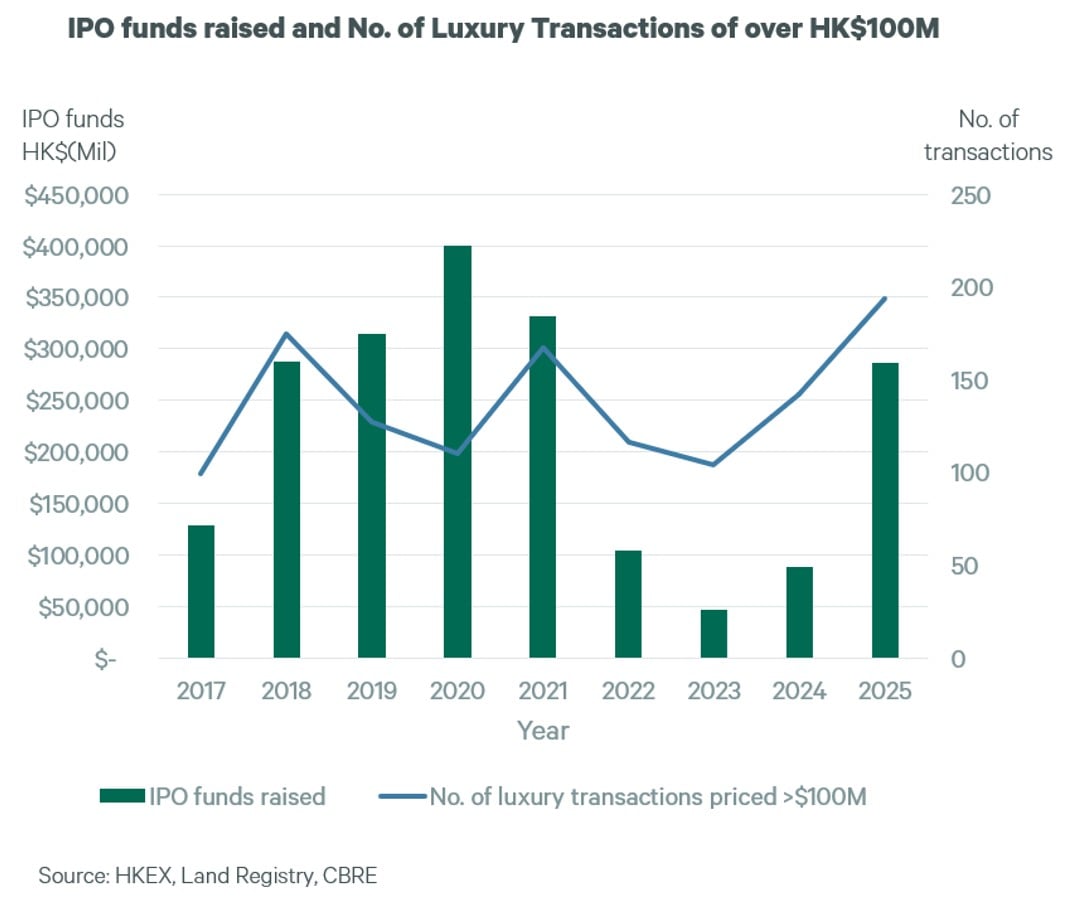
These newly wealthy individuals often favour luxury homes, not only for improved living conditions but also as a status symbol and a stable investment. Data shows a positive correlation between Hong Kong IPO fundraising and luxury home sales: years with active IPOs often see a surge in luxury home transactions.
Of course, established Hong Kong wealthy families remain the cornerstone buyers in the luxury home market. They have a deep-rooted preference for top-tier properties, viewing them as symbols of status and family heritage. When the overall economic environment improves and capital market returns are high, the purchasing power and willingness of these buyers are amplified. In recent years, tech-background purchases were in particular interested in luxury market. For instance, 46 Plantation Road and 99-103 Peak Road were purchased by Dr Yeung Kin-man, President of Biel Crystal (HK) Manufactory Limited and Stephan Horst Pudwill, Vice President of Techtronic Industries Limited Company at HK$828 million and HK$1.1 billion respectively in 2024. Local tycoons and mainland nouveau riche, these two forces sometimes intertwine and sometimes rotate, jointly supporting the high-end demand in the luxury housing market, making it resilient throughout economic cycles.
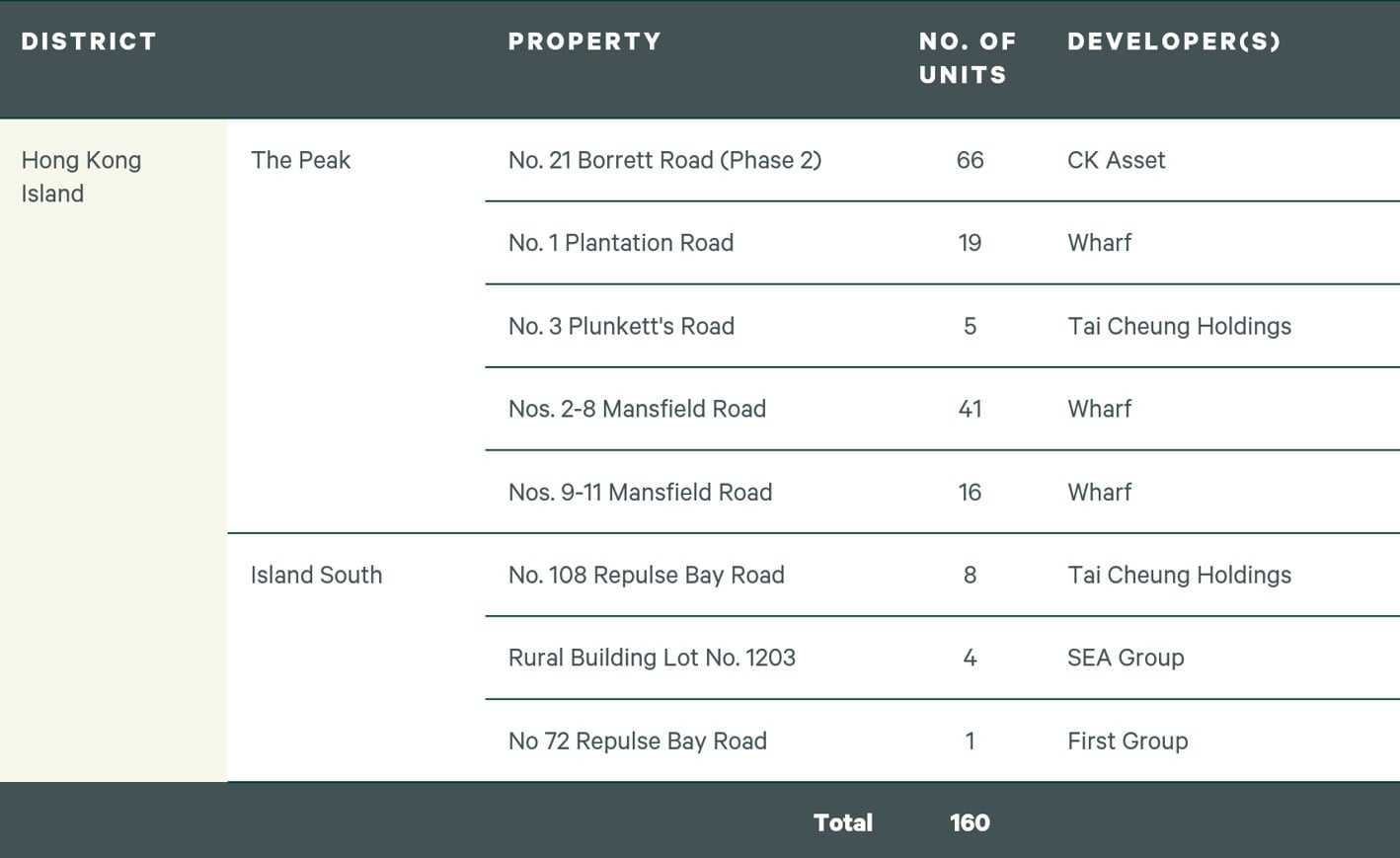
Limited luxury projects in the Peak and Island South
Furthermore, the international appeal of Hong Kong's luxury housing market remains irreplaceable. Despite global economic uncertainties and geopolitical tensions, Hong Kong's robust legal system, free capital flows, and high-quality living environment continue to exert a strong attraction for high-net-worth individuals worldwide. With supply unlikely to increase significantly, luxury property prices are expected to maintain a long-term upward trend.
In addition, as the liquidity of luxury houses is relatively higher and its demand is resilient as compared with those commercial properties, Hong Kong’s banks are now more accepting the luxury residential mortgage. With the support of bank financing, it is expected that more transactions will come to the market.
In conclusion, Hong Kong's luxury property market is no longer just a traditional real estate sector, but a wealth storage vehicle deeply embedded in the new economic ecosystem. Stock market volatility, the IPO boom, and the rise of the new economy have collectively shaped the market's unique resilience and attractiveness. In the foreseeable future, this scarce land will continue to bear the dreams and flows of global wealth.
The Linkage Effect of Stock Market, IPOs, and Luxury Housing Demand
As an international financial centre, Hong Kong’s stock market and luxury housing market are closely linked. Whenever the Hong Kong stock market is active, especially during IPO fundraising booms, it generates a significant wealth effect. Market records are frequently set: Colin Huang, the founder of Pinduoduo, spent HK$480 million to purchase a luxury house at 33 Island Road; Zou Qunfei, the founder of Lens Technology, a leading one-stop integrated precision manufacturing solutions provider, purchased a super-luxury apartment at Mont Verra for HK$1 billion; and after several biotech companies went public, their founders and scientists chose to purchase properties in traditional luxury residential areas on Hong Kong Island.These newly wealthy individuals often favour luxury homes, not only for improved living conditions but also as a status symbol and a stable investment. Data shows a positive correlation between Hong Kong IPO fundraising and luxury home sales: years with active IPOs often see a surge in luxury home transactions.
The Rise of China's New Economy Creates a New Buyer Group
With China's rapid development in new economic sectors, a new class of high-net-worth individuals with an international perspective has emerged. These leaders and investors in the new economy not only possess enormous wealth but also have higher demands for quality of life and asset allocation. Hong Kong luxury homes, with their unique geographical location, sound legal system, high-quality educational resources, and low-tax environment, have become the ideal choice for these newly wealthy individuals. Luxury houses and premium apartments are highly sought after for their privacy, scarcity, and prestige. According to the Land Registry and CBRE Research, the luxury transactions over HK$100 million from Mainland Chinese buyers increased by 10% YoY in 2025 and they accounted for nearly 60-70% of luxury property deals in 2025. This trend has been continuing in 2026.Of course, established Hong Kong wealthy families remain the cornerstone buyers in the luxury home market. They have a deep-rooted preference for top-tier properties, viewing them as symbols of status and family heritage. When the overall economic environment improves and capital market returns are high, the purchasing power and willingness of these buyers are amplified. In recent years, tech-background purchases were in particular interested in luxury market. For instance, 46 Plantation Road and 99-103 Peak Road were purchased by Dr Yeung Kin-man, President of Biel Crystal (HK) Manufactory Limited and Stephan Horst Pudwill, Vice President of Techtronic Industries Limited Company at HK$828 million and HK$1.1 billion respectively in 2024. Local tycoons and mainland nouveau riche, these two forces sometimes intertwine and sometimes rotate, jointly supporting the high-end demand in the luxury housing market, making it resilient throughout economic cycles.
Scarcity of Luxury Housing Supply Supports Market Resilience
The Hong Kong government's tight land supply, coupled with environmental and planning restrictions, results in long development cycles and limited numbers for new luxury housing projects, especially detached houses. Traditional luxury residential areas such as The Peak, Repulse Bay, and Deep Water Bay have limited new supply. This "limited edition" attribute makes existing luxury housing assets increasingly valuable, attracting global buyers to view them as safe-haven assets.Limited luxury projects in the Peak and Island South
Future Outlook: Deep Integration of the New Economy and the Luxury Housing Market
Looking ahead, with the continued innovation and development of China's new economy, more technology, artificial intelligence, and pharmaceutical companies are expected to rise and enter the capital market. As a bridge connecting the mainland and the international community, Hong Kong's financial market and luxury housing market will continue to benefit from this trend.Furthermore, the international appeal of Hong Kong's luxury housing market remains irreplaceable. Despite global economic uncertainties and geopolitical tensions, Hong Kong's robust legal system, free capital flows, and high-quality living environment continue to exert a strong attraction for high-net-worth individuals worldwide. With supply unlikely to increase significantly, luxury property prices are expected to maintain a long-term upward trend.
In addition, as the liquidity of luxury houses is relatively higher and its demand is resilient as compared with those commercial properties, Hong Kong’s banks are now more accepting the luxury residential mortgage. With the support of bank financing, it is expected that more transactions will come to the market.
In conclusion, Hong Kong's luxury property market is no longer just a traditional real estate sector, but a wealth storage vehicle deeply embedded in the new economic ecosystem. Stock market volatility, the IPO boom, and the rise of the new economy have collectively shaped the market's unique resilience and attractiveness. In the foreseeable future, this scarce land will continue to bear the dreams and flows of global wealth.