Article
Business Insights | Key Factors to Consider for Effective Data Centre Site Selection
February 19, 2026 8 Minute Read
Worried about your future data infrastructure?
This guide is designed for hyperscale, cloud, and AI operators evaluating new European data centre locations amid rising power constraints, AI-driven density, and regulatory scrutiny.
Key factors covered in this 2026 guide:
- Power availability & long-term scalability
- Power cost & economic competitiveness
- Network connectivity & latency
- Site availability, risk & planning certainty
- Market clustering strategy
- Sustainability & AI-ready infrastructure
Introduction
Hyperscale and AI-focused data centres now form the backbone of the global digital economy. From cloud computing and digital services to Artificial Intelligence (AI) and high-performance computing (HPC), these facilities support the most demanding workloads. As AI adoption accelerates and compute density increases, selecting the right new data centre location has become ever more important as energy cost and availability become the key criteria.
Rising Demand and Vacancy Pressure
In Europe, data centre demand is mainly being driven by AI workloads, with vacancy rates across primary and secondary markets forecast to fall to 6.5% by the end of 2026, despite record levels of new supply entering the market.
Why Site Selection Matters
Data centre site selection is not simply a question of finding available land with sufficient reliable power. It is an important decision that can affect operational resilience, capital efficiency, sustainability outcomes, and regulatory compliance over the full life of an asset.
Long-Term Strategic Impact
To make the best possible decision, a range of factors, including long-term capacity requirements, power availability, and location flexibility, need to be considered. For Hyperscale and AI operators in particular, site decisions made today will influence performance and competitiveness for decades.
Regulatory and Market Pressures
As governments increasingly designate data centres as critical national infrastructure, developers and occupiers must navigate constrained power networks, environmental regulation, and heightened community scrutiny. Successful data centre site selection requires a holistic and forward-looking approach grounded in market insight and infrastructure expertise.

Power Availability and Long-Term Scalability
Escalating Power Density Requirements
Power availability remains the primary constraint on growth for Hyperscale and AI data centres. AI training clusters and high-performance computing environments can exceed 50 kilowatts per rack, with total campus requirements often measured in hundreds of megawatts. Securing locations that can support power at this scale is the key challenge for the sector.
Grid Congestion Across Europe
CBRE Data Centre Outlook identifies grid congestion and extended connection lead times as the main limiting factors on new data centre capacity across Europe, even as more than 750MW of new capacity is expected to be delivered in 2026 alone. This is equivalent to France’s entire colocation capacity (as of 2025) added in a single year.
Infrastructure Strength and Expansion Planning
Developers and operators also seek regions with robust power transmission and distribution infrastructure, access to multiple substations, and credible long-term power grid reinforcement plans.
Shift Toward Secondary and Emerging Markets
In the traditional European established markets, including London, Frankfurt, and Dublin, power grid congestion and connection delays are limiting new development. As a result, Hyperscale and AI operators are evaluating secondary and emerging markets where capacity is available now and in the future.

Power Cost and Economic Competitiveness
Impact of Power Pricing on Competitiveness
Electricity is the highest operating cost for most Hyperscale and AI data centres and has a material impact on long term competitiveness. Beyond headline pricing, total energy cost is shaped by reservation charges, grid access fees, taxation, and exposure to market volatility.
Energy Market Volatility and Pricing Strategy
Recent CBRE Data Centre Research indicates that rising energy market volatility and long-term power pricing uncertainty are increasing investor and occupier focus on power costs. The largest operators securing long-term power purchase agreements to stabilise pricing.
Increasing Density Magnifies Cost Differences
Today’s data centres are being built at higher power densities than ever before, so even marginal differences in energy pricing can translate into significant increases in operating costs. So, choosing a location with access to low-cost power is ideal for a new facility.
Long-Term PPAs and Renewable Investment
Many Hyperscale operators are securing long-term power purchase agreements to stabilise pricing while supporting decarbonisation commitments. In some cases, direct investment in renewable energy generation has become part of a broader infrastructure strategy. The most attractive locations combine cost-effective power with long-term price visibility and local sources of sustainable energy.
Total Cost of Ownership Considerations
A well-thought-out selection process must focus on several criteria that affect the total cost of ownership. This includes capital expenditure, operating costs, incentives, regulatory risk, and the long-term economics of scaling power density.
However, the current market is supply-constrained, so alternative locations with power availability are growing in popularity even if costs are higher. Access to up-to-date market data and devoting time to a thorough search will greatly improve the chances of selecting a cost-effective new data centre location.

Network Connectivity and Latency Performance
Importance of Network Density
Hyperscale and AI data centre sites are deeply interconnected facilities that rely on high-capacity, low-latency networks. Proximity to dense fibre routes, cloud services on ramps, and internet exchange points enhances performance overall, but digital proximity to the operator's end users can be the most important. CBRE Data Centre Research highlights that short-term available capacity with low latency connectivity is now commanding a price premium as a consequence of the AI boom.
Latency Sensitivity for AI and Enterprise Workloads
For AI inference, real-time analytics, and latency-sensitive enterprise applications, network performance is as critical as compute capacity. Locations with access to diverse carriers and resilient network paths reduce operational risk and improve service continuity. Carrier-neutral environments with high-speed connectivity also strengthen long-term demand by attracting cloud providers, content platforms, and enterprise customers.
While some workloads can tolerate latency, locations that are served my multiple network providers continue to command a premium where performance and resilience are important.
Site Availability, Risk, and Planning Certainty
Increasing Competition for Suitable Land
Securing suitable land for data centre facility has become increasingly difficult. Competition for sites is intense, particularly in established clusters, while planning processes are subject to greater environmental and social scrutiny.
CBRE 2026 European Data Centre Outlook shows that construction and overall project lead times are increasing, even as customer requirements become more short-term.
Balancing Physical, Regulatory, and Risk Factors
Effective site selection balances physical suitability, expansion potential, and infrastructure access with exposure to environmental risk and regulatory certainty. Early engagement with utilities is essential to find the right location and ensure long-term power availability.
In constrained markets, brownfield redevelopment is becoming more popular. Repurposing industrial sites with existing power and fibre infrastructure can accelerate delivery while supporting sustainability goals.
Hyperscale Clusters and Market Strategy
Hyperscale and AI data centre operators tend to concentrate in clusters where power, connectivity, and talent converge. Established hubs offer immediate access to interconnection ecosystems, service providers, and customers. However, clustering also brings challenges, including grid congestion, land scarcity, and regulatory pressure.
As a result, many operators are expanding into second-tier markets that offer a balance between ecosystem development and long-term scalability. The decision to locate within an established cluster or select a new region has increasingly become a scale and speed decision. Some operators prioritise speed to market while others focus on securing long term capacity and cost advantage.
A successful data centre location strategy often combines both approaches through a portfolio of core hubs and alternate locations in new growth markets.
Sustainability and AI-Ready Infrastructure
Growing ESG Expectations
Sustainability is now fundamental to data centre strategy. Investors, customers, and regulators expect facilities to demonstrate energy efficiency, responsible resource use, and alignment with net zero objectives.
Renewables, Climate and Cooling Efficiency
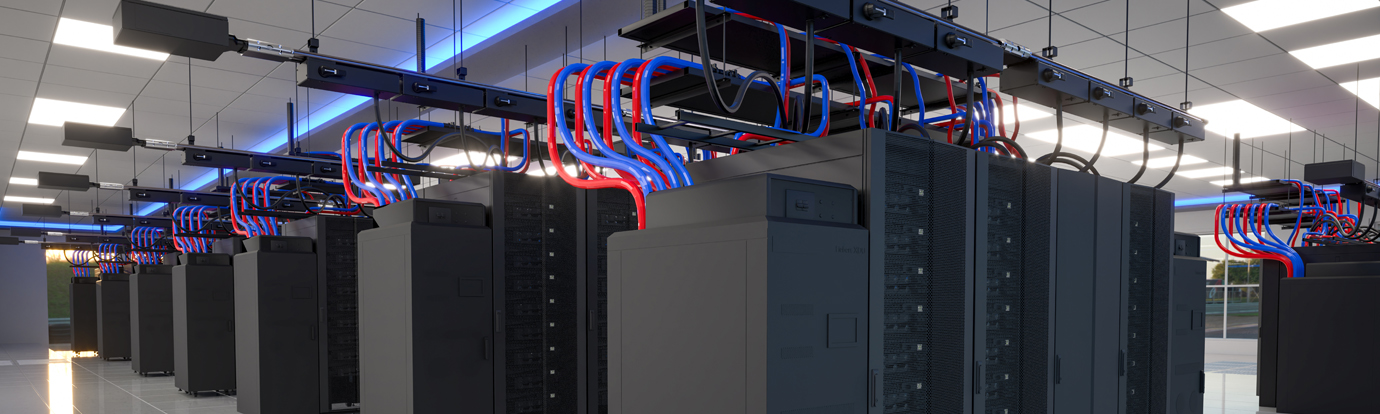
Access to renewable energy sources is a key consideration, particularly for AI workloads with high power demand. Cooler climates can support more efficient cooling strategies, which reduces energy consumption and operational cost. Technological advances in liquid and hybrid cooling are also reshaping site requirements, enabling higher density deployments while lowering environmental impact.
Water usage is under increasing scrutiny, particularly in regions facing resource constraints. Operators are adopting closed-loop cooling systems and exploring waste heat reuse to improve overall efficiency. Transparency through published efficiency metrics and ESG reporting is now standard practice among leading Hyperscale operators.
Sustainability’s Role in Operating Costs
Sustainability considerations are important in location selection because factors like a low ambient temperature, local abundance of renewable energy and water supply have a dramatic impact on the cost of IT cooling. This is a major expense in the annual operating budget of a data centre.
Conclusion
European data centre vacancy rates are forecast to reach a historic low of 6.5% this year, driving investment and opportunities for exceptional returns. However, selecting a location for a data centre facility remains one of the most important decisions an operator can make. Power availability and cost are key criteria, but network connectivity, planning certainty, market dynamics, and sustainability performance are also essential considerations.
As AI continues to reshape compute demand and infrastructure requirements, site selection must anticipate future density, regulatory change, and environmental expectations. The most successful developments are those informed by market insight, rigorous evaluation, and a long-term perspective on risk and opportunity.
For Hyperscale and AI operators, effective site selection is not simply about meeting today’s requirements. It is about creating resilient, scalable platforms capable of supporting the next generation of digital growth.
CBRE’s Data Centre Solutions team supports operators from initial site screening through to full feasibility, power procurement, and development advisory.
Future-Proof Your Organisation's Data!
Get in touch with us today to discover how we can support your future.

Related Services
Operating specialist teams that offer consulting, advisory and transaction, project management, and integrated data centre operations services.
Leading experts in AI-ready data centres. We tackle the challenges & opportunities in AI infrastructure.