
Live-work-play sounds trendy and desirable but what does it really take for a development to succeed? That’s what Amit Kumar, Russell Whitehead and Christopher Kuno from CBRE’s Development Strategy & Consulting team work with their clients each day to figure out.
They advise organizations on how to ensure large-scale mixed-use developments or master-planned communities will prosper in the long term. Through long-term demand forecasting, project positioning, phasing guidance and implementation strategies, CBRE helps clients ensure their developments are feasible, financially viable and well-positioned to succeed in a competitive marketplace.
“In some instances, developers may come up with projects that sound appealing yet fail to meet their true potential because certain elements didn’t align with placemaking best practices and market realities,” says Kumar.
The key to vibrant, lasting mixed-use developments, he says, is to create the conditions for constant activity, giving residents, shoppers and workers reasons to stick around and do things. This activation can drive long-term desirability and improve market resiliency across the life of a project.
CBRE’s approach often focuses on commercial activation and can involve clustering tenants next to complementary experiences such as park space, public plazas, fitness centres and event venues. It can mean creating mixed-use entertainment districts around sports stadiums, such as Maple Leaf Square/Union Station in Toronto or ICE District in Edmonton. It can consist of revitalizing downtowns or enlivening larger developments by activating nearby streets or public areas with farmers’ markets, art installations and consistently programmed events.
“The traditional anchor tenant model is evolving,” says Whitehead. “Entertainment and experiential destinations are essential to attract consistent foot traffic. They encourage repeat visitation and lengthy dwell times, often correlated with enhanced sales performance.”
Revamping Lansdowne Centre
The CBRE team recently advised on the redevelopment of Metro Vancouver’s Lansdowne Shopping Centre with the vision of a mixed-use downtown with significant retail and commercial space along with 5,000 new homes by full build-out in 2045.
Nearby is Richmond Centre, the city’s main shopping node, which meant the CBRE team had to position Lansdowne Centre to ensure market differentiation and long-term success . “Richmond lacks a true town centre where people can gather and socialize,” says Whitehead. “We suggested that Lansdowne Centre be positioned to fill that gap.”
The vision is for the development to have public spaces that can be activated for events, along with unique restaurants and smaller boutique retail to maintain a community feel.
The CBRE team strategized and quantified the rollout of each phase of Lansdowne Centre’s redevelopment over the next 20 years. They identified when retail and amenities should be introduced, and which tenants might occupy the commercial units based on spending habits, nearby competition, demographic trends and target market profiles.
“We accounted for new developments that will come to market over the next 20 years and how the region is expected to organically evolve during this period,” says Kumar. “This will enable the landlord to pivot as needed, ensuring Lansdowne Centre can perform and compete effectively over time.”

Expanding Walkerville
Last year a private landowner enlisted the CBRE team to create comprehensive development scenarios for a new mixed-use project on a vacant five-acre greenfield site in Walkerville, one of Windsor, ON’s most desirable communities.
“We articulated five scenarios for what this piece of land could become based on market demand, demographics, economic forecasts and urban planning best-practices,” says Kuno.
The project, a high-density mixed-use development, would be a new to market concept for Windsor and Walkerville. The CBRE team examined case studies of similar projects in other markets. They quantified how much office, retail, condo and rental space would be feasible and developed a retail tenant mix based on the existing inventory, local spending, mobility patterns and market growth. They also engaged directly with retailers and commercial tenants that could differentiate the project from the competition and draw visitors from a broader area.
“Prospective tenants we engaged with understood the potential impact of the project, which gave the developer a sense of assurance to help rationalize the decision of moving forward,” says Kuno.
This project illustrates a shift toward bringing urban amenities and higher-density development to areas traditionally seen as secondary market, a trend the CBRE team anticipates will grow as housing prices drive people to more affordable communities. “A Toronto or Vancouver approach won’t always work,” explains Whitehead. “The positioning, tenant curation and design have to fit the local market context.”
“This project has the potential to leverage Walkerville’s current position as a desirable neighbourhood and make it a place where residents will want to live, work and play,” adds Kuno.

Planning Tewin
Kumar, Whitehead and Kuno are currently advising on Tewin, a new pedestrian-oriented mixed-use community being planned in Ottawa. Tewin will span over 1,000 acres and house more than 35,000 residents in a community format atypical for traditional Canadian suburbs.
“Usually suburbs evolve organically but this project will create a new town from scratch,” says Whitehead. “Right now, we’re evaluating how much retail and commercial services can be supported and how it should be phased over the next 20 years to create a vibrant neighbourhood that feels complete even in the early stages of the project.”
The longer timeline means the project teams must consider the impact of future trends and technologies such as new mobility technologies, shifting retail formats, emerging tenant types, changing household demographics and evolving consumer preferences.
“We have to plan strategically so that Tewin will be equipped to meet the needs of its future residents,” says Kumar. “It’s a matter of positioning projects so they’re not just relevant now but in the future and making the economics work.
“Everyone wants to predict the future. We plan for it. That’s why clients call us.”
Recent Insights
-
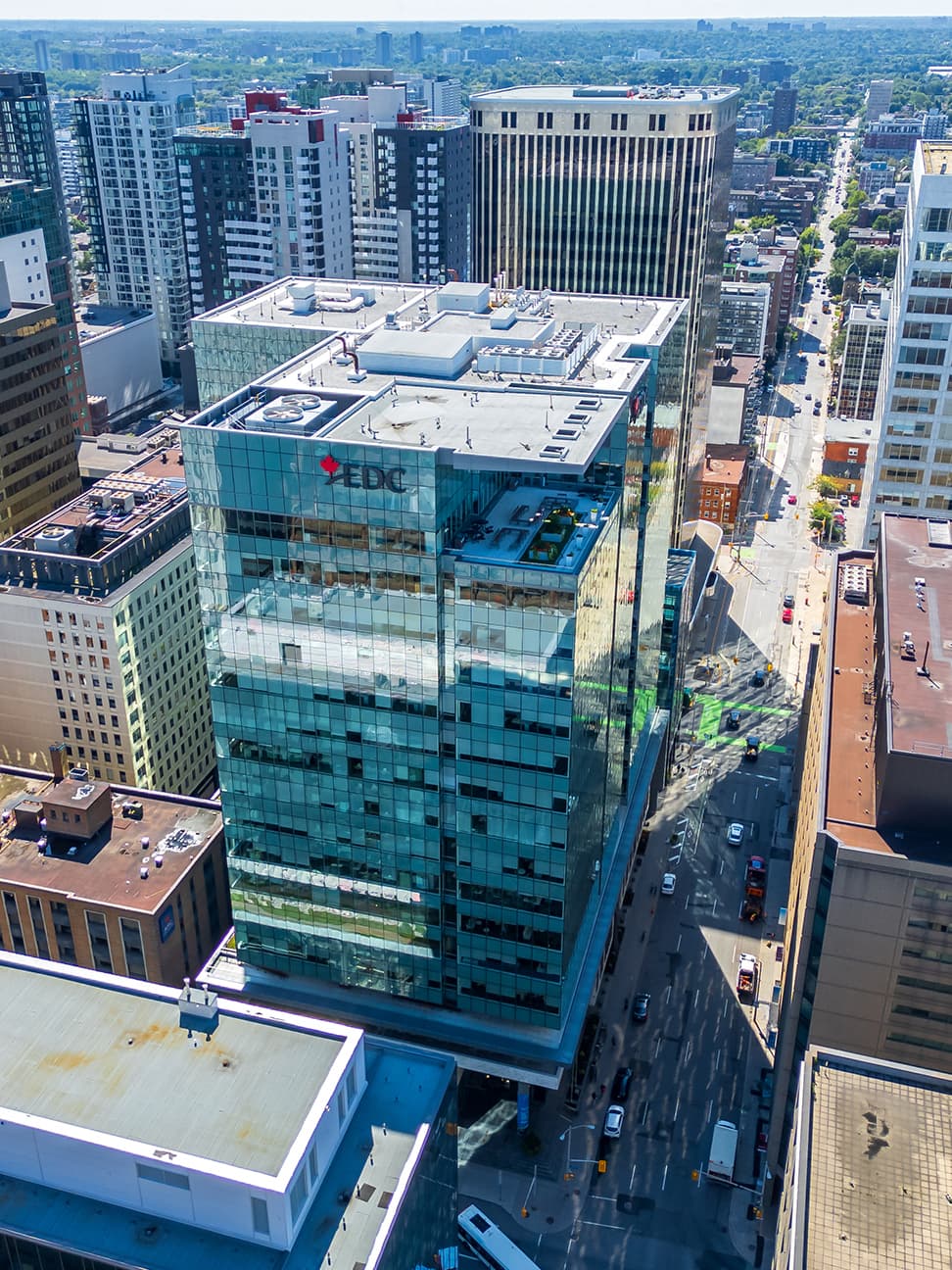
CBRE recently brokered the sale of 150 Slater St., a 447,448 sq. ft., Class A office tower in the heart of the capital’s financial district.
-
Article
CBRE Canada CEO Jon Ramscar: Investors Have a Golden Opportunity to Access Vancouver Real Estate

Jon Ramscar told the Vancouver Real Estate Forum today that there is a compelling reason to have renewed confidence in the city’s prospects: Access.
-
The seven-storey office building is being built on top of a restored former 100+ year old warehouse, combining the aesthetic of a century-old brick and beam structure with the functionality and sleekness of new, state-of-the-art office space.
Stay In The Know
Subscribe today and join hundreds of professionals who get the latest blogs delivered straight to their inbox.