Article
Business Insights | Making Places Investable: How Capital Structures Unlock Delivery
May 12, 2026 5 Minute Read
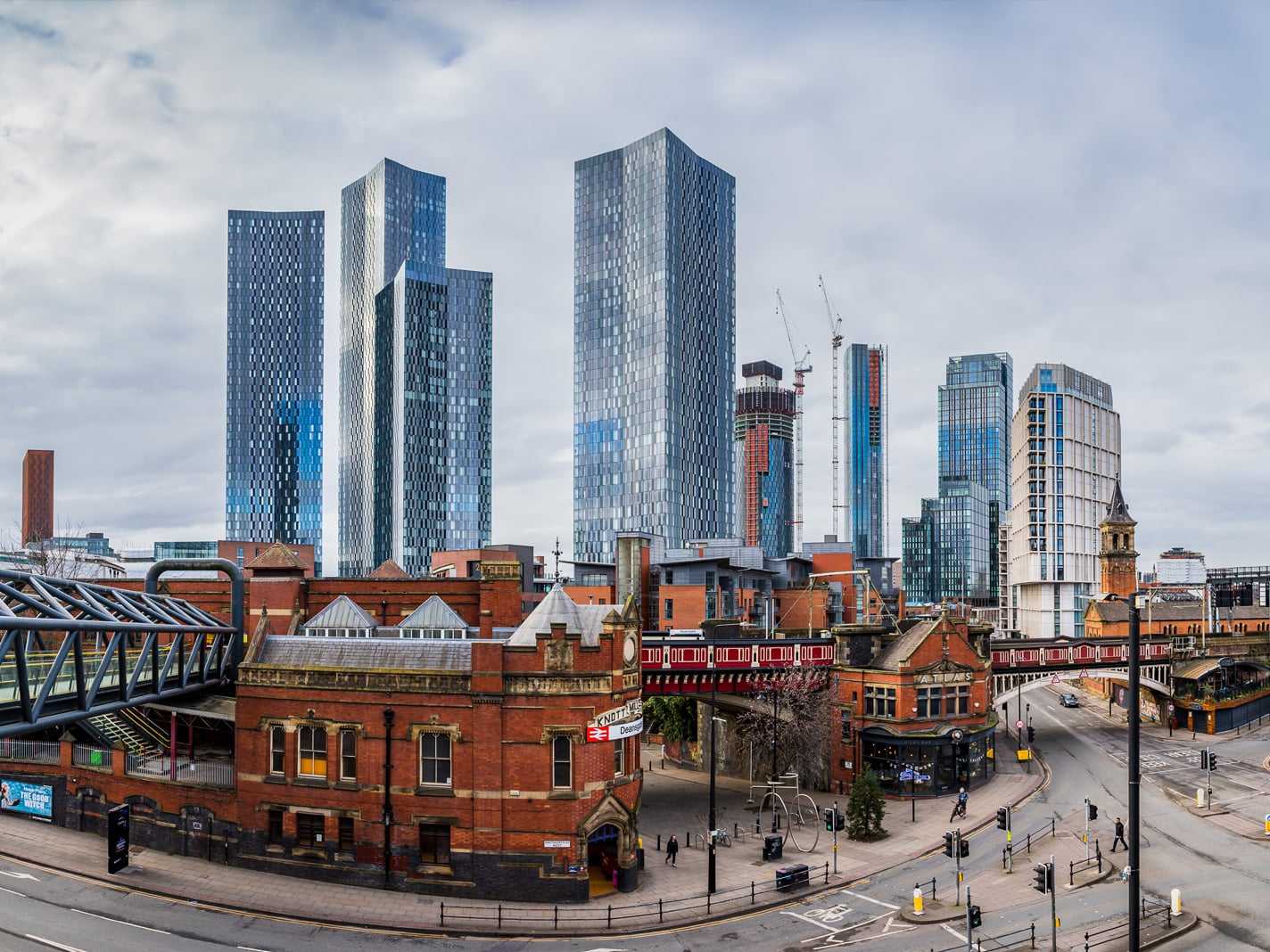
Across the UK, ambitions for place led regeneration continue to grow. Public and private sector partners are increasingly aligned around bold visions: mixed use neighbourhoods, revitalised town centres, sustainable communities and long-term economic growth.
Yet for many schemes, the challenge is no longer vision or intent. It is delivery.
Too often, well-conceived place strategies struggle to move from concept to construction. Demand exists. Policy support is strong. Political will may be aligned. But progress stalls at the point where ambition must be translated into an investment case that works for all parties involved.
From my perspective, the lesson is increasingly clear: capital structure is a central driver of whether places get built.
Why capital structure now sits at the heart of delivery
The context in which regeneration is funded has changed fundamentally.
Higher interest rates, tighter credit conditions and increased scrutiny of risk have placed pressure on traditional development models. Capital has not disappeared, but it has become more selective, more cautious and crucially, the cost of that capital has increased materially.
At the same time, place-based regeneration has become more complex. Schemes are larger, delivery timeframes are longer and most pertinently, costs are higher. Much higher.
Expecting a single source of capital to absorb all this risk is increasingly unrealistic, especially where viability is so strained.
In this environment, how capital is structured, sequenced and aligned between public and private sectors has a direct bearing on viability, investor confidence and delivery momentum.
Capital follows credibility – not just vision
One of the most common barriers to delivery is not a lack of capital, but misalignment between risk and the parties expected to bear it.
Early-stage regeneration costs, land assembly, planning, design costs, and remediation often sit uncomfortably with private investment return requirements. Equally, public sector partners can find themselves exposed to disproportionate financial pressure in the absence of a clear investment strategy and funding structure.
What successful programmes recognise is that different types of capital are suited to different stages of delivery.
Rather than seeking a single solution, investable schemes deliberately separate, allocate and sequence risk by:
- Using public, grant or blended funding to unlock early stage and enabling works
- Reducing planning, infrastructure and market risk before introducing private investment
- Structuring partnerships that share upside while protecting downside exposure
By aligning risk with the parties best placed to manage it, schemes become investable to a broader pool of capital and more resilient to market volatility.
Phasing: A financial strategy – not just a planning tool
Phasing is often treated as a design response or a planning necessity. In practice, it is one of the most powerful financial levers available to place makers.
Well-conceived phasing strategies allow regeneration programmes to:
- Reduce total upfront capital requirements
- Demonstrate value early and recycle it over time
- Create multiple entry points for different investor types
- Respond to occupier demand and shifting market conditions
Crucially, effective phasing is not rigid. It provides structure without constraining evolution. It allows places to adapt without undermining long-term vision, sustaining confidence even when market conditions change.
In financial terms, phasing turns long term ambition into a series of investable decisions rather than a single binary bet.
Designing investment strategies early
Across successful regeneration programmes, a common pattern emerges and financial strategy is embedded from the start.
Capital structures are developed alongside master planning, infrastructure design and delivery strategies not retrofitted once decisions have already been locked in.
This integrated approach enables:
- Clear, tailored investment narratives for different capital partners
- Stronger alignment between public sector objectives and private capital expectations
- Delivery programmes that can evolve while maintaining long term certainty
It also encourages a shift away from transactional thinking towards long term partnerships, where capital, expertise and stewardship are aligned around place performance over decades rather than single development cycles.
From ambition to investability – the new models for delivery
Risk capital models are now increasingly seen as a key component of the solution to these challenges: public capital takes the early, patient, higher risk position so private capital can follow at scale. In Greater Manchester, this model is now systematised through the Good Growth Fund, which blends Greater Manchester Combined Authority (GMCA) investment, Government contributions, Greater Manchester Pension Fund (GMPF) capital, and borrowing against future business rate growth to create a nearly £2 billion investment pot. The fund deploys “just enough public money” to make schemes viable, unlocking billions in private investment and accelerating delivery of homes, employment space, transport links, and regeneration across all parts of Greater Manchester.
CBRE sits at the centre of this model as investment advisor and manager to the Greater Manchester Pension Fund, providing:
- Strategic capital markets advice on where GMPF’s capital can be deployed most effectively across residential, commercial, and mixed-use sectors.
- Development advisory and due diligence capability, assessing viability gaps, ESG performance, risk adjusted returns, and structuring solutions.
- Debt and equity structuring, including preferred equity, development debt, and co investment alongside private developers.
- Impact oriented investment management, ensuring projects deliver measurable outcomes in jobs, regeneration, sustainability, and long-term value creation.
This integrated approach is exactly what allows Greater Manchester to run a sophisticated risk capital model: GMPF provides patient institutional capital; GMCA provides catalytic public investment; CBRE provides commercial discipline, structuring expertise, and market reach to make schemes investible.
When capital strategies are treated as a core part of place making rather than a downstream technical exercise, ambition becomes credible, momentum is sustained and regeneration moves from strategy to site.
That is how places are made investable. And ultimately, that is how investable places get built.