Article | Intelligent Investment
Business Insights | Why prime location still reigns supreme in the evolving retail landscape
The definition of a ‘prime’ retail location is rapidly changing against the backdrop of retailers chasing store impact and shifting consumer preferences.
September 15, 2025

Find your perfect retail location
Click HereWalking through Sydney’s CBD on a Friday afternoon will reveal one thing: the city’s retail landscape is a tale of two streets. On the main thoroughfares, flagship stores shine with meticulously designed shopfronts, and immersive brand experiences. These aren’t just stores, they are statements from a brand about who they are and their purpose.
But just a few steps away, on secondary pitches, there is a clear contrast. Foot traffic thins, vacancies rise, and those stores that remain often feel dated with spaces that haven’t kept pace with the evolving expectations of today’s consumer. They are purely transactional.
This polarisation is a reflection of the broader truth that retail is changing faster than ever before. Consumer preferences are shifting, digital integration is accelerating, and the definition of a “prime” location is being reimagined, and demand for prime locations is far outreaching that for secondary locations.
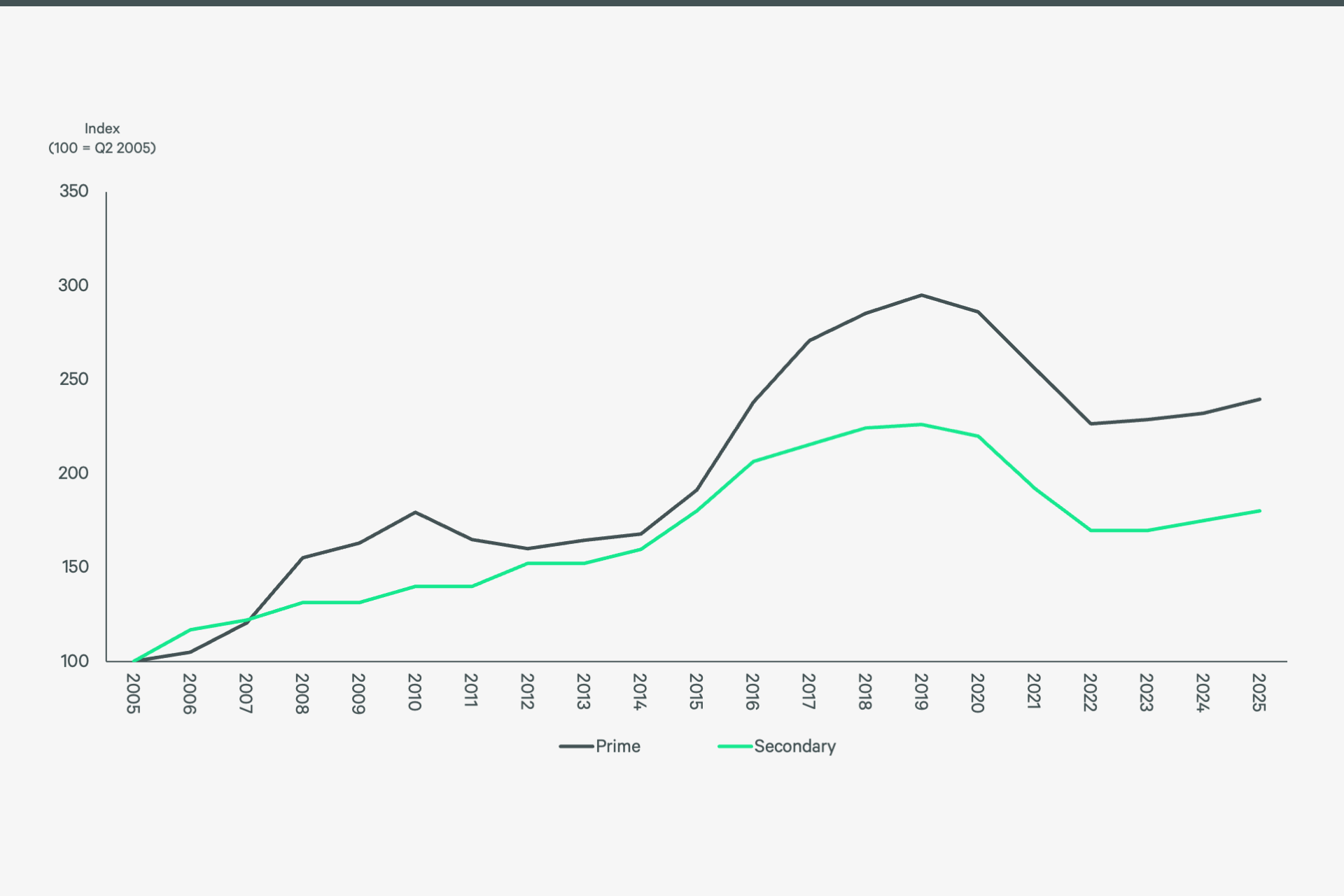
According to rental data tracked by CBRE, rates in prime locations have increased by 240% in the past 20 years, while secondary locations have increased by 180%, and the trend shows a widening of the gap in growth.
Figure 1: Sydney CBD Retail Rent
Less is more: Why omnichannel is critical
Retailers are no longer chasing store count; they are looking for impact. The focus has shifted from quantity to quality, with brands investing in fewer, more strategic locations that deliver elevated experiences and stronger returns, further emphasising prime.
This ‘less is more’ approach is driven by several factors:
- Cost efficiency which results in fewer stores with leaner operations
- Experience-led design where flagships are now immersive, not transactional
- Omnichannel integration where physical stores are seamlessly connected to digital platforms
Today’s consumers aren’t just shopping, they’re seeking purpose, connection, and convenience. The traditional window shopper now goes online, surfing for inspiration before stepping into a store. Retailers must now meet them at every touchpoint, blending digital discovery with physical engagement.
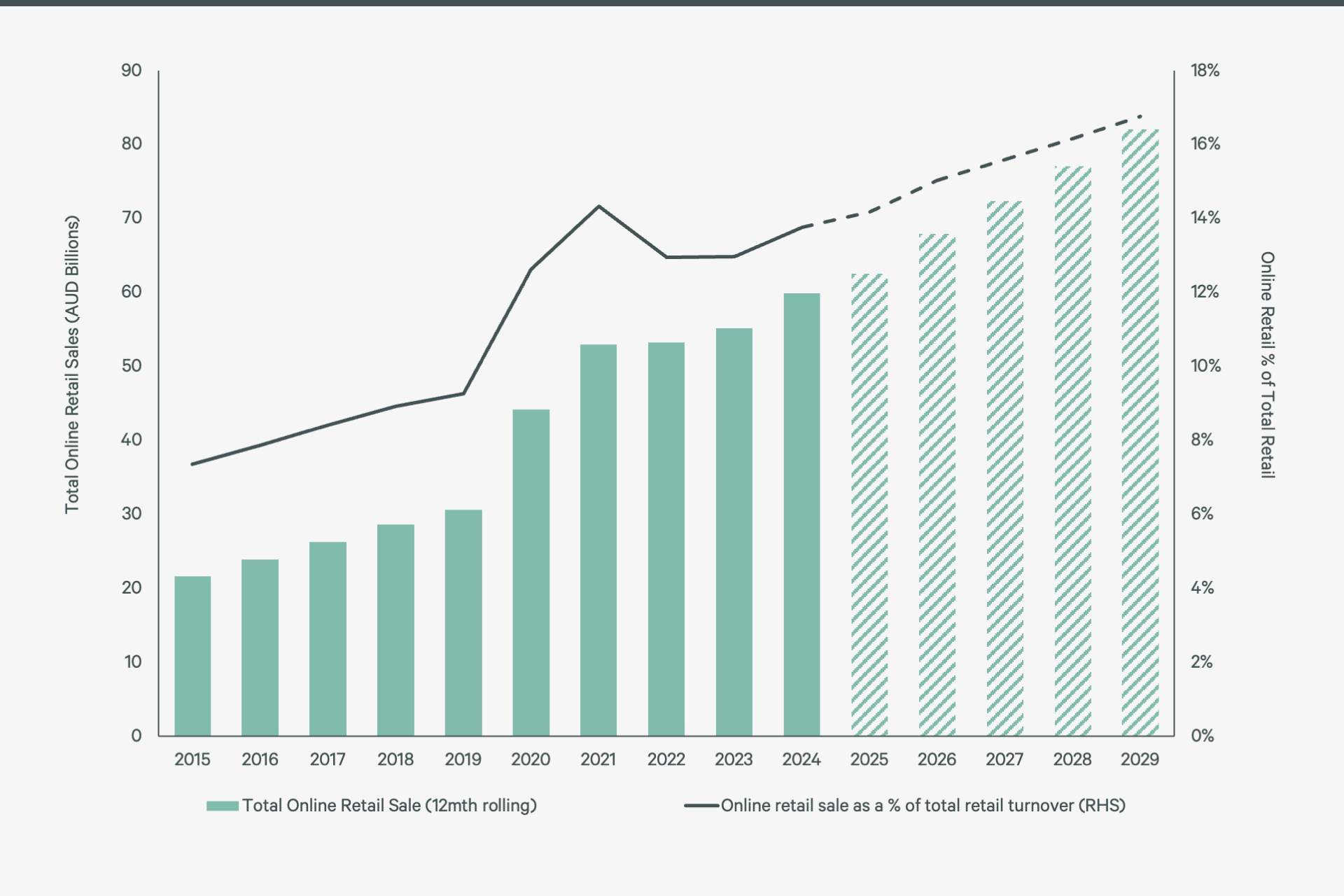
Online penetration rates reflect the importance of an omnichannel for retailers in Australia, with rates still sitting at 14.3%, and CBRE research forecasts 17% by 2029. After the sharp rise during Covid, there was a clear plateauing and now a steady rise that retailers must carefully consider as they figure out their omnichannel strategy to balance costs with convenience while also trying to connect with new and existing consumers.
Figure 2: Online Retail – E-Commerce
Decision drivers and how retailers are using data
Retailers are increasingly turning to data to guide their location strategies. It’s no longer just about footfall - it’s about the right footfall. Key decision drivers that impact every brand's version of prime include:
- Demographics that include where do people live, work, and shop?
- Foot traffic patterns like when and why do people visit and for how long?
- Competitive landscape looking at what are the key competitors and co-tenants
- Accessibility like how easy it is to get to the location, how prominent the site is, and ease of access
Data analytics enables retailers to align location choices with brand strategy and customer expectations. Experience is also a key factor and spaces that can host activations, events, or community engagement are increasingly valuable.
To help our clients harness the full potential of data, we’ve invested heavily in tools and technology and put a dedicated team in place that combines data analytics with brokerage expertise. This integrated approach enables us to support our clients through complex retail decisions.
By aligning data insights with brand strategy and customer expectations, we empower smarter, faster, and more strategic growth. Our data-driven methodology gives clients a competitive edge in identifying prime locations and accelerating expansion.
Human touch and why physical is still king
Despite the rise of e-commerce, physical retail remains a key part of brand strategy. Stores are not a point of sale but a strategic platform for storytelling, community, and loyalty.
Beyond the products on display, brands are expanding their offerings to include:
- Community initiatives including run clubs, wellness events, and local partnerships
- Brand collaborations with influencers, athletes, and creators
- Experiential activations from yoga classes to live demos
CBRE Research highlights this in our latest report on how athleisure is reshaping the future of Australia’s retail market. Specifically, Nike’s flagship in New York, which features an in-store basketball court, creates a destination and brands like Nimble partnering with events like City2Surf and local fitness studios to build deeper connections with their audience.
Kate Bailey, CBRE’s Head of Retail Research, further highlights the importance of flagship stores and prime locations.
“Flagship stores play a pivotal role in anchoring retail precincts within Sydney’s CBD, serving not only as high-impact brand showcases but also as key drivers of foot traffic, tourism, and economic vibrancy. Their presence reinforces Sydney CBD’s status as a premier retail destination, attracting both local shoppers and international visitors while supporting surrounding businesses and contributing to the broader urban experience.”
Looking ahead with AI, demographics and the wealth effect
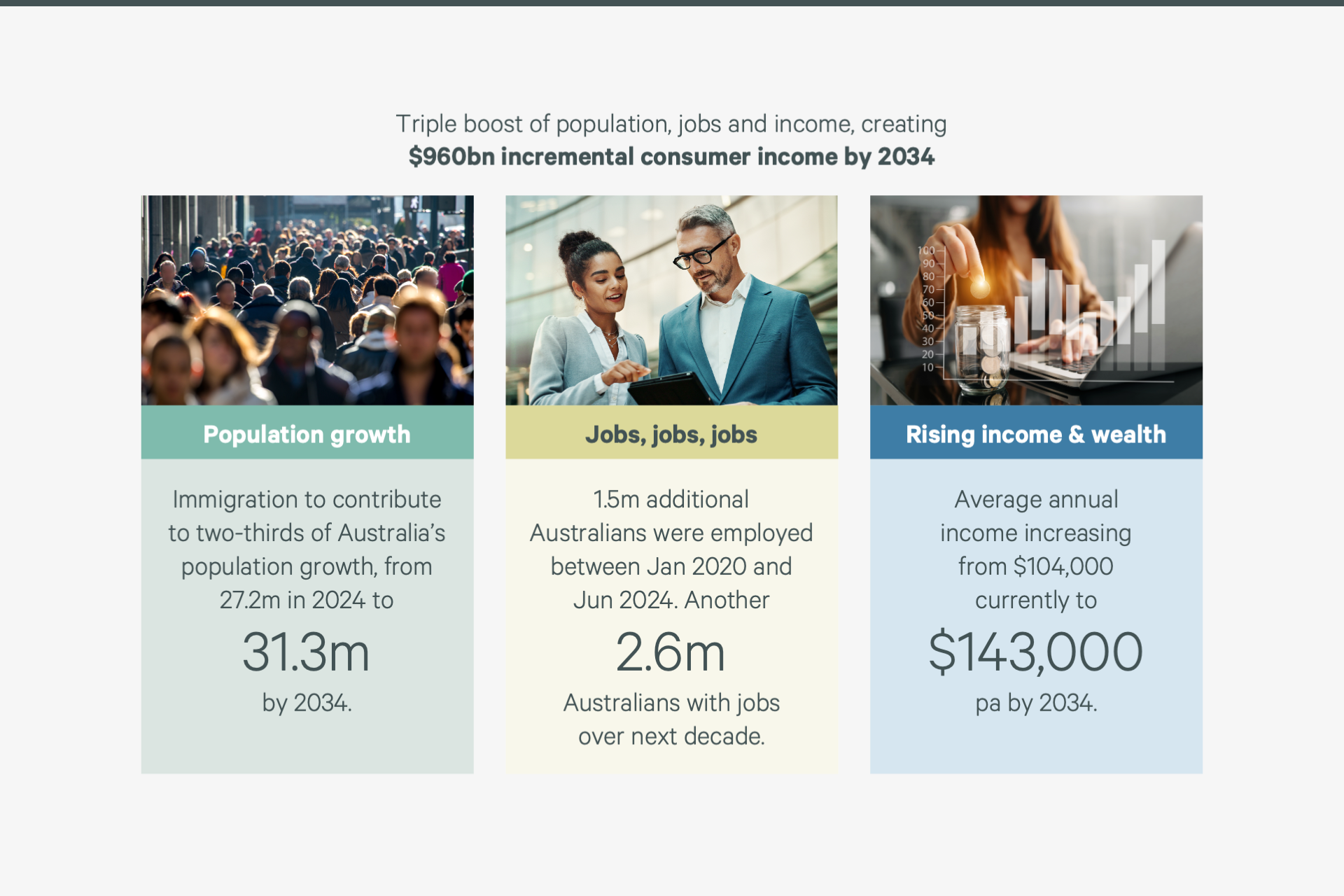
As we look to the future, there are three key economic drivers that will shape retail demand:
- Population growth
- Rising employment
- Increasing household income
These drivers are predicted to add $960 billion into the economy over the next decade, much of it flowing into housing, retail, and leisure.
This, combined with the injection of AI, will play a key role in defining what makes a location “prime”. From predictive analytics to real-time consumer insights, technology will empower retailers to make smarter, faster decisions.
Figure 3: Triple boost in Sydney
The rise of prime or nothing
In a rapidly evolving retail landscape, location still matters, but it’s no longer just about being seen; it’s about being relevant. Retailers who embrace data, invest in experience, and connect with their communities, both online and offline, will be best positioned to thrive.
The gap between prime and secondary is widening, not just in rent, but in relevance. Retailers who succeed will be those who understand that physical stores are no longer just points of sale, they are platforms for brand storytelling, community engagement, and omnichannel integration.
By leveraging data, embracing experience-led design, and aligning with shifting consumer expectations, brands can turn prime locations into powerful strategic assets.
At CBRE, we combine deep market insight with cutting-edge analytics to help our clients navigate this complexity and unlock the full potential of every square meter.
In a rapidly evolving retail environment, prime is a non-negotiable.

Shaping Sydney’s Tomorrow
Discover expert insights on how Sydney is evolving across housing, workspaces, retail, and industrial growth.