Article
The UAE H1 2020 Market Update
We take a look at the UAE Real Estate market, providing an overview of the residential, offices, retail and hospitality sectors.
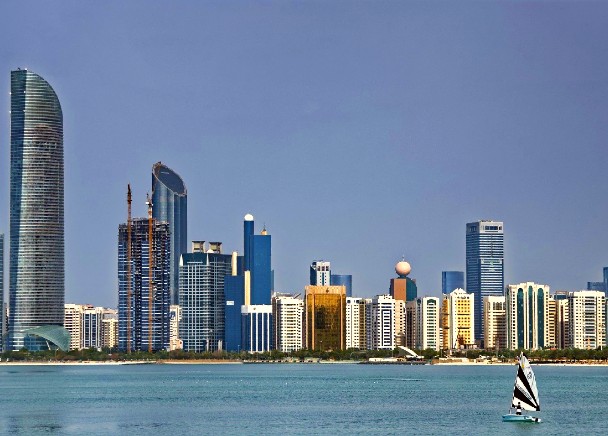
Whilst CBRE expects the economy to begin to bounce-back in H2 2020, the pandemic’s effects were so strong in H1 2020 that the year as a whole will still register a contraction of economic activity. It is estimated that Abu Dhabi’s GDP will contract by 7.2% in 2020, and begin recovery in 2021, supported by an AED 3 billion stimulus package that includes initiatives such as subsidies, rebates, and financial support. In parallel to this, the Government of Dubai has a similar stimulus package of AED 1.5 billion to support various sectors.
Dima Isshak, Senior Manager, CBRE Consulting commented: “There are 3 key challenges to recovery: subdued consumer demand; lower disposable income, and restrictions in occupancy of retail and commercial space. These in turn are impacting the real estate sector, which is having to adapt and evolve to the ever-changing demands of the pandemic.”
Abu Dhabi - Key Performance Indicators

Dubai - Key Performance Indicators
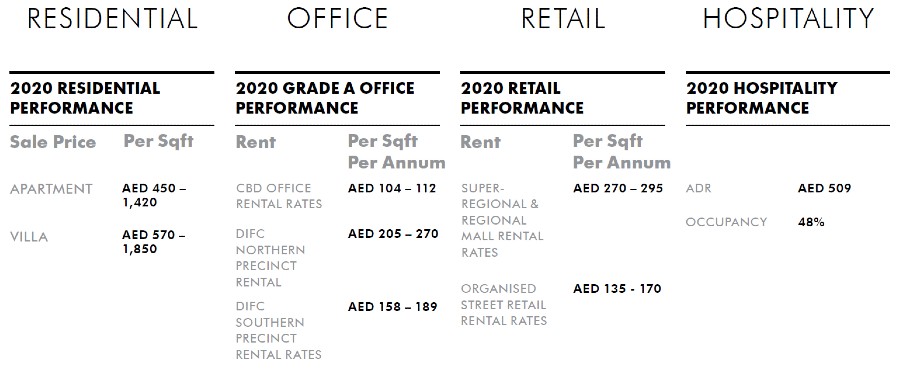
Residential transaction activity decreased by 20% in H1 2020 vs H1 2019, primarily due to lockdown measures and travel restrictions to combat the spread of COVID-19. As these restrictions have been eased, developers and landlords are increasingly offering a range of incentives such as discounts on DLD fees, longer payment plans, and rent-free periods, as an attempt to attract buyers and enhance transaction activity.
The office market is expected to remain under pressure as businesses and employees continue to adopt flexible working arrangements, and companies look to reduce their central operational costs. Some companies are reconsidering their office space requirements in light of more global shifts in the way we work. To reduce the impact of the pandemic, landlords continue to offer incentives such as rent-free periods and reduced lease rates in an effort to maintain occupancy levels and retain tenants.
Spending within the retail sector is likely to flow through digital channels more and more, as the adoption of e-commerce accelerates. Those retailers which are able to quickly provide a seamless experience across both physical and digital formats are expected to thrive in an increasingly competitive retail market moving forward.
And although travel restrictions in Dubai have eased, hotels remain focused on domestic tourism, offering attractive staycation deals. Whilst there are a number of hotel chains that have announced temporary closures during the summer months, utilising the opportunity for renovation and property improvement plans.
Impact of COVID-19
CBRE expects the temporary mass remote working experiments brought on by COVID-19 to accelerate the trend of flexible working strategies, rather than lead to a wholesale structural shift away from office use. Workers are expected to visit their office less frequently, but when they do, it will be to collaborate and create with their colleagues. As such, office spaces are expected to become more flexible and agile, increasing hybrid workplace and larger space per employee. As professionals are expected to continue a flexible workstyle, there is a strong focus by developers on flexible residential unit designs to allow and accommodate ample WFH space. Furthermore, as residents’ home-time increased, the need for open spaces and green parks is anticipated to become an important part of residential communities.
Moving forward, more hotel operators are expected to shift their focus on operating hotels and become “asset-light”, concentrating more on their brand and less on bricks and mortar. The adoption of artificial intelligence (AI) and automation is expected to accelerate in many hotels, providing a contactless environment for guests. Whilst in the retail sector the acceleration in e-commerce virtual shopping and frictionless delivery is anticipated to become increasingly popular for the sector.
For more information on the UAE Real Estate sector, contact Dima.