Article
What Lies Ahead For Vancouver Commercial Real Estate in 2026
January 21, 2026 4 Minute Read
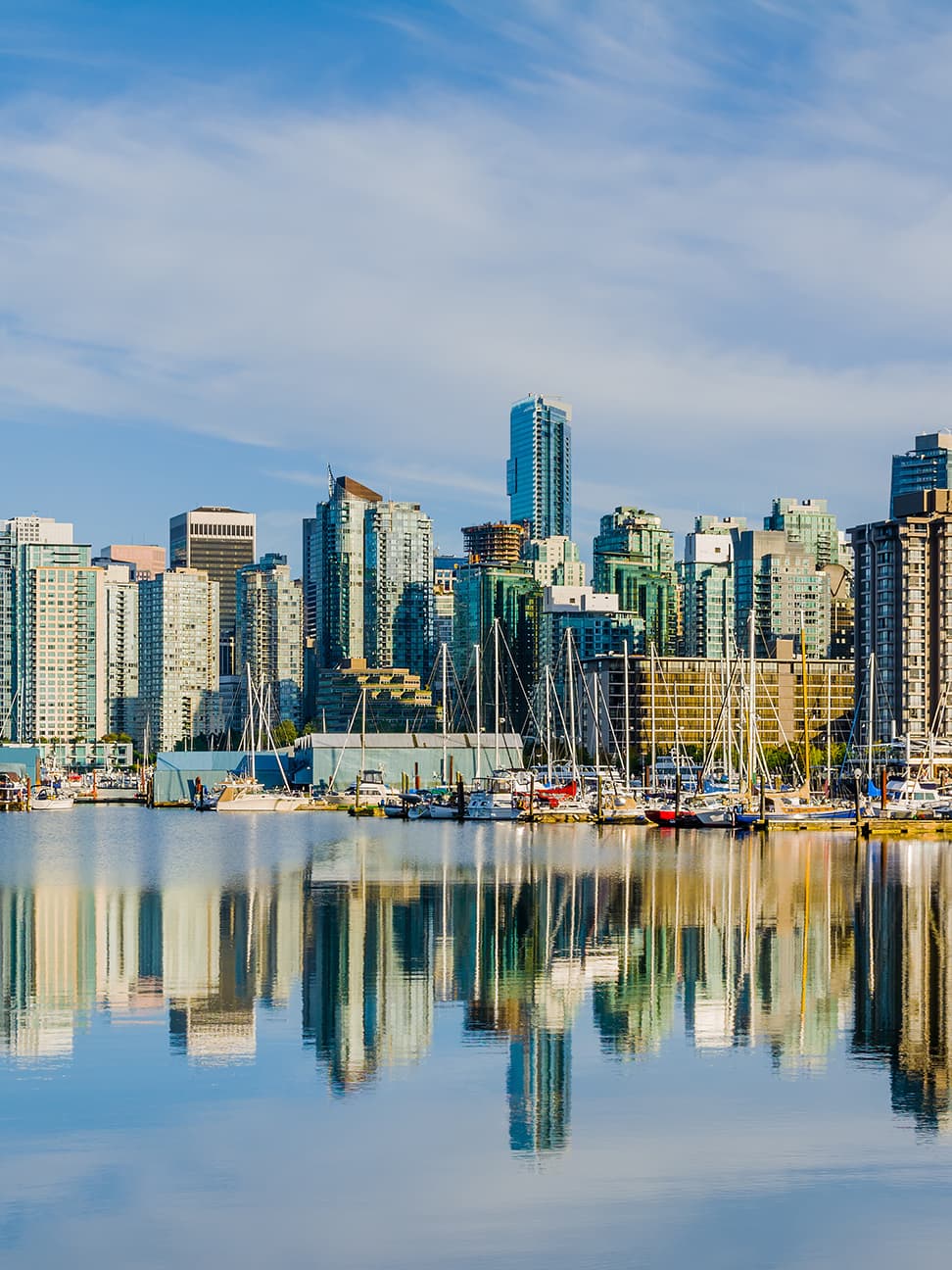

Office leasing was on the rise in Vancouver at the end of 2025 but vacancy remains elevated downtown and in the suburbs.
Metro Vancouver’s industrial market is working through a glut of new supply, with demand picking up for large format space in the second half of 2025 after tariff shocks earlier in the year. The year to come promises a resurgence in the absorption of industrial space.
We spoke to CBRE Vancouver Managing Director Jason Kiselbach to find out what he’s watching for in 2026.
Office Market Has Recalibrated
Office leasing has picked up significantly, with gross leasing up 100% in 2025 compared to 2024. However vacancy has remained elevated and it seems to be a bit sticky. The reason for that is threefold: First, for all the large blocks of space leased there have been companies returning office space to the market. So the availability of 30,000 sq. ft. and above blocks of office space was up 20% versus 2024. There’s no rhyme or reason in terms of which industries are giving back space; it’s all over the place with some large blocks coming in the form of sublease and a full building that was retrofitted being returned to the market.
The second element to elevated vacancy is that commodity space is taking a longer time to lease. Class B and C office space smaller than 5,000 sq. ft. is struggling to find new tenants. And the third element is the shift in subleasing. In the pandemic years subleasing represented 40% of our vacancy and a lot of turnkey options for tenants, but now only 18% of available space is sublet.
So subleasing is not the source of deals that it was, even though the amount of sublease space is much higher than it was pre-pandemic, when it was 5%. While the total amount of sublease on the space has come down significantly, now representing 18% of the total vacancy down from 40% in 2021, it still makes up a considerable amount of the vacancy. Prior to 2020, subleases comprised 5% or less of total vacancy.
All of that leads us to where we are today, coming off the first year of negative absorption of office space in Vancouver since 2020. Vacancy remains elevated; it’s at about 12.5%, so up from 2024, and we thought it would come down. But there is no new supply coming and all projects planned are paused. So we see vacancy decreasing in 2026 as demand continues to tick up.
Industrial Demand Pulls Back
Between 2016 and 2021 you couldn’t oversupply the Vancouver industrial market. We had 6 million square feet of excess demand versus the supply that was delivering. Every developer produced as much new industrial space as they could, starting in 2022.
Since then we’ve seen 10 million square feet of excess industrial supply over demand. That has to do with the pullback of underlying GDP. Demand for leased product and strata has pulled back as well. But the supply cycle is ending, demand has started to come back and we had strong positive absorption at the end of 2025.
The industrial market is poised to rebound and vacancy rates will also turn over. The bright spot for industrial is large-format leasing over 100,000 sq. ft. That segment was growing in availability from 2023 to 2025. But by the end of 2025 we saw some of those large format spaces leased by businesses and we know there are 12 spaces over 100,000 sq. ft. with either offers in place or under contract.
So we think the supply of large format availabilities will be cut in half by Q2 2026. And that’s a needle mover for the industrial market as a lot of space comes off the market.
Sales activity in the industrial market is lagging leasing, and total sales activity is below the five-year average. That’s driven by the fact that there isn’t much strata or condo industrial product trading hands. And industrial land sales are lagging even further.
Historically we’d trade 80 to 100 industrial zone land sales in the region; in 2025 it was only 17. As the large format industrial market continues to surge, we expect a trickle-down effect to smaller leasing, sales and the land market.
Consumers Drive Retail Success
The B.C. consumer has been more resilient than we expected. For all the major spending categories B.C. is outspending provincial counterparts on a per capita basis. That’s leading to stability in the retail sector. Retail vacancy remains within a tight band except regional shopping centres where we’ve seen a spike because of the Hudson’s Bay space coming back to the market. We’ll be watching to see what happens with that space in 2026. All the other retail categories have low vacancy, between 2% to 4%.
Over the last 10 years we’ve had very little new retail space constructed, but 2026 and 2027 will be big new retail supply years with the delivery of Oak Ridge Park (650,000 sq. ft.), Richmond Centre (60,000 sq. ft.) and City Centre 4 (40,000 sq. ft.) in Surrey. We’ll be keeping an eye on how much preleasing will get done and how the tenant mix and rental rates shape up.
Multifamily Market Processes New Supply
We’re in a significant supply cycle with our multifamily market. The peak years were 2024 and 2025, but there will be fewer new projects coming in 2026. The supply of purpose built rental is up 63% versus the previous five years. That’s based on housing starts. We’ve seen developers convert condo sites to purpose-built rental, and others going ahead purely on a purpose-built basis.
It takes time for projects to hit the market; so we’re probably 12 months away from showing stability in the vacancy rate and bringing it back in line with long-term averages. As all the new construction projects are delivered and absorbed by renters in the coming years we’ll get back to long-term norms.
Investment Momentum Builds
Last year was the second year of growth in total real estate sales dollars traded in the B.C. region; it looks like we completed $8 billion in investment transactions in 2025. Office has seen a significant rebound in investor demand. Retail remains in strong demand but the product availability is limited.
Multifamily is below the five-year average in trading activity, but there are signs that multifamily sentiment may be improving. Industrial product hasn’t been trading because there hasn’t been a lot of it availability at scale and people are just hanging onto their properties versus trading them at a lower price.
Overall, Vancouver continues to show stability in investment fundamentals for income producing assets and there were some significant investment sales in Q4 indicating purchasers are coming off the sidelines. We’re excited about future prospects for commercial real estate in the region and even where there are challenges, there are more opportunities for both investors and businesses.
Recent Insights
-

CBRE analysis shows FIFA World Cup brought mixed results for Toronto and Vancouver hotels, as room cancellations offset higher pricing momentum.
-
Montreal life sciences sector is stable in 2026, driven by downtown hub migration, AI integration, and demand for graduation lab space.
-

Canadian commercial real estate investment surged to $16.2B in Q2 2026, led by strong multifamily, industrial, and cross-border activity.
Stay In The Know
Subscribe today and join hundreds of professionals who get the latest blogs delivered straight to their inbox.