Article
Business Insights | What Occupiers Actually Look for in Regenerated Places
A Northern Perspective
May 12, 2026 8 Minute Read
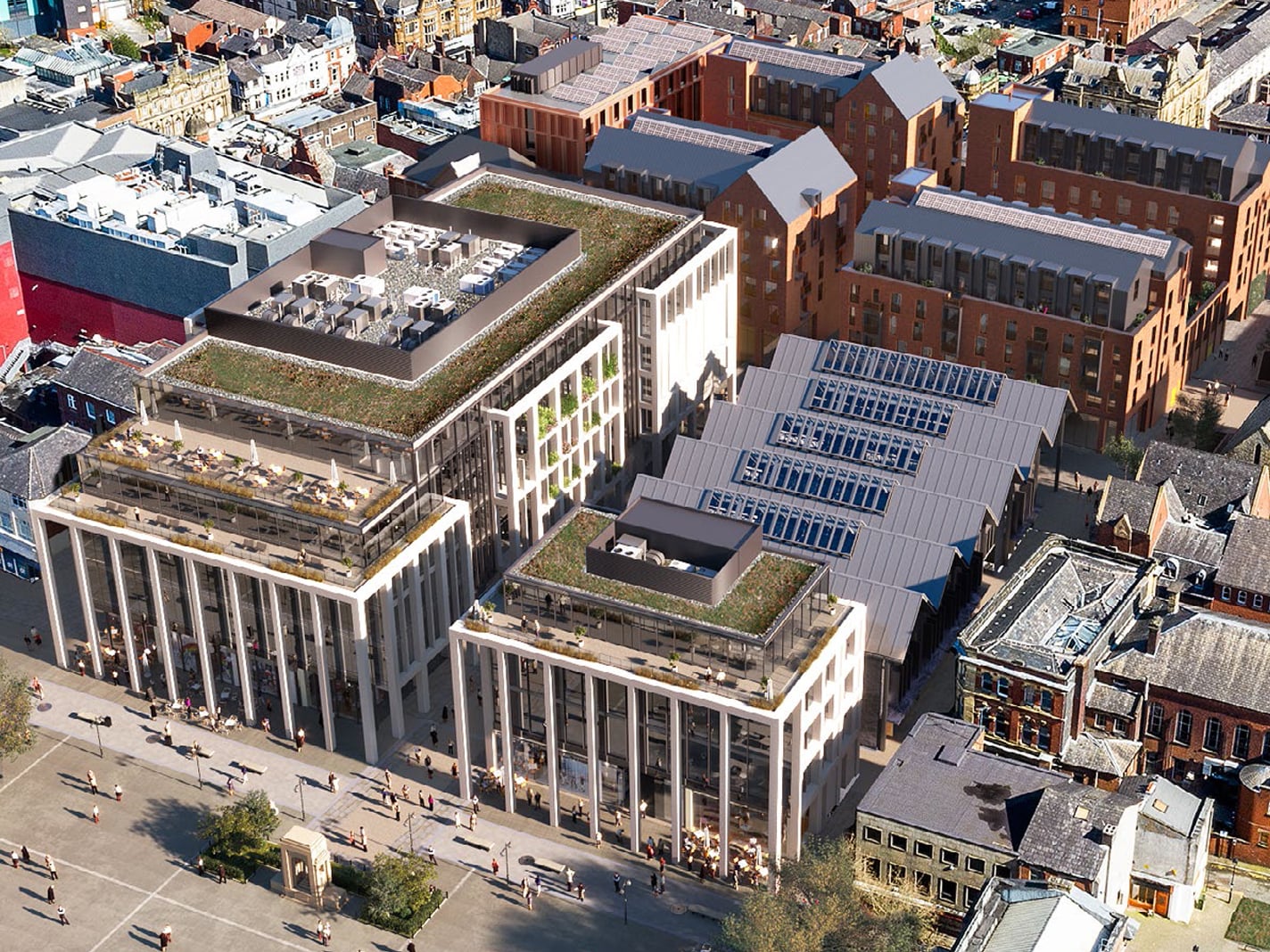
The North of England is having its moment. Not in an over-promised way that has occasionally characterised commentary about regional growth but in the grounded, evidence-based way that those of us working here every day have long believed was coming. Cities like Manchester, Leeds and Liverpool are not playing catch-up with London. They are establishing successful models on their own terms.
In my years advising occupiers across the North, what they tell us consistently, clearly and regardless of sector is that they are not buying into visions. They are buying into places that work right now, and that give them confidence to commit.
The most compelling regeneration stories in the North are not the ones with the biggest masterplans. They are the ones where occupiers arrived, settled, and told others it was worth it.
This piece reflects what my CBRE colleagues and I see daily across the North: a market confident in its own pace, its own character and its own way of doing things. The opportunity has never been greater.
Demand is revealed through behaviour, not projections
Regeneration strategies are typically built on forecasts: employment projections, sector growth models, infrastructure timelines. These have their place. But here is something I have learned from my occupier advisory work across the North: occupiers do not make decisions based on projections. They make decisions based on what they can see, touch and rely on today.
When we completed transactions at St Michael's the landmark mixed-use scheme in heart of Manchester, occupiers were not simply buying into a future vision. They responded to credibility already on display: architectural quality, a commitment to public realm, proximity to operational talent pools, and a genuine sense of place identity that felt earned rather than marketed.
The same dynamic has played out at Island, HBD’s development delivered with Greater Manchester Pension Fund. GMPF’s involvement itself signalled conviction, reinforcing confidence among occupiers. They were not there because it was the cheapest option. They were there because the building and the neighbourhood felt like somewhere worth being.
Occupier behaviour in the North today reflects a simple truth: resilience, optionality and adaptability matter more than long-term forecasts. The questions they ask us are pragmatic:
- Does this location support how our people actually work today?
- Can we adjust space requirements without excessive cost or disruption?
- Does the environment help us attract and retain talent across roles and seniority?
Place still matters but credibility matters more
Manchester has no shortage of ambition. Across the city and increasingly across Leeds, Sheffield and Liverpool developers are bringing forward schemes with genuine quality. But ambition without credibility does not convert interest into occupation.
At Circle Square, Bruntwood SciTech’s development next to the University of Manchester, credibility is tangible. Proximity to academia, talent and research partnerships actively shapes location decisions, particularly for technology and life sciences businesses.
Transactions were secured because the environment was already functioning, with real activity, amenity and community.
A strong narrative can attract interest. But credibility is what is already there and working and that is what secures commitment.
Nowhere illustrates this more clearly than NOMA. Developed by Federated Hermes and MEPC, the estate has been built up over time through sustained investment in place quality. Today and it feels earned: Heritage buildings alongside new development, a distinctive food and beverage offer and public realm that invites people to stay. That is precisely why BNY Mellon chose NOMA.
A global institution with options everywhere chose a northern location built on credibility.
The question occupiers ask is not what will this place be? It is what is this place right now? Where the answer is compelling, transactions follow.
Amenity is now a baseline expectation
I am often asked whether investment in amenity can follow occupier committed. It cannot., Amenity is no longer a differentiator, it is a baseline expectation.
Whether a 5,000 sq ft professional services firm or a 50,000 sq ft financial services occupier, businesses are competing for the same talent pool. Talent has choices, and those choices are shaped by where people want to spend their working day.
St Michael's demonstrates this in practice. High-quality food and beverage integrated within a heritage setting gives occupiers something real to point to. Their people can experience it immediately. That matters more than many developers realise when making phasing decisions.
What occupiers assess is not the quantity of amenity, but its authenticity:
- Is amenity genuinely integrated into the working day, or is it a promotional feature?
- Does it support hybrid patterns, varied schedules and different roles?
- Is it accessible and inclusive, not just premium or occasional?
Places that answer yes – including Circle Square and NOMA – perform better in occupier conversion. Deferred amenity increases perceived risk. Early genuine delivery builds credibility.
Location drives talent. Talent drives decisions.
There is a conversation happening in boardrooms today. It is no longer about desk ratios or lease lengths. It is about where the best people want to work.
Mayfield illustrates this shift. As an emerging neighbourhood it faces the challenge of being untested in a city with proven alternatives. What gives first movers confidence is not aspiration alone – it is Mayfield Park.
Manchester’s first new city-centre park for over a century offers something the traditional core cannot. That park must be central to the occupier proposition, not a backdrop.
Location drives talent. And in a world where talent drives every occupier decision, getting the location story right is not a nice to have. It is the whole game.
MediaCity provides a reminder of how this plays out. Once environment and infrastructure reached a certain quality, the market followed. Mayfield is earlier stage, but the logic is the same.
Flexibility is central to occupier location strategy
Post-pandemic, flexibility has moved beyond serviced offices and break clauses. It now underpins how occupiers assess location risk.
- The regeneration schemes winning occupier confidence treat flexibility as a design principle: Adaptable buildings
- Realistic lease structures
- Phasing that does not expose early occupiers
Inflexibility signals risk. Flexibility signals confidence. Schemes that embed adaptability consistently outperform those that do not.
Mixed use only adds value when it is lived, not just planned
Mixed use only succeeds when it is experienced day-to-day, not when it exists solely on a masterplan.
Circle Square demonstrates how residential, workspace, retail, food and culture combine to create continuous activity and genuine life.
By contrast, heavily phased schemes risk early occupiers arriving into monocultural environments. Even with good intentions, the experience feels incomplete – and talent notices.
Occupiers are quick to recognise when a place functions as single use in practice, regardless of its long-term intent.
The lesson is clear: accelerate activation.
Life attracts occupiers and keeps them.
What this means for the north's regeneration partners
Manchester is now a genuine Tier 1 occupier destination. The transactions at St Michael's, Island, Circle Square and NOMA are not coincidences. They reflect a deeper, more confident market.
Sustaining momentum requires honesty about what occupiers need:
- Test demand early, using real feedback
- Deliver amenity and public realm early
- Build flexibility into buildings, leases and phasing strategies
- Treat occupiers as long-term partners
- Communicate credibility through what already exists
The north leads. It always has.
I have spent my career in northern real estate because this region backs itself. It builds, delivers and attracts occupiers on the strength of what exists, not what is promised. That independence is not branding. It is why the North works. Regeneration success is measured by occupation, by people choosing to work, invest time and commit to places. The North is earning that commitment. The task now is to keep delivering the quality, credibility and flexibility that make those decisions easy.
