Figures
Germany Investment Market Q4 2025
German real estate investment market drops below the 2024 level despite year-end rally
January 21, 2026 10 Minute Read

Looking for a PDF of this content?
Overview
Boosted by the strong year-end rally, Germany’s real estate investment market delivered a transaction volume of €33bn in 2025. Although this result fell 5% below the 2024 volume, a slow recovery is in evidence as €18.6bn was invested in the second half of the year, a good €4.4bn more than in the first six months. The dynamic final quarter shows growing investor interest in German assets. The discrepancy between buyer and seller price expectations posed the greatest obstacle to more brisker investment activity.
Large-scale deals were thin on the ground in 2025 as they were problematic against the backdrop of the majority of risk-averse investor strategies and the financing environment. A sum total of only 49 deals were recorded above the €100m-mark in 2025, 16 of which in the final quarter of the year (four in the residential and twelve in the commercial segment). The volume invested in portfolio acquisitions dropped 24% in a year-on-year comparison, achieving a proportion of only 29% in the transaction volume. While investors sat on the fence in the large-scale segment, deal sizes between €20m and €50m grew substantially by just under a third, accounting for almost half of the overall volume. As a result, transaction numbers climbed by 17% to around 1,390 deals compared to 2024, with the deal size averaging €24m.
Trends
- Residential (50 units or more) saw a slight decline in volume due to insufficient new construction and a resulting lack of products for core investors, as well as significantly weaker portfolio adjustments on the part of portfolio holders compared to 2024. Nevertheless, residential remained the strongest asset class, followed by logistics, where the lack of adequate value-add products and weaker user demand due to the economic situation slowed down investment activity
- Retail real estate experienced slight growth thanks to twelve large transactions in the course of the year, each worth more than €100m, while the office segment saw continued strategic optimization of existing portfolios, but also a continuing recalibration of the new market-adequate market price level, which inhibited higher transaction momentum; hotel and healthcare properties showed significant growth compared to 2024
- Despite the overall economic challenges, Germany remains one of the most important target markets for international investors, who, in addition to the size of the market, are primarily focusing on the continuing economic recovery, which will ensure greater growth in the coming months and, above all, in the medium term thanks to the fiscal package and rising exports
- In 2025, there was an increase in security-oriented investments in the core segment, with office and hotel properties in particular coming to the fore; however, core-plus and value-add investments declined in the overall market, although the picture varied depending on the asset class—opportunistic investments remained at the previous year's level overall, but there was a 20% increase in the commercial segment (especially in retail and logistics)
- Prime net initial yields remained stable in most asset classes; on average across the top seven locations, the figure for prime office properties thus remains at 4.76%
Outlook
In 2026, and above all in 2027, the German economy should shake off its economic doldrums, especially if the fiscal easing anticipated takes effect. Additional government investment is resulting in interest rates rising, especially at the long end of the yield curve. At the start of 2026, the yield for German Bunds with a residual period of more than nine to ten years stood at 2.87%, a good 0.4%-points above the year-earlier figure. Stabilization at this level, with a tendency to even higher figures, can be anticipated over the course of 2026. Despite the ECB lowering the key rates during the year now ended, the yield curve is steepening, which is likely to limit real estate yield compression in the future. Accordingly, focusing on the revenue side is becoming increasingly important for real estate investors in the current real estate cycle. Proactive asset management that strategically realizes the respective opportunities at market, location and property level is the key to long-term success.
We anticipate further gradual recovery in the real estate investment market. Given the well-filled deal pipeline, including various very big landmark transactions that, when implemented, could prove to be an initial fillip for the local market, a transaction volume of between €35bn and €40bn can be expected in 2026. Furthermore, the importance of real estate as a safe haven may be given a boost from the growing uncertainty of investment alternatives such as shares and bonds.
While prime yields tend to stay stable, total returns will be driven by rising rent, especially in markets and asset classes where property is scarce and demand strong, which applies most particularly to prime office in core locations, residential and the big box logistics segment. Beyond prime property, rising purchase price returns can be expected.
Residential Trends
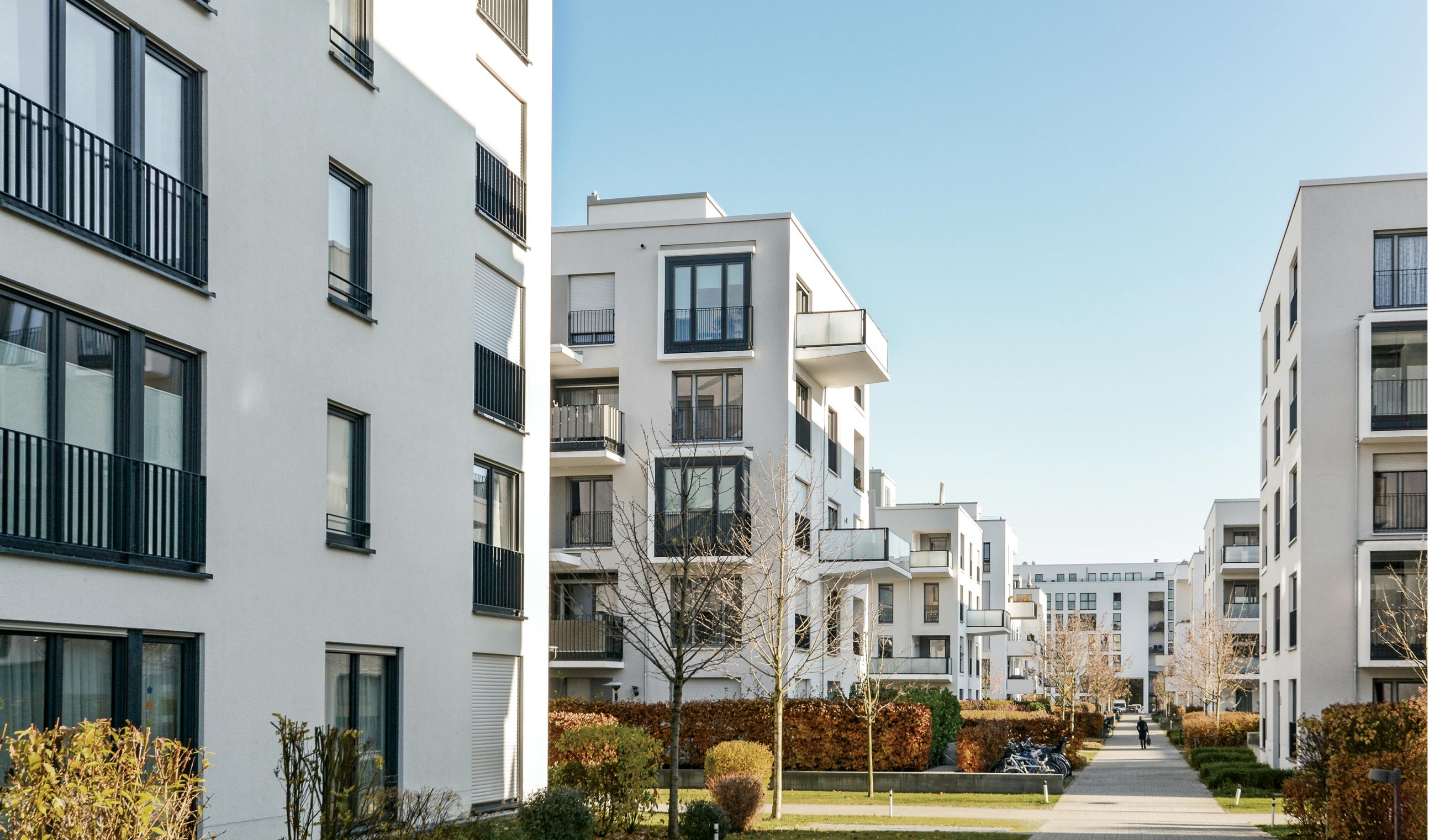
- Interest in German residential properties is high but will be slowed in 2025 by a lack of portfolio transactions; investment volume in 2025 will be around €8.4bn, approximately 5% less than in 2024 – residential properties will nevertheless remain by far the strongest asset class with a market share of around 26%
- Significantly lower volume of portfolio transactions of around €4.1bn in 2025 (-23%) is only partly due to a wait-and-see attitude on the part of portfolio holders; persistently high financing costs, strict capital requirements, and uncertainty about future price developments are leading to a pronounced bid-ask spread problem – however, the number of transactions has risen by more than 40% to 200, with a reduced average transaction size of around €42m (2024: €62m)
- Foreign investors are once again more active in the German market: their share rose from 24% to 35% – targets are large, high-quality tickets, which are, however, in limited supply; willingness to invest in value-add will remain high in 2026
- Foreign core and core-plus capital in particular is currently very selective, while supply is scarce; in addition to institutional market participants, larger foreign family offices are increasingly active in the market
- A slight market upturn is expected in 2026; some institutional investors are seeking to reallocate capital towards residential property, and interest in forward transactions is steadily increasing, accompanied by a slight rise in construction activity, which is contributing positively to transaction results; an annual volume of €8 up to €10bn is therefore realistic
- It remains to be seen whether there will be scope for a slight compression of prime yields (currently stable at 3.4%) in 2026, which will depend heavily on macroeconomic conditions
Office Trends
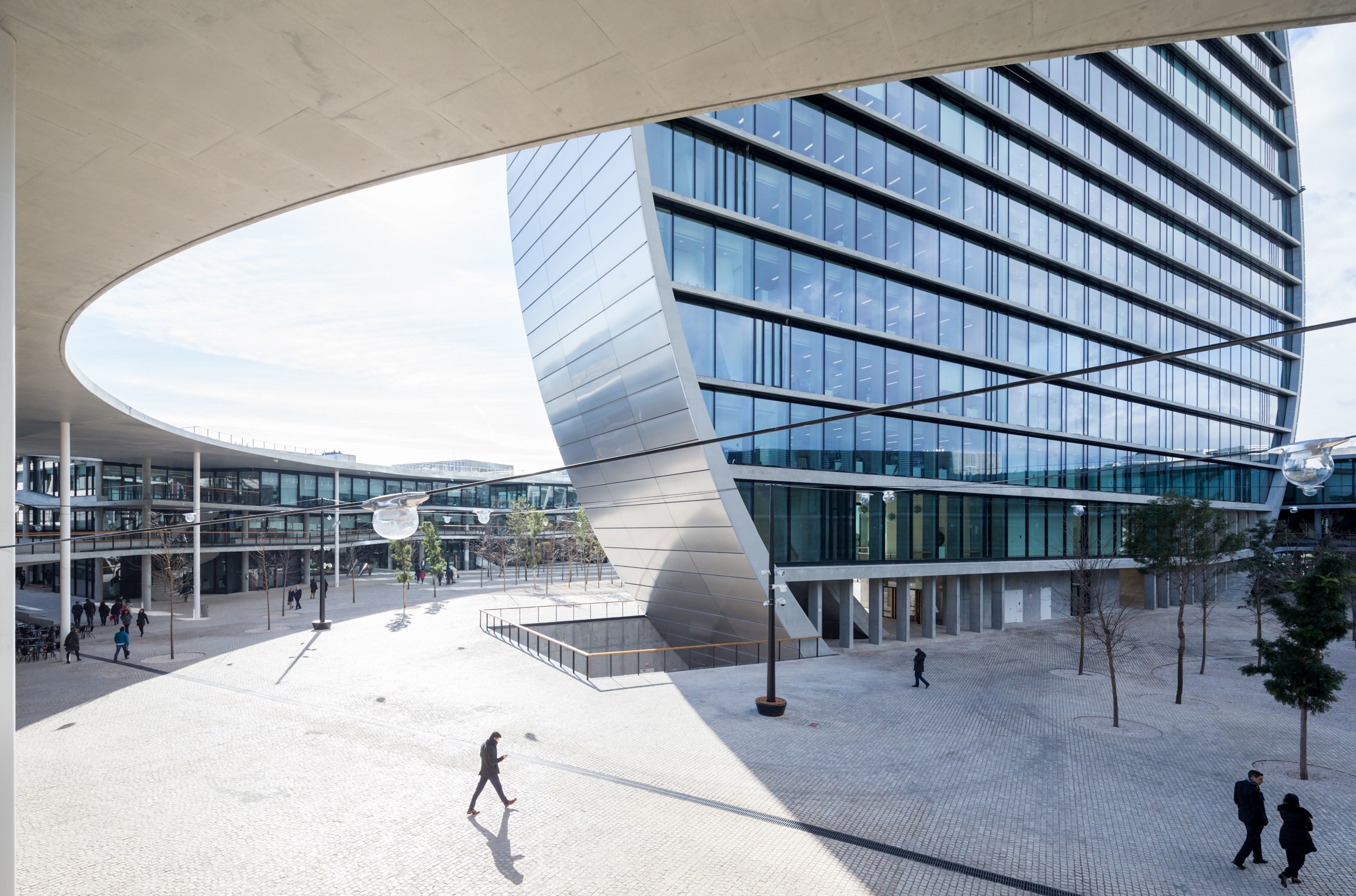
- The German office real estate investment market saw a total turnover of €5.5bn in 2025, 11% less than in the previous year, placing the office asset class in fourth place behind residential, logistics, and retail
- The comparatively low market share was also due to a lack of momentum at the end of the year; furthermore, the market was slowed down primarily by continuing divergent price expectations between buyers and sellers, as well as high financing and equity requirements
- Low-risk investment strategies continued to dominate, although value-add investments remained significant – targeted repositioning of outdated office stock accounted for around one-fifth of investment activity
- Large deals and portfolio transactions were rare due to the uncertain macroeconomic situation and the recalibration of the office asset class against the backdrop of structural changes
- While prime yields for prime office properties are likely to remain stable, total returns will be generated primarily through rental growth, asset management, and leasing performance – especially in CBD locations with limited supply; for non-prime products, however, further differentiation is to be expected based on location, property quality, and ESG standards, which may necessitate higher purchase yields in order to adequately compensate for risks associated with vacancy, capex, and repositioning
- A further gradual recovery of the office investment market can be expected, especially as a well-filled deal pipeline – including several large-volume landmark transactions in the core and core-plus segments – could act as a catalyst if successfully implemented and could noticeably boost transaction activity in 2026
Retail Trends

- Germany’s retail real estate investment market delivered a transaction volume of €6.4bn in 2025, marking growth of 2% year on year
- One reason for the increase is to be found in the twelve large-scale transactions over the course of 2025, each of more than €100m, among other deals, the Porta-Portfolio takeover by XXXLutz, the disposal of Oberpollinger in Munich, the sale of the Designer Outlets in Neumünster and near Berlin, as well as the Gropius Passagen in Berlin and several grocery-anchored real estate portfolios
- Retail warehouses and retail parks emerged as the strongest segment in 2025, together accounting for a share of 49% (+15%-points) in the retail real estate investment market, followed by high street properties with 28% (-20%-points) and shopping centers with 10% (-4%-points)
- Prime yields remained relatively stable in 2025 - in the final quarter, only shopping centers in secondary locations showed a change in prime yield that increased by 0.25%-points to 7.75%, DIY stores gained 0.1%-points to 5.85%
- Given a well-filled deal pipeline, it is looking like a brisk start to the year following a good year-end quarter – also because demand especially for grocery-anchored properties and properties in inner-city locations is holding steady, which is why a transaction volume of around €6bn up to €7bn is expected again for 2026
Industrial & Logistics Trends
-
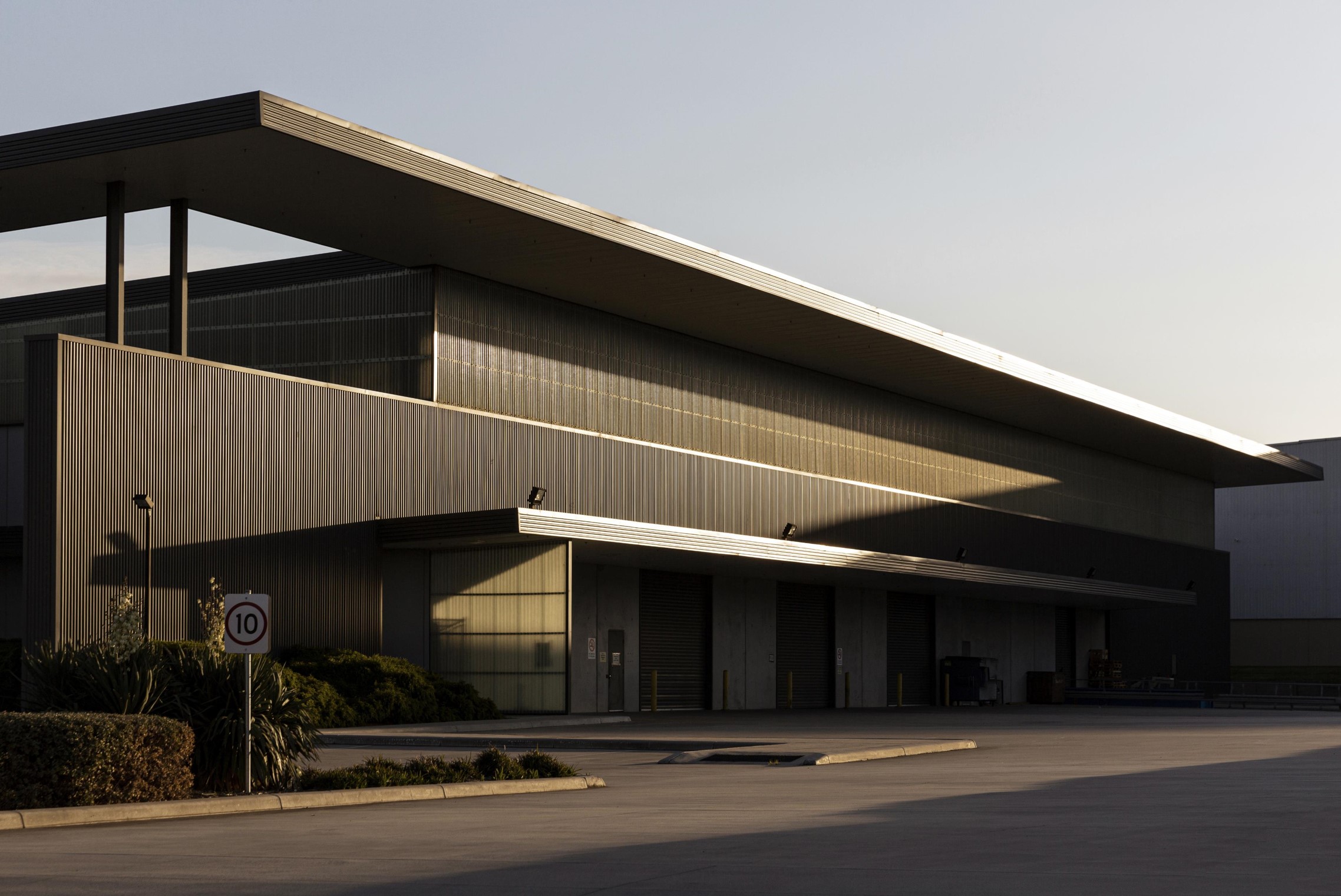
The German industrial and logistics real estate investment market recorded a total transaction volume of €6.6bn in 2025, down 14% on the previous year
-
The decline in investment volume is primarily attributable to the fact that large-volume single transactions and portfolio transactions were less frequent—not least because potential sellers were unwilling to accept the price reductions expected by various buyers due to the size of the transaction
-
Despite the lower total volume, the market remained active: Deal activity increased noticeably, especially in the small and medium-sized segment, which is particularly evident in the ticket size of €20 m to €50m, whose share of transaction activity rose from 17% in 2024 to 32% in 2025
-
In the prime segment, price levels remained stable throughout 2025, with the prime yield for logistics properties remaining unchanged at 4.4% over the course of the year, while deviations from prime quality were increasingly priced in
-
After transaction volume continued to increase from quarter to quarter in 2025, investment activity is expected to continue to grow in 2026, with the asset class likely to benefit from the fact that many investors have anchored portfolio shifts toward logistics in their strategies
Hotel Trends

- In the hotel investment market, the transaction volume in 2025 was €1.9bn; at +38%, this was the largest annual volume growth among all asset classes; the share of the total commercial volume rose to 8% – the highest figure in the last ten years
- Capital continued to focus predominantly on value-add strategies involving repositioning, renovation, and operational optimization of mostly operator-free properties; nevertheless, there were also more core transactions again, which are increasingly differentiated in terms of prime locations and hotels of the highest quality
- Financially strong owner operators and corporates represented the strongest purchaser group with a 25% share; they are strategically exploiting attractive purchase prices to expand their market presence; in addition, private investors (17% share) offset the still cautious institutional capital
- The largest hotel transaction of the year – the sale of the Mandarin Oriental in Munich — is a prime example of the global appreciation of the German hotel market as an attractive and stable growth market; overall, international capital sources accounted for around half of the total volume (49%)
- While only seven transactions exceeded the €50m mark in the previous year, 13 large-volume deals now contributed significantly to improving market transparency and further drove the pricing process forward
- The stable fundamentals of the hotel market and growing investor interest in both traditional hotels and sub-segments such as serviced apartments point to continued upward momentum in 2026; with the right combination of location, property quality, operator, and positioning, core deals will also increasingly become the focus of investor attention
Healthcare Trends

- After the crisis year of 2023, the German healthcare real estate investment market recorded a noticeable recovery for the second year in a row, reaching a transaction volume of €1.2bn in 2025 – an increase of 18% compared to the previous year
- Around half of the transaction volume was generated by care homes with €630m (+19% compared to the previous year), followed by assisted living facilities with €212m (-14%), closely followed by outpatient healthcare real estate with a volume of €200m (+121%); clinics and rehabilitation clinics reached €170m (+8%)
- Price levels remained stable in all sub-asset classes – the prime yield for care homes remains at 5.4%
- Sustainable evidence of yield compression in the premium segment remains to be seen; this would require increased trading activity in premium products and a revival in development activity
- International investors are closely monitoring the German healthcare market and exploring potential entry opportunities, as they are convinced of the long-term stable demand for healthcare real estate in Germany
- In addition to a certain willingness to take risks, this asset class also requires a sound understanding of the relationship between real estate, operations, and the regulatory environment; In return, it offers secured long-term user demand
Research Contacts
Dr. Jan Linsin
Managing Director | Head of Research Germany


Business Contacts
Sandro Hoeselbarth
Managing Director | Head of Valuation & Advisory Services

