Future Cities
2020 North America Industrial Big Box Review & Outlook
Central Valley
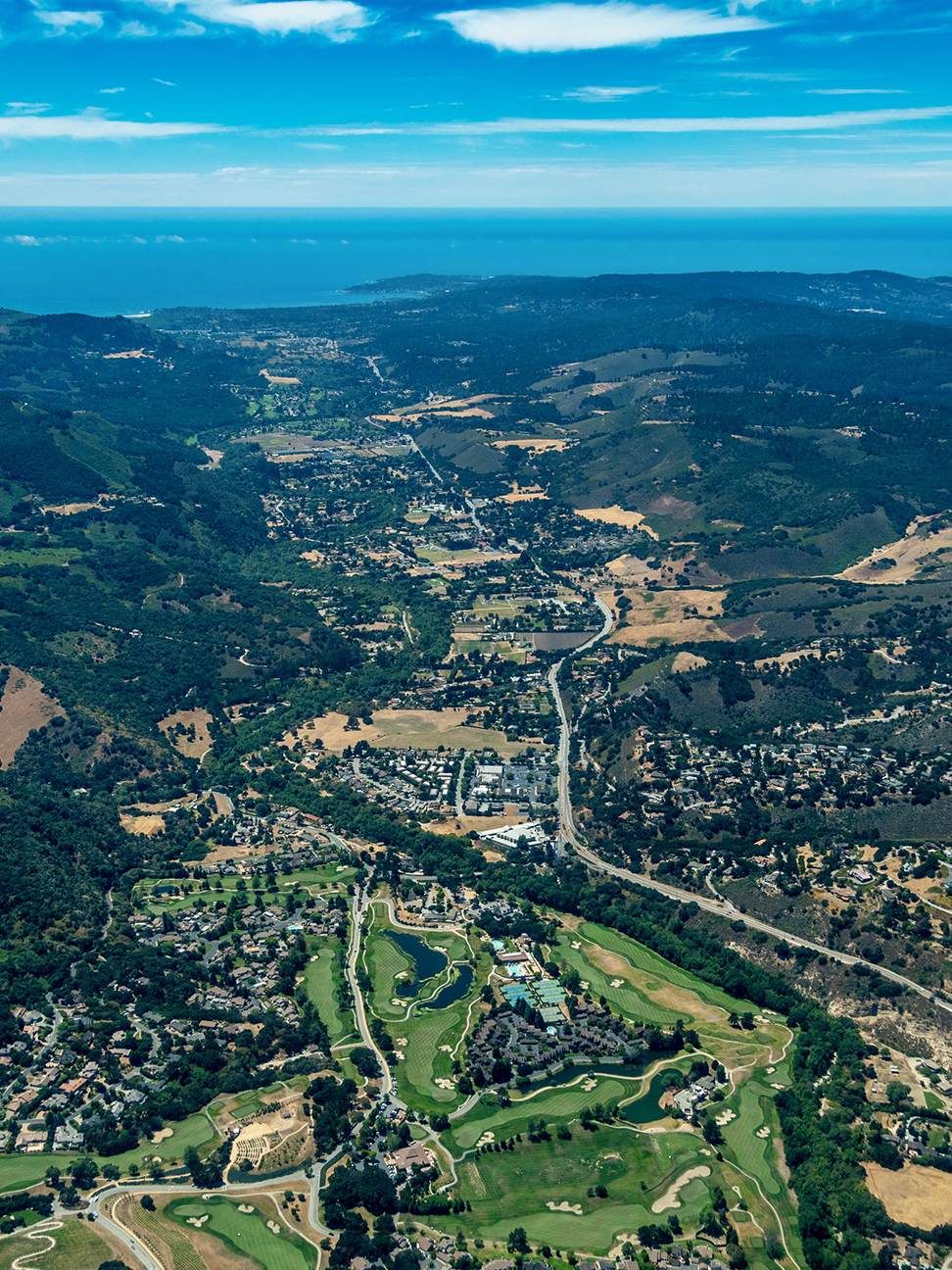
The Central Valley industrial market is performing exceptionally well, with a deepening pool of interest from e-commerce, food & beverage, 3PL and electric vehicle occupiers. Whether serving populous Northern California markets or the entire western U.S., the combination of location, transportation modalities and labor accessibility makes the Central Valley a vital component of the strategic supply chain. Q1 2021 momentum is outstanding and continued strong metrics are expected throughout the year.
Looking for a PDF of this content?
Demographics
Central Valley’s proximity to the affluent Bay Area gives it convenient access to more than 6.7 million people within a 50-mile radius. Within 250 miles, the market reaches 17.6 million people, nearly 25% in the 18-to-34 age demographic.
Figure 1: Central Valley Population Analysis
Source: CBRE Location Intelligence.
According to CBRE Labor Analytics, the local warehouse labor force of more than 21,000 is expected to grow by a nation-leading 28% over the next decade. The average wage for a non-supervisory warehouse worker is $15.77 per hour. 12% higher than the national average.
Figure 2: Central Valley Warehouse & Storage Labor Fundamentals
Note: Warehouse worker labor fundamentals cover the Stockton-Lodi MSA only.
Source: CBRE Labor Analytics.
*Median Wage (1 year experience); Non-Supervisory Warehouse Workers (forklift, warehouse workers).
Location Incentives
Over the past five years, there have been 189 economic incentives deals totaling more than $78 million at an average of $9,035 per new job in the Central Valley metropolitan area, according to Wavteq.
According to CBRE’s Location Incentives Group, among the top incentive programs in Central Valley is the California Competes Tax Credit, a discretionary income tax credit awarded to businesses that locate or expand in California. The program has $180 million in tax credits available through 2023 for allocation to businesses that make capital investments, create new jobs and offer strategic importance to the region. The credits are non-refundable and companies can only apply during designated application periods three times each year.
Figure 3: Central Valley Top Incentive Programs
Source: CBRE Location Incentives Group.
Note: The extent, if any, of state and local offerings depends on location and scope of the operation.
Logistics Driver
The Central Valley is one of the most rail-friendly logistics regions in California, served by two major lines: BNSF and Union Pacific. Fresno Yosemite International Airport provides daily cargo services by FedEx and UPS.
Perhaps the region’s top logistics advantage is the Port of Stockton, which is served by four major freeways, two transcontinental railroads an international waterway and a regional airport. The port boasts first-class warehouse storage and handling facilities for both dry and liquid bulk materials, facilities and equipment to handle break-bulk and containerized cargo by land or sea.
The Central Valley’s strong market fundamentals continue to attract core institutional capital. The region has undergone a tremendous shift toward long-term institutional ownership over the past few decades. Numerous build-to-suit developments are underway, which have limited opportunities for investors and created a supply/demand imbalance.
Notable transactions in 2020 include the $86 million purchase of buildings in Lathrop and Stockton and a $94 million purchase of a building with excess land in Stockton. Both transactions were part of larger portfolios. Investors were looking for returns in the 5% range for vacant properties and in the 4.75%-to-5% range for more stabilized properties. Class A cap rates are expected to head into the 4.25%-to-4.5% range for new stabilized product in 2021.
Capital Markets
Figure 4: Cap Rate Comparison
Source: CBRE Research.
Supply & Demand
Central Valley was one of the top big-box growth markets in North America last year. Transaction volume totaled 9.2 million sq. ft. in 2020, 72% of which was for facilities of more than 500,000 sq. ft. This was up from transaction volume of 6.4 million sq. ft. in 2019, only 19.6% of which was for 500,000-sq.-ft. or greater facilities. Net absorption increased by 6.1% year-over-year to 5.5 million sq. ft. in 2020, the highest rate (net absorption/existing inventory) of any other market in this report.
Construction completions totaled 5 million sq. ft last year. Another 4.8 million sq. ft. is currently under construction, 37% of which is preleased. Taking rents increased by 20.7% in 2020 to $6.12 per sq. ft. E-commerce occupiers accounted for 35.5% of total transactions. The Valley is the top emerging market in California and will continue to grow at a robust pace in 2021.
Figure 5: 2020 Occupier Transaction Market Share
Source: CBRE Research.
Figure 6: Transaction Volume
Note: Includes new leases, renewals, and user sales transactions 200,000 sq. ft. and above. Source: CBRE Research.
Figure 7: Big Box Year-Over-Year Comparison
Source: CBRE Research.
Figure 8: Under Construction & Percentage Preleased
Source: CBRE Research.
Figure 9: First Year Taking Rents (psf/yr)
Note: Includes first year taking rents for leases 200,000 sq. ft. and above.
Source: CBRE Research.
Navigate the Map to Explore U.S. & Canadian Markets
Contacts
John Morris
Group President, Advisory Leasing

Spencer Levy
Global Client Strategist & Senior Economic Advisor, CBRE
.jpg)


2020 North America Industrial Big Box
This report provides an in-depth overview of supply-and-demand fundamentals, demographics, logistics drivers, labor and location incentives for the top 22 markets in North America.