Download Transcript
Spencer Levy
The restaurant business mixes a lot of ingredients into one enterprise. It's about food, naturally, but it's also a service business, retail, logistics, and of course, the meat and potatoes of real estate. On this episode, we visit a beautiful new establishment in Phoenix to learn from its owners, hospitality entrepreneurs in a growing market, blending culinary experience with other business acumen.
Sam Fox
The hard part is doing it every day correctly and being consistent. That's really the hard part. That's the secret sauce.
Spencer Levy
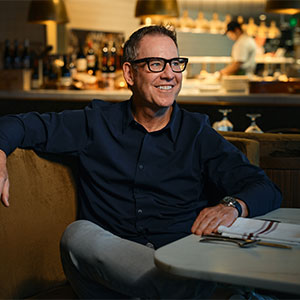
That's Sam Fox, the founder of Phoenix-based Fox Restaurant Concepts, a business that in 2019 was acquired for more than $350 million by The Cheesecake Factory. Sam's a third-generation restaurateur with establishments around the country and a 10-time James Beard award semi-finalist for restaurateur of the year. He grew up down the road in Tucson. And we met at Le Âme, his new restaurant in the Global Ambassador Hotel, which he also developed and co-owns as part of another venture. That is, a company called Author and Edit Hospitality, which has interests in hotels and membership clubs.
Brian Frakes
Good times and then all of a sudden like the trough period, but retail seems to be resurging back in Phoenix. Lots of growth, lots of diversity in terms of the demographic profile in terms businesses here.
Spencer Levy
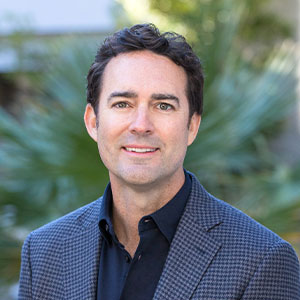
And that's Brian Frakes, President of the Common Bond Development Group, a commercial real estate company which he founded in Phoenix a decade ago, primarily building properties across the Southwest. The company's bread and butter is in retail, restaurants, and hospitality, a portfolio that includes the Global Ambassador. Which he co-owns with Sam as one of several projects they've developed in partnership. Coming up, we return to our Shaping Tomorrow City series with a toast to Phoenix and a look inside the restaurant business and how hospitality is serving the future of this market and influencing others. I'm Spencer Levy, and that's right now on The Weekly Take.
Spencer Levy
Welcome to The Weekly Take, and we are delighted today to talk not just about Phoenix, but about restaurants, about hotels, with two of the leaders of those industries. Sam Fox, thank you for hosting us today at your beautiful hotel, the Global Ambassador, here today.
Sam Fox
Yeah, thank you.
Spencer Levy
And then we have the developer of the hotel, Brian Frakes, also a huge developer of retail here in the Phoenix area.
Brian Frakes
Thanks for having us.
Spencer Levy
Great for you to be here. There's so much we can cover, but let's just start with restaurants.
Sam Fox
Sure.
Spencer Levy
And you have a list here of all the restaurants you've opened. A dozen different brands, 150 locations. How's the restaurant business today?
Sam Fox
Yeah, I think the restaurant business today is what I would say, steady, not incredibly growing right now, but just sort of steady as you go. Business, top line's been great. It's a little bit different how you're getting to the top line these days. It' a little choppier. And so that also puts a little pressure on your bottom line when you're not able to predict the business. The business is a little more unpredictable today, like a lot of things in the world. And so we see that with our guests coming into our restaurants and spending money all the time. But overall, I think our business is solid and strong and we have a lot of growth ahead of us at Foxtrash on Concepts. And we're gonna have some growth here at Author and Edit here pretty soon as well.
Spencer Levy
Brian, you develop restaurants, you develop shopping centers, you developed this hotel. How's the development business today in the Phoenix area?
Brian Frakes
Phoenix is great as of right now. I think we're seeing a resurgence and a lot of focus in retail. There were good times and then all of a sudden like the drop period. But retail seems to be resurging back in Phoenix. Lots of growth. Lots of diversity in terms of the demographic profile in terms of businesses here. So retail has been strong, very strong in Phoenix.
Spencer Levy
Sam, you used the word steady for the restaurant business, and I guess there's three words you could use. You could use booming, steady, or declining. Why is it steady today?
Sam Fox
Well, when you're comping out of COVID, you were comping, you know, eight, nine, 10%, right? And so steady for us is growing two or 3% a year. And so I think that's more normalized, what we've seen before COVID and that consistent growth. Some of that is inflationary, meaning the check has gone up a little bit. So the revenue is there. Sometimes the traffic count is flat. But it just seems like we're settling in a little bit. Like I said, it's been choppy since the beginning of the year, but it ebbs and flows. We're in so many different markets, so we have a pretty good handle on where business seems to be heading. And like I said, I think it's a good word to use is steady
Brian Frakes
It's funny that you talk about steady. Like I would classify the last five years post-COVID as white knuckle development, right? You're getting into projects, you're commencing construction, and then you're hoping you can maintain your budget. I think what we're starting to see a little bit is some steadiness or flattening of the increase of cost. When we're developing things, 23, 24, every day things were increasing exponentially. And a lot of that in Phoenix is-
Sam Fox
If you could get it.
Brian Frakes
If you can get it, yeah. Sometimes there's that as well. If you get the materials. Phoenix, because of some large semiconductor plants, there's a huge demand for a lot of subcontractors from concrete, electrical, mechanical. So that's left other areas within the Phoenix, Arizona market struggling to get some of those commodities and the labor, which is increasing construction cost. So lots of challenges in the development business, just maintaining budgets. So hopefully we can see some steadiness. Those semiconductor plants continue to hit the gas pedal in this market. Some other projects are falling off a little bit. Industrial is not as hot, multifamily is not as hot. So that labor pool and those materials are starting to kind of settle down on the market a little.
Spencer Levy
In the context of how tariffs have made certain finished goods, the delta, the beta of how high they can go, how low they can, is now so uncertain that many of our contractors and developers are itemizing them so that they can have actually an escalator in there to protect themselves. Are you seeing any of that?
Brian Frakes
Yeah, we're seeing it. Sam and I are working on some new projects and some new pre-development stuff. And there's certain line items that we're holding that we are saying, hey, these are subject to tariffs. Can we source them locally? And how should we forecast those? And it's making it really hard, especially a lot of case goods, things that used to come from over in China. You know, when we built the hotel, we got some stuff outside of the country. But as we move forward, we might have to look if it's more economical to source everything internally. So we'll see how that all plays out. I think every day it seems to be changing.
Spencer Levy
I was really looking forward to this episode for two reasons. One, this is our fourth episode on restaurants. We've had several hotel episodes. I also grew up going to restaurants in New York City. My father was a New York city real estate lawyer and his way of raising his kid was taking me to fancy steak restaurants with his clients when I was eight years old.
Sam Fox
Yeah, I did the same with my kids.
Spencer Levy
And it was three martinis, smoking. Let's say the language is a little bit salty. So you have me at hello on a restaurant.
Sam Fox
All right, there you go. So great background.
Spencer Levy
And so, given that you have a similar background and you grew up in the business, how does restaurants from 40, 50 years ago, that whole old school steak joint scene, inform what you're doing today?
Sam Fox
You can always learn from the past, right? And there's so many great examples of incredible restaurants, particularly in New York City where you were growing up, where there was like the 21 Club, Tavern on the Green, or some of these famous places that probably had amazing hospitality and amazing service. And you went to those places and it was a formal experience. We look at some of all these great old clubs or old restaurants from the past. And what you're seeing also is this resurgence of all of these old school restaurants are coming back, getting back to basics. And so, a lot members clubs in New York, we have a members club here. And so the reason you're seein' that is because of that level of hospitality and that level service that people are yearning for that maybe is not everywhere else in the restaurant business. The hard part is doing it every day correctly and being consistent. That's really the hard part. That's the secret sauce to being consistent and making sure it's great all the time for everybody, especially in today's environment when people are a little bit sensitive with their dollars where they're gonna spend their money. You know, people are having a meal, getting the check, and then they're deciding right then and there, was it worth it or was it not worth it because of the price of this. So I think there's value at any price point and the value could be at $150 check average, could be a value at a $10 check average. So we need to continue to give value to our guests and making sure that we give them a reason to come back.
Spencer Levy
And I actually sent you an email. I was very fortunate to eat here. I don't want to mispronounce the name, Le–
Sam Fox
Le Âme. It means the soul. It’s the soul of the Global Ambassador. And that's a restaurant we're really proud of here.
Spencer Levy
And I ate here Wednesday. And I ate at Olive and Ivy last night. And I said the same thing in my email to you. I said, the food was great. The service was better. And that's actually how I judge restaurants.
Sam Fox
Yeah, I think a lot of people do, right? There's alignment with a lot of menus today in this world. There's no secrets, a lot of people are selling or cooking the same items, but yet, once again, how do you execute that moment that you have with your guests? And so I think that's the difference that we try and work on is trying to have a little more hospitality than everyone and caring a little bit more and being sensitive to, like you said, everyone's got a price point where they feel comfortable spending. And so I think that's important as well.
Spencer Levy
Sam, we talked a lot about some old school restaurants, which weren't technically members clubs, but they were in a sense of there was a pecking order of the customers there. They knew you, you got a table. If you didn't, they didn't. But today we're formalizing that in the form of members clubs, and I know you're doing that. Tell us about why members clubs today, how they work from a restaurant standpoint, from a real estate standpoint.
Sam Fox
Yeah, for us from the real estate standpoint, we wanted to find another revenue generating opportunity and we felt there was a hole in the market to build on what I would say is a community of like-minded people that enjoy a lot of the things that we like, whether it's around food and wine, whether it around wellness, health and wellness, and general community. And so we leaned heavily into that here at the Global Ambassador. And what you're seeing is a lot of members clubs to open up all over the country. I just got back from New York and I went to five different members clubs and I probably could have gone to another 50. You know, it's as not as easy as saying, Hey, we're going to open a members club. There has to be a purpose, a reason. There has to be soul to it. You have to have the right offering. Otherwise, people are gonna get sick of your place really, really quick. If you go to a member's club and you go to the restaurant and they're not really putting their best foot forward, you're gonna say, well, why would I wanna eat here all the time? And so we are really focused on food and hospitality. A lot of the model comes from the country club business. And the country clubs, I can't tell you how many times in the last 25 years I've had people call me up and say, hey, can you help me with my country club food? I belong to some country clubs and they ask me all the time, I say, that's a losing proposition. You have a thousand different owners and they all have a different opinion whether there should be meatloaf on the menu or not. And so you run into these problems and there's a lot of turnover. And so these country clubs have these restaurants that are not really putting out really high quality product. And so if we took that model and put that in and say, okay, let's build that country club without golf and tennis, but around social and around wellness and around great food. And being able to host great events, that's what we took and that's what our model was.
Spencer Levy
I think it's fair to say, and I say this a little bit tongue in cheek, three of the riskiest businesses growing up or I guess the riskiest is horse races. The second one is Broadway shows.
Sam Fox
Did you go to the track a lot when you were a kid?
Spencer Levy
I do now.
Sam Fox
With your dad drinking and smoking martinis there, right?
Spencer Levy
Believe me, I had a very colorful childhood.
Sam Fox
OK, got it.
Spencer Levy
But I definitely go to track today. So horse racing, owning the horses is probably even more risky than betting on them. Second is Broadway show, and third was restaurants. Restaurants had a bad reputation in terms of the business model, because you had to actually buy the plane before you could figure out whether it flew. But now we've had a much more professional way of looking at it and I think that's what you're bringing to the table among other things.
Sam Fox
I think a lot of people have learned from the past and the mistakes that a lot of people made and it's such a capital intensive business, right? To build these restaurants today. It's 800-, 900-, a thousand dollars a foot to build these restaurants. It's a lot of money, and so you better be well-capitalized. But you really have to understand really how to run the business. And I think lot of have learned how to do that. There's some people that haven't and those are also the ones that sometimes don't always make it. But it's also amazing to see some small mom and pop place that really had no budget that opens up a place that maybe they didn't really Know how to run a business But there had a great offering and people became there and became busy and then they learned how to learn that business So it's also fun to see all these small little independents grow into some better and bigger restaurants
Spencer Levy
And on that point, looking at your 12-plus brands you have here, were all of these conceived by you, Sam?
Sam Fox
Yeah.
Spencer Levy
And then you started at one and went to more. I mean, just tell me the evolution of some of these brands.
Sam Fox
The evolution: We never really started out to open up more than one of anything. And so when we got our start in Tucson and then when we came up here, it was really, we opened up a restaurant and a developer would come to us and say, Hey, we got this great piece of real estate and it's a half mile away. We'd love for you to do something. I'm like, well, I have this restaurant. So I had to create a new restaurant to fit within that real estate. And so early on, the growth of the business or the growth of the different concepts was really driven by just how close all the real estate was to each other. And if you look at our portfolio, particularly in Tucson and Phoenix, everything's within a five mile radius. And so that was really the birth of a lot of the different brands that we have within the organization. And our goal really is always, when we always start out, it's to open up one great restaurant. We never say, I hear it all the time from people, we're gonna open up 10 of these, and we're going to open 20 of these and we open 30 of these. I think this is such a wrong way to look at it. So our focus is one great restaurants. And if we can work hard at that and make that successful, then there's an opportunity for number two. But to put the cart before the horse, I think that some people early on make that mistake. And you see it all the time. What we always say is we run our business one shift at a time. We got to be great at lunch today. We got to be great at dinner tonight, and then we got to do better again tomorrow, and we got do better to get in tomorrow night. And if you focus on today and you focus on the shift and you focused on it one guest at a time, instead of looking forward and say, I'm gonna open up these 25, 50 restaurants around the country, I think that's where you lay that foundation for success.
Spencer Levy
So Sam and Brian, we've talked about your existing businesses, the restaurants, the hotels, the great success. But you both have very interesting origin stories. Tell us about them. I know that you started off in Tucson, your family, third generation, and I was given the name of the restaurant, The Hungry Fox.
Sam Fox
Yeah, in 1972, my parents moved from Chicago and opened up that restaurant.
Spencer Levy
Tell us about how that informs you.
Sam Fox
I think every single day, I take all my experiences in life. I tell my kids all the time, I go, everything you do, every time you walk into a building, every meeting you have, every magazine you read, whatever it might be, those are all learning experiences that you can consolidate in your head and use those as you make decisions. And so seeing all those decisions made early on with my mom and dad in the hospitality business really, really informed me for who I am today. Unfortunately, my parents made a lot of bad decisions. They were not great business people. They were great with hospitality. They were pretty good with food, but they were not really good with business. And so seeing that as I grew up and seeing the struggles that they had, that really informed on how to really want to make sure that not only did I want to focus on hospitality and as Brian alluded to earlier, you know, we're in the restaurant business. Those are two words. So my family was really good at restaurants and really bad at business, and I decided early on I was gonna be really good at both, and that informs who I am today, and I take both those approaches and blend those together, and that's one of the reasons we're successful.
Spencer Levy
Same question, Brian. You started at a big corporation. You have your own. That's a bold move. Why'd you make it? How'd you make it?
Brian Frakes
You know what? It was a natural progression for me and a lot of prodding by Sam, to be honest. I was born in Tucson, a fifth generation Arizona, moved up here and had the ability to observe, like we referred to earlier, the boom and bust. My dad was in the banking business, savings and loan industry. I saw the fallout of that, but I also saw the rise and the wealth generation created by people that I observed or grew up with. So. My goal was to get into the real estate development business. The best in town at that time was Westcor. I begged to get a job there. Rusty Lyon was the founder. Rusty Lyon built his entire business and reputation off relationships, the primary one being Bill Dillard. And so I had the ability to observe that and progress my business in creating unique relationships that will help generate opportunities. And that's the nature and the name for our company Common Bond. It's about building relationships.
Sam Fox
Restaurateurs are entrepreneurs, and we're a little crazy, and we are sort of sometimes risk adverse. And so I told Brian all those things, I said, let's take some risk here. And so it was a little bit of prodding.
Brian Frakes
Yeah, there was a lot of prodding back then.
Sam Fox:
And you know, just making that jump, and it's been amazing ever since.
Spencer Levy
So, Brian, given the evolution of the restaurant business where it started off with, I would say, mom-and-pop kind of management, now it's gotten much more professional management – how has that changed a landlord's point of view of having a restaurant or two or three in your shopping centers? Because it used to be–I'm not going to say a disfavored tenant, but you were certainly limiting the number of restaurants based upon their credit profile.
Brian Frakes
Oh, for sure. I look back, I think it's probably the genesis of me starting my own company. I was partners with what I'll call older guard from Westcor and Sam and I did one deal together, which was a yard project of Culinary Dropout on Seventh Street. And we found another building and my partners looked at me and said, we've done one restaurant deal, that's probably enough. It was executed great. We did great on it financially. But they stopped at that one. And Sam with his encouragement was I was like, you need to go start your own company. So that was the genesis. Then we started doing more and more of these restaurants, what I'll call focused development projects, which have financially been successful and done well. But the evolution of these guys not wanting restaurants to now restaurants being really the darling child of the retail, right? Back when I started, it was, hey, Dillard, Sears, Pennies, you got to get all the department stores and then everybody falls in a line. And now Sam and other restaurateurs.
Sam Fox
Now they're tearing down the department stores and putting in restaurants.
Brian Frakes
And so it's this amazing shift with over 25 years that this experiential restaurant is driving traffic.
Sam Fox
We saw early on what the restaurants were doing for our developer partners. They were driving up rents, they were helping them get deals, and so when Brian and I got together to develop our own properties together, we wanted to benefit from the success of our restaurants. And so the real estate really helped the restaurants, and the restaurants really helped their real estate. And it's just been a good marriage ever since of trying to work through that. It helps us get financing, it helps us get other tenants. It helps drive rents. And it really gives a stamp of approval on a lot of projects. So it's been a great partnership.
Spencer Levy
It's quite an evolution for our listeners. We're talking 25 years ago, maybe even less than that, but you're now a wholly owned subsidiary of Cheesecake Factory, which is corporate owned. And so you made that decision five years ago. How’s it going?
Sam Fox
It's going really well. They've been great partners. We've been growing a lot and our mandate is to continue to grow. We've grown up to a little over 40 stores. Cheesecake is running north now and Flower Child is up to over 40 stores. And we have a siloed team that's running that business as well. And then we have the rest of the Fox Restaurant Concept restaurants that were continuing to grow, whether it's the Henry or whether it is Culinary Dropout. And so our mandate has continued to grow and open restaurants, source real estate around the country. And continue to innovate and train and develop great future leaders for our businesses as well. And people forget, we're really in the people business. We may have these great buildings and we might have a great development, but if you don't have the right people in your business and your building, then it's really a moot point.
Spencer Levy
Going back to your partnership, if you don't mind going into how do you capitalize your deals and how does that work?
Brian Frakes
It's different on every one of them, just like a midsize development company. And we built a company in silos as well. We started where the smaller restaurant focused some single tenants and multi-tenant stuff, larger format and neighborhood shopping center stuff. And then the evolution into the hotel business with Sam. We'll start out, the smaller ones, whether it's Sam and I doing the investment and maybe some friends and family, to smaller private equity, family office type investments for the neighborhood. And then with the larger institutional partners, like we brought in for the Global Ambassador.
Spencer Levy
And if you don't mind me saying, this is a beautiful hotel, for people who have not been to this hotel before. Just walk through the capitalization of this project. How much was it and how did you finance it?
Brian Frakes
We spent, call it $175 million for easy math. We have an equity partner. Koch is our equity partner.
Spencer Levy
These are the Koch brothers?
Brian Frakes
The Koch brother, yeah. Western Alliance Bank is our construction lender. They gave us basically a 50% loan. And we raised the rest of the equity through Koch and then through Sam and I's investment, and also some friends and family. So, relatively very straightforward deal. Our first large institutional partner, Koch's been an amazing partner for us. Very great to work with, Huge company, but also a very close kind of family office feel to it, very efficient, believed in Sam, believed in our ability to execute as well. And it's been great. So very straightforward.
Sam Fox
This corner that we're on has had 11 different start finishes from different developers over probably a 25 year period
Brian Frakes
Probably
Sam Fox
And maybe a little bit longer. And so when I knew this land became available, I lived three blocks from here. So I know the corner very, very well, and I really wanted to do something here. Once we got into the deal, realized quickly how expensive the land was. The land was really expensive. And so building the project that I wanted to build, it didn't make sense based on the land price. And so kind of evolved over time. We had to go through a couple of years of some entitlements. That was also a little bit painful. I was part of that and leading that a little but yet, I don't consider myself a developer. So those were all new processes for me – going to neighborhoods and talking about height and density and parking and all those things. So we worked through that. Brian and I have been friends for a long time and we're partners together. And so while Brian's never built a hotel this big, I've never built the hotel this Big. And I said to him, let's do it together. We'll figure it out. And so the real kicker of all this was, oh, COVID just happened. And so we were at a moment of time in the bit middle of COVID where we had to push go because we were spending so much money or stop and started to say, okay, let's just eat the money, wait. And so we pushed go. Our two partners really believed in us and early on we had to convince them that besides 141 rooms that are non-branded, that we're gonna really drive more revenue with FMB in the building. We had to sell ourselves a little bit And fast forward, we wouldn't have done anything different. I might've spent a little less money in some areas, but other than that, I'm really happy with the location, the building, the people, the concepts, everything in here has been really, really right on exactly what we wanted it to be. It's been an incredible learning experience for Brian and I and very, very rewarding.
Brian Frakes
I've been through lots of neighborhoods, entitlements, rezones, and the property needed to be rezoned. Originally it was owned for a very, very dense office project.
Sam Fox
Yeah, over a million square feet of office on this property.
Brian Frakes
And it was just kind of a typical textbook zoning case. It was the ability to tell the neighbors exactly or close to what they were going to get delivered in exchange for those entitlements. The property was actually. Owned by Dallas Police and Fire and it was handled by AW's pension fund. So we all individually bought our parcels and Sam and I with the coke and this entity bought the two and a half parcels. But then we had to tie all these other parcels here together. So it got pretty complicated from a real estate transaction standpoint. We have a parking garage that's been condominiumized that's wrapped with multi-family units that we didn't develop, an office building next door, a single tenant office building. So.
Sam Fox
The Suns’ practice facility is right next door to us as well.
Spencer Levy
How long has that been here?
Sam Fox
There's a 50-million dollar basketball court right next to us basically. They opened up about six months before us, right?
Brian Frakes
I would say they were open while we were under maybe a year. I yeah something like that. Yeah, but yeah, but it was–
Sam Fox
Three years,yeah.
Brian Frakes
We were under construction for just over two years and it was interesting . The construction workers really like the one Devin Booker is driving by waving at everybody every day. So it was just a Complicated transaction to get through to to also build the plane while we're flying it
Spencer Levy
I think for all of our listeners–I mean, we could just talk only about how this deal came to pass, because you see this beautiful $175 million hotel, terrific restaurants, world class finishes. It's that hard. It's hard. It takes eight years. It took that many developers, that many capital sources to come together to build something like that. And so, congratulations on that,
Sam Fox
Thanks.
Spencer Levy
And now you're going to try to do it again.
Sam Fox
We'll figure it out. We'll see. Yes.
Spencer Levy:
So let me mention, one of the guests we had on the show was the CEO of White Castle. And the CEO White Castle, she was terrific. She walked in the door wearing a yellow t-shirt that said Slider Queen on it. So it started off well. But they have 100% corporate-owned properties. They only have about 350 of them. And I guess the majority of their revenues these days comes from frozen foods. But what struck me was the corporate- owned versus franchise. Because it screams control in a good way.
Sam Fox
Yeah, I think that's a slow family growth story there, right? There's a long history there. You know, just built up the reputation and continued to grow one store at a time. There's obviously so many different models. You can go the franchise model. You can go the corporate model. And like you said, that family controlled business. They wanted to own that business. They probably could continue to monetize that business, they probably could franchise if they wanted to, right, and probably make even more money. But, I guess it’s what everyone's different agenda is. What is their values? What do they want? And so it sounds like they want to hold onto that. Us as well. It was really, really important to us that we own and operate everything in the hotel. And as we own and operate, we own all the restaurants. We own the valet. We owned the spa. We did not want any outside vendor working in the hotel and for me, that's what got me excited about the hotel business was – I was operating a restaurant inside the Hard Rock Hotel about 12 to 15 years ago, made a lot of promises by ownership there. And when we worked in there, we were our own entity, there was other restaurant entities, they outsourced the casino, they outsource the ballet, the spa was done by somebody else, and everyone was just working in different silos for different reasons. And a lot people were working for management fees. And I just don't know if that's really so healthy for the business. So my thesis was, we're gonna own, develop it, we're going to create our own brand. And we're gonna work in unison. Everybody in the building is gonna be on our payroll. We're all gonna get trained the same way. We're gonna be in it for best for the employees and for the guests. And by doing all that, it's a lot more seamless. Everyone knows the mission here of what we wanna do. And that's one of the reasons that we're successful, by controlling that narrative from start to finish for our guests and our employees.
Spencer Levy
And you know who gets that? The customer.
Brian Frakes
You know, who doesn't typically get it is a typical hotel developer, right? Because the easy thing is, Hey, we're going to build some hotel rooms. We're going operate those hotel rooms and we're gonna lease or do management deals with all the operators in that side of the space. And it's going to help me build this stabilized NOI that's easier to manage. But unfortunately that NOI might have a higher failure rate because certain outlets aren't successful. And so our white paper, our thesis has been that we can put this all under one P&L.
Sam Fox
And another point to that is in the design and what we built here. We're operators. We run our business. We know how big the kitchen should be. We know many seats we need to do the revenue. We know we need this big a break room to make our employees happy. All those things. So my job and my goal here with my team that I hired was to give them all the tools to be successful. Take away everyone's excuses, basically, from them, and being willing to spend more money or be willing to give or push or pull in some areas where people might not feel comfortable or wanna take shortcuts, we didn't do any of that here. And I feel like that's really been the secret to our success.
Spencer Levy
When I take a look at some of the concepts we've had on this show, we had Wonder on this show, Marc Lore, owner of the Minnesota Timberwolves. And what they've done is taken 20 brands, essentially put them into a common kitchen. And when I think about that, at first I thought it was a competitor of yours, but really I don't know that it is because you're not competing with food or food delivery. You're competing with experience. What do you think?
Sam Fox
It's a transaction, you know, it's transactional and it serves its purpose. And there's value in what they do, but there's also value in what we do. And so are we competing? I guess we're competing against everybody because everyone's got to eat every single day, right? And so our competition is everybody everywhere all the time. And so that's okay. And that's what makes us better. We're in a competitive world. If you're not competing, if you're trying to win, if not doing any of that, you're not going to be successful. So those things when you see all the other businesses. Open up a round or there's another development that's trying to get some of the tenants. Brian's trying to get across the street. You know, we're competing and our job is to win every single day. And so that's kind of exciting when you get to compete like that. I enjoy that. Brian and I play a lot of pickleball together and we're never on the same team. We play against each other because we want to compete with each other every day. And our wives are like, you guys got to stop this. And I'm like, no, honey, you don't get it. This is actually good for us.
Brian Frakes
This is good for us. This is our counseling session.
Sam Fox
Beat each other up on the pickleball court. And so. I mean, I just think for us, and for my mentality, Brian's mentality, we like to win and we like to compete. And so, you know, none of that's easy.
Spencer Levy
We recently came out with a research report called Shaping Tomorrow Cities, which is very high on Phoenix. Why Phoenix?
Sam Fox
Why Phoenix? You know, I think Phoenix is–I travel around the country a lot, and for as big a city as we are compared to a lot of other cities, it's very easy to live here. It's a very easy way of life for me. That's why I look at it as like, everything is close by, there's a lot cultural events, there's lot of sports events. The weather, obviously it's a little bit warm in the summer, but for nine or 10 months out of the year, the weather is great. We have tourism, we have golf, and then the last seven, eight years. Leadership. The governor has brought a lot of pro-business mentality to what things that we would have here in Phoenix and in Arizona in general. And so I think it's just a great place to live, great place to raise your kids, and more importantly for what I do, a great place for people to visit and stay at our hotel.
Brian Frakes
Yeah, I was born in Tucson and moved to Phoenix when I was little. I've been here basically my entire life. And Phoenix was a boom and bust real estate town back in the days. I don't know if you can go back. There was an old Wall Street Journal article and Phoenix ended up on the front of it. And it's kind of an infamous article because it talked about the bust times of Phoenix. The industry in Phoenix is completely different. The demographic makeup, the people that are here, especially post-COVID, the amount of... Companies, wealth that have migrated either from California, different areas, the financial sector, the semiconductor sector, the healthcare sector. That didn't exist 25 years ago. And so this base of Phoenix is continuing to get bigger and better versus just being a sunshine state where snowbirds came. It's different.
Spencer Levy
And I think one of the drivers that we didn't mention, and I'll mention it, is Arizona State, because Tempe is now one of the best submarkets in the country. So how big is education as part of that driver for Phoenix?
Sam Fox
I think it's incredibly important. All the universities in Arizona, whether it's down in Tucson or Phoenix or up in Flagstaff has really done a good job and they've really diversified and they have an approach of innovation and doing a lot of things. So I think that's really helped.
Brian Frakes
And then I also hear these big companies that are moving here are really embracing these universities and trying to educate their future employees in those different industries. So you're seeing a lot of synergy through our border regions and through these large companies working together, which is great. When you get an economy and politics, everybody working together, it's a lot fuel to the fire.
Spencer Levy
So I'm going to ask both of you a wrap-up question. I'll start with you, Brian. What do you see as the future for Common Bond development? What's the big picture five years from now?
Brian Frakes
I feel like we've been growing the company methodically. Sam and I built an amazing project here. It's exciting to continue to look at, like, what he referred to as large prominent projects to grab a couple of those but also keep the bread and butter, the singles and doubles with executing the neighborhood shopping centers and growing that portfolio and having that diverse mix of real estate assets within our holding is the goal.
Spencer Levy
Sam, same question, what's the future?
Sam Fox
Well, the future is that, as Brian mentioned, we're gonna do hopefully some more projects. We're gonna continue to grow our restaurant business as well, but what we're really focused on in the future is having a great lunch shift today, great lunch, shift tomorrow, dinner shift as well. So, obviously we're focused on the future, but we gotta make sure we execute great today.
Spencer Levy
You do a great today, rinse and repeat.
Sam Fox
It's a foundation for success. Consistency, doing it right every single day is that foundation for you to build on.
Spencer Levy
Well, on behalf of The Weekly Take, what a great conversation today with Sam Fox, founder of Fox Restaurant Concepts, co-owner of Global Ambassador Hotel, which we're sitting in today, and thank you for hosting us. Thanks for everything. Great job, Sam.
Sam Fox
Thank you, appreciate it.
Spencer Levy
And Brian Frakes, president of Common Bond Development Group, also here, also co- owner. Great job and thank for hosting as well.
Brian Frakes
Yeah, thank you.
Spencer Levy
And thanks to you as well for tuning in. To hear about other influential markets and sectors, you should check out previous episodes from our Shaping Tomorrow's City series. They're archived on our web site, CBRE.com/TheWeeklyTake, as well as on all the major podcasting platforms. We also hope you'll share this episode and make sure to subscribe, rate, and review The Weekly take wherever you listen. We'll be back to take you inside some of CBRE's latest research about a hugely important and growing asset type: data centers. But first we venture into another sunbelt market to sit down with legendary developer and investor, Stephen Ross. We'll hear what he's got cooking. We'll also ring in, get this, our fifth anniversary on the air. Feels like we're just getting started. With that, we thank you again for joining us. I'm Spencer Levy. Be smart, be safe, be well.

.jpg)


