Download Transcript
Spencer Levy
Data centers sit at the cutting edge of real estate, an increasingly vital asset type the world over, with demand driven by innovations in technology and advancing uses for digital infrastructure. On this episode, we explore healthy gains, but also some growing pains, in the realm of data centers.
Gordon Dolven
These are infrastructure assets. This is not just a simple land board tenant relationship.
Spencer Levy
That's Gordon Dolven, CBRE's Director of America's Data Center Research. Based in Denver, Gordon's an expert on all kinds of digital infrastructure. He leads CBRE’s data center research and thought leadership in North America, and routinely collaborates with colleagues around the world. He's one of the lead authors of CBRE's recently published report Global Data Center Trends 2025.
Maja Rosenquist
This is an evolving space because where we traditionally had data center alley in terms of what you saw outside the DC corridor, I think, is shifting.
Spencer scratch
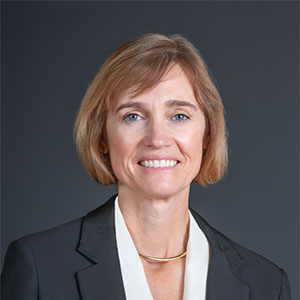
And that's Maja Rosenquist, an Executive Vice President at Mortenson and a 31-year veteran of the Minneapolis-based company. Mortenson is a designer, builder and general contractor with offices across the country. Its expertise includes not only data centers, but also energy and infrastructure, sports and entertainment. Coming up, a panoramic view with the latest data on data centers. I'm Spencer Levy and that's right now on The Weekly Take.
Spencer Levy
Welcome to The Weekly Take and we are revisiting perhaps the most popular asset type in real estate data centers today with Maja Rosenquist at Mortenson. Maja, thanks for coming out.
Maja Rosenquist
Yeah, happy to be here, excited about the conversation.
Spencer Levy
Great to have you. And then my old friend and colleague, Gordon Dolven. Gordon, welcome.
Gordon Dolven
Thank you, Spencer. Appreciate it.
Spencer Levy
Maja, you've been in the construction space for 31 years, but eight years focusing on data centers. Why'd you go to become a generalist to a specialist?
Maja Rosenquist
Well, I have a few things that I do for the company, but I ran our business there in Denver for a number of years. And obviously data centers has been a big part of the infrastructure build for the last 25 years across the country, but given the explosion of data centers that we've seen in the market, it's just been a huge focus for our organization in terms of how we support our customers. The customers are incredibly sophisticated and they are looking for partners to provide a high level of support. And, so, for us, most typically is around the hyperscaler, but there's also cloud service providers or enterprise companies or co-location operators that we see in this space. And what – right now is pretty interesting is the utilities and the independent power producers are really getting involved in this data center space as well. There are examples of where we will look for data center land on behalf of our customers and purchase that land. We most typically are going to be the builder in terms of the construction manager that is working directly for a hyperscaler or a colocation organization. It's been a fun market to be part of.
Spencer Levy
Gordon, why are data centers doing so well?
Gordon Dolven
I think it's the confluence of our lives becoming more and more reliant upon digital applications, digital technology. Before the pandemic, we were reliant upon communications infrastructure for our work and for our personal lives, but in a post-pandemic world, everyone sort of had a eureka moment in which we realize that these are infrastructure assets. This is not just a simple land board tenant relationship. These are assets in which there is a sense of permanency in our world in a 2025 type of digital landscape that we live in. So, whether we're accessing medical records at the doctor or sending photos between each other or accessing applications at work, we are here because data centers are something that we need for professional and personal lives. And I think that the slowdown is certainly not in 2025.
Maja Rosenquist
I'm built off of what Gordon was saying in terms of cloud-based solutions for data centers has just been exploding within the last 10 years, but this change to AI is really a game changer in this market. And, so, whether that hyperscale or enterprise-wide solutions are looking for the gigawatt sites around the country that are really being based on this combination of land, power, and water. And, so, finding the right combination is getting more and more difficult. And, so, we're seeing hyperscalers and others look towards probably more remote, more suburban locations, more industrialized areas in terms of how they can really meet the commitments that they're making in terms of delivering this power capacity to future data center customers.
Spencer Levy
Gordon, let's just do a little more data centers one-on-one. We use a lot of fancy terms here today, hyperscaler, colocation. Describe the different types of data centers, where they're located and why.
Gordon Dolven
There's various types of data centers and different niches within the industry. There's a lot of jargon that I'll attempt to simplify. If we start at the central business district level or at the urban level, there's something called a carrier hotel, which from the outside looks like an office building, but within it, there are a various amount of fiber companies, internet service providers that will occupy space within a carrier hotel, and they will exchange all their data at this central point. But,as we grow towards the suburbs, towards more rural area where there's more land that's available, there's data centers that historically were called wholesale colocation data centers. So inside a central business district might be a small type of facility that's quite vertical in terms of multiple stories. Some carrier hotels might be 10 stories tall. As we go out to the suburbs there may be more acreage utilized. And in a wholesale collocation type of data center, this is where Fortune 500 companies, private companies, will occupy space. So back in the 70s and 80s and 90s, there may have been IT closets that each type of company would maintain, they would own their own servers, own their hardware, and had an IT specialist on hand to make sure everything was running smoothly. But as we've transitioned into the 2000s, 2010s, people realized that they could share costs and bring those servers from the office closet into a wholesale co-location building. The other two asset classes that are very popular nowadays are a hyperscale type of campus, this is either self-built or there's a landlord-tenant relationship. These are large campuses in which you will see a major cloud service provider or technology company build out infrastructure for their clients that utilize their services. And, then, lastly, there's on-premises and enterprise types of facilities as well, these are predominantly self-built. These are owned and managed amongst financial services, companies, hospitals. In terms of the location, to your question, these can be spread out between an urban or a suburban type of location.
Spencer Levy
Let me then ask the where answer. My understanding is that there are certain clusters in the United States, and the major clusters include Northern Virginia, they include the West Side of Manhattan, they include San Francisco, they include Dallas. First of all, why do we have those clusters? And second of all why are people outside of those clusters, Maja?
Maja Rosenquist
I think this is an evolving space because where we traditionally had data center alley in terms of what you saw outside the DC corridor, I think is shifting into this, you know, the amount of land that it's taking and where we can find the power. And, so, those locations are shifting in the future to places like West Texas where there's a huge amount of data center capacity being built right now. And frankly, it's hard for the construction industry to service because it's places that typically don't have a large labor supply. And, so, that's really changed in the industry as well in terms of how we think about prefabrication or other labor strategies to address the needs of the market.
Gordon Dolven
In terms of your question on the clustering, I think historically it was very much associated with finding fiber, finding existing types of areas in which latency was not an issue for transmitting data, for sending traffic, for all of those types of things, and sharing electrical infrastructure. So, if there was a utility that built the substation, we could cluster those buildings around the substation to tab into the power.
Spencer Levy
Going back to the co-location, walk me through – without getting too technical – why somebody might choose to be within one of these locations or why somebody might choose not to be.
Gordon Dolven
The clusters, in my opinion, 10, 15, 20 years ago were associated based upon great fiber infrastructure for everyone to utilize that was already built along railroad lines or highways or existing easements and right-of-ways, as well as sharing electrical infrastructure and tapping into local substations. If we talk about where things are moving in 2025 and the clusters – to Maja's point, West Texas as an example – Pat Lynch, who is the Executive Managing Director of our data center solutions team, coined the phrase that “We used to bring power to the site and now we have to bring the site to the power.” Because when we used to request power from a utility, everyone was very much excited and enthusiastic to deliver five megawatts of power. It did not require major high voltage transmission lines to be built out. It did not require onsite substations to be constructed. It was not a complex type of solution to the extent that we're seeing today. It was complex, but today it's far more about protruding electrical equipment to build high voltage power lines and build onsite sub-stations, so it's much more complex of a construction project today when we're requesting 500 megawatts as opposed to five megawatts. That's, I think, the transition that's been made. But in terms of where they're going, we've seen so much attention being drawn to I-20, which is along the southern states in the southeast, and then I-85, which takes you from Atlanta all the way to Northern Virginia. These are epicenters in which people are benefiting from low cost of power, benefiting from land availability and benefiting from a robust amount of power to tap into. So, I think, depending upon the workloads of the data centers, the types of the datacenters and what they're utilized for, we're seeing more flexibility, but solving for power is still the number one priority for site selection.
Maja Rosenquist
I would fully agree with Gordon's point. It is all about power. And I think in the world that we're entering, this conversation about global energy and power dominance is what's going to equal global AI dominance. And, so, solving for the power in a timely manner is absolutely the key to unlocking data center development.
Spencer Levy
So when you say power, Maja, Mortensen has a big power division. Tell us about how your energy practice coincides with your data center practice.
Maja Rosenquist
Yeah, I mean, that world is really exploding on us today. And, so, Mortenson is traditionally being incredibly strong in solar development, wind development, battery storage. What we're seeing with those clients in terms of what traditionally where we were building directly for the utility or for the independent power producers, they are wanting to be in the data center game, I think for a variety of reasons. And, so, they're looking to take that risk internal now and whether that's create a behind-the-grid solution or create a bridge to how they can get the power on the site, they're really looking to be the builders around data center core and shell, if you will, to the extent that they can the right lease to ultimately be in the game.
Spencer Levy
Gordon, let's go to the capital markets for just a moment. As I mentioned, data centers may be the hottest sub-asset class within real estate. And I say sub- asset class – it's not one of the big four, office, industrial, multifamily, or retail. But nevertheless, it is getting the greatest amount of attention, the greatest amount of capital. Tell us a little bit about that.
Gordon Dolven
Historically, data centers were funded by venture capital firms or private equity firms, but the shift that we've noticed in the last five to ten years is that the infrastructure funds and the long-term capital sources have turned their eyes towards data centers in a big way. So the holding period of some of these assets has extended itself from maybe a short-term type of investment that we used to see in venture capital. To more of a permanent type of investment vehicle, long-term investment vehicle where it's seven, 10, 12, 14 years. So that's been a shift. We've seen a tremendous amount of companies and operators been taken private. So, historically data centers had quite a few competitors that were trading on the public markets, but they've been taken in private. So it remains to be seen if they will be held in the private ecosystem or shift back. But I think historically the capital has found itself into data centers because of the demand side equation. I think the demand side remains incredibly robust and then we are constrained on the supply side based upon the frustrations that we're seeing in terms of timeline for delivery of some of these projects from the power procurement side. Not only just sourcing the electrical equipment for the delivery of power but also the timelines, working with the utility to get things constructed. And make sure everyone is on the same page with construction.
Spencer Levy
Gordon let's go back to the basics of how data center leases work. Most people are familiar with rents but this ain't rents. This is based upon kilowatt hours. Explain how it works between the landlord and the user and also explain what the fundamentals are at the moment.
Gordon Dolven
Yeah, sure Spencer. So something that's unique about data centers in the commercial real estate world is that leases are denominated in power as opposed to in square footage, which would be common across office, multifamily, industrial, and retail. So to exaggerate to make the point, if I had a million square foot industrial center with zero power that is available at that type of site, as an occupier myself. I would not view that type of building as something that would be attractive to me because I'm not solving simply for square footage. I'm solving for power that's delivered to the site.
Spencer Levy
At what rate are rents going up now in data centers and where are some of the pockets of strength or pockets of weakness in that rental growth?
Gordon Dolven
We sort of hit a bottom in terms of rental rate pricing in 2020 and 2021, and at our Digital Infrastructure Summit recently in Washington D.C., I highlighted that we rebounded from the lows of rental-rate pricing in 2021, 53% in terms of a retracement. So we had three consecutive years of double-digit increases in terms of rental rate pricing in ‘22, ‘23, ‘24. Right now, we are almost halfway through ‘25. I do not see pricing falling off a clip. I also don't see pricing increasing 20 percent. I think that we will remain in that high single digits, low double digits pricing rental rate increase for 2025 by year end is might forecast an expectation. And this is predicated based upon the fact that demand remains robust and supply continues to be constrained to points we made on the power delivery side.
Spencer Levy
What, if any, risk factors should our listeners be looking for to judge whether there's a supply issue in the sector, Maja?
Maja Rosenquist
Yeah, I think we're getting this question about the data center bubble more frequently today than we certainly have in years past. And one of the things that we're seeing is because speed to market is really the piece that is so critical in terms of trying to unlock this future capacity, is that many of these developers are chasing the same customers. And, so, do we really have a sense of the size of market that is appropriate for the needs is I think a question that a lot of people are asking themselves. I think for everyone who is in the space of being selective and careful related to where you're placing your bets or where you are engaging is gonna be incredibly important. Because what I see is, if there's a point in time in the future when the music is gonna stop, it's gonna be on projects that are billions and billions of dollars. And, so, the risk side of that equation is gonna just be overwhelming for anyone who is involved.
Gordon Dolven
Yeah. Zooming in, Spencer, if we just look at the largest data center market in the world, which is Northern Virginia in the United States, the vacancy rate in Northern Virginia for our H2 2024 North America Trends report is less than 50 basis points. If you can name an asset class, a product type, a region, a geography, a market that has that type of a vacancy across any dynamic, I will be happy to provide you with a fabulous prize. But in terms of current dynamics, zooming in, supply and demand, and where that intersection is with vacancy, we are still at historical lows in terms of the largest data center market in the world. If we zoom out though, Spencer, I think we need to look at pre-leasing of under-construction projects. So if we see some type of slowdown on the demand side, that will be reflected in terms of pre- leasing, but this all needs to be framed accurately, which is something we spoke about in Washington D.C. Recently. So when under-construction has gone up 12 times in the last five years, from 457 megawatts to 6,350 megawatts, and pre-leasing is still incredibly robust with like 75% approximately pre-leased of that figure, that is such a fascinating story to draw our attention to. So while we may see some softening in the future, I think it's important to reference the fact that the industry and the construction, quantum of construction of these projects has exploded so tremendously. So that is something that I think we'll keep a keen eye on.
Spencer Levy
Maja, let's turn back to the supply side for a moment. Certainly the challenges of getting these types of facilities in areas that might have scarce water, that might scarce electrical, it's a lot harder. Tell us how you walk through those issues when you're speaking with your clients.
Maja Rosenquist
Yeah, I think we're solving for a couple things here. So, one is absolutely going to be the power solution in terms of how can we get the power to the data center to get it operational as soon as possible. And there's supply chain issues there in addition to what are the types of power that we're providing. And then, I would also say, how are we solving for the construction in terms of both the labor solutions? I mean, these projects that we are seeing are all in the megawatt space. They are pushing over a billion dollars in most cases. The labor force is thousands of people. You're having to pay labor attraction to get the workforce in these very remote parts of the country. You're building housing for this labor force. And, so, how can we do as much of that work offsite as possible is really the change in the industry. And, so, there's been much more effort put into prefabrication and both building prefabrication plants, whether that site adjacent or in more typical metropolitan areas, where we can really build these data centers in components that are prefabbed early and then ship them to the site and really pull that labor off of site to help with that overall schedule pressure.
Spencer Levy
Let's back up for a second. The permitting process. How does it work? How long does it take? How do you expedite it?
Maja Rosenquist
I think most of the customers that are in this space are fairly sophisticated, both in site selection and getting the collaboration with the jurisdictional authorities to ensure that they have agreed upon timelines from a permitting standpoint. The design is changing quickly in this place. And, so, as the technology changes, the design changes, we actually are able to streamline the permitting process, I think, in a fairly reasonable way. Not to say anything is easy in this space, but I think again, solving for power and solving for ultimate construction and the overall speed to market are probably the two more challenging places.
Spencer Levy
Is technology changing to make these data centers more energy and water efficient? And how?
Maja Rosenquist
I would say it absolutely is. I think how quickly it can change is what the industry is looking to address. And, so, what used to be an air-cooled system to keep the servers cooled is really evolved into a water-cool system. Now that is taking more from a water standpoint. The next technology we're seeing is direct-to-chip in terms of how we might have a liquid-cool solution that continues to evolve for us. I think consistently what we see in this space are these are environmentally conscious clients. And, so, they're looking for the right solutions in terms of how can they use technology to their benefit to come up with a more sustainable eco-friendly solution. But there's no question that there's a toll being taken in terms of what it means for power consumption and water consumption in these sites.
Gordon Dolven
I think one of the main benefits of data centers and digital infrastructure is the fact that we can now listen in and watch some of these planning and zoning commission hearings, some of these city council hearings, and something that I was observant of recently is the fact that the water usage of some of the sites for existing farming and agriculture compared to what water usage would be for a data center was incredibly fascinating. So, as an example, this 200-acre type of proposed data center, because it's a closed-loop water system, the approximate potable water coming in in terms of gallons per day was 3,500. That was what was estimated from the design phase of this type of development. If the same amount of residential type of develop took place on this agricultural land on these 200 to 300 acres, it would be four times more water that was utilized. And then if it remained as agricultural land in terms of farming – if we run pivots or sprinklers on our farmland to water our crops, it can pull 1,000 gallons a minute of water. So if we run the pivot for one hour, that's 60,000 gallons of water, if we run pivots for 24 hours, that is 1.4 million gallons of water per day. So I think it's important to really frame things.
Spencer Levy
I think there's been some pushback on local communities and the pushback includes not just usage of water and power, but also because after these data centers are built, they don't create nearly as many jobs as maybe a manufacturing site might. So, Maja, how do you get local community buy-in for construction in what might be a new area?
Maja Rosenquist
Yeah, I think that's a fair point. And we do see that across the country. But I would say in terms of what these sites are doing from a tax revenue basis is actually incredibly strong. These servers are typically only lasting four to five years. And, so, there are massive amounts of spend that's happening on these sites. And, so, what they see from a taxes revenue standpoint can be incredibly helpful to the community. And we worked with our clients. There's an example where we're building in Utah right now, where originally the community basically was resistant to the data center build happening in that part of the state. And ultimately, we were able to help them see that it was going to dramatically increase their tax revenue for the community and put infrastructure and roads and other investments in the community in a way they had no other line of sight to. And, so, we've actually been in that community building for the last seven years and they've been super excited about it.
Spencer Levy
Let's turn back to energy. Maja you talked about solar, you talked about wind, any talk about nuclear these days?
Maja Rosenquist
There is growing talk in the industry about how to harness nuclear, and I think we see that in the headlines. Now, I'm not sure I see that as a short-term solution, but I do think that we're gonna see that more as a longer-term in this space.
Spencer Levy
Tell us about how labor factors in, how you're trying to accommodate it.
Maja Rosenquist
Yeah, this is really just a fascinating element of the industry right now in terms of, one, how do we attract it to these locations is not easy. So there is a lot of money going towards labor attraction, which is, in my opinion, great that the trades are being well paid for the work that they're doing on these sites. But just getting the labor to these locations is one of the more challenging things to solve for. We're building in Louisiana right now on a site that probably will have upwards of 10,000 people working on it on a daily basis. And, so, how do you solve for the housing and the infrastructure and what goes into the communities and the investment needed to support basically a population that hasn't been in that community in the past? And, so, things that maybe weren't on your radar from a construction perspective in terms of building the worker facilities or the trailer complexes that these individuals might be living from is one of the first things that you need to be solving for.
Spencer Levy
Gordon, we're putting these further and further afield and in addition to the labor to build it, you got to have the laborer to manage it. How operationally efficient are data centers today? Meaning, can you manage them from 100 miles away or do you still need a lot of on-site staff to make sure they're functioning properly?
Gordon Dolven
That's a really good question. There's been some great recent publications about the fact that these high paying technician roles are now available to these types of communities that historically were not common, based upon the fact that in order to be a data center technician, it may not require a four-year bachelor's degree. It may require you to be certified to be a technician at a Associate's degree level or with some type of certification. And there's schools within Arizona and within Virginia that I like to highlight on LinkedIn that provide these types of trainings and certifications for people that are eager to get into the business. I think when it comes to operating and managing a data center on the physical level, you still need individuals to install the servers. That is something that will never go away in terms of actual individuals touching the hardware and replacing components that are no longer working. And, so, therefore, I think at the ground level, you will always need someone to manage the hardware. From a software perspective, I do think it is more common for you to see remote hands or some people that are a little bit further away from the physical data center, but those high paying, high skilled jobs in which you're managing the hardware, touching the hardware or installing the cabling, connecting the servers to one another. It is still something that is required on the ground level for sure.
Spencer Levy
Risk factors and we talked about some of the obvious risk factors about access to water access to power access to labor. Technological disruption, we talked about that a little bit. But let's just go back to what happened in January where we had that blip in the stock market when a Chinese AI Company says we can build chips for one-third the amount of power. Maja, what are you hearing in terms of technological disruption or other risk factors that we're trying to solve for?
Maja Rosenquist
Well, I do think that that news got everybody's attention, but it also didn't seem that it was changing the strategy for most of the hyperscalers in terms of the investment that they're plowing forward for the AI solutions. And it is a bit of an arms race right now, certainly amongst the four or five big hyperscalers, and then I would say the other colos that are really looking to service that same customer base. We have seen some, and you've seen these headlines probably as well, in terms of some hyperscalers pausing on some projects because they're looking for the technology and the design to catch up to what they think that future strategy is. And, so, there's been some mega projects around the country that were launched and then they were put on pause. And I think that's because they are looking for a technology solution that is going to better service their needs in the future.
Gordon Dolven
One thing that I do want to keep in mind, if we were going to build a new startup company, Maja and Spencer, it is an OpEx or a CapEx type of question for us in terms of our new company that has some sort of digital presence. So are we going to own our own servers? Are we going at least in types of co-location data centers? Are we gonna own our data centers or is it an OpEx type of equation in which we are going to go ahead and use a hyperscaler, use a cloud service provider, to deliver our app, our product to the masses? And, so, I think that in terms of risk factors, it is a question depending upon the OpEx or the CapEx side. And, so, it just is going to be fascinating in terms of the future and how different enterprises and tenants and occupiers, as well as operators and developers, manage that dynamic.
Maja Rosenquist
I think that's interesting and I think the diversification of companies that are in the real estate space looking to capitalize on this market is also quite fascinating right now. I mean what we're seeing with most of our customers is they're building these facilities with cash or equity. And so, I think, there's some other risk factors that are being put out there, from what's going on in the world of tariffs or, you know, what we're seeing in interest rates that are hugely upsetting other capital investments that are happening across the country right now aren't slowing down the data center industry nearly as much as we're seeing in other spaces.
Spencer Levy
When people look at data centers, a lot of people will say, well, these things are pretty cool, but 10, 20 years from now, that data center is going to be in my back pocket, my phone. I don't need it anymore. Some people are concerned about the technical changes over time. How do you see that impacting investment? How do you see that changing data center demand over time, Gordon?
Gordon Dolven
I think the way that data centers will be constructed and designed will always evolve and always change based upon where they're located and what they're solving for. I think it's important to remember that when we design and construct a data center, we are simply solving for what types of hardware, servers, and chips are going to be installed within those data centers. So as that technology on the hardware side evolves and changes, that will also change the way that we cool the data center, the way that we power, the way we connect to the data based upon the connectivity requirements that these servers are requiring. So, obsolescence risk has been somewhat of a hot topic to your point, Spencer. I do think that our industry is very much comfortable with change and comfortable with the fact that we will have to adapt. And by no means do we think that this is something that will stay stagnant for the next 10, 20, 30 years.
Spencer Levy
This has been a great conversation about the current state of data centers, but there's one question that we haven't answered. And this is the question that so many of our listeners on both the owner and the potential occupier side would like to know is, well, is my site the next data center? So what do you say to those folks, Maja, that say, well, I'm going to give Maja a call about possibly developing this into a data center. What might get your attention?
Maja Rosenquist
I think my first question would be, how much power do you got, and how big is your site, right? The site – we're building on a site in the Southeast right now that is five miles by two miles, and it's a two gigawatt site. These sites are enormous. I think there's 70 miles of temporary roads on this site. And, so, size and scale is getting bigger for what data center customers are looking for, solving for power, and then finding the water solution, I'd say are the three combinations that would be priority one in answering that question.
Gordon Dolven
Yeah, my wife's grandfather sends me articles all the time, and that's because his brother owns a timber farm in Sylvania, Georgia. So if anyone's interested in redeveloping a timber farm in Sylvania, Georgia for a data center, he is first in line, which I have assured him that he will get the first call for that. I think everyone looks at agricultural types of farmland for a viable data center. But to Maja's point, we still need the power component. Oftentimes, this is an above ground high voltage power line. These are existing substations or the ability to build substations. We still need to solve for fiber connectivity. We still need to solve for the labor piece, which I'm happy to dig into as well but those types of dynamics are absolutely paramount. And on the energy side, I think it's an all hands on approach. I don't think we can be pigeonholed into one type of renewable generation. I don't think we could be only relying upon one type fuel mix because we are so diverse across the United States and in North America in terms of the natural resources and what we can bring online, whether it's hydropower, wind power, solar, natural gas, it's an all hands on deck approach in terms bringing more generation online that we can utilize for digital infrastructure.
Spencer Levy
Why don't we just use some of these old office buildings and CBDs that are already stubbed to electric, already stub to water, that are underutilized for data centers? What's the solution there? Maja or Gordon?
Maja Rosenquist
I think it's a creative idea and likely one that's going to need to be further explored. Most of what we're hearing though in terms of size and scale, I'm not sure that some of the older office product is going to be able to service the full needs. It's also going to obviously be a very expensive build in terms of a multi-story solution. Not that that doesn't exist, but it's going to be at a price point that's above what most of the clients are paying right now.
Spencer Levy
The future we talked about the last couple of years which have been the golden hour of data centers from a demand standpoint from a supply standpoint only looking up with AI and crypto and more traditional data uses more traditional video game uses all kinds of uses what does the next five years look like? So, Maja, starting with you
Maja Rosenquist
Well, I don't see a day in the future that's going to need less data than today. And, so, I think the trajectory for data is going to continue to increase in the world that we live in. And so, I do think that this market is going to continue to demand capacity and be strong. Now, having said that, I think everybody's a bit concerned about a bit of a bubble in terms of what this market is. And, so, being diversified and really thinking about placing your bets in the right place is going to be important for all of us.
Gordon Dolven
I think to Maja's point, I don't see a slowdown in terms of the utilization of our smartphones on a personal level. I was just in Peru visiting Machu Picchu, which a shout out to that region, over 50% of their electricity is generated by a hydropower plant that is right below Machu Picchu. So in terms of mixing the old and the new, they've become incredibly resilient based upon the fact that they've utilized a local resource to generate electricity to spur more development in the region of electricity usage. So, I see a scenario in which we get more creative on the energy side in terms of generating power, in terms of where we're developing data centers, which is a benefit to everyone. We don't need a 500 mile extension cord in order to power up our data center from where the electricity is generated. I hope there's more creative types of designs where we are sourcing data centers adjacent to renewable generation. Where we're not needing as much of a redundancy backup from historical generators. I think there's a lot of optimism in the space in terms of design and how efficient we can build these things and where they're located. So the future is bright, Spencer.
Spencer Levy
Thanks for joining us for a great discussion on data centers with Maja Rosenquist, Executive Vice President at Mortenson in Minneapolis. Maja, great job.
Maja Rosenquist
Thanks, Spencer. Really enjoyed being here with you and Gordon.
Spencer Levy
And then our own Gordon Dolven, Research Director of America's Data Centers for CBRE. Great job, Gordon.
Gordon Dolven
Thank you, Spencer. Really appreciate it.
Spencer Levy
If you're interested in more data and insights on data centers, including the latest reporting from CBRE Research, you can find it online at the CBRE Insights page or check out our website, CBRE.com/TheWeeklyTake. You'll also find archived episodes about ways that technology like AI and other digital innovations seem to be making an impact, well, just about everywhere in real estate, along with deep dives into other asset types as well. There's a lot to explore, and we encourage you to take a listen. You can also share this conversation with your network, as well as subscribe, rate, and review The Weekly Take wherever you get your podcasts. We'll be back with more, including conversations with the biggest names in the business. Thanks for joining us. I'm Spencer Levy. Be smart. Be safe. Be well.


.jpg)


