Download Transcript
Spencer Levy
When you think about a parking lot, the old real estate adage about highest and best use might not be the first thing that comes to mind. But parking is actually a much more dynamic and nuanced business than you might realize. On this episode, we learn the ins and outs of lots and garages from a pair of the biggest names in the industry.
Alan Lazowski
The parking industry is the greatest infrastructure business with recurring, stable cash flow. And that's why infrastructure companies love investing in parking.
Spencer Levy
That's Alan Lazowski, aka Laz, the namesake, co-founder, chairman, and CEO of LAZ Parking. Alan proudly lays claim to being the first valet parker at LAZ when he started the business with his childhood best friends. Forty-five years later, they're still friends and partners and have built the largest parking company in North America, operating 5,300 lots and garages, over half a billion square feet of real estate, and employing some 21,000 people.
Rob Zuritsky
Parking supports every form of business and real estate, if you think about it. I mean, we're vital to sports arenas, we’re vital to hospitals, universities. I say that if we close the parking industry, the economy would shut down.
Spencer Levy
And that's Rob Zuritsky, President and CEO of Parkway Corporation, a 103-year-old, third generation family business based in Philadelphia, a leader in parking management with crossover expertise in development and acquisitions of other real estate as well. Rob also serves as chair of the National Parking Association's board of directors. Coming up, we head to the NPA annual convention, it's 75th, where I had the chance to speak and sit down with two of the best in the biz. So find a spot and we'll punch your ticket to the parking space. I'm Spencer Levy and that's right now on The Weekly Take.
Spencer Levy
Welcome to the weekly take. And I couldn't be happier to be here today at the National Parking Association's 75th anniversary event with two of the undisputed leaders of the parking industry. Starting with Rob Zuritski. Rob, thank you for coming out today.
Rob Zuritsky
Thanks for coming and doing a great presentation. Great to see you.
Spencer Levy
Great to see you. And my old friend, Alan Lazowski.
Alan Lazowski
Can't wait. You did a great job today, Spencer.
Spencer Levy
Thanks, man. Rob, I'm gonna jump right into it, right? So you do parking, you do development of other buildings. How would you describe the parking industry to somebody who doesn't know anything about it?
Rob Zuritsky
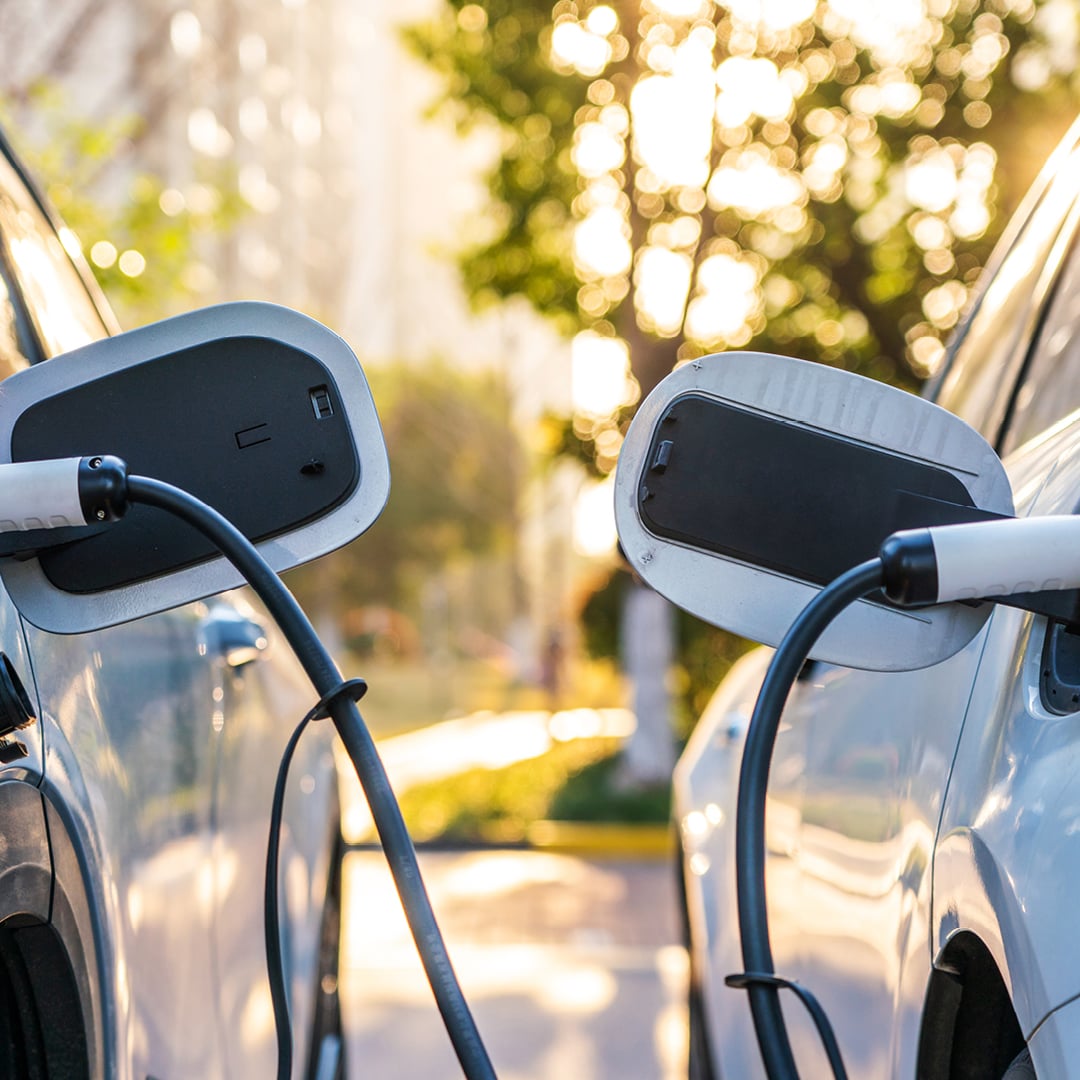
Parking supports every form of business and real estate, if you think about it. I mean, we're vital to sports arenas, we’re vital to hospitals, universities. I say that if we close the parking industry, the economy would shut down. We're vital infrastructure for EV charging going forward. I think we're going to be vital to autonomous vehicles having staging areas and EVTOLs, the flying taxis. We're a vital part of the economy. We provide a really important service and part of infrastructure for transportation. You have planes, trains, buses, and cars and bikes and all other forms of transportation. And we play a vital role in our economy's movement and success.
Spencer Levy
And Alan, from your perch of seeing so many different parking garages, what is the state of the industry today?
Alan Lazowski
So parking, as Rob mentioned, is an essential infrastructure element of industry, of central business districts. And I believe that we have the best distributed real estate network throughout the country in cities. And we happen to have 500 million square feet of space. And besides traditional parking, I think we're talking about what else we can do with that wonderful distributed real estate network. And Rob mentioned we're now talking to people like Waymo and Zoox and autonomous vehicles about becoming the urban autonomous vehicle mobility hubs of the future. So there'll be a place to charge and store and there will be all sorts of other uses besides just traditional parking.
Spencer Levy
So Rob, let's talk about some of the technological changes that Alan brought up – the EV, the parking stations – before we get into alternative forms of development. But EVs are here, they're coming, maybe not as fast as they were, but they're still coming. But they're also heavy. I don't know if they're twice the weight of a typical vehicle, they are a third heavier. Tell me the pros and cons of the changes from gas to electric.
Rob Zuritsky
I think any form of transportation that makes transportation easier, more efficient, more fun to get to where you're going in cities and towns is amazing and needed and coming. I did my first Waymo drive yesterday to the restaurant and it was really amazing. It was a little scary, but it was amazing. And this stuff is coming, and I don't think we should be afraid of it. I think it's going to open up more opportunities for and more importance for the parking industry, because if there's a thousand Zoox and a thousand Waymos and a thousand Tesla taxis in a town, you would have complete gridlock. They don't have a place to go stage and go from and to. And they're just driving around, clogging up, ruining, you know, destroying our infrastructure, our streets. We're in trouble. Your comment about garages potentially needing to be, if it was an entire fleet of electric vehicles, I'm not exactly sure the structures would have to change. We haven't found that yet. In some of the cities, we're probably parking 10% or 15% of the vehicles. The adoption in the cities has been greater, right? And we are the place, other than your garage at home, to charge. I mean, I think we do more charges than any other industry does, like gas stations, or we have Wawas where you can charge. So the parking industry plays a vital role. We're the new sort of gas stations for some of these vehicles. And that's important. It shows the importance of our industry. And I bring this up a lot because I feel like there's certain cities, Philadelphia, Chicago, San Francisco, where parking is really looked down upon. And we play just a very vital role. We're going to play a more important role going forward, and you need this inventory to succeed. But you said there's a negative connotation from some on parking. Why is that? It's a good question. There's a narrative. In certain circles that the parking industry is the cause of congestion or the cause of pollution. We get cars off the streets. We help to solve those problems, but we somehow get blamed. And then certain maybe politicians use that energy to raise our taxes and then make us even less viable as an industry. What we're trying to work on with the National Parking Association is to change the narrative. We're putting out position papers. One of them is that we're not against these, you know, there's parking minimums that used to be for new developments. And I disagree that there should be minimums, meaning if you build 100 apartments, you have to have 100 parking spaces. You don't have to do that. Some markets have more than enough parking. Why force the developer to build? Something that they don't need or is not going to get used. Use the parking, use the operators like LAZ and other operators to manage your parking better, more efficiently. So you need less of it, but you need to manage it better. There's been a lot of advancements in our industry with the camera technology. We'll get into that next, I think. But I think we've come like 50 years in the last five years with the technology that we have.
Spencer Levy
Rob, you opened the door to how technology has changed for the better in many ways, and not just the cars, but you said cameras and other technological devices that make parking garages safer, that make them more accessible. Tell us a little bit about some of them.
Rob Zuritsky
Yeah, the systems that we're installing now are all cloud-based systems. You don't have the servers in your closet in the garage going down. They can accept a multitude of apps. At Parkway, we're accepting SpotHero and ParkWhiz and ParkMobile. And our adoption of those are doubling almost every year. It's incredible. We work with a couple vendors. Flash Parking is our main one. And they have just come out with a new camera that they've been investing in called FlashVision, which I think is a game changer. It is giving us data about our own parkers that we are able to manage. And we have a whole host of different groups parking in our garages. And we're going to. Be able to negotiate better deals now going forward because of this new data. The transactions are now coming through these cameras and they're accurate. We've had these cameras, I'm sure you have too, Alan, we've had these cameras for seven, eight, ten years and they were 80% accurate, 85%. And then, you know–so you're driving up to the gate, it would usually just open up and then it wouldn't and you're like, oh, it's really frustrating.
Alan Lazowski
Basically, through this computer vision AI technology, there's a seamless customer experience. And basically, when you pull into a garage now, instead of pulling a ticket and going to a pay station, or rolling down your window and putting your key card out, we recognize the vehicle and the license plate: “Good morning Spencer, welcome to the garage. By the way, your car's dirty, would you like a car wash today?” So we have just a great seamless customer journey that we created. LAZ has created its own technology. We also work with Flash and others, but we've created our own technology where we have the LAZgo, JustGo technology, which is computer vision, AI, license plate recognition, which is just a game changer because you also get to know your customer and as a known user and a member, and you really get to have a relationship with them.
Spencer Levy
I remember the first time I met you, Laz, and I remember in that first conversation you gave me parking 101. And I want to do a little parking 101 here and there's something you mentioned that in a dense urban environment a spot may get used 110 or 120 percent of the time because the user is only there during business hours and then you have after hours so you might get it twice. Just give us parking 101 of How often is a space used and how do you calculate that? How do you maximize the revenue from that one spot?
Alan Lazowski
Yes, great question. And Rob knows this all too well because he operates tremendous operations himself. But our job is how do we fill that space 24 hours a day, seven days a week? And when you're in a downtown, mixed-use environment, you have the monthly parker that may come into the office, you have the transient parker coming to visit somebody in the office, you have restaurants, you have shopping, you have events. That changes hour-by-hour, day-by-day, night-by-night. And so our job is to maximize the utilization of space and some of these garages and lots do get 110, 115, 120% occupancy. And when you're in the real estate business – and you know the real state business well – it's free cash flow. It's net operating income, right? And you base your purchase based on revenue and NOI and free cash flow and the parking industry is the greatest infrastructure business with recurring stable cash flow. And that's why infrastructure companies love investing in parking. You would think, well, apartments are a great business because it's one apartment at a time. Parking is one car at a time. And you could change that rate to fill your garage on the dime right away.
Rob Zuritsky
I just wanted to add something to what Alan said, is having 110% occupancy, that to me would mean having, instead of 24 hours worth of revenue, you would be getting 28 hours worth. So I look at it a little bit differently as in turns, using the spaces. You can't use a hotel room – I mean legally – more than once a day. You can't turn a hotel – I think you're not supposed to. But parking lots, really good parking lots. I'd love to get what you think. We, some of our parking lots, we could turn three and a half times. There's spaces. So you could have a little lot. You could turn, let's say, a 35-space lot with like a medical use across the street and then a restaurant area. You could get three and half turns in the daytime because the doctor visits are an hour and a half. And then you could get a turn or a turn and a half at night. I mean, New York probably is the poster child for these types of business.
Alan Lazowski
You could get up to five six seven turns.
Rob Zuritsky
That's what I wanted to–
Alan Lazowski
Yeah, you can.
Rob Zuritsky
That's what I wanted to hear is – what were some of the best turning–now imagine that right? So you have one space.
Spencer Levy
You're selling the same thing three to seven times in a day.
Alan Lazowski
Correct.
Rob Zuritsky
Yeah, yeah. And you're turning it on short-term and probably high rates if you're in New York or in some of those cities. So it's an interesting business. Now most parking lots might support one generator. If you're lucky one and a half two three, you know, and you were talking about just office space. That was our bread and butter and things changed after the pandemic.
Spencer Levy
How are parking lots, parking garages valued today? And has that value increased because of the increase in so much infrastructure capital?
Alan Lazowski
We have a parking lot under contract right now in Las Vegas, that's at a four cap, a four percent return.
Spencer Levy
This is a lot, not a garage.
Alan Lazowski
This is a two acre surface lot, okay. Okay, but we feel there's a higher and better use for that site with Waymo, Zoox, autonomous vehicles, and we're gonna bring power to that facility and we'll have 10 megawatts of power and we'll create more value So that's part of what you look at. We look at LAZ-ification. Can we LAZ-ify that location? Can we operate it more efficiently? And maybe we buy something at a four or five cap and if it's a garage maybe it's six or seven or eight cap because it's already improved. But then we try to, through operations and efficiency, good technology and good management, maybe we raise that income a hundred or two hundred basis points And now we've got something that's a seven or 8% on levered return hopefully
Rob Zuritsky
Yeah, I'll piggyback on that. So we are actively buying parking lots across the country right now. And exactly to that point, if you can see additional operating value, you get a big kicker in that. The ultimate value creator for certain sites is a development. That is where you could buy it for a seven, eight cap and sell it for a one cap. And that's what we're trying to do is finding those cities that are just starting to percolate up. If you can operate the facilities. I think last time I was with you, we talked about a couple properties that we just bought. They were not being run well. I'll make a pitch for Premium Parking. We were working with a couple of different sites and
Alan Lazowski
They're good operators.
Rob Zuritsky
Well, you know, it is manager-to-manager, as you know, city-to-city. But there's a bright young woman who is running this new acquisition for us. She's kicking ass. And it's signage, it's chasing business, it's using rate, you know, changing rates as they're filling up every single week.
Alan Lazowski
Dynamic pricing.
Rob Zuritsky
You know, and it's pretty interesting.
Spencer Levy
Well let’s back up on dynamic pricing so when I go on the internet and I want to buy a television set right it's $100 maybe it's five hundred dollars ten minutes later might be five ten the next ten minutes it could be 480 right is that how you're trying to park do parking costs today it's not a fixed price but it'll change throughout the day
Alan Lazowski
Well, as an example, when you have an event at night in a parking garage, it's not the same rate as it is during the daytime. It might be $20 or $30 or $40 for that event, during the day it's less. The dynamic pricing has also happened in a limited way, not fully completely yet, I would say in the parking industry, but based on demand rates can and will go up.
Spencer Levy
So let's use an old school term for our listeners which is the covered land play which was the old school way of looking at parking lots like, Oh well, that's just another use waiting to happen. Is that still the case today?
Rob Zuritsky
Yeah, I give us even a little bit more credit, right? In some cities, they're redevelopment authorities, right. Some companies will buy obsolete old buildings that have no use anymore, tear them down, make a parking lot, hold that for a while, and then either develop it or get it ready for development. That is serving a purpose for cities, right? Parkway is one of the few companies that actually develops our own or with partners. We have partnered with I think 40 or 45 different companies in our history and we have built medical office, hotels, office buildings.
Spencer Levy
Do you sell them afterwards or do you hang on to some of them?
Rob Zuritsky
It depends. It depends on our partners. Some of our partners want to hold forever. We've had partners literally for 45 years.
Spencer Levy
So what we're talking about: alternative use. And, you know, they're the traditional alternative uses of putting up a hotel and office building a medical office. I mentioned industrial outdoor storage today.
Alan Lazowski
Yep.
Spencer Levy
Which is an area that has a squishy definition, but I will say this and I said it on stage today Other than data centers is probably the hottest subsector within real estate today. Have you seen that impacting anything?
Alan Lazowski
I have. We just bought a company called Freight Ninja and basically we're taking industrial outdoor space and doing truck parking and trailer parking. We're up to 65 locations and there's a huge demand in this space for people that own industrial outdoor space and land that maybe they have a building but they have a big parking lot and it's not being utilized. And there is a huge demand for storage, not only of the truck that's a transient truck, but people to store trucks and trailers and we're doing it all over the country today.
Rob Zuritsky
Anyway, what I took away from that is, IOS is a new phrase, and everybody knows what that is. We need a new acronym or a new name for parking assets that are land-carried with optionality. I don't know, maybe Alan, you can come up with it.
Alan Lazowski
Urban farming.
Rob Zuritsky
That one’s not–
Spencer Levy
Urban farming without the green but yes. But I think you're right. I think–look so Rob, let me ask you a question. We have people listening to the show, most of the people that listen to this show are apartment people. They're office people. They're retail people. And you are one of the few in the business – I mean, Alan does some of it as well – but in the businesses that does multiple asset types. When you're trying to determine. Am I gonna do parking or am I going to build a hotel here? Am I gonna build multifamily? Tell us about your thought process.
Rob Zuritsky [00:21:21] Wow, it's doing the math. It's finding if you're doing we've done a couple hotels If you have a location that is a no-brainer for a new hotel, it is making the math work It's being able to get the financing and convincing yourself That it's the right time to take that leap development now is Very risky and very challenging costs are higher interest rates are higher cap rates are not where they used to be. So the development has to really sing and you have to feel confident that you're gonna be able to get the supplies and get the labor and get the materials that you need. That's why we're finding that it's a great time to buy and to stock up on inventory with land because developers–it's really almost impossible. There's a few cranes that are going to be going up now in cities, but it's nothing like it was five years ago. It was incredible.
Spencer Levy
Has the price of land dropped in the last five years?
Rob Zuritsky
Yes, I think owners are becoming more reasonable. And what happens is, let's say developers own some parcels and they may have performing apartment buildings that are completely to plan, right? Occupancy, rents are perfect, but they had planned to refinance it at a three and a half percent rate. Now it's a six and a half percent rate, so you have to redeploy that equity into those healthy projects. So I would love to buy your parking lot and you can buy it back when it's ready or develop it with me. We love to partner.
Alan Lazowski
I think parking is one of the great real estate asset classes, and we love buying parking lots and garages, maximizing the cash flow on that location while we're waiting for a higher and better use. And we just sold a piece of property that we had owned in Boston for many years and a multi-family developer got entitlements for it. And we made a very. Great return and we earned money along the way. So I love the parking business. I love real estate land banking with parking and I agree with Rob. Now is a time to find properties and wait for the right time to develop it.
Spencer Levy
Going back to the capital markets for a moment, you mentioned, Laz, that you're buying something for a four cap and you're trying to get a higher and better use, you can get a better yield out of it. How liquid are the capital markets today? Are you able to go to just about any bank and get a loan?
Alan Lazowski
Yes. People really look at parking as a very stable, good cash flow business. There's a lot of lenders that want to lend to parking. We have infrastructure groups. We have debt availability. We also have equity availability to get into parking. And we love it as investment. We're not only operators ourselves. We are investors in real estate. We have a separate real estate company called LAZ Parking Realty Investors that goes out and buys parking lots and garages, and we've been involved in the last 20 years in over $3 billion of investment in parking.
Spencer Levy
Construction. I remember a few years ago I was with one of our big clients who had an old post office in Boston and they were taking it and he said, you know what we're gonna do? We're going to do external ramps on this and have flat floors so that one day when we don't need this parking we're gonna convert it into something else, right? Well that didn't go over in, like, a big way. And the reason is it's very expensive to build external ramps and, guess what, we still need parking. A, comment on that and B, tell me about construction today. Are we building any today?
Rob Zuritsky
Construction costs are very, very difficult now. Very, very expensive. Parking construction costs are equally difficult there. Above ground parking spaces could cost, you know, $50 to $70,000 a space. Below ground could be$ 100 to $150,000, a space
Spencer Levy
Okay, so let's pause there and we're now going to do math for a second here. So let's assume you're in the middle of that range, $100,000. You just built a space for $100,000, probably took you three years to build it, whatever the time frame is more or less. You now need to get a positive return on that $100k investment based upon how many times you can turn that spot. That's the basic math of this space.
Rob Zuritsky
100% so you'd have to charge a monthly customer, you know, $1500 to $2000 a month, which is–you know, maybe there's one market, one garage that ,you know. So that the math does not work anymore And if you're in a taxed market where you pay 40 to 60 percent of everything you collect before state and federal taxes It doesn't work at all So is that
Spencer Levy
Let's stop there for a second. I do I wasn't aware that–so let's assume you remark monthly parking at one of these places that will pay 1,500 bucks a month 40% of that $1,500 goes to–
Alan Lazowski
That's only if you live in Philadelphia
Rob Zuritsky
Or Chicago. There's a couple of markets where it is literally that bad, right? I mean a lot the country – you know, Alan and lucky to spread his you know all over the country, two countries. But you know there's markets where again, politics or whatever, the reason is they need the money or whatever it is – that it makes it impossible to replace Parking so you build millions of square feet of new demand You're taking away, typically you're taking away parking, because it could be a parking garage there or parking lot there. And now you're replacing it with zero parking or a couple parking spaces. So you're increasing the demand, which is a good thing, but increasing the cost to park, which is good also if you're an operator and you're making profits on that. But it makes it very, very difficult to replace those spaces. I think that the policies of parking, you don't want cities to run out of parking. That's bad. You want public transportation to thrive. You want all forms to be healthy.
Alan Lazowski
We just finished building a parking garage in Connecticut for a children's hospital.
Spencer Levy
Now describe the garage you built. It's slanted floors. Just tell us, technically.
Alan Lazowski
Yeah. The hospital doesn't think it's a parking garage. They look at it as a piece of art because of how it was built and how beautiful it is. It has a bridge right to the hospital over the street and it's beautifully laid out thousand space parking garage, but as Rob was mentioning, that was a $70 million project. So that's $70,000 per stall.
Spencer Levy
$70,000 per spot.
Alan Lazowski
And if it wasn't essential for the hospital–which they leased back from us. We own it. They leased it back because they need that for this brand new beautiful medical center. So it's very difficult to make economic sense out of building a new garage unless you have an essential use.
Spencer Levy
How many of those spots have EV chargers?
Alan Lazowski
By the way, we have 10,000 EV ports in our system right now. We're going to have 100,000 in the next few years. We're building capacity for 10 to 20 percent of those spaces to become EV for the future. The issue is getting power to the facilities is a very important thing that we have to study.
Alan Lazowski
Just to address your one topic of reusing. We have reused some of our, we–
Spencer Levy
When you say reused, meaning reusing a parking garage.
Alan Lazowski
Yes, for our office,
Spencer Levy
Tell us about that.
Alan Lazowski
So we built a garage in the ‘80s and it was supposed to have two towers above it, two apartment towers, and the developer went out of business when we topped off.
Spencer Levy
Ran out of money. Oh, we've never heard that before in the development business. For the development business.
Rob Zuritsky
There was a change in tax policy in Washington and it killed that kind of development. Anyway, so we're sitting with a garage that was way bigger than it needed to be. Luckily, one side of the garage had flat floors and the ceiling height was enough and we started to infill, say 10,000 square foot offices, medical offices. And we got probably an 80,000 square foot medical office out of that. So we pivoted and that was not by design, that was by luck. So that stabilized the project. And then we sold one of the pads to a hospital and then actually we built a tower for another hospital and that's where my father mentioned we have three hospitals all coexisting in one structure. It's a pretty amazing project.
Spencer Levy
So just going back to the example I gave before and we talked about the cost per spot in a garage $70,000 to $150,000 – if you were to do the external ramps, how much would that add to the cost? External ramps and flat.
Rob Zuritsky
It might not, I think there's more to it. I think cars, believe it or not, need less structure than people. Okay. Okay. Cars are lighter, it doesn't make sense if you say it that way, but filing cabinets, people, desks are heavier than cars because it's one car for a lot of space, a real lot of space, right? Ramps and all of this wasted space. The design of the flat floors, first of all, if it's very deep floors, that's not going to work for anything to reconvert. So you'd have to have designed high ceiling heights, which is much more expensive. It's not just the external ramps. That's just a piece of the additional cost. And then you're dealing with other things.
Alan Lazowski
One thing that's exciting about the reuse of parking, we're talking to people about vertiports, building on top of rooftops.
Spencer Levy
Vertiports for flying taxis.
Alan Lazowski
Flying taxi – and you will see electric vehicle take off and landing, fly like a plane, land like a helicopter with both cargo and people. And I could see in the future that there will be a hundred to two hundred of these vertiports like FBOs in cities, carrying passengers and also cargo. The garage could be a great storage place for last mile, same day delivery. Those drone packages come in, you could store them and deliver them. You could deliver them at different places within a city a lot easier. It eliminates congestion. You could do it with electric bikes or robotic delivery in the future. So I think the garage will become the urban autonomous vehicle mobility hub of the future as well as vertiports.
Spencer Levy
There's a lot of talk today about the future of parking. Maybe Rob, I'll give it to you first. The future of parking, both lots, garages and otherwise.
Rob Zuritsky
Where does the industry go is a very, very interesting topic. When Uber started, whatever, 12 years ago, whatever. They were saying parking garages will be urban farms and parking lots will be parklets, little sliding boards for kids. And our banks came to us and said, What do you think? Is this true? And I was like, Oh shit, he's a really smart guy. I don't know, that's scary. And now there's more cars, more vehicle ownership than ever before.
Spencer Levy
Laz, future of the business.
Alan Lazowski
I think there's going to be more change in the business in the next five years than there was in the last 50 years. We're really tech-enabled real estate, and I think we have the best distributed real estate. Parking operators have the best distributed real estate network in these cities. So when you think of the gas station of the future for charging electric vehicles, it's going to happen in cities in parking lots and garages. When you think of autonomous vehicles needing a place to clean and store, it is going to be the parking garage. I think these vertiports are going to happen. I also believe that being able to satisfy the customer with convenience is key. And I think we're a wonderful service industry and we're essential to the ecosystem of transportation.
Spencer Levy
Well, on behalf of The Weekly Take, what a privilege today to interview two of the great leaders of the parking business at the National Parking Association's 75th anniversary, where I was privileged to give a keynote address this morning – the Winter Leadership Forum – starting with Rob Zuritsky, the CEO of Parkway Corporation.
Rob Zuritsky
Thanks for coming and thanks for having me.
Spencer Levy
And my old friend Alan Lazowski, CEO of LAZ Parking. I haven't seen you in a few years, Laz, but it's just like yesterday. Thank you so much for being on the show.
Alan Lazowski
Thank you, you're a gift.
Spencer Levy
For more, and I hope you enjoyed learning more about the niche area of parking as much as I did, you should check out our website. You'll find related content including our episode on industrial outdoor storage and other interesting subsectors or alternative asset types. Lots of great conversations archived at CBRE.com/TheWeeklyTake or on any podcast platform where you find the show. We'll be back next week and look forward to handing you the keys for more insights and information. Thanks for stopping by. I'm Spencer Levy. Be smart. Be safe. Be well.

.jpg)