Download Transcript
Spencer Levy
A trip to the mall ain't what it used to be. After a tough period for retail – we lost more than a few malls around the country –the sector is now in a place of strength, redefined by new approaches to things like tenant selection, experience, and technology. On this episode, two interesting points of view on retail, one who spent more than four decades in the space, and the other who's relatively new to his position.
Jack Hsieh
The opportunity for us is, how do we drive traffic to all-time productivity in these centers?
Spencer Levy
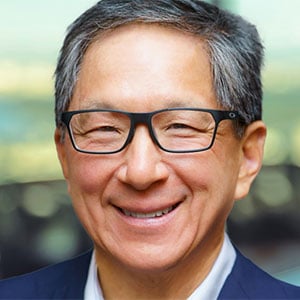
That's Jack Hsieh, the president and CEO for Macerich. Jack calls himself a recovering banker after spending more than 30 years on Wall Street, advising clients with real estate interests all over the world and in a range of asset classes, including malls, hotels, and industrial. He joined Macerich in 2024 to lead a REIT with total assets of more than $8.5 billion.
Todd Caruso
Whether you're on the property side and you own assets or if you're a retailer, it's all about being agile and being able to ebb and flow with your customers.
Spencer Levy
And that's Todd Caruso, CBRE America's Retail Services Lead. Todd started at CBRE in 1983 and is now responsible for growth, management, and leasing of more than 500 million square feet of retail property, a portfolio that includes 17 Macerich assets across the United States. Coming up, Macerich and the state of brick and mortar retail in America, I'm Spencer Levy and that's right now on The Weekly Take.
Spencer Levy
Welcome to The Weekly Take. I'm delighted to be here in Santa Monica, California with Jack Hsieh of Macerich, one of the largest retail companies in the United States. Jack, thanks for coming out.
Jack Hsieh
Thank you, Spencer, good to meet you.
Spencer Levy
And my old friend, Todd Caruso, who's been with CBREs for 43 years, Todd.
Todd Caruso
43 years.
Spencer Levy
43 years, you know, one day, you'll have some job stability. Thanks for coming out today.
Todd Caruso
It's great to be here, thank you.
Spencer Levy
Great to have you, and Todd's been at CBRE so long that we were owned by Sears Roebuck back in the day, 43 years ago. We used to be able to get discounts on washing machines.
Todd Caruso
I did.
Spencer Levy
When you were–do you still have one of those machines?
Todd Caruso
I don't, I wish I did have one of them because it wouldn't break.
Spencer Levy
Oh, well, they had good stuff back then, right?
Todd Caruso
That's right.
Spencer Levy
Jack, tell me how you describe Macerich.
Jack Hsieh
I would describe us as really creating vibrant retail centers that bring together our tenants, shoppers, create a lot of value for them as well as our shareholders in the form of driving NOI and overall appreciation of these properties.
Spencer Levy
Trying not to use too many industry lingo terms–lifestyle-type centers. But that is something that Macerich and other competitors of yours have done to take retail from just a standalone into a truly place that you can live, work, and play.
Jack Hsieh
Exactly. The enclosed, what I call, regional mall business, obviously has changed. And when I took this job two years ago, I didn't really know how to operate a mall. I've obviously been a banker for many years. So one of the first books I read when I was starting this was a book by Alexandra Lange called Meet Me at the Fountain, which was more of an architectural history of the regional shopping mall, how it came to be. So if you look back in history, after the post-war era, and there was a suburbanization basically of America, regional malls literally proliferated. Mall developers were building these things off the back of Sears, Montgomery Ward, JCPenney's, and they proliferated, right? Fast forward to the global financial crisis, Amazon, COVID, you've had a contraction of anchor tenants, obviously. So today, you know, there's very few compared to 15 years ago. And so it's created a lot of challenges for companies like ourselves, having to deal with a million square foot campus. So how do you deal with that? And at the end of the day, look, we wanna create the best shopping, entertainment environment possible, whether it's indoor or outdoor. How do we do it? In my opinion, we've got to have tenants that provide great product, great service, and have great inventory. Those three things are really critical. And so–
Spencer Levy
Go back to there, use those three terms again. Service.
Jack Hsieh
Product. Service. Inventory.
Spencer Levy
Okay, so they can actually get what they want right then and there. It's a now thing,
Jack Hsieh
And to me, the opportunity – I would say, when I started it was like a challenge – but I think the opportunity for us is that we can't rely on our department stores. In the past, the department store was really the curator of different brands.
Spencer Levy
The anchor.
Jack Hsieh
Yeah, the anchors. They're really important, they're still vital, but in a way, like, we're incubating the best ideas into full-scale stores on the inline.
Spencer Levy
I will tell you that when I was starting out in this business, it was really a set it and forget it business. It was more of a bond like business. You put together a great tenant and hope for the best. I'm not saying it was quite that hands-off, but it was a lot more hands-off. Would you say that is the single biggest material change that you've come here?
Jack Hsieh
It's operations. Like, to me, operations means creating a clean, safe environment. Everyone has to have that. To me, where we can add value and differentiation, merchandising makes. Understanding our trade area, understanding our competition, understanding where the puck is going, basically, as it relates to merchandise makes. Because at the end of the day, going back to the Alexandra Lange book, I remember going to malls. What'd you do in a mall? You went to the food court, you got some food, you got Orange Julius, there were, you know, electronic games at the time, there was a movie theater. Yeah, that's what you did. You kind of walked around, that’s where people went when I was younger. Well, fast forward like the opportunity for us is how do we drive traffic to all time productivity in these centers? I was reading Green Street Advisors, who really is great analytical company. They said there's a thousand enclosed regional malls. In the United States today. 250 are in a class A segment, so that's A-minus to A-plus-plus.
Spencer Levy
And that used to be by sales per square foot. When I got into this business years ago, it was like, if you got to 500 bucks, that's what you were class-A. Now it's like 800 to 1,000.
Jack Hsieh
Yeah, I think they look at sales per square foot. They have a tap score that looks at trade area demographics, income, household population. And they come up with an aggregate score. Obviously, closer to 100 is best. But I think for us the interesting part is, if there truly are 250 enclosed class-A shopping centers, you really can't afford to replicate them anymore.
Todd Caruso
You know, I just wanna play on the comment that you guys were making on operations, right? So operational agility equals profitability today. Whether you're on the property side and you own assets or if you're a retailer, really, it's all about being agile and being able to ebb and flow with your customer. We've got the opportunity to get involved in consumer marketing initiatives on behalf of our owners. We've put together campaigns to increase dwell time in open areas within the mall or outside in the parking lots of open air centers, as an example. There's corporate sponsorship opportunities to bring in sponsors who may want to sponsor a valet stand outside one of the high end restaurants that exists on the exterior of the mall. So a lot of different ways.
Spencer Levy
And this term “dwell time” is a fancy way of saying what we're saying in office. What we say in office is the number one amenity in office is other people. And other people doesn't just mean your employees, it means everybody. It means what does it get people there? You agree with that, Jack?
Jack Hsieh
No, I agree. You're trying to create day and night campuses for our real estate, whether it's office, residential, gyms, you know, lifetime fitness, restaurants. They can just be the center of gravity, basically.
Spencer Levy
Now, one of the things that I've noticed when I hang out with my office landlord friends is they're getting into retail a little bit, and the reason why they're into it is because they know retail is so important to get the people in the office. And so my question is, Jack, is that you have so much real estate, most of it's retail, but you have this office. You have this multi-family. How do you try to make them work together?
Jack Hsieh
When I joined the company two years ago, the prior leadership team had gone through quite an extensive exercise of entitling a lot of the adjacent square footage that we had outside of the mall. So: former department stores, particular parcels around the centers. And before I joined the company, and actually while the board was recruiting me, the whole thesis was densification. They kept talking about, this is an opportunity of densification. And I said, okay, that's kind of an interesting strategy, but kind of looking at Macerich’s balance sheet, guys, you're like over nine times levered, debt to EBIDTA. That's not congruent, really, to me. And shareholders want earnings. They want earnings growth. So if you guys want to hire me, are you open to possibly a different strategy? And they're kind of nodding. And the answer is yes. Okay, great. So when I started two years ago, one of the first things we decided is, what is our true North Star at this company? And the true North Star is we want to create thriving retail centers. And I say retail centers, they can be open air, super–enclosed, obviously, because we own both. What does thriving mean? Thriving means dwell time, increased traffic, increased productivity, elevation, quality of merchant, brand.
Spencer Levy
Quality of brand.
Jack Hsieh
So here would be a couple of them, and I'm not trying to disparage, we have a lot of great brands: Aritzia, Alo, Lulu, Vuori – you know, elevation. Elevation of product type. New brands like Edikted. That's a Gen Z brand which I'm sure we'll talk about a little bit later. But our Opportunity was how do I elevate the opportunity, because if I'm elevating with better brands I'm going to be able to drive more sales per score foot more traffic, and in the end more rent for us as the landlord.
Spencer Levy
How do the two work together? Because you might have the top tier tenants. You might have tenants that are food courts or tenants that do other things. But you’ve got to treat them all in the optimal way. Tell us about that.
Todd Caruso
Sure, it goes back to ensuring that you've got full integration within the asset in that enclosed mall and perhaps you look at districting, right? So you've your luxury tenants on a certain wing. I think that's the case in Scottsdale Fashion as an example in your asset out there. You've got some of the aspirational brands which were the five or six that you just referenced a minute ago and they tend to be together. Some of the food. And beverage retailers tend to be together. So there's opportunities to.
Spencer Levy
There's like neighborhoods, is that, you still use that term?
Todd Caruso
Neighborhoods. And there's probably some areas where you want to intermix as well, but I think there's a strategy behind it from a merchandising perspective. One of the most exciting things also I think that's happening, particularly in a lot of the assets that you control, is that retailers to some degree have become agnostic. So open-air retailers that were traditionally expanding only in community and neighborhood shopping centers, they're now looking at regional malls from an expansion standpoint. You have groups like Target and Ulta. Trader Joe's is locating on the periphery of these malls. That wasn't the case five and 10 years ago. So that's an exciting thing. It's the infusion of some of these retailers that traditionally never were in malls that are there today.
Jack Hsieh
I agree 100% and going back to what elevation and all this sort of means, but So when I started here, I came in with no preconceived idea as to what this company sure shouldn't be doing, and basically asked questions. I call it my six questions. if you want to get to truth you ask six times, in six different ways to kind of get to the bottom line. You know, my first 30 days, 90 days on the job. I tried to talk to as many people. And I probably saw, I probably walked 90% of our properties like within the first 60 days. With leasing teams, asset management teams, general manager, kept walking around, trying to understand what our assets are all about, what's the competition doing, to try to understand, like, what should we do. Gotta try to figure this thing out. And I'm looking at our stock price. We're about to celebrate our 30th year anniversary on the New York Stock Exchange, a listed company. Our stock price is pretty much the same as 30 years ago, so that's not great. So using that as a backdrop, I'm all about creating shareholder value, growth, make the business better. So I think I quickly came to the conclusion that if I'm gonna create thriving retail centers, the answer may not be densification. Why? If you go to Tyson's Corner, we own the Hyatt. It's a beautiful hotel. We built the Vita complex, which is high-rise, residential. Some of the best. In that area. We've got great office towers. We got great retail. That takes a stinking long time to do. Years. Like years of build out. Years of entitlement. And we don't have the balance sheet to be able to do that. So that's not really a viable strategy for me to create vibrant centers. And I also noticed that when I was walking this real state, this portfolio, we had wings in centers that had dark anchors like Sears, dark Lord and Taylor, dark Nordstrom stores. I'm like, hey, what's the strategy with this? Oh, well, we've got densification. We could do this, that, and the other thing. We could office here. We could resi here. And I'm, like, there's no vibrancy until we get our inline fully leased from a physical permanent occupancy standpoint. So I'm asking a question, like what's our physical permanent occupation right now? It's two years ago. 83%, not good enough. There's no vibrancy if you're 83%. There's no price tension. That means wings are filled with vacant temporary tenants. So first order of business, let's attack the anchors. So today we have 30 committed, some are open already, some are not.
Spencer Levy
What is your occupancy today, if you don’t mind me asking?
Jack Hsieh
Our physical permanent occupancy is still around 83% and the strategy with our path forward, which I'll talk about in a second, will get us to about 89% to 90%, which is where you want to be in this kind of business.
Spencer Levy
You don't want to be 100%, by the way, because actually, you say, oh, 100% sounds perfect, but actually, you need a little bit of vacancy to keep that tension.
Jack Hsieh
Well, not just tension, but you're constantly moving. This is all like a three-dimensional Rubik's Cube. Aritzia wants to build a new flagship store where they wanna move to X, Y, and Z. Then I've got to displace maybe another tenant that's in place there, put them in a different position to build them a new store. So you're consistently moving tenants on a floor plan. That is a competitive advantage, in my opinion, because when I have 400 to 600,000 square feet of fully occupied inline, I have the ability to move tenants in different parts of our football field.
Spencer Levy
And I want people at that point to sink in there for a second because if you're in other forms of real estate, good luck moving your tenant, but in retail sometimes you have that right within your lease. Is that as-of-right in most of your leases?
Jack Hsieh
Well, like a renewal may come up or they want a different store, they have different needs.
Spencer Levy
So it may not be as-of-right, it may just be circumstantial. Let me dig in there, because what Jack is saying is, we want not just the best tenant mix – and we can talk about credit and all the fancy metrics that people use to value stuff – but we want the best tenant mix that creates dwell time. Tell me about that.
Todd Caruso
Well, dwell time is something that location intelligence has educated a lot of us on. So cell phone data, mass mobile data is something we've been a huge fan of and have invested in significantly over the last seven years within our organization. So, when you think about being able to look at a cell phone ping. And track that individual and track specific dwell time, you can actually analyze zones within an enclosed mall that need some assistance, right? Because not only is the traffic down there, but the dwell time in a specific part of the asset is less than what it might be in another area, another quadrant of the property. So that goes back to merchandising, right. Looking at that particular wing and maybe you've got an under-producing department store and you're thinking about alternate uses maybe that's an opportunity to break that space up, infuse some entertainment. We've seen a lot of entertainment uses now coming into the enclosed mall space. We've seeing a lot food related groups. Those are the things that have increased dwell time so right down the road here we have an individual that does a lot work for Dave and Buster's. Someone that goes to a mall and spends time at Dave and Busters They're gonna be there for a while and they're probably going to cross shop after they leave that experience of Dave and busters so
Spencer Levy
Well, I'm a big Dave and Buster's fan because I think it's got something for everybody there, right? Like, so you go to some of these places, it's just video games, just a restaurant bar, they got them both.
Todd Caruso
That's right.
Spencer Levy
It's a really solid concept. And so, Jack, I want to go back to two ends of the spectrum. If something isn't working, how do you make the decision to de-mall it or open it up? Open up is probably a better way to put it.
Jack Hsieh
I haven't opened one up yet in my tenure. But I would say early in my tenure I was able to luckily spend time with Ed Stack. Ed is the chairman of Dick's Sporting Goods. And I went to go visit Ed in his office in Pittsburgh and he happened to take us on a tour of his new Dick's House of Sport at Ross Park Mall, which is owned by Simon. And I had the opportunity to walk with him, talked with him about this store. And then on a subsequent trip to Ross Park, actually walked through Nordstrom's, as he was pointing out, from a merchant standpoint, sight lines, merchandise, product, technology, bringing in the local flavor into these stores, beta testing different retailers, showcasing different brand types within his template, batting cages, golf ranges, the field, the ability to have inventory control on shoes. Never saw anything like that. It was unbelievable. And I left that saying, okay, that's what I want in our centers, more like him. Really understanding merchandising customers. And Ed would tell me like, hey Jack, this is like a really simple business – because I was blown away, and he's a very good friend. I was only two years into this thing, He said, Jack, it's a really simple business. My business is all about buying stuff at one price and just being able to sell it at a higher price and just make sure I don't get stuck with the stuff. And so it's kind of simple, you're right, but the execution of that, he is super impressive. One of the best retailers I've met, certainly.
Spencer Levy
The way you've described it is he is, he's not just detail-oriented, but the details are actually, when you boil them down, they're simple details: sight lines, product mix.
Jack Hsieh
Service.
Spencer Levy
Service.
Jack Hsieh
Inventory. Yeah. And so we built our path forward around that. So we have like nine committed stores and various house of sports in various different levels, which to me would be my first choice in a center that you're trying to reorganize or transform. And those stores, they're rolling out these Dick’s House of Sports, if you hadn't seen them, they’re really worth seeing. We just opened our first at Freehold Mall in Freehold, New Jersey, and it's gone gangbusters since it opened. And we've been able to lease, the leasing momentum in that wing has really started to gain momentum and will continue to elevate that center as we move forward and it attracts other tenants. So this is all about other retailers following retailers into a collection point, hopefully in your center. Retailers know that great physical stores support their omnichannel strategy. They get a bump up 20, 25% in online sales with a good physical location. It's a really different environment, though, to lease. They want the best centers. They want the best locations within the real estate. They're not carpet bombing trade areas. I guess 15 years ago, if X, Y, and Z tenant was coming into a market, they would put eight to 10 stores in, proliferate the trade area. And in some ways cannibalize the trader as well. Today, physical stores are really important for Aritzia, really important for American Eagle, Gap – supports their omnichannel. They just want great real estate, good locations and actually really good landlords that are partners with them. They get the joke basically.
Spencer Levy
Todd, you've heard the story and we're privileged to have the leasing opportunity at 17 of these properties. But we're not just trying to put in the biggest name tenant. We're not trying to just put the tenants who's going to pay the highest rent. How do we choose the tenants that fits the Macerich story?
Todd Caruso
Again, I think it gets back to understanding from your asset management team what the overall merchandise strategy is. So they've been extremely articulate to our team, and we do everything possible to convey that to the individuals that are on the ground, working on the assets themselves. And if it's a mix that needs to be enhanced with some of the aspirational brands that you've just referenced earlier, then we're out trying to identify either groups that we have relationships in those local markets or where we might be expanding those brands nationally. We may be on point from a tenant rep, a retailer, occupier, representative perspective assisting those groups and helping them with their strategies. That's an opportunity for us to plant a seed and say, hey, you know, Macerich has a highly productive stock of assets throughout the United States, right? There's no egos there. They understand what it means to have a relationship with their individual retailers. Would you consider this location?
Jack Hsieh
And maybe just for your listeners, we have an internal leasing team. We have an outstanding leasing. Why bring CBRE in alongside to work in partnership with us? Well, this path forward, going back to two years ago, one of the first things we did was withdraw our earnings guidance. Why? I've got to do this really quickly. I've to basically stabilize our vacancy, basically, our temporary vacancy, our underperforming tenants, our vacant department stores. So that means basically getting transactions done very quickly on the anchor side. So we've got 30 committed. But also 1,000 tenants on the–1,000 tenants may not seem like, what does that number mean? Well, for Macerich, it means almost 25% of our entire portfolio of spaces. 25%. So if you think about that, that's an unprecedented amount of leasing that had to be done basically in 18 months, right? So we're into it right now, and we can talk about a little bit later on the speedometer, but we're effectively right now about 76% complete as we think about our completion rate. And we're striving to get to 85% by mid-year, and substantially complete by year end. When I talked to our leasing teams, and, look, we modeled every single space out in our portfolio to go forward. What's the right tenant mix? What's the right rent per square foot? It's all built into Argus. And I said, like, I want to have an insurance policy. That's why we called you guys. We're leasing an unprecedented amount of space and we have to do it on time, and at market rents that we've assumed in our model. And thankfully we've exceeded it. You know, we just did our fourth quarter earnings call and, you know, we signed 7.1 million square feet. You know that's an unprecedented amount. Incredible. Yeah, it's an 86% increase over the prior year. So it's just a huge volume of deals. And so if you were at Macrich just peeking around. All about leasing, and now it's all about getting those spaces built and open on time.
Spencer Levy
Execution.
Jack Hsieh
Execution, and so it's been exciting, and the whole company has been on board with it, and if we get these thousand spaces done, what that generates is that 140 million dollars of incremental revenue over our 2024 within those thousand spaces. So if you think about that, about 80% of that flows into NOI, so that's super productive. Earnings NOI that we need as part of our deleveraging plan.
Spencer Levy
Ten years ago, retail was a tough place to be because of the internet. We're done! Nobody's gonna shop again! I think we've just flipped the script here. I think it's now technology is going to be the savior of retail. It's gonna make it even better.
Jack Hsieh
On the technology side, we haven't talked about Gen Z, but we have to because it's really important. So that's the age group that today is 14-to-29 years old. Nielsen basically has projected that the global retail spending of that group in 2030 would be $12 trillion. It's a really formidable demographic for us. And what's really critical about that group is they love to go to physical stores. They're the most prolific. Of the demographic groups that like to actually go to the mall. So there was an article in the Wall Street Journal about this group going back into the retail centers. It's all about TikTok. It's about Instagram. It's basically the brands trying to acquire this cohort and engage with them. It's a remarkable phenomenon right now. We're opening, hopefully, a new store for Cider. In one of our centers. Cider didn't have physical stores. The one they're opening now is at Rick Crusoe's project at the Grove. And it's basically an online, TikTok-oriented, fast-fashion, female brand company, right? So they originate this product from China, ship it over two to four weeks, then now they can have physical stories. But I was with one of their founders and she was showing me a map and I said, here's the center we're talking about. Well, let me look at our data. So she put it up on the screen, I was shocked. Like the amount of TikTok customers that they engage with around this particular center we were talking about. And they have that pretty much all over the country, and I'm sure all over world for wherever their customers are. But it's such an important age group. And if you look at retailers like Tapestry, Coach and Kate Spade, what they've done to try to meet that customer base with the Tabby bag, or the little LaBuBus with PacSun, or look at what Ralph Lauren's doing, what Gap's trying to do in terms of meeting that customer base, because if you ask me, that's the big tailwind behind what we do, if we get it right. I formed a Gen Z committee here recently, and we've picked up kind of a cross section within Macerich to come together, talked to our tenants, worked with some of the universities. I really want to understand what this customer wants from the physical environment, what they want from tenancy. And so we can kind of redefine what it is and meet them there, right? Because I think it's really important.
Spencer Levy
I completely agree though I do have to give a shout out to Gen Xers too because I'm one of them and when I go to a store the way I shop is actually a very efficient way of shopping. I know what I want, I go in, buy it and leave. So I think there's what I'm saying here is I'm not disagreeing with you at all about Gen Zers being the driving force. What I'm seeing is that different people shop differently and you just got to find the optimal way to meet them. Is that a good way to put it Todd?
Todd Caruso
It is. And it's almost the reverse. Being a baby boomer, I would have thought it was different. I would think that Gen Z would be the ones that would be all about online, right? And now we recognize that they they–
Jack Hsieh
They like physical–
Todd Caruso
Too much time in front of the computer. They want to get out they want to interact
Jack Hsieh
Yeah, we opened the store at an Edikted store, it's a very, very popular Gen Z brand right now. We opened them at Tyson's, and the lines that I saw, some of the videos of kids, shoppers going in, and basically video themselves going into the store, is amazing. And so we're obviously trying to expand them in other centers, but it's an important group, and I think we've got to be smart about where to put them, look at the lease structures. Some of these brands don't even have stores yet. So how do we figure out how to get them into a location, pop up in a good location, where they could come in for six months and see, it's good for us, good for them.
Spencer Levy
Dwell time, operational agility, productivity, thriving – I can throw all these words down, man.
Jack Hsieh
Product, service, inventory. That’s what it’s all about.
Spencer Levy
BAM! Product service inventory. Well, that's how we started the show and that's our end of it. On behalf of The Weekly Take, what a privilege Jack Hsieh, the president and CEO of Macerich, one of the great retail companies in America. Congratulations all the things you've done in the 18 months of the job.
Jack Hsieh
I can't do it by myself, so I’ve got to thank all of our Macerich colleagues that are all over the country pushing on the strategy.
Spencer Levy
And our head of retail investor leasing, Todd Caruso.
Todd Caruso
Thank you, Spencer.
Spencer Levy
If you enjoyed that trip to the mall, we've recently featured other shows to compliment those retail insights with looks across the lifestyle and hospitality landscape. Specifically, I'm thinking about our recent conversation about food halls, and another about retail development and the capital markets. Just click over to our archive at CBRE.com/TheWeeklyTake or check out your preferred platform. We'll be back next week to bring you more from across the commercial real estate spectrum including some special episodes coming up this spring. So stay tuned and subscribe if you want to learn more. Thanks for joining us. I'm Spencer Levy. Be smart. Be safe. Be well.


.jpg)