Download Transcript
Spencer Levy
It may be a dated term these days, but the concept of the office park may not be so far gone after all. Indeed, once a staple of suburban workplace real estate, office parks are now, to some, a key to the next generation of mixed-use community living. On this episode, a developer whose family firm has been in this business for generations offers a case study on the reinvention of this familiar format.
Alex Mehran
Selling those buildings and going through this process, which is almost done now, was difficult, but it's proved to be quite a productive endeavor.
Spencer Levy
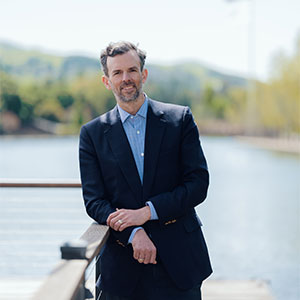
That's Alex Mehran, CEO of the Sunset Development Company, and the third generation leader of this family business. We met up at Bishop Ranch, the firm's master plan community in San Ramon, California, 35 miles from San Francisco. Bishop Ranch has been a focus of the California-based company for the past 45 years and now comprises around 4.5 million square feet of mixed-use real estate. We'll hear how it evolved from a traditional office park – one that's housed the likes of GE, Chevron, PacBell, and other corporate tenants – into a vibrant new brand with an eye on redefining the category. Coming up: big thinking, creativity, financial flexibility around suburban office or business parks, and the story behind the shining star of Sunset Development's portfolio. I'm Spencer Levy, and that's right now on The Weekly Take.
Spencer Levy
Welcome to The Weekly take. Welcome back to the Bay Area. Welcome to San Ramon. Our first time here, and we are delighted to have Alex Mehran, the president and CEO of Sunset Development, and the beautiful Bishop Ranch. Thank you for coming out here today.
Alex Mehran
Thank you for being here. Excited to have you at Bishop Branch.
Spencer Levy
Delighted to be here and I played secret shopper last night, went out to one of your great restaurants last night. They treated me great. So we got off on the right foot. And it's a quite an impressive community with office with retail, with new housing coming in. Tell us a little bit more about the project
Alex Mehran
Yeah, so in 1978, my grandpa and my dad were searching for a new project. My grandma and grandpa had started a home building company nearby, built about 4,000 homes, a third of the city of Livermore. And my grandpa had slowed down. But then my dad came home and reinvigorated the business, and they set out to find a piece of land, bought the Bishop Ranch, and created one of the world's best business parks. About 2002, we finished our last building, and in about 2005, 2006, it started to become less cool to have a business park. So my dad and I have been figuring that out with our great team here over the last 15 years.
Spencer Levy
I like the way you use less cool. I use that term on the show all the time. I think it cuts through all of the fancy talk. Making this place, making Bishop Ranch cooler. Is that a pretty good description of what you're trying to do?
Alex Mehran
Yeah, it is. I mean, cooler, easier for the users to enjoy, more multi-dimensional. But in a word, to sum it up, cooler, I guess, is what you could say.
Spencer Levy
And what's interesting is this is a development that's been going through changes since the beginning, since 1978, but really went through its most massive recent change, more recently, I would say in the last 10 years or so, when you added more retail, when you started to reposition some of the office buildings. Tell us a little bit about how the project has changed in the past decade or so.
Alex Mehran
Yeah, so preparing for this show, I went back and looked at some satellite images. When you look at 1960 in the Tri-Valley, there's nothing. There's just farmland, little bit of stuff in Walnut Creek. A couple guys from Los Angeles came and built some drainage ditches, which got all the water from the agricultural fields out of the land and created developable sites for housing. So housing started booming, the Bay Area was booming, and all these subdivisions got built. In 1978, we started building office in what was Contra Costa County, City of San Ramon, started in 1983. So we're building this wonderful first class business park. All these great subdivisions are being built. And so you have all these great families move into the area. You have this wonderful business park and big companies, Chevron and PacBell, were our two biggest in the early days. But hundreds and hundreds of companies decided that Bishop Ranch was the spot, mainly for back office. And so these people that were moving into the area could also work in Bishop Ranch, but the job profile was, there was a lot of file cabinets. There was a lot cubes. The PacBell headquarters had the largest cube order in Knoll history. And in fact, the Dilbert cartoon was created there. So in 1980s, the office style here was different than it is today. But it worked really well. And I think my dad has great taste, my grandpa had great taste. We're huge into agriculture. As an Iranian family, we come from a long—agriculture in Iran started in 7,000 BC, and they have all kinds of wonderful figs and pomegranates and pistachios. So really a big focus on beautiful landscapes. And so we created this place that really appealed to CEOs to put their back office in San Ramon. And slowly but surely these things matured, and we became a front office. And that really started happening, we had General Electric come here for the digital division in about 2010. And that was the first time we saw a crazy interior. Get built, that we built, it was very hard on our team to build this interior, and now every job is like that because it's, you know, very high-end TIs, higher-end workforce, and that's the profile of the Tri-Valley today. So 2020, it was the right time to rethink the whole land plan. We delivered City Center as our downtown, and so we did that. Now we're getting rid of buildings that really don't accommodate that style of TI that aren't that great workplace. We're delivering housing and growing on this suburban downtown idea.
Spencer Lev
Well, first of all, well played on the Dilbert reference. I will say that we've had multiple references to the TV show, The Office here, but that's our first Dilbert reference, so...
Alex Mehran
Homegrown right here in Bishop Ranch.
Spencer Levy
Absolutely. Absolutely. Well, in terms of homegrown, the City Center is the huge retail center, which is where the restaurant I had dinner last night. Now you call this the Tri-Valley area. How do you define your area, San Ramon? Where, how does it fit versus San Francisco, an hour away, Silicon Valley, an hour away. How do you position this?
Alex Mehran
We're between Walnut Creek and Dublin-Pleasanton on 680. And naturally, a city at the juncture of two major freeways should be the center of action. That would be Pleasanton at the junction of 580 and 680, or Walnut creek at the Junction of 24 and 680. And both of those cities are thriving cities. We're in the middle. And so this is the piece of land that was available for my dad and my grandpa. And they bought it. And we've been focused on it ever since now. I tend to think that being nestled between those two cities is an advantage for us. I think so we benefited from being, maybe not the main and main location, but in the center of this really wonderful market. And we also benefited from the fact that we're a family and we've kept this piece of land and we continue to work on it and double down and reinvest in it for 50 years. So location we're in, plus the continued. The pursuit of excellence from the family and the team is what's made us be able to create such a special place.
Spencer Levy
We've been fortunate on The Weekly Take to feature a lot of wonderful developments. One of them that I keep thinking of when we're having this conversation is Lake Nona down in Orlando. And the reason why is it's 100% owned by the Tavistock corporation. And that common ownership element, I think, is the absolute key to these master plan communities. What's your point of view?
Alex Mehran
A lot of similarities, they have the same driverless bus that we have here and try to take an innovative approach. I would say one thing we benefit from here is the vintages of development. When you go to a place like Florida or Texas, a lot of times everything has been delivered in a pretty short time frame. And one of the things I'm really proud of is the different layers of things that have been developed, from buildings to trees to trails. When you have a place that's been developed over 50 years, It feels more natural and less like something that popped up. Like when you go to places in Texas, right, it sort of just emerged from nothing. And a lot of the things that get publicized are brand new places. I think we benefit from being a place that's been around a little while. And I enjoy having different architects for each building, different feels for each project. Like this place we're in, the branch today, we just delivered. It's an office amenity, but it's got its own heart and soul. This one is a life-size terrarium. And so being able to deliver these different experiences with a different field creates a tapestry within Bishop Ranch. But Lake Nona is similar. It's got a lot of offices, it's got a lot residential, and I think that provides a huge benefit to having a long-term vision. If you sell out everything and are trying to capitalize in the normal real estate way, you lose control of things.
Spencer Levy
I know you had many large corporate users, you still have many large corporate users here, but several of the headquarters users have moved. How do you pivot towards new corporate users basically going from the old to the new?
Alex Mehran
We have been attracting new corporate users here by really focusing on the construction delivery and design of the space. I think big corporate users are frustrated with the days of standards and we have to have this type of furniture and this type wall covering and this is our new light standard. I think the friction of corporate users going into big leases — delivering on these very expensive standards and not needing them at the end of however many years, or changing them when some new person comes in — has been very frustrating for them. And so what we started doing is on leases up to 20,000 feet, just delivering spaces on spec that we think are awesome spaces. You can pick whatever you want. We've got 10 different flavors. You don't like the one that's green. We'll give you one that is red, or whatever. And so we just deliver these spaces, and people can come in and start business the next day. We'll deliver them on a short-term deal, which eliminates the financial frustration of the CFO, saying, I don't want to do this 10-year lease. So. Trying to reduce those barriers to entry, reduce the financial commitments of these big companies has been very successful. Now on the bigger side, a lot of people want custom space and so with that, we've told people, hey, there's an option. You can deliver on your standards, you can design it, you can hire whoever you want, spend however much you want. Or we can really cap your costs, bring them down and we'll do the design for you. And a lot people have really enjoyed that because you get these corporate users, you see these 16-person Zoom calls where. Somebody who's not even involved in space delivery or design says, you know, I like the purple, or I like pink. And it's just sort of an unproductive design process that I don't think anybody's happy to be at. They just want a great office that works. And so we've really been able to deliver space in a more efficient model. And that's been bringing more corporate activity here. Because if you can eliminate the headache of a year-long process of delivering space, it's really valuable to the customer. So we've been seeing activity, maybe not in the 400,000-foot category, but the 100,000-foot category. And it's exciting to be able to sort of remove that real estate headache from the customer's plate and deliver something that they're really happy with, and that also at the end of their lease, if they don't need it or they want something else, we're happy to take it back because we designed it with them on our standards. So we probably don't have to rip the entire thing out the way that we have over the last pre-pandemic decades.
Spencer Levy
I know that there are some older office products on this site that you're going to be taking offline and turning into residential. Tell us about that.
Alex Mehran
Yeah, so my dad started the idea of residential Bishop Ranch in 2005. We were going to build a dual-anchor mall. We had a 635,000-foot retail entitlement for the first City Center plan. It was going to be a 27-acre project, 550 units and apartments and condos. We quickly realized in 2018, 2019, we needed a lot more. We had purchased the PacBell campus back, and we upsized it to 4,500-apartment units. And I think that was obvious. Apartments are a great asset to own as a family. They don't have the brutal office cycle where you do a 10-year lease, you only start making money in year six, and then the tenant leaves at the end of year 10, which we're not immune from financial struggles having owned this place a long time. Maybe I would say we're handicapped and that we don't get the big pop when we sell at just the right time because we're no sellers. But we were in a place in 2020 after the pandemic where we had to think about the longevity of certain assets that got developed in the eighties. Were these office buildings places that the younger generations would want to work? And the answer was no. And so the big issue there is that they're fully depreciated. None of our buildings had zero tenants, right? So they'd be 60% occupied, 70% occupied. And we'd say, okay, this asset is not gonna work. We need to empty it. We need to work with our customers to move them. It's tough. Little bit of tailwinds there because most of the customers wanted a different office post-pandemic. Some didn't, particularly medical. Now they're very happy with their dental office with the five chairs. We had to move that and it's quite difficult. So cost to move the tenants, tenant disruption, customer disruption, which we don't like. And then re-entitlement, which in San Ramon was great because we worked with the city. We have a wonderful relationship with the city and we're able to get the entitlements done with relative ease. And then selling to the home builders, which is a unique, home builders are a unique animal. We've gotten to know them and what their needs are and optimizing around that. And then of course, with a fully depreciated asset, you have to pay a huge tax bill. The result in the end is happier office customers who have new offices and better buildings that they love and brand new homeowners pushing strollers down the street in Bishop Ranch, which is really a heartwarming thing. But selling those buildings and going through this process, which is almost done now was difficult, but it's proved to be quite a productive endeavor
Spencer Levy
And just to put a few, just big picture numbers on it, I understand that at its peak, Bishop Ranch had about six million square feet of office. You're going down to about four and you're taking those older buildings and turning them into residential. And a topic on this show comes up every time is, well, why don't we do more of that? Why don't get do more conversion of old office buildings? But I think the reason is most of the office buildings we're dealing with are in CBDs. They're 30, 50 stories. Very difficult to demolish an older building, very difficult to demolish any building, but it's a lot easier to do it in a suburban five to eight story building than those.
Alex Mehran
Yeah, and I always need to make this point clear. We're not repurposing the buildings. It's not that we didn't look at it. We looked at it, and as you said, Spencer, it's quite difficult. So we are demolishing buildings and building sub-normal subdivisions, which, from a land planning perspective, is much better. If you were to take three office buildings that sit in the middle of a parking lot and convert them, you know, maybe you can get it done, but then where do you park? You know, people in apartments, they want to park inside the building. So it's this odd thing. And we don't want to have some sort of Frankenstein building in Bishop Ranch. We want proper subdivisions. For example, this is for sale residential. It's not apartments in those neighborhoods. These are parts of Bishop Ranch that we viewed as for sale areas that are neighborhoods, not the CBD of Bishop Branch. And so that's how we planned it. There are teardowns. And it's much easier here, because when you look at the surface park to office building in the suburbs. You have a lot of area for lots versus the square footage of office. If you've got a tower that's 40 stories sitting on a quarter acre pad or a half acre pad, if you tore that down and built five houses, you're not going to make any money. So we had tailwinds in that regard, too.
Spencer Levy
And because these are, and I'll use the word one more time, suburban, you have a lot of land area. You have the ability to create not just town homes, not just multi, you can create single family homes here as well.
Alex Mehran
Yeah, and that's been a great part of the development, is detached homes. People in the suburbs have a major predisposition to buying detached homes, and so we've been able to deliver a lot of them. And it's a product that's really in demand. Town homes are great, and they're great starter houses. Unfortunately, the first project we sold was in 2020 to SummerHill. I think the pro forma underwriting for a town home was $850,000. Now they're selling for a million one, a million two. So calling that a starter house probably shocks some nationwide. We're trying to build some condos that would come in under the million dollar price point. I think that would be a great product. A lot of people are looking to come here to enter the school system for their kids. One of the most exciting products that we have coming is affordable apartments, all affordable buildings. We're partnering with Eden Housing on that. The idea that somebody could come into Bishop Ranch where market rent is $4,500 for a one-bedroom apartment. And somebody who qualifies could come in and pay $1,200, move their family here from the Central Valley and start their kids in San Ramon schools. That's an amazing opportunity. So there's everything from the lowest cost being affordable apartments to the highest cost, which is our senior living project at Belmont, which the CEO is a wonderful woman, Patricia Will texted me the other day and told me that it's the highest performing lease up in their portfolio. Nationwide shows me that all these markets are quite strong and so it's great to be delivering all these products at the same time.
Spencer Levy
I would also say that San Roman has been noticed nationally, and it was just ranked the number one community nationwide in terms of quality of life and community. So congratulations on that award, but I think it speaks to exactly what you're saying here. It isn't the luxury apartments, it isn't a high-end office, it is the senior housing, it's all of it. If you bring it all together – and I would say putting what I consider to be the most important things: the quality of the schools here is excellent – and you combine the quality of the schools with this diverse housing, it's the winning formula.
Alex Mehran
Yeah, and when we bring this up, we often talk about the obvious things. We have a wonderful police force. We have the community that's come here for the schools, for the jobs. They're oriented around investing, and their families focusing on the quality of the lifestyle, the schools, the safety. So everybody's bought in and engaged in this community. And so you have all those elements, schools, safety, jobs, beauty, that are obvious. We're in the Bay Area, so they have immediate access to the California lifestyle, which is the biggest selling point of being in the bay area. If you're going to pay to be here, you need access to the great pieces that California provides. We're adding walkability, retail, different activations. But really what makes the place so desirable and ranked the way you see is that these people provide a diversity and a culture. And a neighborhood that's really cohesive, it's vibrant, it's attractive, it's got an energy to it. And those things are the result of the people. And so you can say it's the safety or it's the schools, but the people who are here are what make those things great. It's been that way for a long time, and it'll continue to get stronger. That's why we continue as a family to invest and stay in Bishop Ranch.
Spencer Levy
In terms of the evolution of these buildings, we're sitting here today in what is a professional studio, which is, we didn't bring it in, it's here. And I walked through many of the office buildings with the amenities, I saw the gyms, I saw all the coffee houses, I saw common areas that I classified as hotel-style amenities. Now, you're also in California, so you've got the lake and you've the weather and all that stuff, but just walk me through how amenitization, to use a fancy word, has changed. And how you think it's going to influence the tenants.
Alex Mehran
Realize here that we need to leverage everything about our approach, our team that's here, our location, what we own in Bishop Ranch to make it better than what's available elsewhere. So it's very common to see an office building and somebody says, oh, I'm gonna build an amenity center, right? And this has been happening for a long time. After COVID, it's become more publicized, but amenity centers are not a new thing. 2013, helped by CBRE, CBRE represented AT&T to purchase the two million square foot former PacBell headquarters that had now become AT&T. PacBell became, SBC became AT&T. So we bought it from AT&T. And I'll never forget sitting there with the team and the AT&T team, and they had this big amenity center in the middle of the building, conference rooms, food, all this. And there was a big argument about who is going to have the priority to lease these conference rooms? Because AT&T wanted to protect its ability to get access to the conference rooms that they'd enjoyed since they built the complex in the ‘80s. So just to set the context, this is a Skidmore-Owings-Merrill-designed, awesome corporate campus. It was the end of corporate campuses. You know, that happened in Basking Ridge. It happened in Armonk. It happened at Reston. This was the ultimate, sort of the last of its kind. Corporate headquarters where companies just really cared about design and built an amazing building. There's lakes, there's liquid amber allées of trees, there's all this beautiful stuff. Anyway, so AT&T's saying, well, hang on a second. If you lease this to this tenant and I don't get access, I'm gonna be in trouble because the CEO might have a tour that day, whatever. And I remember I said, well what about the fact that we're gonna have third parties come in and use the conference center? And that was this big problem. Right, they said, oh, we can't have that. This thing's going to be booked all the time. We're not going to have the ability to lease it when we need it. And I took the approach of saying, hey, guys, if you want this 300-seat auditorium to be leased out by you going to the front desk and checking out a key attached to a wooden spoon, that's not what we're doing. We want to create this vibrant hub. And it's always going to be available. These things aren't leased. It's like a parking lot. There's always space. Just trust us, we're going to bring a great team in here, we're gonna have a chef, we are gonna have an events team. This is gonna be better than what you have today or better than you've experienced over the last 40 years. So, I convinced them to do that and we opened the thing, we brought in an awesome operator in Palisades Hospitality. And this conference center started doing six million dollars of business right out of the chute. Never had a problem with booking, AT&T always got access to what they needed. But when you walk in that lobby, it was just full of people and activity and vibrance, and that's what set this building apart from anything else in the Tri-Valley. And that's what taught us that you really have to focus on vibrance and activity in people. And so when we went about amenitizing, to use the uncool term, the other office buildings that my dad and grandpa had built in the 80s and 90s, we thought, let's really make these things publicly accessible. With really high quality food, really high-quality conferencing, and give access to people that are third parties so that there's always a population in there that's making them great. You know, if it's just an office building and people are there nine to five, Monday through Friday or whatever it is now, it's not that fun. And, you know, we were known as a place to teach kids how to drive on the weekends. You know that the parking lots are empty, so that was what we were on the weekend. So now on the week, we're this vibrant place where people are doing things and enjoying themselves. So I'm really proud of that decision. I learned it through this process with AT&T, and it's really worked well in terms of making the office buildings a part of the downtown community.
Spencer Levy
So, Alex, you have a very interesting background in addition to this wonderful project. You're a sailor. Am I correct in saying that you have the world record for sailing from the United States to Europe.
Alex Mehran
No, I set a sailing record from San Francisco to Hanalei Bay in a race called the Solo Trans-Pac which was a single-handed race so is calling a world record, I don't know how impressive it is, but–
Spencer Levy
But world record sounds better than saying it's a suburban office park.
Alex Mehran
Yeah, exactly. There's no amenity center on the boat. Yeah, I've loved this. My friend Nick–after I started my career in New York, I took a little bit of time off with my friend Nick. We purchased this boat and taught each other how to sail offshore shorthanded, which means one person, two people. And it was just a life-changing thing. And somehow, each race that I've done well in or won, it corresponded with some major turning point in my life and gave me the confidence to undertake what was ahead of me. The first one was winning the Bermuda 1-2, Newport to Bermuda, and I was coming back here to join the family business. The second one was setting the Solo Trans-Pac record in 2012. That was right before we purchased the PacBell headquarters, which was the biggest undertaking in my career. And then 2022, I finished the Route du Rhum, which I got 14th, which doesn't sound great, but it's an all-professional race across the Atlantic. And so that was the ultimate piece of that.
Spencer Levy
So let's back up here for a second here. So you raced across the Atlantic?
Alex Mehran
Yeah.
Spencer Levy
How long did that take?
Alex Mehran
It was 16 days.
Spencer Levy
And you did it solo?
Alex Mehran
Yeah. So the interesting thing, in business, you show up every day. You try your best. You have a strategy. You've got to be flexible. But there's a lot of externalities that happen that you can't control. And sometimes it's nice to be on a boat by yourself and have everything, every piece of the outcome, your inputs during those 16 days. Of course, I have great people that I work with to prepare the boat and all these things. But when you're out there and you get from Saint-Malo, France, to Guadeloupe and the Windward Islands, you feel a sense of accomplishment that's different than anything else. And of course, a piece of this is family business too, right? I can never take credit for Bishop Ranch or anything I do here. It's all a culmination of generations of my family. And so being able to have something of my own that I can stand on is helpful to me personally.
Spencer Levy
You know what's interesting about this? This is maybe a little sidebar, but I know a lot of, I'm very fortunate to know a lot of real estate developers that all have really cool hobbies like this. And there's a broader point here other than saying a lot real estate people have a lot cool hobbies. It's these cool hobbies aren't just hobbies. These cool hobbies make you better at what you do every day. Do you see any parallels there about if you have a terrific hobby like sailing and you're a world class like you, makes you better at real estate.
Alex Mehran
Oh, for sure, if you're looking at a map of the Atlantic and looking at the weather systems and using the software to try and decide which way you're gonna do, how you're going to play the race. All the way down to, you know, if my autopilot goes out trying to figure out which settings to change and how, I remember I was coming across the Atlantic and we had a very steep sea state. There'd been a hurricane that came through the Atlantic when I went through and the boat kept plowing into the waves in front of it and stopping. And so I was sort of A/B testing the autopilot settings and the different axis controls. To try and get the boat to sail better. And just yesterday I was meeting with our head of facilities talking about our DDC system and the building operation controls, because yesterday was quite a cold morning on a Monday, so we needed to heat the buildings up quickly. And I could think about how I met the challenge of fixing this autopilot and how you have to have your control and your variable and change one thing and A/B test each one and working through it, it really helped me work through this issue with the software with our team. So. It's not just the big picture strategy. It's just the decoupling from your normal day-to-day and having that headspace. It's really a lot of the tasks that are set before me on a single-handed boat to fix to get to the other side of the ocean are similar to the tasks that face me in real estate. So I find it to be a multi-dimensional way that I can become better at my business life.
Spencer Levy
It's not just the tactical problem solving. It is the bigger picture of strategic, why am I out here, what are we doing here? Because when you're dealing with a project as complex as Bishop Ranch, you sometimes have to think tactically when it's a cold morning. But most of the time you say, you know, strategically, I gotta get from here to the other side of the Atlantic and tactics aren't enough.
Alex Mehran
Yeah, and it's so intense too. There's been many times on the boat where I was brought to tears. The emotion is so palpable. I've gotta fix this problem, I made a mistake, I've got to correct it and get across the ocean, because there's no alternative. I'm not sailing back upwind to France. And so that tension, that emotion, the intensity of it really is the same that you bring to business and it is amplified and I think that's what we seek in these miniature experiences we get in between the sort of long stretches of business, long pulls in business strategies.
Spencer Levy
Well, I thought you were interesting before this interview, Alex, but now I understand in addition to your sailing, you kitesurf, you fly a plane. I'm probably going to miss like three or four other things, but I think that's a very California story in the sense of there's so many things that you should do with your life beyond your job, but they all come together.
Alex Mehran
It's a nice place to be able to have diverse interests. It provides for that. And one thing that isn't often talked about is health. Health is a, we just delivered this big medical facility and so we've been talking about it. Health in this area is such a focus, it's such an area of innovation. And I think it's a big part of the future of the country too, is what is being delivered in the health space in California. So if you wanna live a great business life, you wanna raise a great family, you wanna have access to good universities. You want to be involved in technology or health. You want a live a long life with varied interests and access to all these things. There's no place better.
Spencer Levy
There's a lot of places that may go by the older term of suburban office park, which I know we're getting away from, but you're transforming it, you're changing it. What are the lessons you would like to give others about why it's working here?
Alex Mehran
Land value is very important, right, and that's a function of home price. So we benefit from a higher home price and a higher land value, which made it easier for us to get out of some of the office buildings and convert them to these subdivisions. Pick the place that's going to be the center of activity, have the lower density residential in places that are on the periphery of that, and really build up the multifamily. And I think a lot of suburban office parks around the country don't benefit from those adjacencies. They're sort of developed around these huge six-lane roads that feed just the park. They don't feed residential or anything surrounding them. But I would say that in terms of the relationships and the help that that's given, going around touring, meeting these people, learning about their projects, learning about how they view things, it's really informed a lot of what we do here. And the economics in different parts of the country create different solutions. But sort of forming up. Where you think the economics are gonna go and which projects can go, how you're gonna create the street network and the walkability plan long-term is something that I've seen commonality with in successful redevelopments like this nationwide.
Spencer Levy
What's next for you? What is the next mountain you would want to climb, if that's the right way to put it?
Alex Mehran
Well, I think as a third generation here, my main focus is setting this business up for future generations of my family. Typically, the third generation is the one that spoils the whole thing, and it ends up going down in flames. So I'm trying to avoid that. But there's so much opportunity in Bishop Ranch. Like I said, 8,000 units. We want to develop apartments ourselves. Currently, we have Avalon building 450 units here. We wanna continue partnering with companies like them. We want to deliver residential and diversifier platform. We want to deliver more retail. There's so much opportunity here. I don't see myself starting a new project and I really wanna optimize this for the future of our family. I wanna continue building our team to make sure that it stays the way it is for a very long time. And I think that's a tough goal to achieve in a corporate kind of way. And so that's my main focus. I'm not looking at land anywhere else. The California forever thing or anything like that. Those things are interesting and exciting, but we're focused here and we're focused on continuing doing what we've been doing for the last 50 years.
Spencer Levy
Well, that's a great way to end it. And I would note we've had actually several episodes and family companies that were going through intergenerational changes. And I think you said it perfectly, which is, look, I'm not building this for me. I'm building this for us. I'm building it for the community and your family. And if you look at it that way, you're going to have durability over the long term.
Alex Mehran
Yeah, that's probably a core message of what we do here. Durability for the family, durability for the customers, and for San Ramon becoming the best place to raise a family in the Bay Area, the best to grow a business, and nationally recognized as a place that can deliver on the California dream. There you go, California dreamin’.
Spencer Levy
Alex Mehran, president and CEO of Sunset Development here at beautiful Bishop Ranch in San Ramon, ranked the number one city for lifestyle. Alex, great job. Thanks for coming out. Thanks so much.
Spencer Levy
Thanks again to Alex Mehran and the Sunset Development team for hosting us at their California dream community, Bishop Ranch. And with due respect to The Mamas and The Papas, we hope you enjoyed our conversation on this winter's day. Our new programming year – season 7! – continues with more big hits including our annual market outlook. Thought leadership on the use of artificial intelligence in our industry and market views from the most recent CBRE Women's Network conference. Plus, we have a taste of food halls from the team that's developing properties for celebrity chef and restaurateur Tom Colicchio. That's just some of what's on our upcoming menu. And you can also get a second helping of anything that's in our archive. That's available at CBRE.com/TheWeeklyTake, and on the podcast platform where you get the show. We hope you'll subscribe and share your favorite episodes and we'll see you again next week. Thanks for listening. I'm Spencer Levy. Be smart. Be safe. Be well.

.jpg)


