Download Transcript
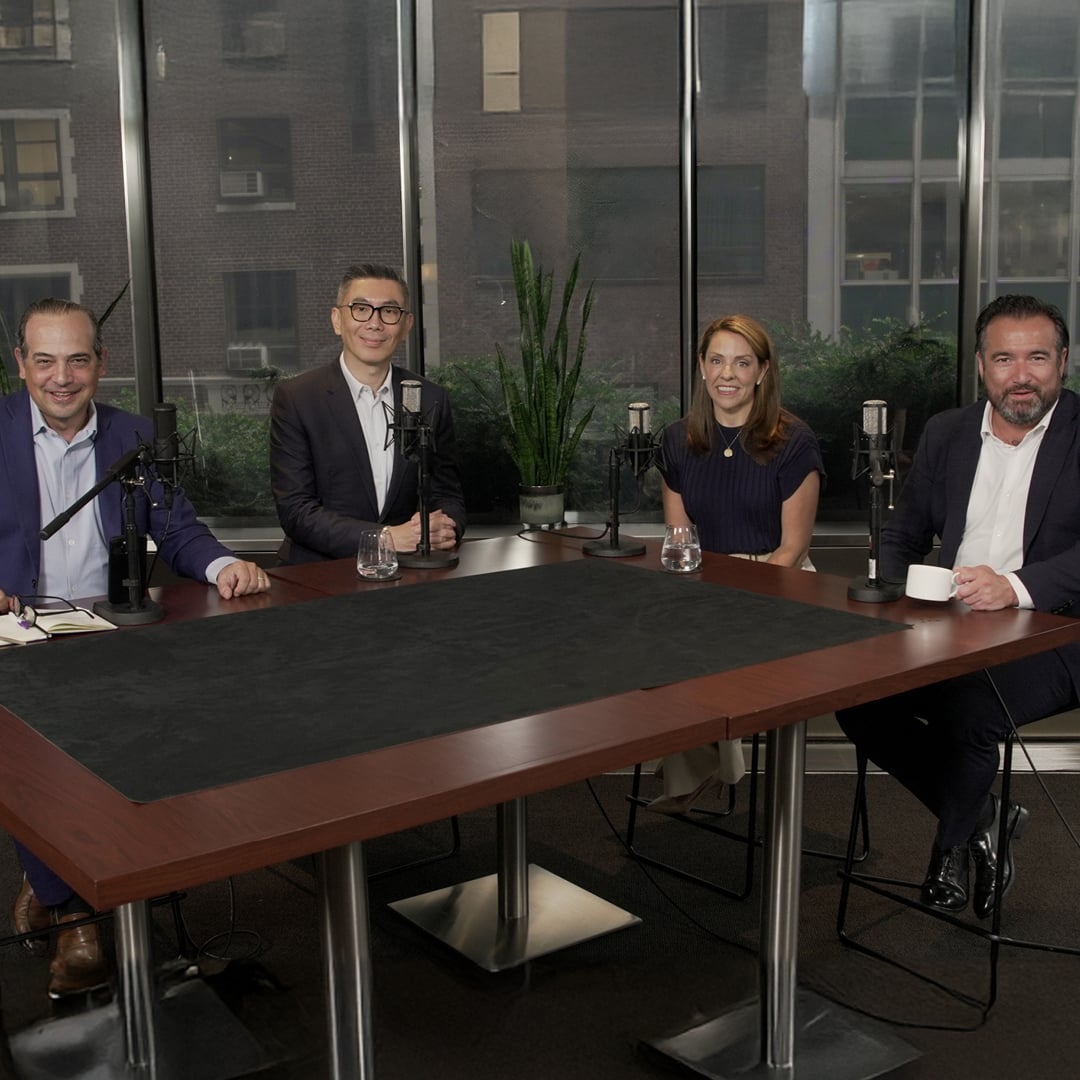
Spencer Levy
We're just past the midpoint of a very eventful year, which means it's time to update our report on what we expect to come. We've assembled an all-star cast of CBRE's leading research experts in the 2026 mid-year real estate report. This terrific new report is hot off the presses, and it's gonna tell you what's happening not only today, but what we see happening for the rest of 2026 and beyond. I'm Spencer Levy, and that's right now on The Weekly Take.
Spencer Levy
Welcome back to The Weekly Take, and I have three of my longtime friends, starting with Henry Chin, the Global Head of Research for CBRE. Henry, welcome back to the show.
Henry Chin
Thank you for having me here, Spence.
Spencer Levy
Julie Whalen, our sixth or seventh appearance on the show, every time I say it, it's another appearance. But Julie Whalin, Senior Vice President, Head of Occupier Research for CBR. Thanks for coming, Julie.
Julie Whelan
Excited to be here.
Spencer Levy
And my old friend Darin Mellott, Head of US Investor Research CBRE, my tag team partner at the Real Estate Roundtable. Great for coming out here today, Darren.
Darin Mellott
Always good to see you.
Spencer Levy
So here we are at the beautiful Lever House. CBRE just moved in a few months ago. And we've got this fantastic new mid-year report. What is the one big change that we see today versus what we saw six months ago?
Henry Chin
Geopolitical dynamics. I think generally when we put out the Real Estate Market Outlook we’d never seen this Middle East conflict coming through, but now here we are
Spencer Levy
Julie, big change from an occupier perspective from January till today.
Julie Whelan
So building off of what Henry just said, I would say that despite all of this geopolitical concern that's out there that has greater downside risk to it, I am surprised about the strength in the occupier resilience that we have seen because none of our fundamentals or our leasing metrics or our net absorption metrics have fallen along with this downside risk. If anything, we are being surprised to the upside.
Spencer Levy
So Darren, from the investor perspective today versus six months ago, what's the big change?
Darin Mellot
I think tying together what Henry and Julie just mentioned, what's changed are the risks. But it's not all risks to the downside. A lot of times we think about it in those terms. It's like Yogi Berra said, predictions are hard, especially about the future. And the reality is things could get resolved and we could actually have some upside risk. But I think investors are wise to continue to look through the headlines right now.
Spencer Levy
Well, Yogi Berra also famously said, after he got hit in the head with a ball, “They x-rayed my head and they found nothing.” So, sometimes you gotta listen to Yogi Berra, maybe sometimes not. I think there's one word here, which is very different today than it was a few years ago, and that word is supply. When we take a look at the market today, because of high interest rates, because of the high cost of labor, because the high costs of materials, because of tariffs and other things, it's hard to build. So, Henry, is that maybe one of the major themes of the mid-year report, that the supply is falling and that is impacting real estate?
Henry Chin
100% agree. When I was engaging with clients globally, funny enough, when we're talking about–people tend to overly focus on the negative side of the short-term demand. It's the volatility, the conflict in the Middle East. But real estate is a function of demand and supply, as you highlight. Globally, there's not much of a supply coming to real estate markets. Here in the U.S, the same. Office, no supply. Retail, no supply. Multi-family, some markets under supply. Industrial logistics, we're coming from oversupply to undersupply. So overall supply is actually a tailwind for us going forward.
Spencer Levy
And it’s a tailwind because the supply that is here is worth more, but if you're an occupier, it gives you less choices. Is that right, Julie?
Julie Whelan
Absolutely. And you know, it's interesting because in my career in commercial real estate, I feel like I lived in a world where there was only always more supply at the end of one period than at the start. And as Henry just said, from an office standpoint, we I think had two million square feet, two million square feet delivered in Q2. From a retail standpoint, we only had about five million square feet delivered in Q2. There's never been quarters on record where we have had less supply coming to the market. And industrial is relative, right? I think there's still 260 million square feet under construction, but that's still really light compared to where they were. So that obviously means that occupiers are having to make really different decisions today. And I think a couple years ago, their decisions were really reactive against everything that had happened in kind of a post-COVID world. And now they're moving into a point in time where they are much more proactive and they're really planning for the future. And so in a case like office where the type of space that they want might not be available in the next 18 months, then they're pulling the cord on some early renewals and some early moves even earlier than they may have typically done so in the past.
Spencer Levy
Well, two points there. Number one, where we're sitting right now at the beautiful new Lever House – which we just moved into, several our divisions, in the last few months – if I could throw a baseball right now, maybe a 16-year-old Spencer throwing a baseball, right now, I could probably hit 15 million square feet. I mean, within 200 yards of where we are sitting right now, that's how little 2 million square feet is. And that's how much occupiers are trained. In fact, I'll ask you one follow up question there, Julie. Because occupiers are early movers, but given the lack of new supply, do you think we might see some more build-to-suits or people building buildings and moving into them, or is that still a problem because of the supply challenges of cost?
Julie Whelan
So, well, that's exactly right. You have to make it pencil out. And so it is extremely expensive today to build anything. However, there are some markets, depending on literally where you are in the corner of Maine and Maine, where the rents that you can get for that may pencil out, however, I will plug what I talk about a lot, which is conversions. There is a lot of empty space still. So we are still at nationally high record vacancy levels. And I believe that we need to really be more creative at converting more space into higher and better uses than necessarily building new space from scratch.
Spencer Levy
We're seeing a lot of office to multifamily conversion. Are you suggesting something different, Julie, converting into office?
Julie Whelan
Yes, I think office to office conversion is absolutely the way to go in many cases.
Spencer Levy
Well, I think the highest and best use of most office–
Julie Whelan
Is office.
Spencer Levy
–is office! So Darin, it all comes down to being able to raise the money. What I've been hearing, big picture, is that the debt capital markets are deep and liquid, but equity for the most part – not totally, but more so than the debt – is sitting on its hands. How do you see the capital markets today and trying to provide capital, provide capital for new supply?
Darin Mellott
Well, look, Spence, I think the way that I would characterize the capital markets today is, as you mentioned, the debt markets are extremely healthy, spreads are historically tight, and you can get money across the board for just about anything. I mean, you know, before you would look at construction loans a little bit more difficult when the banks were out of the game. The banks are back in the game. They've been back in the game in a big way since the end of 2024. So even for construction loans, even for office, for the right deal, you can get a construction loan for office at interest rates that aren't that different from a cash flowing asset. So, you know, that just goes to describe how healthy the debt markets are right now. But, Spence, overall, yeah, you can look at pockets of equity that might not be as active, but the reality is there's still a lot of capital out there, and that weight of capital is really underpinning the recovery that we see. And it's powering it through all of this uncertainty that we are experiencing both in terms of geopolitics and anything else that might be in the headlines today. So overall, plenty of capital out there chasing after real estate.
Spencer Levy
We've never disagreed on air before, Darin
Darin Mellott
Never.
Spencer Levy
Here it comes. But I just went to a Japanese-U.S. summit in Dallas a few weeks ago. I'm seeing Japanese capital as one category of foreign capital looking to come in. And actually, I'm also seeing high net worth capital taking a more prominent role, because many of the traditional sources like pension funds, better stated, insurance companies are being a little bit more conservative on their JV capital.
Darin Mellott
Well, as much as I'd love to disagree with you, you do raise a valid point, particularly, you know, when you're looking at foreign capital. And the reality is we haven't seen the volumes coming in from overseas for the last several years. Now, some of that was driven by interest rate differentials and the cost of hedging and things of that sort. And it still hasn't fully recovered. So but the reality is the recovery that we're seeing, it's moving forward, notwithstanding the fact that we are seeing less capital flowing in from overseas, for example.
Henry Chin
It's very interesting, Spencer, I want to highlight here. I was talking to so many global investors, the capital allocators. Although I'm coming from Asia-Pacific, I talk to the global investors. I said, at this point of time, I want to overweight the U.S. I will remain neutral in Europe. I probably will underweight Asia- Pacific. It's largely because the U.S. has repressed quite substantially and the economy performance is very resilient. So therefore, that's why I say investors shouldn't overload the U.S.. It's the perfect timing to invest into the U.S.
Spencer Levy
Well, I think that's a very insightful comment because I don't think you would have said that last year because I don't think people from foreign investors would have over with the U.S. I think there's been a shift and the shift I think comes down to one of my favorite words and the word is: math it actually on a risk-adjusted basis. The U.S. looks more attractive today than it did a year ago. Is that a fair way to put it?
Henry Chin
Yeah, I do agree. And then look at the repricing, look at a cost of financing, look at the spread and look at fundamentals. I think the U.S. is in a recovery mode.
Darin Mellott
And I would add to that just the depth of opportunity, right?
Henry Chin
Agree.
Darin Mellott
It's a large market there The breadth of opportunities is you can't replicate it anywhere
Spencer Levy
So let's talk about quality. We've been talking about quality for a long, long time. But we're sitting here today in the beautiful Lever House, which is about as classic of an office building as there is in America. Spectacular. And it's had a rebirth. But quality is more important than ever for all three of you, from macro, from capital markets, and from an occupier. Tell us how quality is winning, Julie.
Julie Whelan
Quality is winning in a big way. So we have to talk, I think, asset by asset to go down that path. Office is where quality is probably the biggest conversation right now. Everybody has been talking about a bifurcated office market. And today, primed office space is at 12.3% vacancy, whereas overall office vacancy is at about 19%. Now, what I find fascinating about that is that there has never been one quarter of negative net absorption. Since–at all, even during the pandemic of prime office space. So there is clearly a drive for occupiers to be in places that is going to attract and retain the people that they want there. Now, you were just talking about capital. What I find very interesting about office – and I had a session that I did with Sabina Reeves from CBREIM, and she had a five-year forecasted rate of return on properties across all asset classes. And what was interesting is that there was an immaterial difference between the return that you would get for prime office space and for data centers, yet the narrative and the market about both of those things could not be more different. So it just really highlights how prime office is really driving a lot of decisions today. But then you look at retail and you look at industrial and prime just means different things. You know, from a retail standpoint, there is so little construction that's out there. There's so little available space that is out there that yes, really good quality space might mean what it looks like and how new it is, but it also means where is it? If it's in a place where you're driving a lot of foot traffic, then that's gonna be okay for occupiers today. And then industrial is a totally different world. There is an absolute flight to quality, but it is flight to first generation space. And what does first generation space mean in industrial? It means clear heights, but it doesn't just mean clear heights because we've been doing a ton of research where we look at actually what is driving run structure as an industrial. And it's also the dock-to-door kind of configuration, the yard configuration, how easy it is for these large vehicles to turn around in these spaces. And that is what determines quality. And industrial, of course, along with location, because that drives so much of transportation costs.
Spencer Levy
Let me give you a slightly different take. I was at a meeting with one of our big investors in Dallas recently, and we went out of the room and said, what is your single best idea? They said, powered land. And what that means is that second generation industrial may have a new life as something else. So I think much like your story about maybe conversion of office to multi or keeping office offices, maybe some of that older industrial has a life too. Is that a fair way to put it?
Henry Chin
100% agree. Funny enough, I was with a lot of clients yesterday in New York, Manhattan, and they asked me my number one pick. Surprise, surprise, I said value add for industrial logistics. And I think Americans don't seem to understand how to do the value add for logistics facilities. That's why I think we should learn from Japan that facilities after 30, 40 years in the right location, closer to the market, they still can command a 20% premium in the market. It's all about location.
Julie Whelan
Yeah, and to your point, Spencer, the power equation is a really big one. We talk about power primarily in the world of data centers, but industrial, it's really important because from an advanced manufacturing standpoint, in these advanced warehouses where there's a lot of robotics in it, the powerful really matters. And what I think about that value-add play that could be interesting is when it's now coming to lease decisions in some of these very sophisticated sites. It's no longer just about, well, where am I going to get the better lease terms and the better location? It's about, what does my capex cost look like to actually get out of this space? So if you can go into a lower generation space for better fundamental cost and have the power there that you need to do what you need to do with it, then it could be a good play for these very advanced facilities.
Spencer Levy
But I want to turn to you Darin. Quality is often associated with the core end of the capital spectrum. Value-add is associated with a value-add end of this spectrum and there's more of it. That’s really my point and I think it's more difficult to get that core capital. Certainly It's been more difficult to raise that capital today. So when you look at quality, are you looking at quality today, or the quality tomorrow if you put some value-ad money and improve it?
Darin Mellott [00:14:42]
Well, Spence, it's both. It's the quality of the opportunity. So in some markets, it might be about new, and that's where the demand is. And the supply and demand, I like the way that Henry framed it at the get-go. This isn't rocket science. In real estate, it comes down to supply and demand. And that's what drives rents, and rents drive returns. So in markets, I would say, look, I really like some of the new product. In other markets, and for example, you know, particularly in office, for example – where we're starting to see some of that spillover demand and where it's all about the location – those are areas where I might not be looking for new. I'm not looking for the new trophy tower. But in other areas, in industrial, where perhaps some of the advanced manufacturing that requires a certain kind of infrastructure and build around it, I might be a little bit more interested in something new. And so for me, Spence, and I think capital in general, it's not about the physical characteristics and this and that and the other. It's really, where are the greatest opportunities to drive income growth?
Spencer Levy
AI comes up in every conversation. Let's start with the very big picture here. Henry, how is it impacting the market in your opinion?
Henry Chin
Wow, this is a billion dollar question.
Spencer Levy
It might be a trillion dollar question, i don’t know if you’ve watched the stock market recently.
Henry Chin
Actually, I hope I do have a crystal ball. But i do have to say from the macro point of view I think I was very surprised we have lost the productivity over the past 25 years around the global G7 economies. So therefore if you're looking at the global economic perspective – population growth plateau, GDP continues to grow – then AI might come into the right time to support it, But when it translates into the real estate market, I have to say, I think people seem to be overreacting about all the AI hype, to be frank. If you're looking at history: 1993, when the internet was first introduced, I was a uni student. People were so excited. They said, oh, we don't need to work for six days a week. We only need to work for, you know, three, four, five days a week. Spence, how many days do you work per week?
Spencer Levy
And I hope my boss is listening, seven days a week.
Henry Chin
Here you are! So therefore I do think AI can enhance our productivity. One thing I also want to highlight, Spence, is that people seem to forget about population growth – the working population growth as well. Think about it, we retire early, and then we come to the job early, we don't want to do a full-time job, we want to part-time. So all of those structural changes in the population, working population changes, actually AI is coming at a good time to help us enhance the economy growth. Personally speaking, I'm thinking it's all about productivity gain.
Spencer Levy
Yes.
Henry Chin
And the economy scale could be bigger, the quantity could be better, it's helping us. Of course, it is going to shape the demand for real estate.
Spencer Levy
So let's go from the macro, where I agree with Henry, the macro is productivity. The micro is, well, what does it mean for office space? Are we gonna need less office workers? Are they gonna be in less markets? What do you think, Julie?
Julie Whelan
Well, I feel very happy that AI is on the scene because I'm finally not talking about hybrid work and what that means for office, but now I'm in the hot seat talking about AI and what that means for office. And as we did during the hybrid time, we are putting a lot of time, effort, and resources and a lot of brain power behind this. And, Spence, I feel like I can very emphatically say that this is not going to be the detriment of office. Now, we said that during hybrid and it came true. It just means that office is going to be different. So we've done a lot of study about what has happened in the last technological errors. The reality is that office using job growth outperforms the market in every single era, even though there are always headlines that say that office-using job growth is gonna be devastated as a result of all these technological advancements. However, what everybody is missing is that the level of which it's outperforming is diminishing. And so I believe that for the next five years, we're expecting on average about 0.8% office-using job growth. And that's because, yes, there are going to be a number of jobs that are disrupted and taken out of the market, but there are going to be a whole bunch of other jobs added that we're only beginning to scratch the surface of right now. Now what's interesting about this is when you think about what's being taken away, it's all the stuff that is unbelievably task-driven. And it's a lot of the stuff that happens remotely today. And so what we believe is that the need for the office and the need for people to come together in an environment where they can collaborate together, where they think critically together, where they knowledge share together is going to become more important than ever. But what the office looks like is going to change because we've been moving away for the last five years from this ‘me’ space into this more amenity-driven and ‘we’ space. And I believe that in the future, we're actually just going to have to have more technologically advanced spaces also for all of us to work in and collaborate in.
Darin Mellott
I'm actually going to pull a reverse Uno on you, Spence,
Spencer Levy
Here it comes.
Darin Mellott
Because on Capital Markets Conversations, which is a small fledgling video series, I might add, we actually just discussed AI. It took me a few minutes to get into that shameless plug.
Spencer Levy
Believe me, Darin, you've learned well because I shamelessly plug The Weekly Tak as many times as I can.
Darin Mellott
I’m not as good as you, Spence. Not very smooth. Regardless, I think what Julie was mentioning is worth emphasizing, that it's not just about, you know–talk about the composition changing in jobs and how that impacts different markets. And the reality is, you can look at markets and say, oh, well my goodness, there's a lot of software workers here and that's gonna be a problem. You know, when you look at those historical examples, those markets are often the most adaptable. And so what's going to happen is just the composition of jobs going to change. In fact, one of the stats that I think you guys dug up, Julie, in your report was something like, what was it, 20% of jobs that exist today didn't even exist in the year 2000? And that's not a lot of time. I mean, it's really remarkable. We can't really fathom how all of this goes. But one thing that I thing history does teach us is the worst case scenarios don't come to pass. And those markets with those large, deep talent bases are going to continue to reinvent themselves. And as they do, there's gonna be a lot of opportunity for capital.
Spencer Levy
We often talk about productivity from the macro standpoint, the overall GDP in the economy, but I've gone very micro on productivity. I go all the way down to not just what is the name on the door, but what are they doing? And how productive is it? And I think that's why you're going to see more capital go to non-traditional places like advanced manufacturing in real estate, which has typically been a very niche industry. But to your point, the places that have the large talent pools will adapt. The places that have the highest value add work will win. Fair point?
Darin Mellott
I think so.
Julie Whelan
And an interesting point that I would just bring up from this body of research that we'll be releasing actually in September is we did look at how susceptible markets are to automation. But then also how adaptable their workforce is to changing. And what I found fascinating about that is it's most of your tech-driven markets that are very susceptible, but that also are very adept to driving change. And those are the ones that have grown the most over the last 20 years. Those are the ones that we believe are going to be the best suited. So you think a San Jose, a San Francisco, even a Seattle, a Boston, a DC, even here in Manhattan, right? These are highly adaptable markets that jobs and the higher value add jobs are going to grow in. And we've been seeing it happen in Manhattan from a financial services perspective. Spencer, when you hired me 10 years ago, we wrote a financial service report. And we talked about how the lower-cost jobs were leaving Manhattan and the higher-cost jobs were staying, but not growing as much as those lower- cost jobs were in the more secondary markets. That has ended up being a very strong point for Manhattan. So I am very bullish on these large, agglomerated hubs of activity in the future. And when we even look at a downside scenario for those markets, their vacancy in office is still well below where we are today. And I think that that is the key. Because even in a downside scenario, these markets are going to do very well.
Darin Mellott
What was the old saying? New York's the longest running boom town. But the reality is it's not just New York. I mean, even LA, you know, you could look at another place with a large talent base. LA's reinvented itself as well. Century City, one of the best office submarkets in America.
Henry Chin
Yeah, it's excellent and also if you're thinking about just a look at a Q2 numbers what we're seeing the biggest leasing coming from which sector? Legal. And professional services. People talk about lawyers can be replaced by AI. No, they're taking more spaces and that not only happened here in the U.S., it also happened in London. Also happened Hong Kong. I'll just tell you the story.
Julie Whelan
But what I will say is tech and financial services are the industries that – especially tech – are growing their market share the most of leasing. And when you look under the belly of that, the size of their leases and the term of their leases are expanding the most.
Henry Chin
It’s expanding, yeah.
Spencer Levy
So now let's talk about the returns you're gonna get in New York, San Francisco, or dare I say it, Kansas City, okay? Apples and oranges. But the apples and oranges need to be considered because the same thing that was reducing supply, which is high interest rates, is the same that's changing the component of returns. So returns used to be, well, all in this for a while, cap rates will compress at the end. I'm a genius. Game over.
Darin Mellott
Yeah.
Spencer Levy
The game now is the operators win and you need higher cash flow going in, you need to raise that cash flow faster, and you certainly can get higher cash flow going in Kansas City than you can in other markets. What do you think, Darin?
Darin Mellott
And that's going to be the case for a long time, Spencer. So when we look at our long-term forecast, throughout the 2010s, you're absolutely right. There was this rising tide of, fueled by low interest rates that increased the value of assets across the board. You can't rely on that anymore. When we look at benchmark rates, we don't think the 10-year treasury is going to go much below 4% over the next, really, the foreseeable future. And that's for a variety of different reasons – structural issues, amount of debt supply, things of that sort, elevated inflation over the near term – and so don't don't plan on that coming back for sure And so what does it mean? It means your underwriting needs to be that much better. It means when we're talking about strategy with clients. We're not just talking about markets. We are not just talk about submarkets, we're talking micro markets and the very specific characteristics of the building, and is it where people want to be. So it really is location location location. And beyond that it's how well are you operating the building how well or you efficiently–how efficiently are you investing the capital needed to bring it up to spec if you on the value-add side of things and so it really is all about income spends and you got to get your hands dirty if you really want to drive those.
Henry Chin
Can I offer something very, very different? Actually, I feel like an income-driven narrative, you know me, it's become dated. Okay, for me, if I become a very opportunistic, savvy investor, I am going to look at the investors who is a huge debt pressure, which cannot refinance. So I am gonna chip off the price to get the opportunistic returns. Because what? Some of the market like Dallas, like Manhattan, the spill over demand is coming through. So you got a stronger rental growth probably in the A-minus, B-plus. And some of the asset owners need to sell on the prices. Interest rates are not coming down. Cost of finance still remain high. At this point of time, motivated sales is going to be very, very interesting. That's my view.
Julie Whelan
So I don't disagree with that. And we're doing a lot of research right now on that spillover demand to understand where it's happening. And in the markets where we're seeing prime vacancy in the range of about 10% to 12% is where we are starting to see the spillover demand and that's where quality does start to change the story a little bit because now what does quality mean in that next tier of space? It means a solvent landlord. It means the landlord that you're gonna be able to be with for the longer term and that it's gonna stay true to the covenants that they've agreed with you. So I do agree with that.
Spencer Levy
So I think the market that's going to be the exhibit A, that’s often exhibit A of the stuff, is right here in New York.
Julie Whelan
It's happening.
Spencer Levy
Because I did a couple of studies, two blocks from here. One was 660 5th Avenue, where we were fortunate to have on this show Macquarie. 660 5 Avenue used to be called 666, they rebranded it for controversial reasons, but nevertheless, it's an old building. The space, if you see Macquaries space, is some of the finest space I've ever seen. A six-story staircase right in the middle, but also things like the sizes of the windows. The sizes of windows aren't the smaller windows you might see in some buildings. They're more retail-like. So they took this building that was probably built in 1952 and turned it into a gem, and I've met with other owners of similar buildings like that.
Julie Whelan
Yeah, and I would say, you know, a tenant like Macquarie is that magic sauce. When I was a baby in this industry, I visited Australia and I walked through one of Macquarie’s first headquarters of the future format. And then it was absolutely a game changer in the industry. Nothing like that was being done. So that also gets to tenant credit, right? Which is, I know something else that we were going to talk about, which is if you have a tenant that doesn't just come in with the credit, but also comes in with a vision. Of what they know office space can be in the future. That becomes a really powerful partnership, especially when you have a landlord that may not have the ability to put in that full capital that they might have previously done. The last thing that I'll say is just to full circle this conversation back to Kansas City. You know, I think that from a Kansas City perspective, it is important to say, yes, that might be a sleeper market, but I don't know about necessarily for office, because when we look at what is gonna be happening in office in the future and the markets that are probably gonna be challenged by AI, it is a lot of these back office markets. And again, when I was an occupier, Kansas City was a huge back office hub for what I was doing at the time. And we were putting a lot of people there and they were giving us a lot of incentives to go there. But a market like Kansas City also has to start to reinvent themselves to get that higher value add and investors in office and Kansas City have to be very specific and surgical about what they're going in to get.
Spencer Levy
So Darren, I hate to narrow you down here and put you on the spot, but I'm just going to flat out ask you the question you get every day.
Darin Mellott
Go Spence.
Spencer Levy
What is your number one investment idea right now – asset type market and why?
Darin Mellott
Okay, any property type?
Spencer Levy
Any property-type, any market.
Darin Mellott
I'm gonna go Louisville industrial and I'll tell you why. It checks a lot of boxes. It's supply constrained, a lot that is driven by geography And it has this fantastic combination of logistics with the UPS hub being there as well as manufacturing. So I think it's just one of those markets. It's very well positioned for the future, has solid fundamentals today. You look at it on a risk-adjusted return basis, great market.
Spencer Levy
The only thing don't like about Louisville is they have Churchill Downs there, which is a fine track, but Keeneland which is–
Darin Mellott
Have you lost money there, Spence, is it?
Spencer Levy
I have. Thank you for reminding me. But Keenland is in Lexington, which may be the nicest track in America. So let's give some love to Lexington, too. So last big-picture question, then we'll wrap it up: The consumer. So the term that many people are using today is the K-shaped economy.
Darin Mellott
Sure.
Spencer Levy
Where the K, I want to create a K here on camera. People at the higher end of the income spectrum are doing well; people at the lower end not as well. How is that impacting the economy, Henry?
Henry Chin
Yeah, it will continue, unfortunately. I think that the economy will continue the K-shape, which translates to a steady amount. You can see offices, good quality upper form for commodity stock. Retail similar stories. Hotels, similar story. Unfortunately, it is what it is. And we just feel like the economy’s resilience is driven by the higher quarter of incomes.
Darin Mellott
Spence, I think where you really see the impact of the K-shape directly is going to be in those areas where you have consumer spending that's taken into factor. So it's really retail. It's multi-family. It’s hotels. Those are really the three sectors that are going to see it. I think AI is probably going to drive more of the story in office and like I said you've got kind of geopolitics driving industrial, but you know it has some impact there as well. But, you know, I completely agree with Spencer. This is a story that's gonna be around for quite some time.
Spencer Levy
Let's dig a little bit deeper into multifamily for just a moment. So until, say, two, three years ago, office, excuse me, multifamily and industrial were by far the most popular asset types for institutional investors. But we've seen a fall off in demand in multifamily, particularly in B and C multifamily which is compressing returns in a class A. I'm still very bullish on multifamily over the intermediate and longer term. This may be a short-term issue. What's your point?
Darin Mellott
Oh, I completely agree with you, Spencer, and the reality is the breadth of opportunities in multifamily. And, again, this goes back to what we were talking about earlier. You can't just look at this from a headline perspective, or even just on the market level. Because even in markets where the headlines might indicate it's not really that attractive, I could show you some really interesting opportunities, and that's the reality in multifamily.
Henry Chin
It's very interesting for multi-family. Sorry, Julie. And one thing I want to highlight here is quite fascinating because if I have capital, I'm going to a Sunbelt market now. Oversupply. There's a distressed sellers in place and then population growth will continue the medium to longer term, Sunbelt are very attractive.
Darin Mellott
I still like the Midwest for multifamily as well. I do think Henry has a point there talking about those kind of high-growth markets There's still gonna be a lot of opportunities. But you know if I'm going in today I'd be taking a close look at Chicago or Detroit for sure. And that's one of the interesting things. You talked about the K-shape and these kind of big macro things that are playing. You know, if the markets really attractive in one sector, it's usually attractive in another as well
Henry Chin
Also student housing. The Midwest markets, Kansas City, Detroit – funny enough, student housing is outperforming in those cities.
Spencer Levy
So we talked about a lot of factors here about the mid-year 2026 report. What do you think is most likely to change or could impact our outlook for the next six months and then beyond? Starting with you, Henry.
Henry Chin
Well, I think the biggest issue for me is geopolitical issues. We cannot forecast any geopolitical issues. That, for me, is the biggest uncertainty for now, which is going to have an impact on macro, policy rate, and real estate fundamentals.
Julie Whelan
Yeah, from my perspective, it really is around AI. Whenever we end talking about AI, we end with everything we don't know and that we're thinking about. And first of all, from an AI perspective, right now, it's getting really expensive to use AI. So we may find that the whole discussion about AI drops off the map a little bit more than it has been. And then at the same time, are we in a boom bust cycle? And so that really concerns me to not know if a shoe is going to drop. That is going to put us in more of a cyclical downturn than we have been in quite some time.
Spencer Levy
Darin, what factors are you looking at?
Darin Mellott
Well, look, it's interesting because people say, well, what's changed? And you look at the headline number and say, well, we think the recovery is going to continue. Volumes are up 16%, whatever it might be. And you say, well, that's not really much different from your expectation at the beginning of the year, but we've had all of these headlines and what do we make of it? I mean, look it is true. We haven't seen a material impact from the headlines on investment volumes. However, I think Henry is right to bring this up, because it's not just geopolitics. This is really like the potential that'd be the largest energy disruption in history, right? But there's also the potential that this gets resolved, and there's a lot of upside potential. So I think what's really changed is the risks on both the ups and the downside. And that's what I'm looking at here, is the range of possibilities is much wider. But I think, you know, we-
Spencer Levy
Is that what they call fat tail risk?
Darin Mellott
That's right.
Spencer Levy
Just to use a technical term that the range of outcomes is wider today than they might have been a few years ago. Is that a fair way to put it?
Darin Mellott
100%. But I think investors have been smart to continue investing through this, because the reality is real estate is still very attractive on a relative basis when you look at other asset classes. Following that value reset that Henry was talking about, the fundamentals, you know, this is an interesting, interesting cycle, normally when you get a value reset, you've got fundamentals that have to recover because something's happened. This time around it was all, it was, you know your favorite word, math. It was high interest rates, had a value reset, but fundamentals continue to look pretty good.
Spencer Levy
Favorite word. It's impossible to boil it down to one point, but from each of your perspectives, what would you like our listeners to take away from CBRE's mid-year report?
Henry Chin
I have to say we are providing a top-down and bottom-up approach to looking at the market opportunities in a very, very objective way. And we are providing occupier-investors what to do for the next six to 12 months. I have say this is the second time we do that from the national point of view. Also we are producing 16 local markets on the same look and feel. And we are going to talk to the occupiers, what to do. We are going tell investors this is an opportunity, you should look into that. But final word for me is I really want to highlight AI cannot replace human beings. That conversation you had with the three of us cannot be replaced by machine.
Spencer Levy
I couldn't agree with that point more. What's your takeaway, Julie?
Julie Whelan
So my takeaway of why I would think that readers should go and visit our outlook is that I don't believe that we have really ever been in a place from a commercial real estate standpoint where we are in a different place for so many different assets in the cycle. And it can get confusing when you're an investor and you're trying to understand what's happening. And very often when I go into investors and I talk to them right now, I put all of our different asset classes and sectors on a cycle graph to show where everything is. This report really makes it clear both in our text and in our charts and also in our videos that where each of these sectors is in their cycle and at the end of the day though what it really promotes is that fundamentals and demand drivers that they are across all it's just that we're in different stage of trough versus recovery in different ones.
Spencer Levy
Darin, final take away from the report.
Darin Mellott
There are abundant opportunities in real estate, Spence. Coming off of a value reset, strong fundamentals, yes, there are lots of headlines. Look through them. Fantastic value. A lot of opportunities.
Spencer Levy
What a great conversation about CBRE's mid-year report with three of my truly great friends at the company, starting with Henry Chin, Global Head of Research. Thank you for coming out today.
Henry Chin
Thank you.
Spencer Levy
Julie, another great friend. Our Senior Vice President, Head of Occupier T^esearch. Julie, great job, thanks for coming out.
Julie Whelan
Thanks
Spencer Levy
And Darren, I apologize for agreeing with you so much on the air today, but Darin Mellott, one of my great friends. With the head of U.S. Investor Research, Darren Mellott. Great job.
Darin Mellott
We'll fight it out another day, Spence. Great to see you.
Spencer Levy
For more on the state of the business with deeper insights and analysis from CBRE's research leaders, you can find the full mid-year market outlook on the CBRE Insights page. It's the 2026 U. S. Real Estate Market Outlook Mid-Year Review. We'll also post a link on our show's homepage, CBRE.com/TheWeeklyTake. So check it out. It's a terrific report telling you about what's happening and what's going to happen for the remainder of 2026. I'm Spencer Levy. Be smart. Be safe. Be well.


.jpg)