Download Transcript
Spencer Levy
It's considered the oldest nation-state in Europe, a country with longevity and stability, but also an eye on the future. It's probably better known for its namesake wine, or perhaps its surfing beaches, or maybe even its diverse economy. Who are we kidding? It's the home of global soccer icon Cristiano Ronaldo. We're talking, of course, about Portugal. And on this episode, we take in the real estate view from Lisbon, an old-world capital that's seen hard times, but is uncorking a dynamic new stature.
John Calvao
Portugal happens to be the first European country once you come across the Atlantic. It's a six-hour flight from New York, very easy to get to, and I like to call it the Florida of Europe.
Spencer Levy
That's John Calvao, a partner and fund principal at Arrow Global, a UK-based firm with nearly $150 billion of assets under management. Arrow has a presence across eight European geographies, and John oversees its southern European investments, including around $12.5 billion of assets in Portugal, a portfolio and presence that's been growing for nearly two decades, increasingly so in the past five years.
Francisco Horta e Costa
We've got investors looking at all asset classes, all sectors, a few new sectors emerging like student housing and slowly data centers. But it's a completely different market now.
Spencer Levy
That's Francisco Horta e Costa, who joined CBRE in 1998 and has been the managing director of CBRE in Portugal for the past 12 years. Coming up, a trip to Lisbon to talk about a relatively small country that seems to be on the move. Dare we call it, a Portuguese roll? I'm Spencer Levy, and that's right now on The Weekly Take.
Spencer Levy
Welcome to The Weekly Take, and I am delighted to be speaking to our listeners today from Lisbon, Portugal, with two of our friends in Portuguese real estate, starting with our fearless leader, Francisco Horta e Costa. Francisco, thanks so much for coming out.
Francisco Horta e Costa
Thank you, Spencer. Finally made it to The Weekly Take.
Spencer Levy
You made the big time, Francisco. And speaking of the big time, we've got John Calvao at Arrow Global, one of the largest European-based real estate funds. John, we're delighted to have you here today.
John Calvao
Thank you, Spencer. Pleasure to be here alongside CBRE and my friend Francisco who I've known for a long time.
Spencer Levy
Well, it's great to have you here, John. So we're here in Portugal – and not my first visit. But I will tell you, I have a very different point of view on Portugal and southern Europe today than I did seven or eight years ago when you were still getting through what was an incredibly difficult period from 2008 through, say, 2015. But it really seems to have turned the corner. So Francisco, did I characterize it correctly and tell me what's going on here?
Francisco Horta e Costa
You definitely did, Spencer. I mean, we had a hard time back in 2011 when the country was bailed out by the IMF-ECB, the European Commission. It was a €75 billion bailout, but those days are clearly gone, days known as the PIIGS, as we were part of that group, so-called the PIIGS. And now you have The Economist naming Portugal as the economy of the year. And you got S&P upgrading our rating to A-plus as of September last year. And the result is years of getting our public finances in good shape from different governments. So the focus has been really to cut costs and you’ve got now three years of budget surpluses. And we are an example to follow within the EU. And when you look at, for example, European government bonds, 10-year bonds, Portugal is now at around 3%, which is below Spain, the UK, or even the USA. And that reflects on the investor interest in the Portuguese market, definitely.
Spencer Levy
And for our listeners’ benefit, PIIGS stands for Portugal, Ireland, Italy, Greece and Spain, which were countries that really got hit hard during the global financial crisis. Tell me why Portugal? Just say if you're looking at a deal here in Portugal versus Italy versus Spain versus Greece, what are the pros and cons of doing a Portuguese deal?
John Calvao
We have a large footprint in Portugal. That large footprint allows us to see a lot of the market compared to everybody else. We're there all the time. We have over 3,000 employees in Portugal alone, and that gives us access to a market, which doesn't always have big deals, right? This is a market that's more by nature, smaller transactions. You really have to be there on a day-to-day basis to really get the feel of how to do deals and be in the mix of them. And you compare it to Spain and Italy, France, which I'm also involved in, they all have to some degree some of the same characteristics. They have large bureaucracies. Getting licenses and things of that nature is still not the easiest thing in the world. It's a great place to live and the weather is great and the fact is there are opportunities there because of the inefficiencies of the markets. We are investing in Spain. We are investing in Italy. We are investing in France. Those are relatively newer platforms for us. But I think what we've been able to do and why Portugal more than anything, Spencer, is that we've had the vision of kind of staying ahead of the curve. We were doing NPLs when that was the right thing to do. Then we kind of shifted and did more of what we call special situations. Then we shifted and we did hospitality. The first hospitality deal I did was in COVID and it was a major play into Portugal by acquiring Vilamoura. And I went heavy into hospitality when everybody else was retreating from hospitality. And that's a bit of what we do is–you know, we're not contrarians by nature, but the fact is I think we see opportunity sooner cause we're in those countries every single day with our staff.
Francisco Horta e Costa
If I can add to that, Spencer, I think Portugal was lagging behind comparatively to Spain and Italy in some sectors. If you look at logistics, for example, Blackstone invested heavily in Portugal in the last few years in logistics, and it's apparently their best performing logistics portfolio in Europe. In relation to hospitality, I mean John and Arrow clearly saw the opportunity to do these acquisitions here. While no one else was really looking at those at the same time where the country was getting an inflow of tourists. If you look at tourists, you've got now 33 million tourists in Portugal compared to 10 years ago, there were 10. So it tripled, the number of tourists. It's tripled, the number or foreign residents in Portugal in the last 10 years. So all of that has brought much more consumer spending, much more people needing a room in a hotel or needing to spend their holiday here or to buy a house here. And then all the logistics came after that, of course. Also with the rise of e-commerce Portugal on logistics was definitely not a place to be. And now you've got all the major players here, Panattoni is developing warehouses, Merlin. And you're selling those logistic warehouses to core investors afterwards because the numbers work. The vacancy is very low, demand is there, fundamentals are good. So I think Arrow, Blackstone, other well-known names saw the opportunity 10 years ago or so and started investing heavily here.
John Calvao
It is a complete turnaround. I mean, if you were here in 2012 and ‘13, ‘14, we were investing, but we're mostly investing in what we would call distressed assets and non-performing loans. That has pretty much gone away, or the level of distressed NPLs in the market has reduced significantly since those days. And probably in the last couple of years, we're doing less of that and doing more value add, which is something that we've been very focused on, especially in the hospitality sector. So yeah, given that we've been there for 18 years and given that we've been through different cycles, having even just remembered some of the stories with CBRE back in the day in 2012, ‘13, it was almost impossible to find anyone who would invest in Portugal. But when you did find them, they were looking for 20 plus IRRs. And today you look at those same investments and they're probably half that.
Spencer Levy
Tell us more about the attraction between US investors and investing in Portugal and why.
John Calvao
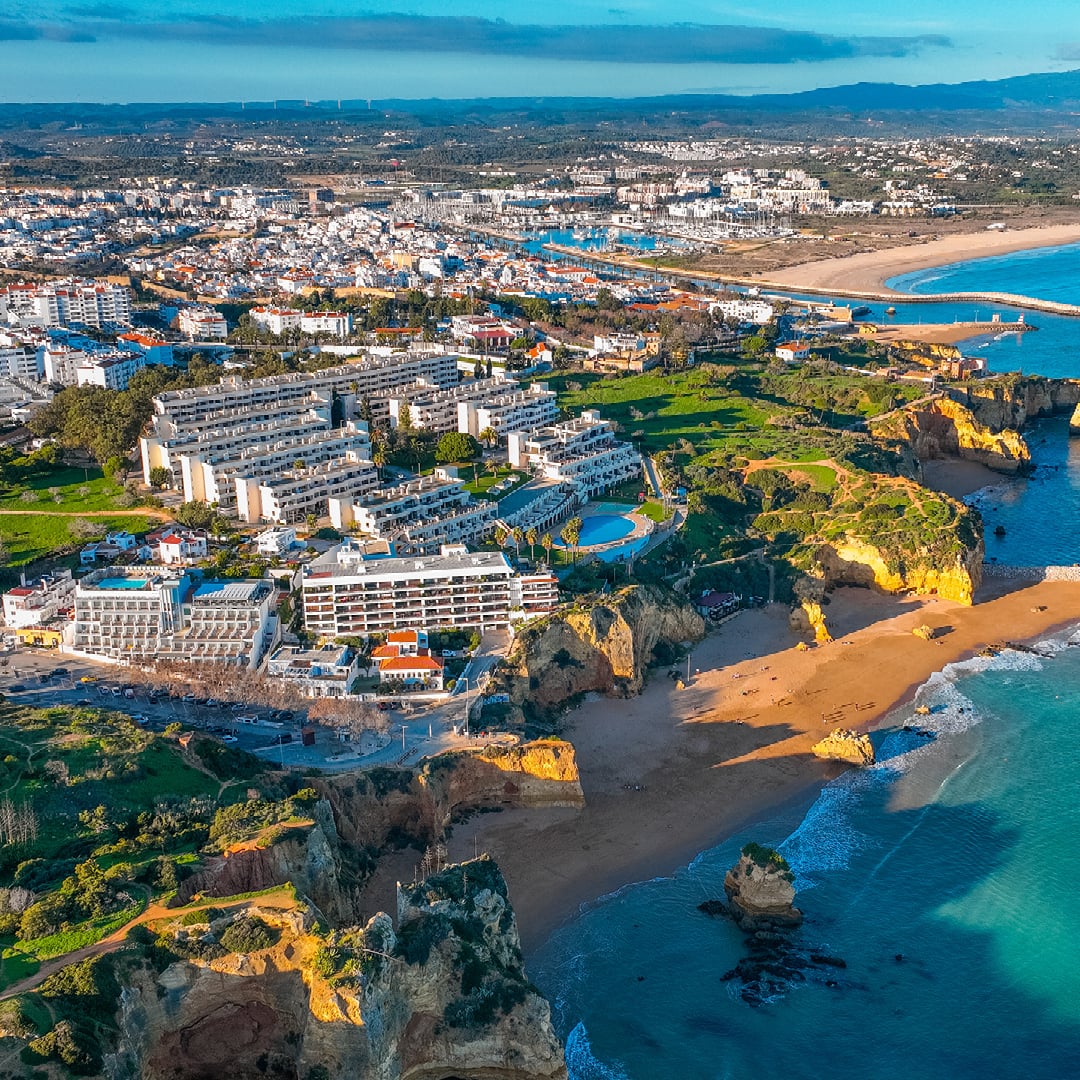
Yeah, I think, I mean, you look at the numbers over the last couple of years, the Americans are the fastest growing tourist into Portugal, as well as homebuyer. If you look on year-on-year, their numbers are growing significantly in terms of looking at Europe. I think part of it is given what's going on around the world. And I think Portugal in particular, we're looking at great weather, great food, great people, great health care. I mean, we have all of the things that someone will look for to move here. It's more marketed than it's ever been. Social media has allowed that to happen. I think that's been a big mover for that. I think the second thing is the American traveler, as well as I would say consumer, is quite different than many other parts of the world. And I'll give you some examples. Americans tend to be brand loyal. They like their Marriott's or they like their Intercontinental, they like their – whatever brand they're into, and they like collecting their points and things of that nature. Portugal really hasn't been that today. That's one of the things that we're doing is we're starting to bring in more international brands. Especially into the Algarve. So we're bringing in the first JW Marriott. We're bringing the first Fairmont. We just brought in the first Hyatt. Like, we are bringing international brands of quality that Americans will know and then there's the service quality For instance, one of things that We've done heavily in the last years is we've invested in other leisure assets and particularly golf. We own 12 golf courses in Portugal. And the level of quality of golf in Portugal in the last years has risen tenfold. You look at our first private course that we redid down in Portugal called the, and it's the else club. We're going to host the PGA Champions Tour in July. These are just big uplifts to the market, which I think the American buyer is looking for. And I think that's why you’re starting to see a lot more Americans. There's direct flights now to Faro from the US, and that's a big mover. So you can fly direct from Newark to Faro. As opposed to flying to Lisbon, and you'll see other airlines, I think, pick up on that. There's just a big influx of Americans looking to Europe, and Portugal happens to be the first European country once you come across the Atlantic. It's a six-hour flight from New York, very easy to get to, and I like to call it the Florida of Europe. The Brits and the Irish have found, and the Nordics have found Algarve a long, long time ago. They've been investing there for 40 years. Many people live there full-time and retire there. And I think the Americans, once they understand what Portugal is about and really start to understand Algarve in particular, I mean, Algarve is at par or better than Florida, to be honest.
Francisco Horta e Costa
And we're finally starting to build a new airport in Lisbon. So hopefully in about more than 10 years time, we're going to have a very decent, big airport to host much more flights and airlines. Coming back to the number of Americans living in Portugal, they doubled between 2022 and 2024. There's still not a lot. There are around 30,000 residents, but that represents a big trend. And I think that Americans have discovered Portugal in the last few years. And also one issue that was not mentioned that I think it's high on the list, it's safety. Portugal is always ranked very highly on safety rankings around the world. So it's a safe place to live, which also makes people much more confident when they think about moving here.
Spencer Levy
And when you take a look at the investments today in Portugal and in Spain, you're seeing an enormous number of institutional investors that are now in the market that candidly would not have come here until a couple of years ago buying traditional real estate. Is that a too simple characterization, John, or is that a fair way to say how the market has changed?
John Calvao
I think that's a fair characterization. I think even now, there's also a lot of credit play, but it's a very interesting and different type of credit playing. I think when you look at the earlier version of this, again, 2010 to ‘14, ‘15, coming out of GFC, that credit play was buying distressed assets, cleaning up banks' balance sheets, getting them into a better position. Today, there is a need for credit, but it is for the other side of it, which is in acquisition, in development financing, and other–that's just investing in assets as opposed to, I would say, divesting in assets, which was what the banks were doing back then.
Spencer Levy
Francisco, tell me the types of assets that are moving today and why.
Francisco Horta e Costa
So, I would say virtually all sectors are performing very, very well. You've got investment across offices, logistics, PBSA, student housing. Retail was the largest chunk of investment last year, around 30%. You've got good occupancy levels, low vacancy rates. And so I would say that we've got investors looking at all asset classes, all sectors, a few new sectors emerging like student housing and slowly data centers, but it's a completely different market now. I mean, if you look before the GFC, the highest investment volume we had was around €1.3, €1.4 billion. Then we had in 2019, nearly €4 billion of investment volume. This year, we're probably going to get to around €3 billion. I like the image of me at MIPIM before the GFC with my nice briefcase trying to speak to investors about Portugal. No one would really care about me and I would need to go around MIPIM, chase investors wherever they were in their stands and now I'm sitting on this beautiful CBRE stand. I'm not saying investors are queuing up to speak with us about Portugal, but it's a completely different scenario. There's definitely a lot of people wanting to talk about Portugal. As you said, there's a huge number of international investments here. Typically, the range was between 70 and 80% of the investment volume was done by international investors. Slightly lower last year, but still a pretty good chunk of international investment. So it's a completely different landscape. I have to say we are much more prouder of being Portuguese and now prouder of our market these days than we were 10 or 15 years ago.
John Calvao
I would say in the last three to five years, we definitely have invested a couple of billion into Portugal and that's acquiring different types of assets. We've been very focused on hospitality in particular. There's been a need, what I would call a need to uplift and upgrade a lot of our hospitality. I think if you look at the numbers and Francisco would have them better than me, the majority of the hospitality in Southern Europe and Portugal is not institutionally owned. So it's still owned by what I call mom and pop original owners, original builders, or families of the original owners and builders. That's not a bad thing It's just a different type of I would say management and style and therefore what we've been doing is we've Been investing heavily into rebranding remarketing and uplifting a lot of the hospitality sector and our resorts which we own quite a few of them I think Spencer just to cut back on one thing you said earlier Which is quite interesting is just the US versus the Europe side of things and part of that is driven by what Europe is, which is a very heavily bank finance sector as compared to the U.S. Which has a much more non-traditional banking sector to it as well. If you look at Europe, it really relies on what we call real estate financing. I mean, the majority of lending in Europe is done as it's backed by real estate. And then the other big difference is that in the U.S., it's a market to distribute. Everything was securitizable. So the banks got rid of a lot of their assets into the public market through these securitizations, and that's still a very active market in the U.S., and that is how they distribute. So in Europe, that's not the case. The banks are heavily laden with assets. There is no real securitization market or public markets for these assets. And so the banks, it's two things. When it goes bad, they're saddled with a lot of assets that they have to find capital for. And when it's going good, they need to continue to lend. So, you know, they're building up these big books, which is how they operate. It's how they make money. I mean, in Europe, I think, if you look at the Portuguese banks in particular, the majority of their books is loans that are given to development or loans that are given to mortgages.
Spencer Levy
So when you're lending, you're acting as what we would call in the United States a non-bank financial institution. Is that a fair way to characterize it?
John Calvao
That's correct.
Spencer Levy
Okay. And then, when you're talking about lending into this market in a market that may have a lower cost of debt, I think what you're saying is it may not be as liquid as the U.S. In terms of getting that debt. That gives you at Arrow a great opportunity here because there aren't as many non-bank financial institutions here to provide that kind of capital. Is that fair?
John Calvao
Yeah. And I would call it also not as flexible as you would see in the US you look at the cap structures and how you structure deals and things of that nature. You know, we'll do deals where we are senior debt providers, but we also will do things where we play in a different side of the structure. We may do a mezz piece. We made do a mezz plus an equity piece. So we're much more flexible than I would call your traditional banks in Portugal, which again, they have a box. You have to fit kind of in the box. If you try to get out of the box, that's a little bit more difficult. And that's something that we could step into. I'll give you an example. One would be traditional, like if you're an investor in Portugal and you want to buy something, but you're not Portuguese and you don't have your history of banking in Portugal, that's a difficult thing for a local bank to give you credit on. Whereas we may have a different view of that with different guarantees or different international reaches that we have.
Spencer Levy
Francisco, what percentage of the market is institutionally owned versus privately owned of non-institutions?
Francisco Horta e Costa
I would say that depends on the sector, certainly if you look at offices, for example, is mostly institutional owned, same with logistics and retail pretty much. Now if you go to hospitality as John was saying, you still have Portuguese owned hotel chains and operators and they got very professional in the last years, but of course they're not an institutional entity when it comes to running those. So there's a tremendous opportunity there to acquire some of those hospitality companies and lift them up and getting them a much more professional management. And I would say certainly on niche sectors such as self-storage, and as you were saying, and student housing where you have some local developers doing the initial student housing schemes, but then selling them to institutionals to create more scale and to get them more professionally managed.
Spencer Levy
At the same time, Portugal is growing. Portugal is a place that, like Spain, has more rapid growth in other areas, also has certain great competitive advantages over other parts of Europe. And one of the areas is data centers, where you have all of this fiber that actually goes to Portugal and Spain, as opposed to going to France, Italy, or elsewhere. And there's very little existing product of data centers here. But we expect that's one of the sub-sectors that's really going to take off in the years to come. You agree with that?
Francisco Horta e Costa
Yeah, I would definitely agree with that. Data centers, specifically Spencer, you've got Davidson Kempner together with Pioneer Point developing, I guess it's the largest data center in Europe right now. I don't want to make any mistake, but it has a 10 gigawatts capacity, which is huge. The first building is built. The second one is under construction. Very recently, Microsoft just announced a €10 billion investment in these data centers. I guess we're going to see more data centers being built in Portugal as a result of our position geographically speaking, you know, there's more than 20 cables landing in Lisbon from all sorts of places in the world and all sorts of providers, and I definitely think that's going to become a competitive advantage of Portugal from where we are located. Actually at CBRE, we just closed our first data center deal in December last year. So I guess that's got to be the first of many.
Spencer Levy
What about multifamily? I understand that multifamily here, there's a shortage. And the shortage is disproportionately in the affordable end of the scale. Tell me about that, Francisco.
Francisco Horta e Costa
Well, first of all, and I know this is an issue that is dear to you, Spencer, but social housing, for example, just to touch briefly on that, it's just 2% of the stock in Portugal compared to like 14% in France. So there's a lot to do on social housing, so the bottom of the chain, so to speak. And then there's the huge shortage of housing, generally speaking, in Portugal. 2025, you're going to have probably nearly €40 billion of residential transactions in Portugal, which is a tremendous growth from the previous year, prices increasing like 20%. So huge shortage. And typically in Portugal people would buy a house instead of leasing a house. So there's a huge shortage on the leasing market because developers, they sell off plan all of their apartments during construction for a very nice price per square meter. So why should they bother waiting to complete their development, then leasing it, and then selling it to an investor? So the numbers on the electing market are not working. So when we talk about bill to rent in Portugal, we are still to see the opportunity coming. Of course, the talk every year is that you need to increase supply. It's not the availability of land because land is there, it's the bureaucracy in most of the municipalities of the country. Licensing is very slow, so that makes that some developers are not capable of waiting that long because they see their IRRs just falling apart. The government has now approved the plan in January whereby they are trying to incentivize supply and to try to increase supply. And that means reducing, for example, VAT from 23% to 6% on construction, because until now we had 23% non-recoverable VAT. And it's gonna become apparently easier to convert buildings from offices or retail to residential without the need to change the zoning. Then other measures include real estate transfer tax exemption for people up to their 35 years, but that's going to put more pressure on demand and also a guarantee from the state to the banks for them to lend 100% of the value when you're buying a house, again to young people, but again that will put pressure on demand. So I can't really figure out how we will solve this equation in the short term.
John Calvao
I was gonna add to just what Francisco said because we are trying to help to be honest with you on this issue about housing and I think it's important to state I mean we we have a company in Portugal called Nexor and Nexor was specifically set up to do what in Portugal is called affordable housing or what the government now is starting to call moderately priced housing and that company only does that and the and the structure that we put there was to do a lighter cost version of this and and back to what Francisco just said, the answer in how you get out of these problems, there is an answer, Spencer, as you just said, you construct more housing. That's the only answer to solve the problem. It's the same answer for Dublin and the UK and London and other areas, as well as in Paris, as well in Madrid and Barcelona. Every single one of these major cities is having housing issues. And the answer is build more houses, not reduce it, not try to not bring in visitors. The answer is building more housing, and building more housing builds more stock, which should put less pressure on pricing. This is a supply and demand issue as much as anything else. But to make it work, as Francisco said, for a company like ourselves and others, it's got to be economically viable. And we have a couple of pressing points right now on us. I think the VAT will help Francisco if that goes by. We have to see how that's implemented. It'd be crazy, for instance, if they implemented and all the ongoing projects are not included. That would put them in disfavor to all the other projects that are about to start. I don't think that would be just. So we need to be smart about how we do this.
Spencer Levy
Let's talk about office for a minute. Office is a sector that has been certainly whipsawed. It went down as hard as any asset class I've ever seen go down, but now we're seeing real signs of strength in the United States. How is office doing here in Portugal? Is it investable? Do you see some of it being converted, Francisco?
Francisco Horta e Costa
Offices here have never been hit as bad as probably other places, namely in the US. We tend to say that, and it's true that commuting times in a city like Lisbon are much shorter than a typical US city. That means for a lot of people it's not that hard to get to your office. When you look at the average take-up, we compared before COVID and after COVID, say between ‘17-’19 and then between ‘22-’24, and in Portugal, you've got a 6% increase on the average take-up, which is quite good. And it's quite a unique situation in Europe. We've got low vacancy rates. And especially when you look at prime rents – prime rents have really picked up and we’re now recording the highest rents ever in the Lisbon market, which for us means somewhere between €31, €32 per square meter, which has never been the case. Typically, Lisbon was lower than Barcelona, much lower than Madrid, and now you're like more or less similar to Barcelona, still catching up with Madrid, but getting there. And also, the office market in Portugal is not Lisbon only anymore. When we speak to a company that is looking for, you know, their headquarters or to establish some in Europe and is looking at five or six or ten different cities in Europe. We offer them Lisbon and Porto. Porto's got a great infrastructure, great airports, great office buildings. And you suddenly saw the French bank Natixis leasing 12,000 square meters in Porto or BNP Paribas also leasing a 15,000-square-meter office building there. Currently in Lisbon, you've got a lot of office developments. And I think when an occupier, especially an international occupier looks at Portugal, the rents are still competitive, but not as competitive as, for example, Eastern Europe. But of course, you've got the quality of life in Portugal, which is very attractive. But I think most important, you’ve got a labor force that is really highly skilled, coming from the very good Portuguese universities. And you've got a population that I would say more than 90% speaks English fluently. And that makes these business environments very friendly for these companies and hence the office market performing well or really well.
Spencer Levy
Well, John, what's next for Arrow in the Portuguese market?
John Calvao
I think when you talk about where is Arrow going next, I mean we have done a lot in Portugal. I think we will continue to invest into what I call destinations. So where we've really been focused in on the hospitality side is destination. And when we mean destination, our best example is Vilamoura, but whether it's Vilamoura or Troia or Monte Rei or Aroeira and Palmares, these are some of the iconic destinations of Portugal, especially in the tourism space. But also, I would say, in the living space. I mean, when you look at Villamora, it is a city resort, and people live there as they should, 365 days a year. It’s a place for families to move to, retirees and everybody else. Every year we're putting more CapEx into these different developments and growing them. And then we're looking to do that throughout Southern Europe. We've done some already in Spain, some in Italy. But Portugal, like we said before, has really been our home turf and has been kind of outpaced in the other countries so far.
Spencer Levy
And so Francisco, from your perspective, what percentage of the institutional market within Portugal is Lisbon versus the everything else that John was describing?
Francisco Horta e Costa
That really depends on the sector. So of course, if we're talking offices, we're talking about Lisbon. If we're talking logistics, we are talking greater Lisbon and greater Porto. If we are talking hospitality, we’re talking the whole country with the main focus on the south, of course, the south of Lisbon, and that would include the Algarve and all of the west coast, places like Comporta. Spencer, I don't know if you heard about Comporta. It's the so-called Hamptons of Portugal. Where you have some famous people apparently living there or buying a house there. And then Portugal, it's a small country, right? So when you drive from Lisbon to the Algarve, I would take two and a half hours. John would probably take two or slightly less because he drives much faster than I do. But I would say there is a lot of investment across the country, but then of course, depending on the sector.
Spencer Levy
I mean, look, folks, let me cut to the chase here. This is a real estate show, but a big part of real estate is live-work-play. And this is a city that has incredible food, has an incredible nightlife, has an incredible climate. And all of these things matter not just for tourists, but for the business environment. So on behalf of The Weekly Take, what a great conversation we just had today with two of the leaders of the Portuguese real estate market, starting with our very own Francisco Horta e Costa, Managing Director of Portugal. Thank you, Francisco.
Francisco Horta e Costa
Thank you very much for having me, Spencer.
Spencer Levy
And thank you, John Calvao, Partner and Fund Principal, Arrow Global. Well done, sir. Thank you.
John Calvao
Thank you Spencer and obrigado, Francisco. I'll see you soon.
Francisco Horta e Costa
Obrigado John.
Spencer Levy
Obrigado, indeed, And in any language, thanks to you all for joining us. In the weeks to come, we'll pick up on one of the sectors we just talked about as Portugal's strengths, logistics, with an American logistics leader that operates a massive portfolio, nearly half a billion square feet of industrial space. We're also putting the finishing touches on episodes featuring some other interesting niche ideas. One is a very timely show about office to residential conversions, on-site at one of the most interesting projects I've seen in a long time. Another digs into the nitty-gritty on parking lots; there's more to these assets than you might think. So stay tuned. And in the meantime, catch up on anything you may have missed by visiting our homepage, CBRE.com/TheWeeklyTake, or the archive on your favorite podcast platform. Tudo de bom, as they say in Portugal. All the best to you. I'm Spencer Levy. Be smart. Be safe. Be well.


.jpg)


