DOWNLOAD TRANSCRIPT
Spencer Levy
I'm Spencer Levy, and this is The Weekly Take. When you think of a brand, the traditional idea that comes to mind is a product – a packaged good or label. An actual thing you buy the store. These days, we also talk about everything from personal brands to corporate brand identities, and now real estate is part of the conversation, too. On this episode, two creative leaders make the case for a new way of thinking about physical space.
Rachel Friedman
We won't know the true impact to how some companies have been handling this, with shedding all of their office space until we're another six months, 12 months, 18 months into this, where people look back and they say, Oh my gosh, we lost one of our most valuable assets, which was the special sauce of our company culture.
Spencer Levy
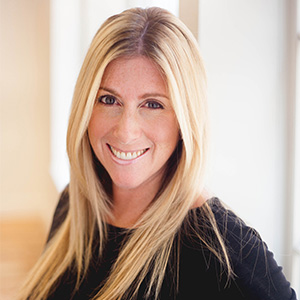
That's Rachel Friedman, the founder and CEO of Tenfold and Tenspace, a pair of shops that specialize in creative and strategy for office and retail. She joins us from our headquarters in Columbus, Ohio, an office that's a testament to her work – full of light, open space and cool design, all of which is a part of her firm's personality and style.
Brian Taff
People want their employees to take pride in the place that they work and in the work that they do. That doesn't have to happen by being in a great office. But if you are going to have an office, I think today you have to have a reason for people to come.
Spencer Levy
And that's Brian Taff, the CEO of Streetsense, a CBRE affiliate that bills itself as part of the quote “experience economy”. Brian joins us from his office in Washington, D.C., where Streetsense is housed in a former bread factory that's been converted from industrial use into a multipurpose work and creative space. We'll start the show by hearing about our guests’ companies – the work they do and the thinking behind it, because I think it's important to get a deeper sense of their unique points of view. Then we'll explore the bigger idea of culture and experience coming together in real estate, from the physical to the digital to the phygital, and its potential as a differentiator for any company. Coming up, a discussion of branding and building – and what it means for business. That's right now on The Weekly Take.
Spencer Levy
Welcome to The Weekly Take and this week we're going to be talking about the intersection of brand and place. But let's just put a big picture start to this. Brian, for our audience, won't you tell us who you are and what you do?
Brian Taff
Thanks, Spencer. So Streetsense is a design experience company that focuses on creating great experiences in place. And for us, place means everything from physical places to virtual places. And so we spent the last 20 years trying to think about, you know, how people and places progress. Really, what we focus on more than anything is the end user and the consumer within the consumer mindset. The emotional connection with place is just the key driver for creating value for our clients. And that's really what we focus on.
Spencer Levy
And Rachel, for our audience, Tenfold and Tenspace, please tell us what you do.
Rachel Friedman
Yes, thanks, Spencer. I think Brian and I are kindred spirits. We speak very much the same language. So I'm the founder and CEO of two businesses Tenfold and Tenspace. I'll start with Tenfold. Tenfold is a culture strategy and creative firm. We focus on building brands from the inside out, so leveraging what makes them really special and unique and differentiated from a culture perspective. And then we uncover that secret sauce that people can feel but have a hard time articulating or putting their finger on. And then we bring that story to life through creative expression. And like Brian, we do it in the built environment as well as in the digital environment. Tenspace is a business that we just launched last September, which is a retail concept. We create in-real-life experiences for online brands. So we feature one direct-to-consumer brand in the space every two months, bringing to life their brand and culture story with a very similar methodology to what we do on the corporate workplace side with Tenfold. And we do that through experience or activation. So it's a really immersive, emotionally connected experience that drives a tremendous amount of user generated social content, which is really valuable today.
Spencer Levy
Well, Rachel, I was fortunate to visit you and your super cool space in Columbus, Ohio, back in December. I presume the brand has turned over since then, but the space at that time had an interactive wall, interactive paint that you could touch, and it would take you to a different place and all the cool things like that. Who's in there now and what are you trying to create?
Rachel Friedman
We're actually doing a brief mini-show right now that is doing a little bit more education in the space, about Tenspace in general. The theme of the show is we all have a story to tell, which is definitely something that's been resonating with folks. And the company that we had in the space when you were there is a firm called Bandeau out of L.A. They're a female brand focused on gifting and accessories, and again, they primarily live in the digital channel.
Spencer Levy
Cool. Well, I think it was Rod Stewart who said Every picture tells a story, don't it?
Rachel Friedman
Yes, I love that. Yes.
Spencer Levy
So Brian, let's stay with that for just a moment. Rachel is painting a picture with real estate. Maybe that's a good way to put it. Would you agree with that characterization?
Brian Taff
I think more than ever. Rachel's, you know, on a target to where the world is moving, and that is being able to create an experience that allows you to connect with brands more and more. There's so many different ways you know that we connect with brands and candidly places. And so creating the experience – the reason to go, making it part of the journey – that's more important than ever. We all know we don't have to go to a store to shop. We don't have to go to an office to work. So why? Why do we go? And our expectations are significantly higher when we get there. But that also gives the brands an opportunity to connect in a way that they've never connected before. So we've all talked about experience forever. And then with the pandemic, we hear experience is dead. But I actually think experience is probably more important and more strategic than it ever has been. So I completely agree with Rachel.
Spencer Levy
Brian, what's your take on how work from home is going to change what you're trying to do from a merger of brand in place?
Brian Taff
I actually think the idea of work from home really is just one part of the work experience, and employers are going to really have to focus on what does the employer experience, what is the employer brand. And culturally, you know, to Rachel's point, people want their employees to take pride in the place that they work in, in the work that they do. That doesn't have to happen by being in a great office. But if you are going to have an office, I think today you have to have a reason for people to come. And that's the things that generally have to do with being with other people. So creating spaces for them to collaborate, creating opportunities for mentorship, creating opportunities to showcase, in some cases, even elements of surprise. So I think we're seeing that across everything. It used to be that we would talk about work – that was office. We would talk about play, right – that was, you know, entertainment or going out to eat or travel. And then we were talking about shop – and that was retail. But today it is really one giant ecosystem that lives not in the physical world and not even the digital, but lives in the mind and the hearts of the consumer. Because you're not necessarily a shopper only in the afternoon and a worker only from nine to five. So you ask how that plays in. I think we're talking about the flexibility for people to be able to be productive in the way that they can and to make sure that they do take pride in the work that they have in the places that they work. The cultural experience is going to be critical.
Rachel Friedman
What we're definitely seeing coming out of this pandemic is that that hybrid workplace strategy is something that is here to stay. In most cases, that's what we're seeing with our clients. And I think what we're saying is it isn't an either/or – that work from home is better than working in the office or vice versa. But it's how do we capture the best of both worlds in a hybrid strategy and recognizing that if you have work – heads down work, work where you require quiet or need to be isolated – if you want to be isolated, you're going to work from home. And so what is coming into the office need to be about? And that is really the opportunity to build and preserve company culture. And so if you have people for two, two and a half days a week, how do you ensure that when they're coming in, you are really filling their cup, you are enabling them to feel very connected to the vision and the mission of the organization, which is really important. And other really important dimensions of healthy and productive company culture, which includes the learning and training, the coaching and mentoring, building authentic relationships, building trust, ideation and innovation – these are all critical things that have to happen, and they primarily happen through spontaneous and unplanned interactions in the workplace. And so by building a Craveable workplace, you're creating an environment that will foster those types of behaviors and enable businesses to compete and to win. And so it isn't just about getting the talent, attracting the talent to come into the office. It's because the success of your firm is dependent upon it. And I think that we won't know the true impact to how some companies have been handling this, with shedding all of their office space until we're another six months, 12 months, 18 months into this, where people look back and they say, Oh my gosh, we lost one of our most valuable assets, which was the special sauce of our company culture.
Brian Taff
I love when you talk about Craveable, this Craveable office or the Craveable Place, because it applies in every segment of the marketplace. And the reason why people go, what makes it special. So that to me, is really, really a critical piece of everything that we're all trying to do. And it does. It lives in the mind, you know, of the people that are using the place. I think I'm going to steal that. I hope you don't mind, Rachel.
Spencer Levy
I like that word Craveable I hadn't heard of before. I'm taking it, too.
Rachel Friedman
One of the other, at Tenfold, the other thing then is how do we address where employees are showing up in the virtual workplace? And so we're actually working with clients to create a very intentional strategic plan, essentially a culture campaign that enables those organizations to create a consistent employee experience no matter where they're showing up every day. So regardless of what companies decide to do with that hybrid strategy, what we're advising is that they just make sure that they actually have an intentional strategy. They are proactively managing it and not just, you know, setting it and forgetting it because it needs to be preserved and protected. Every organization has their own DNA. I mean, they really, truly are like little human beings. They have strengths, they have shadows and, you know, sort of going in and diving deep and then bringing that story to life, I think, you know, is what's so important about creating a sense of place and creating this experience that you have where some of the cues are explicit and some of them are very implicit. It's a feeling. I often describe it like when high school students are making their decision about where they want to go to college. You have all the features and benefits, sort of the check marks. And that can be true for space as well. Like it has these amenities. Check, check, check. It has these common areas, but what's going to make it really resonate and really connect and build community? It's that extra special. Something else is culture and brand, and it's how you express that through creativity and, you know, create that emotional connection between people in place.
Spencer Levy
Well, if I were to quote an old school quote on that, it’s from the band Boston: It is “more than a feeling.” Would you agree with that?
Rachel Friedman
I love it.
Brian Taff
I think that is the point – which is creating the emotional connection, right, between people and place. What we try and do one thing about design, and when we think about what we call place strategy, what are the conditions that you're going to create that allow for those organic things to happen? So while it might be random and that randomness, really, there is an intentionality to it. And I think it's a very good point. What are the cues, you know, that people recognize? This is where I sit. This is where we go. This is how I move through space. And there's some amazing, you know, businesses that do it really well and have done it well for a long time. Disney's a great one who really helps understand how people move through space and what are those intuitive cues. That becomes the responsibility for what we're doing when we think about creating amazing places. It's really about what are those conditions that we're going to create so that when people do interact with it,. That's where the magic happens. So we're just the stage in a lot of ways. And so we're seeing that across everything – whether it's mixed use environments candidly in multifamily, you know, why do people go? Why do they rent there? Why do they stay? How do they create and foster a community? We know that the number one value proposition for people renewing leases is having a friend in the building. And it's the same thing in offices: if you have friends at work. So part of that is having a common experience, having a common connection and to Rachel's point in this culture.
Rachel Friedman
Just to sort of build on that for a minute, I've been working with a lot of landowners and developers, especially some in New York City, with the whole like flight to quality. And how do they bring these properties up to Class A space? And I think the same is true for a lot of these properties where they're lacking a brand story. You know, most of them name their buildings by the address and in the street name, which quite honestly, after you've toured 15 of them, you can't keep any of them straight. But if these properties have a brand, they have a name, they have a visual identity and they have a story that goes with why that place or why that building is special, that becomes memorable. And that can be a reason why a tenant chooses to be in one location over another, especially as all of these properties upgrade and everyone's got the rooftop and everyone's got the co-working space. And, you know, so what's going to make it different? What's going to make it memorable?
Brian Taff
Identity and brand is the way that people differentiate themselves. But part of that is not just, you know, the naming and the identity. Part of that is the connectedness to the neighborhood and the community, and the commitment to the neighborhood and the community. A lot of the work that we do is repurposing or reshaping place. So something existed before and having that connection to the past. And the history really provides an opportunity for people to connect with their culture and the history of that culture. So we do a tremendous amount of brand ID work for place. You know, what are those core elements? What is the strategy to Rachel's point and connecting it to the neighborhood, the community, to the things that lived before are really, really important. I'm in the old Wonder Bread factory here in my new office. This is where they used to make the Tastycakes, you know, in the Wonder Bread, 50, 60, 70 years ago. Today, it's a street level office. So these things evolve and the sense of history. It still says Wonder Bread on the building with Tastycake letters. Those things create a sense of identity and allow people to connect a little bit differently and uniquely so to Rachel's point. It's critically important.
Rachel Friedman
Yeah, so at Tenfold and what we spend a lot of time studying and researching are these subconscious drivers of human behavior. The reality is that we make decisions as consumers from sort of the irrational side of our brain, a part of our brain that we're not that used to talking about or articulating. That's really why I think culture is really elusive and hard to describe. It's because it's something that's palpable in a way that you can feel it, but it's really hard to put your finger on exactly what it is in the culture space for us when we're kind of, you know, getting under the hood and trying to uncover what makes these companies really special and magical. We'll talk to leaders and they'll say things to me like, Oh, you know, our culture, it's our secret sauce. And I said, Well, that's amazing. You know, tell me more about that because we use that as the seeds of inspiration for our creative. And time and time again, leaders could tell me if it was good or bad or healthy or unhealthy. But they had a really hard time telling me exactly what it was about their culture and, more importantly, why. And so I think, you know, that becomes really important as a way to leverage either a landlord's investment in the real estate to work harder for them and tell their story or whether it's a tenant leveraging their investment in real estate with a captive audience. To work harder for them and tell their story,
Spencer Levy
I may take a devil's advocate position here for just a moment because I think what you're suggesting Brian and maybe Rachel is the primacy of the work that you do at the street level or in the office space to create this culturally this environment. But you just can't separate it from the community. You just can't separate it from the location in which it sits. And I think that's even more important today than it was pre-COVID. Not to diminish in any way the work that you're doing, but what wins: location, or can any location be improved to the point of being great?
Rachel Friedman
I would argue that both answers are right in the sense that when cities and communities, even at the state level, when they're more savvy around how to curate businesses that can create a flywheel of a really great destination and a really good experience, that's obviously very valuable. But at the same time, we have numerous examples of, you know, let's just take a retail business like a coffee pastry amazing business here in Columbus called Fox in the Snow. Their first foot on the ground in Columbus, which was in a very undesirable area. It had not been developed. It was sort of out there a little bit. It was in a part of town that was sort of being revitalized. And very soon after they opened with a very strong brand and obviously a very strong product., they became a destination. And wouldn't you know it – years later there's a ton of development in this area. And I don't know if they necessarily started that first domino to fall there, but it would be an interesting sort of case study to look back on. Location matters, certainly. But I also think with a really strong branded place experience, you can create value in an area that doesn't have a lot of value currently.
Brian Taff
New doesn't necessarily mean great. And I think there's a lot of opportunity to redevelop or bring existing places into, you know, what you would call something that's great and, as you said, desirable. I think the concept that Rachel mentioned around destination, that's the key, right? Everything's a destination. If you’re going there, it's a destination. The other thing is we have to be able to change and evolve for a lot of reasons. Over the past 100 plus years, there have been areas where it's just single use, right, where retail is in one place, office is in a different place, residential is in a completely different place. Today, I think we see the biggest risk to real estate is is a single use and not really understand the dynamics of mixed use and the value that happens. We talk about destinations and why people go. We also need to think about what are those underlying things that are there safety, security in a mixed use environment. You got people that live there, so they're there at night in the old CBDs, where it was just offices, a few restaurants, there weren't people there at night. And so you think about what's happening, not just around the space, but the time. So we think about time and place, we think about activation of the place and what are those core elements that create vibrancy and vibrancy doesn't just happen in the afternoons or the evenings or Friday nights. It really is important to think about that across all time.
Spencer Levy
How about if the place is virtual versus being physical, the phgital? // Are people going to start to change the way they interact with virtual in a way that's much closer to the way they interact with physical through virtual reality or otherwise? And are you taking that into consideration, Rachel?
Rachel Friedman
Yeah. So certainly at Tenspace that's sort of our experiential lab or experimental lab around how to bring those worlds together. So at its baseline, we're bringing in a brand that lives online into a physical space to create in-real-life experience. So that's sort of at one layer. Another layer is once you're in the space, how do we leverage technology interactive technology as a part of the real life experience? So that's sort of at another level. And then you have the opportunity to share your experience through your mobile device. That's another integration of technology where because I'm so moved with this experience that I'm having at Tenspace, I want to capture it on my phone in pictures and video and share it out through my social channels. Because as consumers, we're all influencers within our own social network. And so it gets really interesting to play with all of those different layers of technology and how to converge art in real life experiences with the digital world to take it up even another notch. We're doing a lot of work and study within the NFT space and really learning what that is all about in terms of building community and that it's more than just a collectible and is more than just a piece of digital art that there's utility that is being offered with these NFT purchases. And part of that utility includes in real life products, merchandizing, brands direct to consumer. It also includes in real life experiences, ticketed events, gated events through the use of that NFT. So I think we are just on the verge of just explosive growth into really experimenting and exploring with this convergence of physical and digital – or phygital, like we like to say.
Brian Taff
I like the phygital word. But you talked about how places are going to create these digital experiences that are much like the physical space. And my hope is that they actually don't. What we want to be able to do is create something in the digital world or the virtual world that may be better, that might enhance the experience. The goal is to make the experience better for the brand. And that's really all it is. We think about omnichannel is taking products and getting them out to people in a lot of different ways. The world today allows us to take, you know, the people and bring them to the places and the products and ways that people have never thought of before. And I think that's the future of the work. For physical places, for real estate owners, they need to think about this, too: What is my digital experience? What is my virtual twin? If I'm going to lease space for people to be in the office? Why aren't I creating that space that connects to people when they're not here? How do I stay connected? There are tools today that we're designing in. But the reality is, I think we're going to be able to stay better connected to people in place and experiences and memories through the digital integration that is going to create huge value for the people that do it right. And now's the time.
Rachel Friedman
One of the things I would also add to that too, as it relates to the value of the physical environment, is that there is nothing more immersive than scale related to the human being or the human experience. Even if it's not digital, but especially when it is digital, scale really matters. And the only place we can get that kind of scale is in the built environment. And so to create a really immersive experience, one that's really comfortable, you know, without having the goggles on place can play a really important role in that. And for anyone who's been to the Van Gogh immersive experience and those types of things, that's sort of how they're capitalizing on that and creating something that is visceral and just really exciting for people. It all really comes back to scale. They are physically immersed in it.
Spencer Levy
I'm just wondering now out loud, how immersive can you be? What is the next thing that will create this connection to you and your employees, your colleagues, your clients beyond just cool beyond just the newest technology? How do you get ahead of this? Brian, how do you get ahead of this?
Brian Taff
Well, I'd say this: The best experience are those that are shared. If you want to focus on something that's going to drive value, make it ways that people can come together and interact. We just – we need that more than ever. We're going to crave that more than ever. And this idea of we, you know, what are we going to do? Where are we going to go? It doesn't happen by putting on goggles. It happens by us experiencing things together. If you had to focus on one thing, it's how do we create these shared experiences or facilitate shared experiences? That's what helps people connect. They want to be with each other.
Rachel Friedman
Brian is exactly right. Whatever we create in the virtual world is not going to replace what we have in real life. And I think that our concept with time space has proven that out very decisively, that consumers are craving and really desiring to have these in real life experiences that are missing them. And so I think that becomes really important. And the reality is, is that creating relationships and building trust again, those things that are fundamental and foundational to building great businesses, those are multi-sensory experiences and they happen better. And those relationships and connections are deeper because it is an in-person, multi-sensory experience.
Brian Taff
I think the transition from physical to digital is really critical because if you want to create an experience that's real world, you have to have real world experience. You have to have real world planners. You have to have real world designers, real world architects, real world creatives to be able to mimic that into the virtual worlds. But if you want that to be closer to reality, we talk about virtual reality and augmented reality. Reality means people who understand how to walk the street at a walk in the door and how to have that experience where you are bringing people together, how close they need to sit. All of those things.
Spencer Levy
So much of what I'm seeing in real estate is now in the past. We're seeing much more construction using wood – CLT as they call it, cross laminated timber – adaptive reuse, going into old school forms of real estate is the coolest new form of real estate. Rachel, So do you see any of that of looking to the past for the solutions for the future?
Rachel Friedman
Good question, Spencer. I would say, you know, with materiality, maybe not as much. But I think to Brian's point earlier, just the re-use of historical buildings and existing structures as being something that tenants are really interested in because it has that layer of character and differentiation that maybe they're not seeing in the vast majority of spaces that they're looking at. They feel too corporate, they don't feel warm enough. And so I think for us, we're definitely continuing to see a trend with that. People are still loving the exposed brick. They're still loving the wood beams. And they're liking ways that they can combine those to create just a different feeling, a different experience in the office.
Spencer Levy
Rachel, you're based in Columbus, so this is your moment. Why Columbus? Columbus is a Midwestern city – not always associated with hip, cool. But your place is hip, cool, High street is hip, cool. And The Ohio State University down the street doesn't hurt either. But tell us why. Columbus?
Rachel Friedman
Yeah, that's exactly right. In terms of Columbus as a city that we're pitching to a lot of these online brands to prioritize. I will say it's not been an easy journey and it takes a lot of education. So Columbus is the second largest city in the Midwest, second to Chicago or the 15th largest city in the country. We have the highest concentration, to your point, of college age students, perhaps in the country. Nearly half of that is Ohio State, but we have dozens of other colleges and universities in the local region. We are known to be a test market capital, so a lot of big brands bring their concepts here to Columbus to test them out. Whether that's a new food introduction with Starbucks or whether it's Warby Parker's first brick and mortar store that they brought here to Columbus to test and see how that would do. And so there's a lot of great reasons for people to think about Columbus. In Columbus, we talk about the Columbus way, and I will say that is a cultural trait. We're sort of all rooting for everyone. And there isn't a time where you can't ask someone to go for coffee and sit down and solicit their help or their wisdom or their guidance. And people are just incredibly generous in offering to do that. So it's created a really nice business community, a great startup community, and we're starting to see other large companies take note with Intel's recent $20 billion announcement of building manufacturing here in Columbus. I think that speaks volumes as well. So Columbus is a great town. We're also doing work in New York and in all other parts of the country. So we're not just focused here. We've done projects all over: Houston, Nashville, Chicago, California. We're doing a project in Poland right now. So have work will travel is what we like to say.
Spencer Levy
Well, that's awesome. I've been to Warsaw and actually stayed in a super cool hotel. But nevertheless, I still am a big believer that local is the new global. That is the secret sauce. That is the special thing that we still need to maintain.
Rachel Friedman
Yeah, I agree. And I think that's where everyone has the opportunity with multi-use developments to make really strategic and intentional decisions about pulling back on rent rates for certain retail spaces and looking at the development as a whole as to how it can be, you know, really profitable. But you can't expect local retailers to pay the same rent as Anthropologie or some of the other chains that we see in a lot of these places. And I agree with you, I think, you know, just being at Rockefeller Plaza recently, it may not be any different experience going there than it would be for me to go to Easton in Columbus. And that's unfortunate. We have to see more of those local establishments having the opportunity to grow in these markets, and it's what gives these neighborhoods the. Color that they need,
Brian Taff
The more these brands really start to understand the neighborhood and the community, the greater the value of the community and the neighborhood and the impact that they can have on the things that are important to them. So internationally, we're starting to see the same thing. That transformation is really starting to happen. If someone's going to go somewhere, they want to experience something that's local and want to experience something that the locals experience. And if you're thinking about that, how do you translate that and give people that sense that when they walk in the door, they're not transported to a place that could be just anywhere?
Spencer Levy
One of the stores I often point to as being this eclectic combination is Kith down in Miami, where it's my kids favorite clothing store and they always get ice cream on the way out because it's in the store. Who would have thought ice cream in the high end athletic wear store would be the combinations? Or, I think, experimentation on what the right answer is part of it, because not everything is linear. What do you think, Rachel?
Rachel Friedman
I totally agree, and I think what makes the Kith experience great is that that was actually very authentic to the founder of Kith. He grew up eating cereal shakes, and so it was an extension of who he was authentically. And that's why it works. They also have a great product, so that helps. But it comes from a genuine place, and I think that that's really important with brands, that it isn't just throwing something at the wall and hoping that it fits or that it works in some way, but that it fits within the whole brand ethos of Kith. And it certainly does.
Spencer Levy
We're just about out of time, so we're now going to put on our VR glasses or augmented reality, whichever you prefer, and look out five years from now and look back. Given that both of you are at the vanguard of brand and place, how do you see your business or the world that you're going to help transform change in the next five years in terms of the confluence of brand place in a real and in a virtual world, Brian?
Brian Taff
I think it's going be culturally driven probably more than anything. As we're looking out in five, 10 years and people are asking us, it's really not about what's the latest design, what's going to be the important color. You know, what type of cars are we going to be driving or flying? That's really not what the conversation is. The conversation is if there aren't people that are using the place, there's no value. How do we activate place? And what we're thinking about probably more than anything is how spaces are going to drive value for the communities to attract people to drive and increase demand and to make people feel like it's worthwhile for them to be there. So I think those are really, really important things. Placemaking is a term that's really been a little overused, but it's important. And so we're thinking about, you know, what are the strategies and what are the conditions that are going to allow places to be relevant and to be authentic to who they are over the course of time. Because if they are, that's not going to change as much and you don't have as much risk. So really, when we're talking to our owners and investors, we're telling them a couple of things: One,you need to think about that. But you also have to think about the fact that if you're building something, you're creating a compact with the community. You have a commitment to doing something that's going to add value. And I think in today's age, the consumer can demand that. And so we're letting them know that they can't just do whatever they want any longer. They really have to listen to the people that they're hoping are going to show up.
Rachel Friedman
I think what's interesting about that, too, is it's something that we've been dealing with in the corporate work environment and with financial buyers within companies. What is the ROI on the services that you provide and culture and brand, right? It's pretty much the same question. And I think what's been really encouraging and very optimistic is seeing financial firms, asset management firms and asset investment firms making better attempts at quantifying the value of the intangibles. So whether it's described as ESG or in 2018, EY had sponsored a report called the EPIC report, which they did in conjunction with 30 other investment firms that was really trying to create some measures around the intangible drivers of firm value. And so it's the same conversation on what are the intangible drivers of the asset value. And I think it's going to require a shift because a lot of these investments are long term investments. They're not short term gains. Converting a building to be more environmentally sustainable is not a cheap value proposition. It's going to require a paradigm shift in the financial community to look out more long term.
Spencer Levy
And the bottom line is that we have our work cut out for us, but I think the trend is moving in your directions as we speak. So on behalf of The Weekly Take, I want to thank our friend, Brian Taff, the CEO of Streetsense, which is a CBRE affiliate. Brian, thank you so much for joining the show.
Brian Taff
Thanks, Spencer. It's wonderful to see you again.
Spencer Levy
And Rachel Friedman, the CEO of Tenfold and Tenspace. Rachel, what a great job. And go, Columbus.
Rachel Friedman
Thanks, Spencer.
Spencer Levy
For more on real estate branding and on our guests, please visit our website, CBRE.com/TheWeeklyTake. You can find more about our show too, as well as ways to share it with your colleagues, clients and friends in commercial real estate and beyond. After this discussion of brand, culture and community, we appreciate what you are helping us build and we're always interested in growing our connection. So feel free to drop us a note with your feedback, and please remember to subscribe rate and review us wherever you listen. And speaking of culture, we'll be back with a conversational trip to a place with a unique culture and brand of its own. We look to the Lone Star State for a talk about Dallas, Texas, and the fast growing Metroplex community around it. We hope you'll join us for that talk next week. Should be fun. For now, thanks for spending time with our brand here on the air. I'm Spencer Levy. Be smart. Be safe. Be well.


.jpg)