Seattle, WA
Pierce County affordable housing project closes without tax credits in first use of recycled bond structure
June 15, 2026
Media Contact
Sr Corp Comms Manager

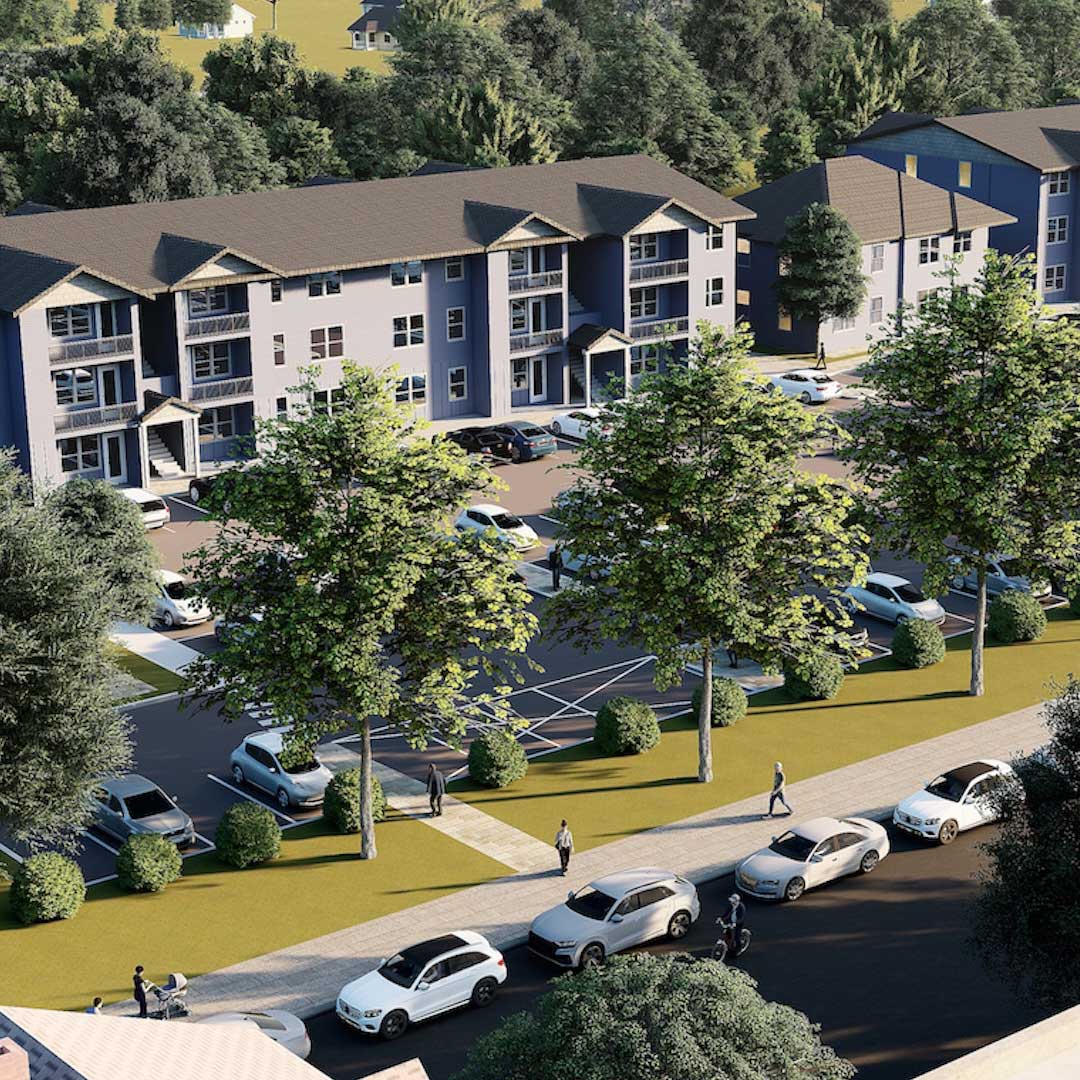
A new affordable housing development in Pierce County, Washington is moving forward with a first-of-its-kind financing structure that delivers 100% affordable housing without relying on the Low-Income Housing Tax Credits (LIHTC) program. The 102-unit project, Addison Grove, represents a significant milestone in innovative housing finance, combining recycled tax-exempt bonds, philanthropic subordinate capital, and Fannie Mae credit enhancement to create long-term affordability at scale.
Developed by Great Expectations, a Seattle-based firm recognized for its creative approach to workforce and affordable housing, Addison Grove will provide housing for families earning between 50% and 80% of Area Median Income, with rents averaging approximately 36% below market levels.
Located in Puyallup, Addison Grove is designed to meet growing demand for affordable family housing, particularly larger units. The development will include a mix of two-, three-, and four-bedroom apartments and will be subject to long-term affordability restrictions, with all 102 units income-restricted for 60 years.
The project is financed entirely without tax credits, instead leveraging a subordinate loan from the Washington Family Housing Fund and recycled tax-exempt bonds issued by the Washington State Housing Finance Commission (WSHFC)—credit enhanced by a forward commitment Mortgage-Backed Security as Tax-Exempt Bond Collateral (M.TEB) structure from Fannie Mae. This transaction is one of the first to make use of recycled bonds for new construction. It closed on a compressed timeline, just 90 days after award of the bonds. Other sources include a grant from the WA State Department of Commerce’s Connecting Housing to Infrastructure Program (CHIP) Grant, as well as private equity.
Fannie Mae’s M.TEB loan structure converts the tax-exempt recycled bonds into highly rated securities and results in significantly lower borrowing costs. The structure includes a forward rate-locked permanent loan and a 30-month unfunded forward commitment, providing interest rate certainty during construction and a seamless transition to permanent financing upon stabilization.
The subordinate financing, totaling $13.41 million, comes from the Washington Family Housing Fund, a unique philanthropic partnership between Ballmer Group and the Washington State Housing Finance Commission to support the construction of affordable rental housing that is designed for families with children. This loan is forgivable at maturity, reflecting a structure designed to maximize affordability and long-term housing stability. This is the first transaction to utilize this financing source.
Leveraging private investment with the combination of low-cost tax-exempt first mortgage debt from Fannie Mae, and the very low-cost subordinate debt enabled this transaction to come together without the typical sources needed to construct affordable housing. It demonstrates the viability of the private investment in affordable housing, when supported by philanthropic funding from programs like the Washington Family Housing Fund.
The Addison Grove financing brings together a sophisticated and experienced team of partners, including CBRE as permanent lender, Heritage Bank as construction lender, Stifel as bond underwriter, and WSHFC as the bond issuer and administrator of the subordinate financing. “We hope that Addison Grove serves as a model transaction to demonstrate how public, private, and philanthropic capital can work together to deliver meaningful housing outcomes”, Ben Maritz, principal of Great Expectations.
About CBRE Group, Inc.
CBRE Group, Inc. (NYSE: CBRE), a Fortune 500 and S&P 500 company headquartered in Dallas, is the world’s largest commercial real estate services and investment firm and a premier provider of critical infrastructure services. The company has more than 155,000 employees serving clients in more than 100 countries. CBRE serves clients through four business segments: Advisory (leasing, sales, debt origination, mortgage servicing, valuations); Building Operations & Experience (facilities management, property management, flex space & experience, critical infrastructure); Project Management (program management, project management, cost consulting); Real Estate Investments (investment management, development). Please visit our website at www.cbre.com.