Intelligent Investment
Data-Driven Decision-Making
How Strategic Insights Help Property Marketing Perform Smarter
November 10, 2026

At CBRE Calibre Creative Group, we think data-driven marketing means using performance metrics to decide where to spend, what to say, and who to reach next. We find the signals that matter to tenants, read them in the context of the market, and turn them into actions.
Success is not about reporting more numbers. Here's how we use data to move the needle for our clients.
Why Insights Beat Metrics in Property Marketing
A metric tells you what happened. An insight tells you what to do next and why.
In commercial real estate marketing, an insight is a finding backed by metrics and framed by the market. It gives ownership an honest picture with full context. Data presented in a vacuum can mislead as easily as it can inform, so we always present insights, packaging the relevant metrics with real-world market experience.
Match Every Metric to a Stage of the Marketing Funnel
Impressions and views are surface-level metrics. They become useful only when you ask what they mean for the funnel and how they should change the next move. We grade performance through a cost-per-action hierarchy:
- Awareness: Reach and impressions, judged by cost per thousand impressions (CPM). Reach among tenant decision makers and brokers counts more than total reach.
- Engagement: Clicks and interactions, judged by cost per click (CPC) and click-through rate (CTR).
- Action: Leads such as tour requests, brochure downloads and broker inquiries, judged by cost per lead (CPL).
- Return: Return on investment (ROI) and return on ad spend (ROAS) connect spend to leasing outcomes.
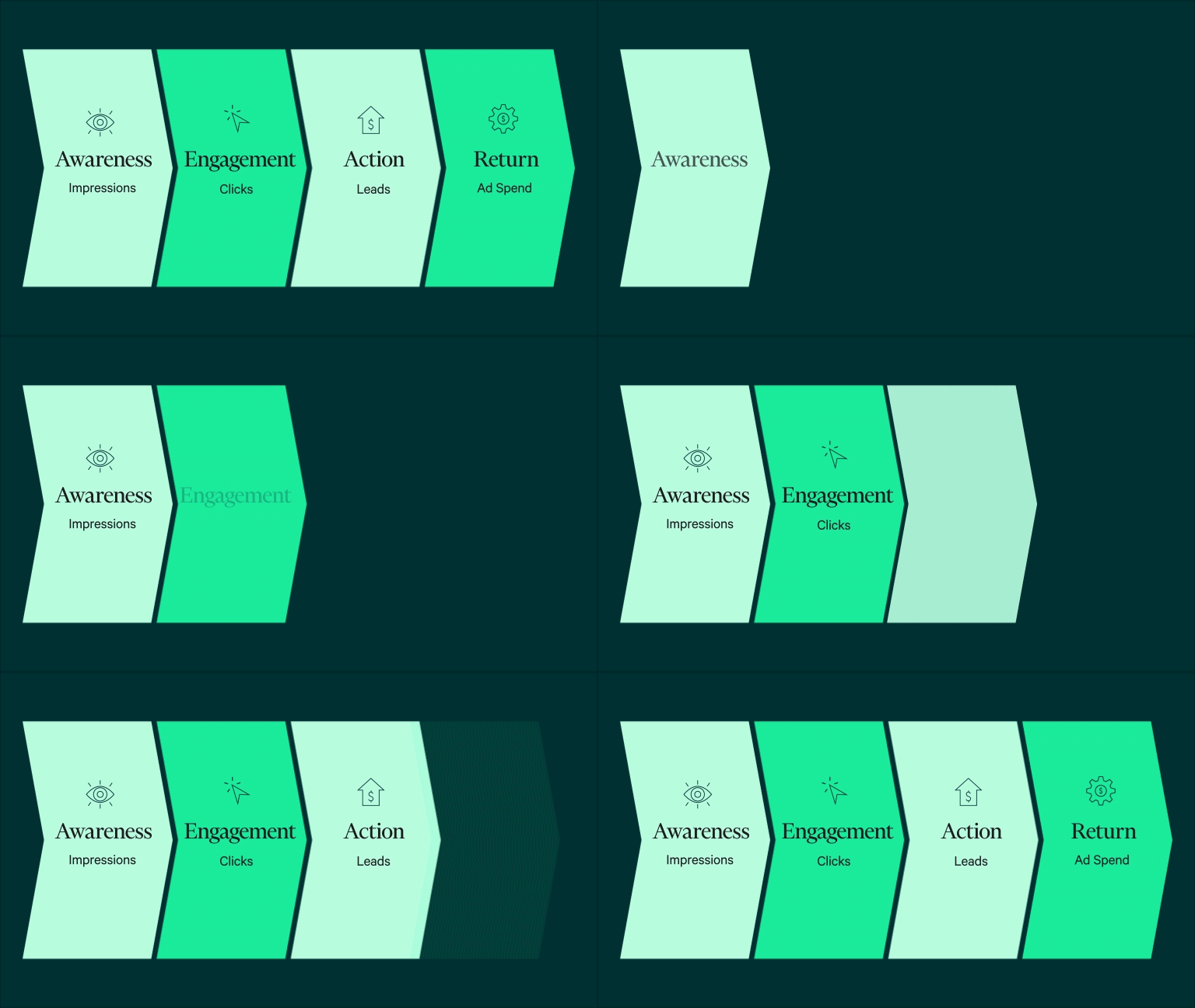
Content and channel strategy follow the same structure. Prospecting campaigns introduce the property to new audiences at the top of the funnel. Remarketing campaigns bring back people who have already shown interest by visiting a website or opening an email. Reading the full funnel reveals where prospects drop off and which stage needs the next dollar. Analytics platforms can surface that data in seconds, but they can’t explain what it means.
Data Informs. People Decide.
AI and analytics platforms can process large data sets, run keyword research, and segment audiences at speed. AI may even be your primary audience, as prospects increasingly research space through AI search tools. But they can't walk a submarket or explain why a company relocates.Market expertise decides which data to curate and how to present it. Start from the tenant's position: what data are they weighing right now? Then make the business case in terms of ROI. People turn data into something a decision maker can understand and act on, and that role does not go away.
Data in Action: Three Campaigns
The Eight
A/B testing and ad segmentation, paired with real-time demographic and engagement data, showed that retail content resonated most with our curated audience. The campaign shifted toward the building's retail energy and used news and fresh content to keep prospects engaged.
MKE Air Cargo Center
Ownership's goal was general awareness. Performance data guided channel strategy and ongoing optimization, and geotargeting concentrated ad delivery within a radius of major airports.
Nexus at Spring Hill
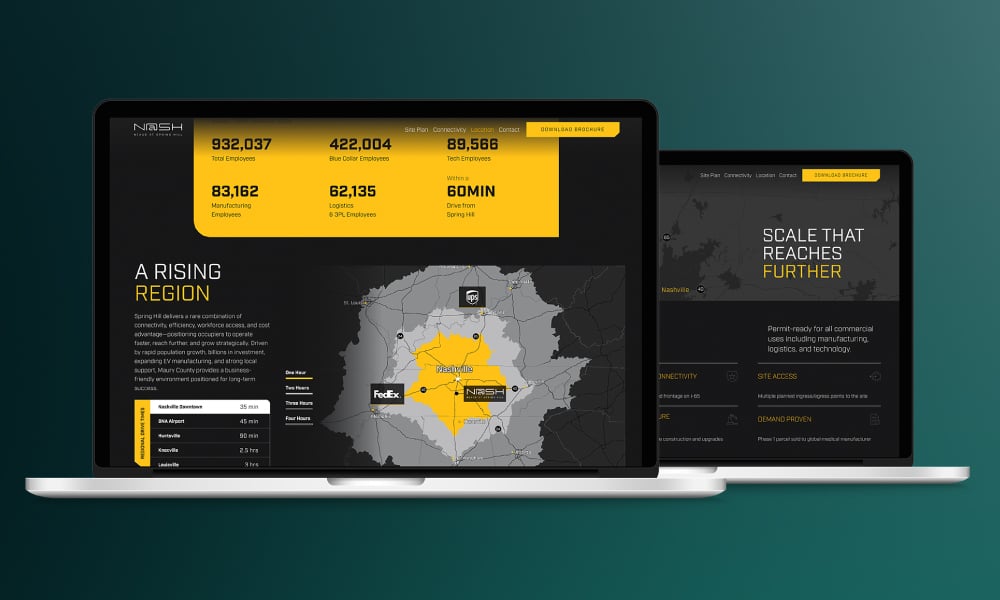
For a site serving the automotive, manufacturing, technology and logistics supply chains, the data that mattered most was drive time, consumer reach, labor availability, and proximity to established industry leaders. CBRE Location Intelligence supported these market analytics, and the team packaged the findings into materials that prospects could reference. Every figure was fact-checked before it went to the market.
Put the Framework to Work
The next time leasing stalls, resist the urge to buy more impressions. Start with a better reading of the data you already have.
-
Prioritize intent over volume.
Shift budget from broad impressions to quality engagement and lead signals. -
Pair data with market expertise.
Use analytics to spot the opportunity and local knowledge to shape the story. -
Present insights with full context.
Back every recommendation with metrics, be transparent, and show the whole picture.
Let’s reimagine property marketing together.
CBRE Calibre Creative Group’s in-house team of industry leaders delivers award-winning, full-spectrum strategies that open new horizons in commercial real estate marketing.