Intelligent Investment
Benefits Far Outweigh Drawbacks of Rising Data Center Development
May 14, 2026 3 Minute Read
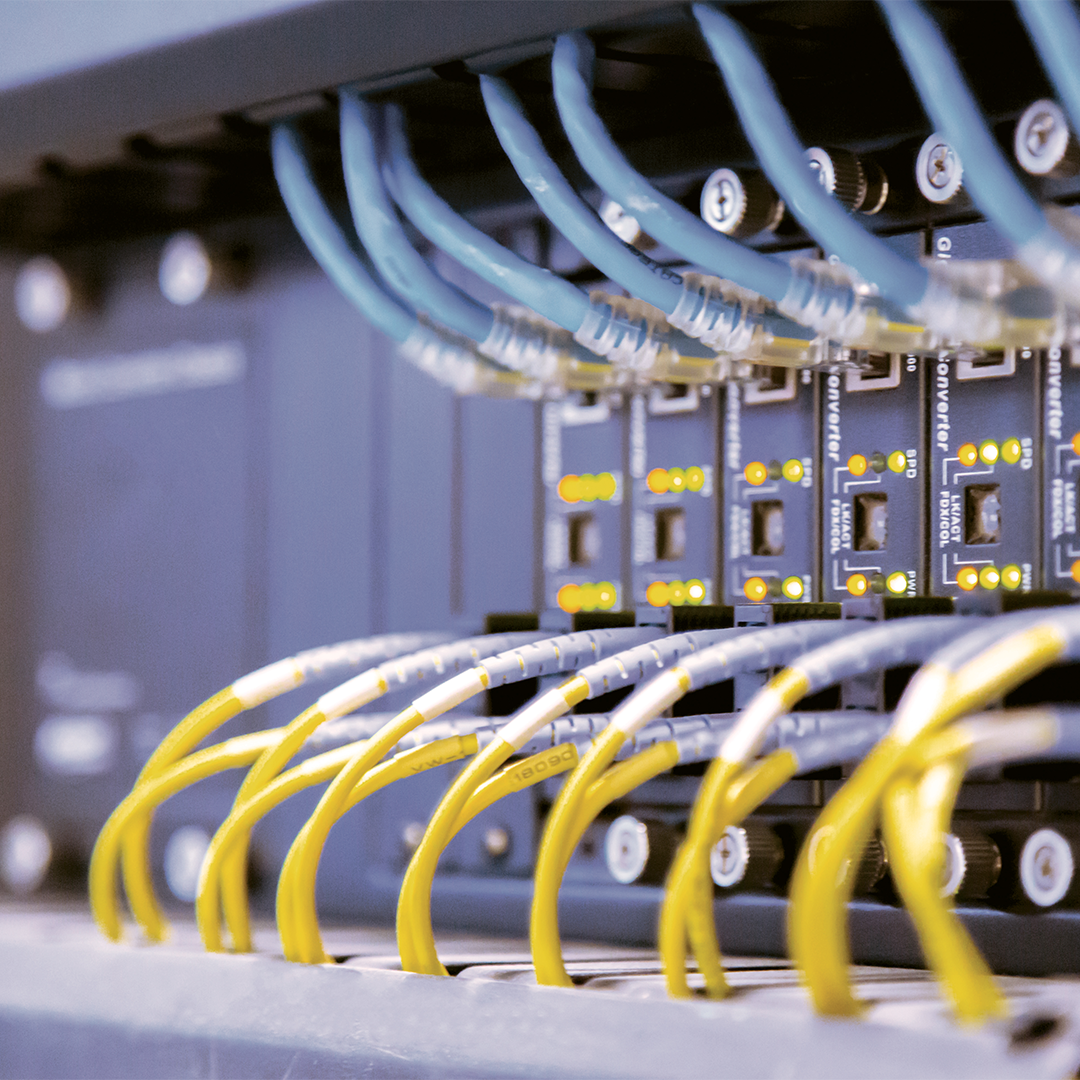
Data centers have become indispensable infrastructure in the digital age, from powering global communications and cloud computing to facilitating scientific research and e-commerce. Despite local opposition to data center development across the U.S., these specialized facilities are the engines driving technological advancement and economic growth.
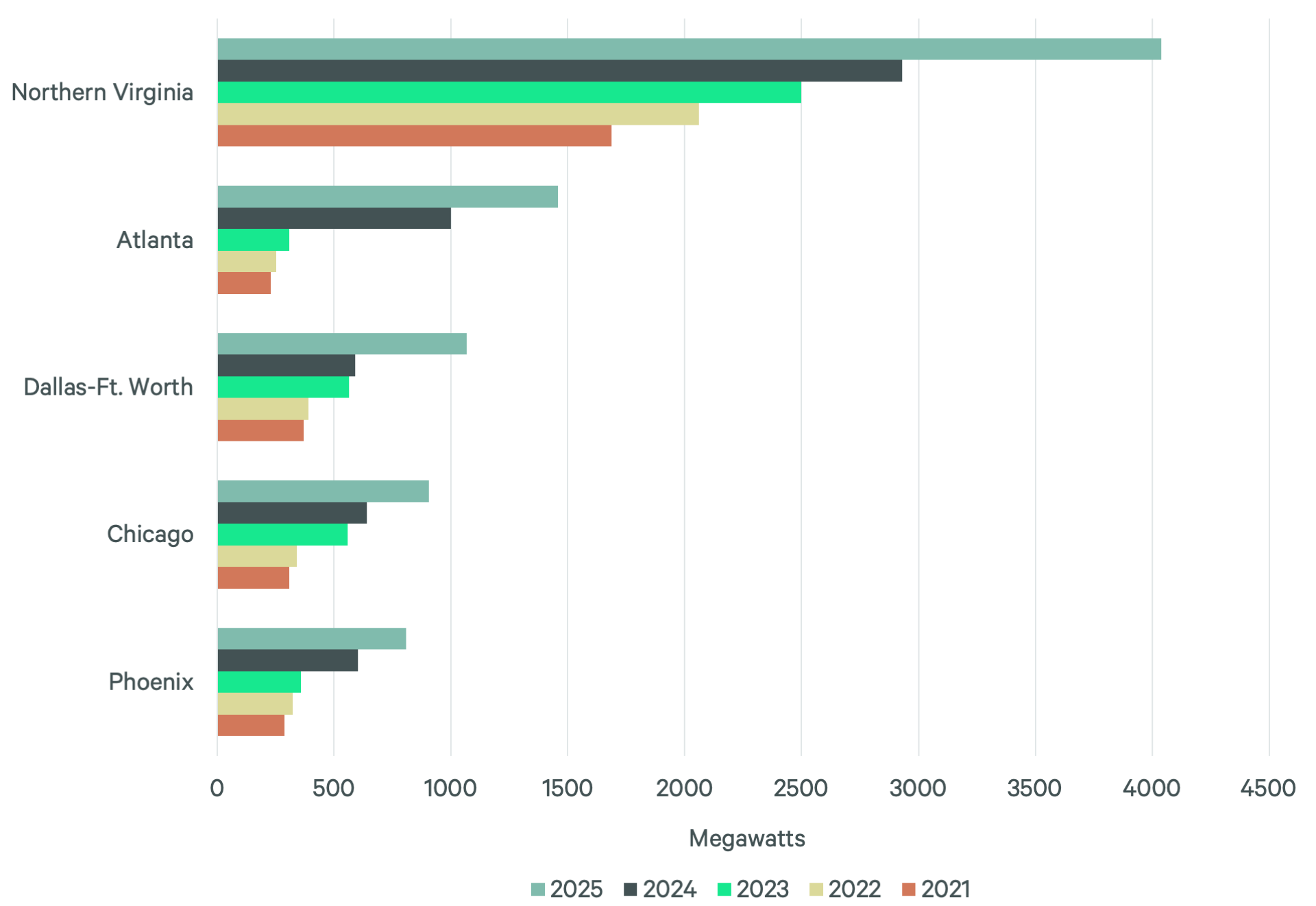
Leading U.S. data center markets like Northern Virginia, Atlanta, Dallas-Ft. Worth, Chicago and Phoenix have seen unparalleled growth in recent years. Since 2021, Atlanta has grown the fastest with a 536% increase in inventory, followed by Chicago with a 192% spike.
Figure 1: Top U.S. Markets by Data Center Inventory
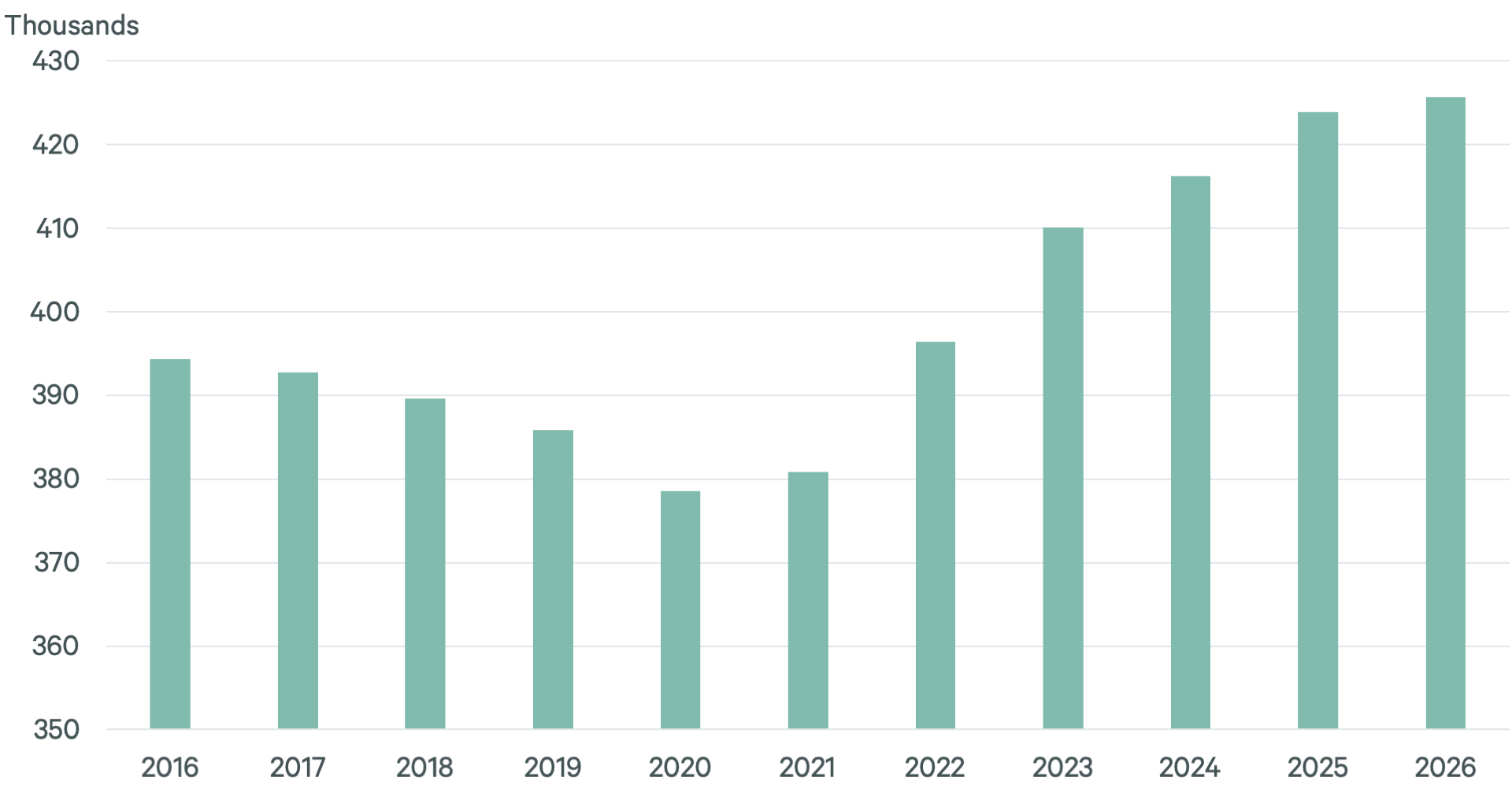
Significant employment growth has resulted from electric grid upgrades and expansion projects to supply power to new data centers. Based on an analysis by CBRE Econometric Advisors, a 55% increase in a market's data center inventory results in a 3.8% increase in local electric utility employment within six months. This has boosted total U.S. electrical service employment to an all-time high.
Figure 2: Total U.S. Electric Service Employees
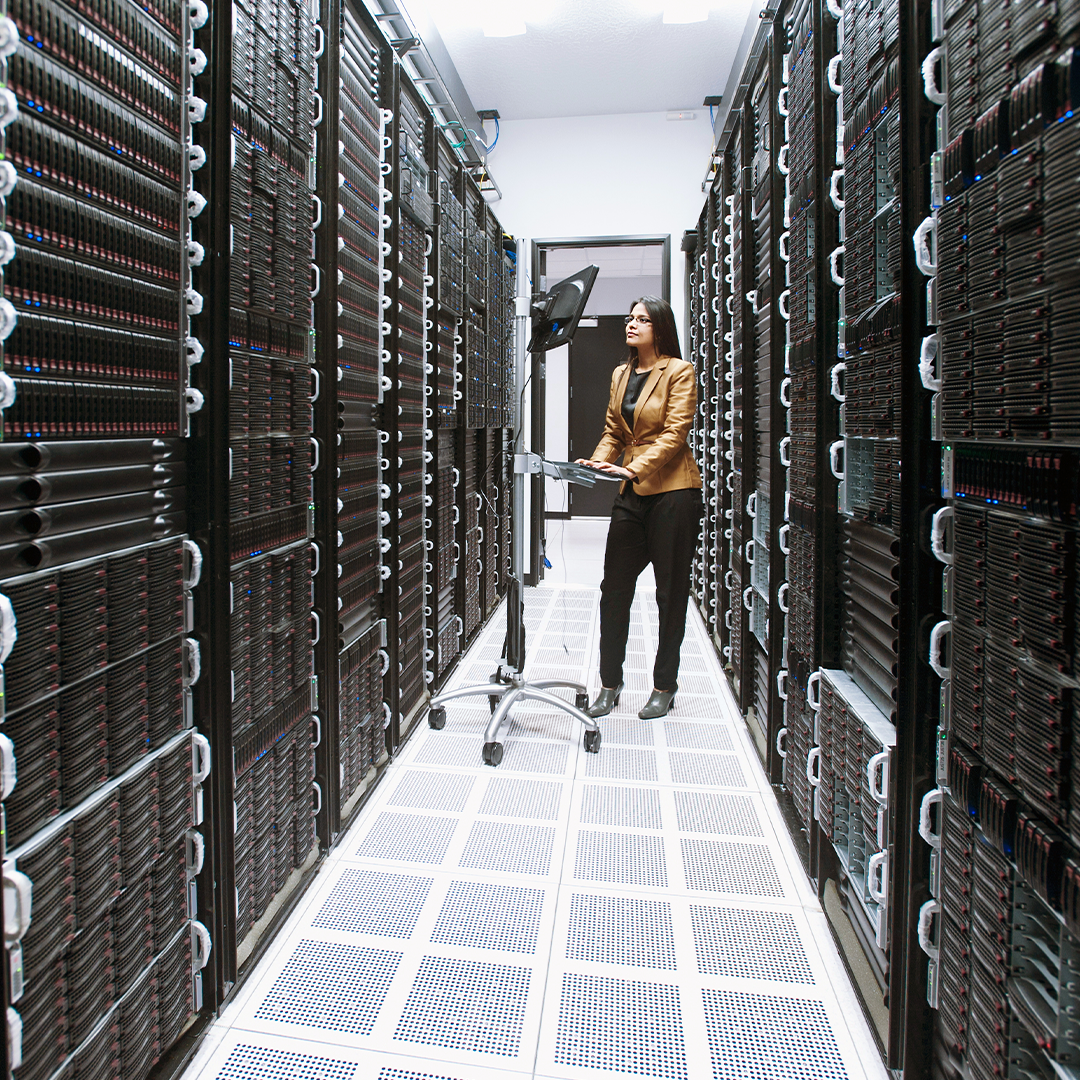
The proliferation of data centers has resulted in substantial need for electricians, engineers, technicians and skilled tradespeople over multi-year build cycles. Once operational, these facilities generate state and local tax revenue, as well as ongoing economic activity through equipment procurement and maintenance contracts.
Among the many benefits of data centers are the following:
- Local tax revenue: Data centers have much higher appraised values than comparable agricultural, office, industrial, retail and hotel properties. As a result, they generate much more property tax revenue, along with recurring sales tax on computer equipment upgrades. For example, Loudoun County, VA—the world’s largest data center market—expects to collect nearly $795 million in taxes on data center equipment this year.
- Job growth: The full build-out of a data center requires thousands of on-site construction workers, laborers, mechanics, electricians, plumbers and technicians. Once completed, full-time staff are needed for security, operations and maintenance. A study by PwC found that data centers create six indirect or induced jobs across the U.S. for every direct job they create.
- Upgrading infrastructure: Data centers contribute to power grid enhancements for adjacent areas and improved water and sewage systems. Data center flexibility during peak hours of stress on the electrical grid can assist in preventing potential brown-out and black-out periods. Closed-loop water systems in new data centers now use a fraction of the water compared with residential and agricultural uses.
Data centers are more than just technological hubs; they are vital components of the modern digital economy, driving substantial economic growth and community development. While their rapid expansion necessitates careful consideration of energy and resource management, data centers continue to be catalysts for innovation, prosperity and infrastructure enhancement that provide a transformative digital future for all.
Related Insights
-

Mitigating the unique risks of executing projects in a live data center.
-
Brief | Intelligent Investment
2026 North American Data Center Investor Intentions Survey
April 21, 2026
Data center investors plan to boost capital allocations in 2026, driven by strong demand and hyperscale growth.
-

With record low vacancy, mounting power constraints and limited new deliveries, the race for data center capacity is intensifying.