Brief | Future Cities

Cities Are Not Dead

February 2, 2022

Learn more about our Global Forecasting Platform.

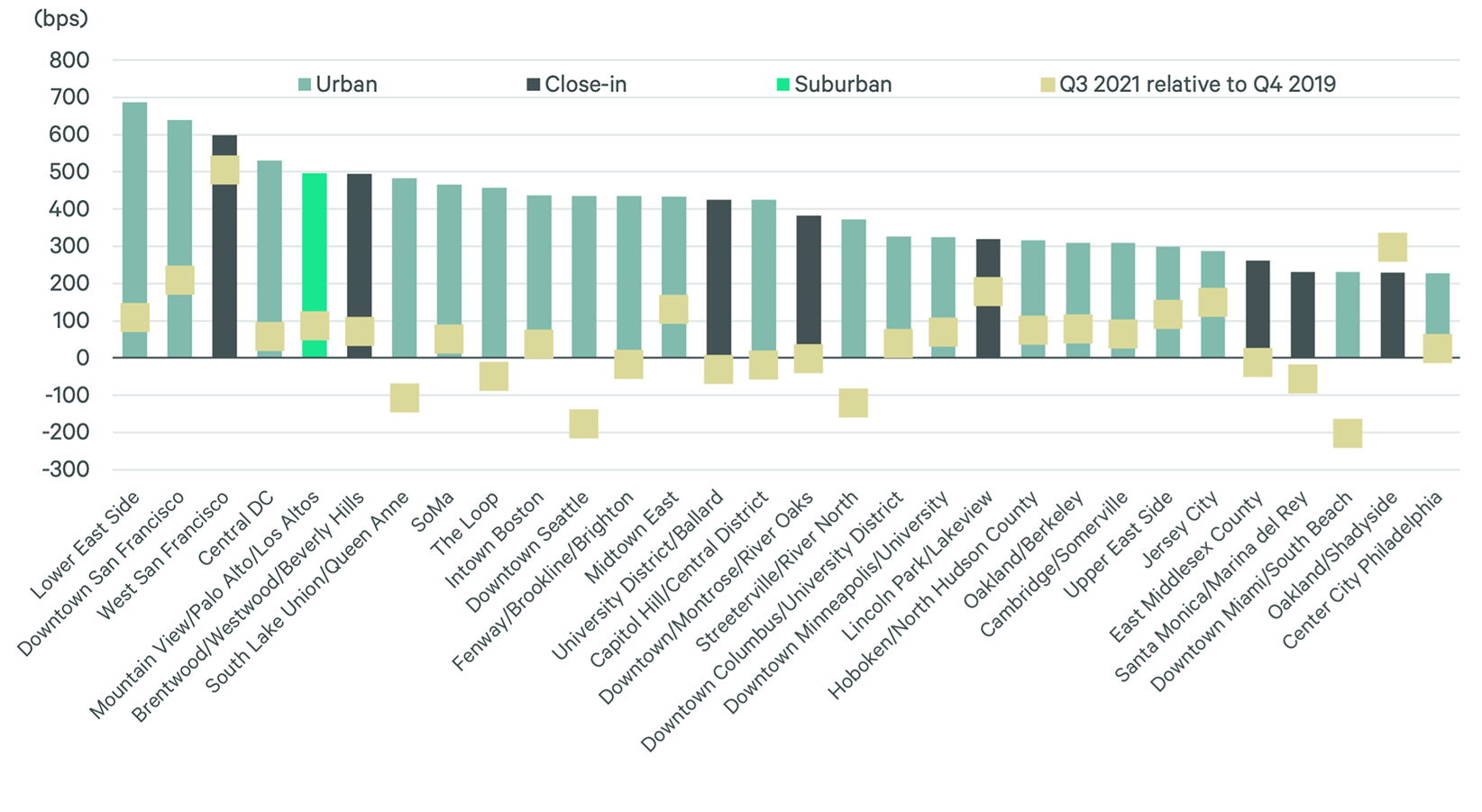
As the COVID-19 pandemic accelerated so many trends, one story that dominated the headlines was a mass exodus from dense, urban areas to more spacious settings. To be sure, urban for-sale and rental housing markets softened in 2020. Urban apartment vacancies rose considerably, especially in the densest markets, such as Manhattan, San Francisco and Washington D.C. But what difference a year makes! As restaurants, bars and other urban amenities reopened, apartment fundamentals began to recover. Seattle and Miami apartment vacancies are now below 2019 levels. Continued hiring in the tech sector appears to be benefitting Seattle, while Miami has seen an influx of residents from other parts of the country in recent quarters.

FIGURE 1: Change in apartment vacancy by submarket type
cities-are-not-dead
Vertical bars represent the change in apartment vacancy during 2020 and are color-coded by submarket type. The square dots show how vacancies have changed during the year 2021 through Q3 relative to pre-pandemic levels. (Note: EA is finalizing Q4 2021 submarket statistics.)
Source: CBRE Econometric Advisors

Let's Talk