Download Transcript
Spencer Levy
It may be a little late for a back to school episode, but it's never too late to learn a thing or two, and that's what we're about to do on this episode – a higher education in higher education, with the administrators of real estate programs at three major universities.
Jeff Tucker
We obviously want them to come out with all the technical skills that prepare them for a career in industry.
Spencer Levy
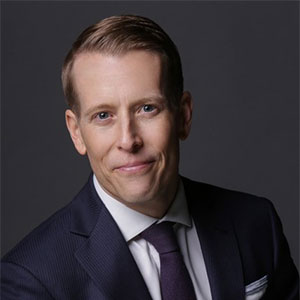
That's Jeff Tucker, Executive Director of the University of North Carolina's Woods Center for Real Estate Studies. Jeff earned his MBA at UNC before embarking on a career of more than 20 years in private equity and emerging market development, including 16 cities across China and more. Last summer, he returned to the campus in Chapel Hill to lead a program that he says places a heavy emphasis on experiential learning and mentorship.
Dustin Reed
We’re weaving together feasibility analysis, process, placemaking, and hard construction fundamentals to try to produce a pretty well-rounded student.
Spencer Levy
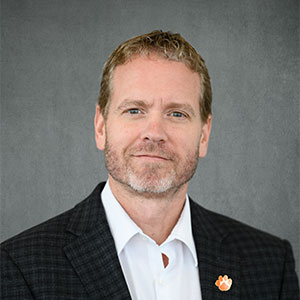
That's Justin Reed, a career professor and administrator, who now serves as Director of the Master of Real Estate Development Program at Clemson University in South Carolina. Unlike many real estate programs, Clemson is not part of the business school. Rather, it sits within the university's College of Architecture, Arts and Construction, taking an interdisciplinary approach to the industry.
Donald Sheets
That's really what this industry is. It's beyond just business school and it touches a lot of different aspects.
Spencer Levy
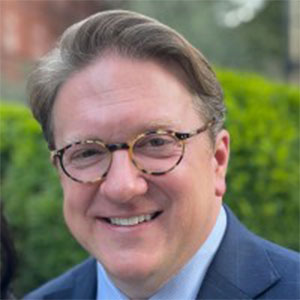
And finally, our roll call of guests features Donald Sheets, a Wall Street veteran who's now rebooting the Ohio State Center for Real Estate, where he serves as Executive Director. Don says students also take a holistic view of the industry, looking at real estate as more than just an offshoot of a traditional business education. Donald’s also a lecturer at the Harvard School of Design. Coming up, a conversation about higher learning in real estate and issues facing young talent as they get ready to embark on careers in the industry. I'm Spencer Levy, and that's right now on The Weekly Take.
Spencer Levy
Welcome to the Weekly Take, starting with Jeff Tucker. Jeff, thanks for coming out.
Jeff Tucker
Thanks. Pleasure to be here.
Spencer Levy
Great to have you. And then my old friend Don Sheets. Don, thanks for coming out.
Donald Sheets
Spencer, great to see you.
Spencer Levy
Always great to see you, Don. And then last but certainly not least, Dustin Reed. Dustin, thanks for coming out.
Dustin Reed
Thanks, Spencer.
Spencer Levy
So let's talk about the future. And the future is in all of your hands. The future of commercial real estate. And we're seeing more and more programs that are growing their commercial real estate program because it's such a big industry. So Jeff, tell us about the vision of real estate, commercial real estate at University of North Carolina.
Jeff Tucker
Well, we're a program that's about 24 years old now. And it just to get a little bit of contextual history started with a class and then has developed from there. We now teach about 260 students between our undergrad and MBA programs. We have ten full time faculty members. We focus on real estate development as well as the capital markets, with a heavy emphasis on experiential learning. So we do some interesting things. We have a fund that our students manage. They raise the capital, they find the investments, do all the deal sourcing, do all the investor reporting, etc., so it's sort of a unique differentiator for our program. But again, heavy emphasis on experiential learning.
Spencer Levy
When you say experiential learning. What is the goal for, I mean, again, this is more of a general question, but what is the goal for each of your students when they get a University of North Carolina education?
Jeff Tucker
We obviously want them to come out with all the technical skills that prepare them for a career in industry. I would say we wouldn't measure our success in terms of just the percentage of students that get jobs immediately, etc., although that's very important. Really, we're looking at, what does that student's life and career look like for the next 30, 40, 50 years. So we want to have a relationship with our alumni for long periods of time. We have a connection to the real estate industry, and so we've got executives in residence that come in and mentor our students. We place them in internships and full time jobs, just like every other program in that respect.
Spencer Levy
Donald, why don't you give us the big picture of the Ohio State University? What are you trying to accomplish?
Donald Sheets
Ohio State's been teaching real estate for about 50 years. You know, over the years, there's been a doctoral program, also in real estate. Our MBA program does not have necessarily a specialty in real estate, but there are real estate electives. At the undergrad level we have a minor major, and this might be a little much inside baseball, but the center for Real estate here at Ohio State is really some connective tissue and some glue of a larger ecosystem of real estate, not necessarily our mission in terms of educating the students. Those are all done basically at the college level. We have Fisher, which is our College of Business. Knowlton, Architecture and Design Engineering. We have Moritz, which is the law school, obviously teaching Real Estate Law. We have the College. We've got climate, and other matters that touch our industry. What the center is doing here at Ohio State, and really what the recalibration effort is that I'm trying to lead, is to look at real estate holistically and on an interdisciplinary basis. So while the center is technically domiciled at the business school, Fisher, we're trying to take down some, some silos and barriers on an interdisciplinary level here at Ohio State and bring a much larger lens and perspective across architecture, design, law, climate, policy, in addition to the nuts and bolts basics of what one would learn traditionally through a finance coursework of real estate, and looking at it in a much larger, more substantive way. Because that's really what this industry is. It's beyond just business school, and it touches a lot of different aspects. So, that's the effort here. As a side note, up at Harvard, we're doing something quite similar and substantially reconfiguring how real estate is centralized, taught, where the faculty are domiciled, and how electives are crafted. So I think there's something larger afoot at a few institutions in terms of looking at real estate beyond the business school.
Spencer Levy
And one of the things you didn't mention, and I will mention it, because real estate is so interwoven in communities that unless you understand the local regulatory environment, I think you're missing out on something. So I'm glad you mentioned the law school as being part of your program.
Donald Sheets
Absolutely. We are looking at policy with the John Glenn School here as well. And one aspect that, and I'm sure we'll get into this, as we start dissecting some things, Spencer, that's been intriguing, is that even the issue around affordable housing has very strong relevance and a lot of resonance with this current generation that will be the next cohort of leaders in our industry. It's an aspect of the industry, to your point, Spencer, on policy and the intertwining of effectively what is a double or triple bottom line that might be looked at that was frankly missing. Certainly, the generation that I saw in my own cohort and really looking at deeper impact, which is why this interdisciplinary lens I think is, is really going to be quite critical for those institutions that are looking to really remain relevant in the next 10 to 15 years.
Spencer Levy
Dustin, let's hear more about Clemson. What, what are you trying to accomplish there at your real estate program?
Dustin Reed
Sure. Well, I'm glad you guys have already brought up the topic of interdisciplinarity. That really was the bread and butter of Clemson's program from its inception that, unlike many real estate programs in the country, we're not housed in a college of business. We're actually housed within a college of Architecture, Arts and Construction and sit within a department of Construction, Development, and Planning. So our 20-year history has really been about trying to teach real estate as more than a subfield of finance and a discipline where we're weaving together feasibility analysis, process, placemaking, and hard construction fundamentals to try to produce a pretty well-rounded student. So I think some of the comments about interdisciplinarity are certainly on point, and that is the direction where I see many of the real estate programs around the country going, including ours.
Spencer Levy
Jeff, let me ask, just a market question. It's fair to say that the last year and a half in real estate, it's been tough. How’s the students taking it?
Jeff Tucker
It's been challenging. We're looking at internships and full time jobs, and those numbers are down from where they've been historically. Which is depressing for students, although I think they're certainly well aware that real estate cycles and we're just in one of those cycles. We have not seen a downturn in applications or an upturn. It's been stable on that front. But I think we're probably tracking with our peers on this front, with full time jobs and internships being down right now. Hopefully that'll change soon.
Spencer Levy
So given the challenging market conditions, Donald, what do you teach your students to be resilient in markets like today?
Donald Sheets
Yeah. So, I spent the last year or so, developing all new casework for a class that isn't taught anywhere. Not just in real estate, but literally, a topic that was a bit de novo and didn't conceptualize in this for maybe the last four to five years and we finally unveiled it up at Harvard. It's all case based, and the course is called Learning from Failure. To my surprise, and developing it with four different research assistants, is that there was nothing like this in any graduate program anywhere, or undergraduate. There are places like venture that might touch on aspects of this, but frankly, spin it, Spencer, in a way that I think is artificially positive, where you try to find the silver lining or fail fast and move on, the obvious. In this course to the question you asked, Spencer, is really understanding how to create resiliency and not getting caught up in war stories or anecdotes around failures. What I've shared with people in industry that I was developing this class, of course, people came at me with like a million ideas of failed deals and failed companies. You know, it's much less that, it's actually how do you study it and how do you learn from it? It's not how do you talk about it? And translating something from just War Story Land all of us could give, given how many cycles we've had – if we've taken any risk of buying treasuries, we've got failures on our hands – is actually how to methodically study it, just like it's done in medicine, engineering, on the playing field, in elite athletics, on a production line, and translating that into how can we actually learn something from this? And how do you methodically create a corporate culture that normalizes failure? Right. I think we're a bit on the leading edge of exploring something here that has resonated, deeply with the graduate population up at Harvard, teaching this on an interdisciplinary basis as well. It's basically a Kennedy School, business school, law school, college, GSD elective. And I think there's a lot of curiosity, even from these students who have not necessarily had large failures on their hands yet just given where they are in their lives, although some have. And in trying to arm what is for recognition in a culture, that can respect how to effectively analyze events, whether they're failures or successes.
Spencer Levy
Dustin, you've been in the field of academia more than all of us. Tell us how the education of commercial real estate has changed over your career.
Dustin Reed
That's interesting, when I was prepping for this conversation today, the idea of change and how real estate education is involved, it's kind of fascinating. It's probably not evolving as quickly as it should be. Right? But like most areas in academia, sometimes we find ourselves following instead of leading, which I hope all of our programs are trying to change. From the perspective of what I see every day, the demands of the students are certainly changing. The we're a self-funded program where the students are paying market rate tuition, so they expect very applied knowledge. They don't want to spend a bunch of time on theoretical discussions. They want to know what skills and what attributes are going to move the needle when they get to the job market and want to be prepared. So they both have high expectations, but they also put pressure on themselves to get something out of this investment. And Higher Ed is really ratcheted up the pressure on programs like ours to make sure we're delivering industry relevant curricula and getting students ready for those placements.
Spencer Levy
Donald, we talk about all the different skill sets that go into being a great real estate developer, and I think we know about the nuts and bolts of Arugus, the nuts and bolts of discounted cash flow analyzes. Building a model to do is a great development, but there are other areas, we touched on affordable housing. Let's touch on the climate. Let's talk about sustainability. How are we dealing with this from an education standpoint?
Donald Sheets
I think, Spencer, we're not, would be the honest answer. It can be very easy for someone to try to spin an answer here. But I would say across, most, if not all programs, is not yet a larger consciousness around what sustainability really is. In fact, there's still a debate of whether this is even relevant to be discussed. Period. Full stop in some circles and what larger debates there are around climate, what contribution real estate has to that, as well as what effects there will be on real estate. So it's twofold. It's, obviously, what is real estate contributing to the climate equation? And what are the impacts to real estate in the built environment as a result of climate? And I don't see it relevantly being addressed in any program. And I think that is where we could see some leading edge. A lot of times, any of us who have been in academics realize that to be able to change curriculum or add attributes like this aren't necessarily something that just kind of gets done. It does take years sometimes to move things through systems, for new electives, and for new concepts to be woven into some of these programs. I would love to be able to say that a lot of these institutions are paying attention here. I don't frankly see it other than what might be symposia, programs, events, awareness, for sure, but within the curriculum, I don't think we're quite there yet. The difference being that on an interdisciplinary basis, if students are intrigued and I would say have some faculty sponsorship to go take electives in what might be nontraditional coursework, it can exist out there in many of these university ecosystems, right at a large institution like USC or Ohio State. You know, perhaps also at Clemson, there will be some coursework around some of this. It's just not gonna be the obvious elective that might be on the menu, for some of these students to take. And it will take some real legwork. So I think the industry has, at least in the United States, a fair amount to move here for this really to become something that happens in the classroom, for better or for worse.
Jeff Tucker
I would add the Wood Center for Real Estate at UNC is what we call a center for excellence at the business school. And so there's nine others, including one aimed at sustainability. So we've got a fair number of our real estate students who are also, maybe not concentrating in sustainability, but they're taking coursework in sustainability. I think we've got a lot of work to do to integrate that better. But they're certainly getting that exposure.
Spencer Levy
So let me just put a very pragmatic issue – oh, go ahead, Dustin.
Dustin Reed
I’m sorry. I was going to jump in. I was. Nice opportunity to learn from Don about learning from failure. This is actually an area I think where Clemson’s MRED program learned from things we didn't do particularly well in the past, that we were one of the early adopters of an elective course in sustainable real estate development, and we were really proud to have that on the books and an important part of our curriculum. But what we found over time is that by having a standalone course in sustainability, students start to conceptualize it as a discipline or a topic separate and apart from construction or finance or design or urban planning. So what we've done to try to tighten our curriculum is we've moved away from a standalone sustainability elective or course, and tried to make a more conscious effort to weave the discussion of sustainability into all of our curriculum. And I think that's where programs need to move to think about sustainability holistically. And we're not there yet. I'm not suggesting we have the magic bullet figured out on that front, but we're seeing better returns on that revised curriculum than we were getting out of a standalone sustainability elective.
Donald Sheets
Yeah, Dustin, to weigh in there, I think a lot of leading business schools, 20 plus years ago, particularly on the heels of the catalyst of Enron, began rethinking how ethics gets taught, and a lot of business curriculum. And, you know, even at HBS, to the point that you’re raising is that there was a realization that clearly you could have a couple standalone, intensive electives on a, on something like this. But the fact of ethics should be interwoven within almost every class. Right. And that almost being a common thread. So around general sustainability, and or what is the impact of real estate, which could be on climate, it could be on policy, it could be on, you know, a lot of things is this concept of impact. We're not quite there, but I think a lot of us are realizing that it's relevant.
Spencer Levy
So, Jeff, you've been in private industry for most of your career. I don't want to get to the bottom line, which is internships and jobs, but what do you do to try to just make greater linkages between the university and the private sector?
Jeff Tucker
Well, the purpose of the Wood’s center is, you know, part of our mission statement, to foster an enduring community of real estate leaders. And so from the time a student walks in the door through orientation, through all classes, through graduation, etc., we want to stay in contact with that person as they become an alum and go out into industry. And so what we really want to do is have a constant feedback loop, if you will, between industry and our program. And that's done through our alumni who come back and speak and, and are part of our programs, are donors to our programs. It's also part of our board of directors who are very engaged, also donors to our programs. So you try to just have this ecosystem, with constant feedback loops so that you may remain relevant.
Donald Sheets
Can I maybe raise something that could be a little controversial here, but maybe it gets us thinking a little bit, outside of our traditional senses in real estate education, which is looking at higher education in general, right? My fear – and it's not this fear grounded in real estate at Ohio State or Harvard, I think it's my fear generally with higher education today – is that there's a larger and larger pressure, if you will, for institutions, to be teaching what is actually a quite narrow skill set to young professionals who then embark on a career at age 22, who haven't really lived independently and have now pre-wired what is a skill set that in many ways is now becoming more and more specialized, and perhaps not as resilient to last a multi-decade career, if you will, right? And again, I said, at the risk of maybe sounding slightly controversial, is where is the role of liberal arts? Where's the role of history? Where is the role of other aspects that do teach someone how to be resilient, how to understand patterns, how to have relevance, how to actually have an EQ and be a contributor to society. So this, this gets much larger and probably not somewhere where a real estate education discussion would naturally lend itself. But in some ways, here we are talking about teaching skills and getting our graduates jobs, but are we teaching them to be citizens? And where's the balance and it’s really an open ended question, right? Not necessarily, probably an answer any of us have, is particularly because real estate touches everything, within our economy, right? It's a very large contributor to GDP, but it's also where we live, where we work, where we stay. And this industry has a lot of imprint. And my curiosity here is, where are we teaching people how to be citizens and actually, like, well-rounded versus necessarily coming at it even with an interdisciplinary lens of finance or architecture design, which are all professional pursuits, but are not necessarily human pursuits, if that makes sense.
Dustin Reed
Boy, Don, you raised some really interesting points. I was just going to add to that, that this is an area where more collaboration between the academy and industry is needed. I can't tell you the number of times I'll talk to employers or companies and they'll tell me, you know, you ask, what are you looking for? And new hires, and they'll tell me a story about, you know, we're looking for the next leaders of our organization, people that are critical thinkers, people that are problem solvers, and that they can really look at real estate investments in all their dimensions and their impact on society. And then they turn around and hire whoever has the strongest underwriting skills. And have a more narrow focus, how can they add value to my organization immediately? So, I think having some of these conversations brings up points that Don just raised about what is the next generation of leadership needs to look like in the real estate industry, and help and tailor a curriculum that actually meets that need. It's a really important discussion.
Donald Sheets
Yeah. And look, I'll be one of the first guilty ones to what you're talking about, Dustin. Because, you know, I was hiring dozens of people before coming in here as well. And we would give modeling tests or give like real world case studies to people, that would test for some aptitudes, but certainly wasn't testing for aptitude on some of the things. It's a really tough subject, and I think it's much larger than just real estate, but it's, you know, are we too narrowly training this next generation?
Jeff Tucker
Well, and you want to broaden the perspective of a typical student who is focused on getting a job. I suspect if you asked various students what the most important skill set they'll learn is, they might say modeling or underwriting, but we certainly want to broaden that and prepare them for a longer career, with all the ups and downs, as we've talked about in this discussion that we've all experienced in our career and going beyond just the quantitative element of underwriting and modeling. You really got to kind of push the student towards that as well.
Spencer Levy
Well, I think the question that we're approaching here is it could be the whole episode, but let me just push it forward just a little bit, which is when I got into the business many, many years ago, I had training programs at the companies that I went to, and some of these training programs were two or three months long before you were allowed to do that pitch book, before you were allowed to touch the model. A lot of them are gone now. They say, well, if we spend six months or three months, whatever the period of time of training is, well, the student is just going to leave in a year, and I'm training them for something else. I've gotten that feedback many times when I brought up training programs in the industry. And, you know, maybe that's, that's just a broader issue. Maybe it's a two way street? Maybe the students should have a period of time when they have to stick around the company to make that training worthwhile? And I don't know if anybody has a point of view on that.
Dustin Reed
You know, all I would offer on that is I've always felt that it falls to the company to create the environment of the culture where people don't want to leave. Right. I don't really want to put incentive structures in place that mandate people to stay with your organization for a defined period of time, after a training period ends, because I'm not sure that works out well for employer or employee. I think there needs to be more, you know, emphasis on what kind of culture and environment really make our organization compelling for our young talent to want to stay.
Donald Sheets
Yeah, and I think there's a larger cultural difference here in terms of just the implicit and sometimes the explicit contract between an employee and an employer. And for better or for worse, employment dynamics have really shifted, right? Where the willingness for companies to invest in human talent is not what it was 30 and 40 years ago when you had Hines and Trammell Crow and others that effectively were the gold standard. If we thought about just our industry, real estate of looking like a rotational program, right, or even a GE, for many years having organizational excellence is being something that they viewed was really a competitive advantage and wasn't just something nice to do or something you put in an annual report, but actually was greedy, but created real talent that had real edge and created a leadership bench of succession. Not to get down the rabbit hole of where we're looking in terms of work arrangements today, but I think it will be even more challenging in the market where hybrid work is pervasive. And I'm not taking a view on that, positive, negative, or neutral. It just kind of is what it is. Because it would be on the other end of the spectrum of the value of investing in talent through training programs. We're seeing a pendulum right now that is swinging in a direction where there's a lot of free agency for human talent, which does become difficult, then to balance the invested time and money in training. I'm not saying it's that I legitimize that, but it's hard to kind of look at the two where you're trying to create an environment where people feel like they've got choice and they've got a lot of flexibility and then have rigorous or structured or accountable legitimate training, not like a week long or two week long thing or a retreat, semiannual. We're talking about legitimate training. It's very difficult if you're going to have that in a hybrid environment.
Spencer Levy
I'll follow up on the hybrid in just a moment. But, apprenticeship, is that something that should be emphasized more? I know that there are some universities that have co-op programs, that have the last two years of school in a private industry. Any thoughts on that?
Donald Sheets
I think it's huge, and I don't think it's necessarily just a student thing. Apprenticeship or kind of self-awareness is something that one kind of does through life. I mean, there are organizations like YPO and equivalents, where you have structures in place to have, basically, sponsorship is kind of what you're getting toward Spencer, and an ability to kind of expand the lens of self-awareness through a lot of this. There's apprenticeship for maybe just skill building, but there's also like, how do you actually address a problem? How do you lead? How do you take on difficult situations? How do you have difficult conversations? At the university level, we at the center are actually experimenting with something right now around this and taking some ingredients from the YPO model and from a few of the things done at Harvard, for, kind of lifelong alumni engagement that could be quite compelling. But in some ways, a lot of it also needs to come from the self. There's only, at least I found in my experience, only so much that you can push kind of on a string, if you will, right, where there is really got to be a fire within someone, to have the desire, to look for sponsorship and to invest in it because it's both bottom up and top down in terms of what that dynamic looks like. And the worst relationships sometimes you put together are those where there isn't really a lot of mutual commitment. What I love is finding in the younger generations what I still feel is a pretty common theme of wanting to invest in self, wanting to invest in something that's beyond the self and learn and skill build and legitimately try to network and find engagement points. But it feels like it's few and far between, just in terms of the coding, if that makes sense. Something that I'm trying to experiment with is how do we perhaps unveil that, that may not be as obvious. But at the end of the day, I think all of this is valuable, but it really takes a commitment and a willingness for those involved. And I’ll say, usually for if it's someone who's on the junior side getting apprenticed, if you will, to really take it quite seriously and to commit to something like this. Because that's the fundamental. You can't just choose 100 and hope they all float. It just doesn't work. From my own career, this kind of structure, this kind of apparatus, was huge. Many of us had to find it ourselves. So hopefully the work that Dustin, Jeff, and I are doing is creating an ecosystem where it's easier for those who have the knack for it, to find it. But ultimately, a lot of it is self-driven.
Dustin Reed
It's interesting that our program has long had an internship requirement, and it's very important because a lot of our students are on the more junior side, and they certainly get industry relevant skills and knowledge through that process. But it's far more a process of kind of a self-discovery that I think these internships serve as really effective means of figuring out what about the industry they're passionate about? What do they enjoy doing? What type of organization do they want to work with them? What kind of activities they want to engage on a day to day basis. The only way to gain that knowledge is by being out in industry. And our students often come back from those internships, and they certainly have better real estate skills, but they also have a lot clearer sense of where they want their career to go. And I think that's just incredibly valuable.
Spencer Levy
A lot of this speaks to not only the importance of apprenticeship, soft skills, but where you get them. Donald mentioned hybrid work. We can go into return to office as a whole show. We've had multiple shows on it. But, do students today appreciate just how important it is to be in the office, or is that something where they think it's a nice to have rather than an essential thing to do? Anybody got a point of view on that.
Dustin Reed
I would say, our students, they want to be in the office. They are looking for opportunities for mentorship for direct engagement with their supervisor. I don't see our students angling for remote work. I'm sure they want flexibility in their schedules, just like everyone does. But, I think our students are pretty acutely aware, having gone through a portion of their college career in a remote environment. I think they have a pretty clear sense of what's given up in that setting, in terms of developing soft skills and relationships.
Spencer Levy
Got it. If I'm a student and I'm trying to make a decision about whether I get an advanced degree in real estate or go into private industry, it's a difficult choice because you're taking a few years out of the industry. The program costs money, and I'm sure you get that question every day. How do you answer that question, Jeff?
Jeff Tucker
Obviously, there are economic realities that each individual person has got to take into account when they're making the decision. Career wise, do I go back to school? How much is that going to cost? How long will it take to get a positive ROI on that investment? I generally encourage applicants and students to look at it on a longer term basis. That ROI for the education you're going to receive in one of our programs should not be measured out over one or two or three years. It really needs to be measured out over 20, 30, 40 years. And it's a question of what sort of trajectory you want to be on in your career. Do you want it angled like this, or do you want an angle like this? Because when you take that out over many years, obviously there's going to be a big difference in that. So my advice, notwithstanding the fact that people have individual realities to deal with, but, I always encourage people to take the longer view in terms of the ROI on an education.
Dustin Reed
I definitely agree with Jeff's perspectives on encouraging students, prospective students, to take a long term view. On top of that, as a professional master's program like ours, I think we have to be honest with students. And I always tell them, whatever, prospective students talk to me if now is the time to come to grad school? I tell them pretty bluntly, that if you can get the job you want, in the market you want, making the money you want, with the opportunities for advancement you want. If you can do that without coming to grad school, you probably should. If you can't do one of those four things, you should probably look at grad school as an option to accelerate your career and prolong a successful career with the right type of employer.
Spencer Levy
Donald, same question to you. I'm sure you get the question all the time. Do I get this added degree or do I go into private industry? How do you handle it?
Donald Sheets
It would vary really based on what the person's background was. I think, first, if there's knowledge for the sake of knowledge. Right. I think, hands down, going back and actually learning something, even though if you were a business major undergrad and have several years of experience, you have something to learn. If someone comes back and says, I don't know anything to learn, and I think the conversation is probably pretty much over at that point. And second, really is what's the intent here? Is it to really skill build? Is it to relationship build? Is it to network build? Because I think finding the program that's going to fit that is imperative because they don't all deliver equivalence, right? Even when we look at something like, like the MBA, going to a Sloan at MIT is a very different experience than going to an HBS. Going to a Wharton. Right. Going to Chicago at Booth is a very different experience in going just up the street to Kellogg, and really understanding, what is it you're trying to get out of this experience, both in terms of the culture, the type of network that you'll be with, the type of faculty, the rigor of the program, and the self-evaluation of what are you looking on the knowledge base to really get here, right? In some programs, there's a real specialty going back for what could be something that is very specialized within real estate. Or it might be an MBA and you get a concentration in real estate or might be an MBA, and there's not even a concentration in real estate. And so trying to be really truthful about what it is that you're seeking to get out of this. Couldn't agree more on the fact of how you look at ROI, bcause I think it's irrelevant many times when people come out of graduate school, it's one of those things where typically if you spoke to anyone who came out of a master's program in business, whether it's MBA or master's in real estate, 5,10,15 years out, would probably always say that it was worth it. It would be fewer and far between to find somebody who didn't. I would point that person to that data point as probably the strongest indicator of what's relevant.
Spencer Levy
Got it. So on behalf of The Weekly Take, great episode on higher education, starting with Jeff Tucker, Executive Director, UNC Woods Center for Real Estate Studies. Thank you, Jeff.
Jeff Tucker
Thank you very much for being here. I appreciate it.
Spencer Levy
You bet. And then my old friend Don Sheets, Executive Director of the Ohio State Center for Real Estate, also a teacher at Harvard University. Don, thanks for coming out.
Donald Sheets
Spencer, thanks so much.
Spencer Levy
And then Dustin Reed, Director, Master of Real Estate Development, Clemson University. Dustin, thank you.
Dustin Reed
Thank you, Spencer.
Spencer Levy
If you enjoyed that discussion, you can find more lessons in real estate on our website cbre.com/TheWeeklyTake. We invite you to bone up on the episode you may have missed or related content, and also ask us questions through the landing page. We'll offer further courses of study on upcoming episodes as we crack the books with some compelling authors such as Innovation advisor Rebecca Homkes and mental health advocate and educator Ben Nemptin, and lots more. We hope you'll join us then. Meanwhile, don't forget to share the show and subscribe, rate, and review us wherever you listen. I'm Spencer Levy. Be smart. Be safe. Be well.

.jpg)


