Download Transcript
Spencer Levy
No matter what business you're in, embracing change is easier said than done. Yet, that's exactly what companies everywhere are facing pressure to do these days. For commercial real estate investors, sustaining their business means adapting to rapidly evolving technology. On this episode, we dig into that dynamic with a leader who decades ago foresaw the potential for things like AI to change the real estate business and is now highly focused on innovating the practice of investing.
Ray Amabile
My target is that 20% of the people, 25% of people, the young people etcetera, they're gonna buy into this, they're going to be the future of the company, and they're gonna help me to drive the innovation metabolism of the organization. And that's exactly what's happening.
Spencer Levy
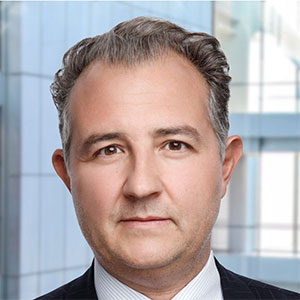
That's Ray Amabile, the co-CEO and Global CIO of PGIM Real Estate, the third largest real estate investment manager in the world, with assets of more than $210 billion under management. A native of Italy, who is based in London, Ray also co-chairs the board of directors and is one of the visionaries behind RealAssetX, an international innovation lab founded by PGIM in 2023. He'll tell us about its ambitious goal to transform the real estate business and some of the ideas about AI and real estate that he first imagined while writing his PhD thesis 30 years ago. Coming up, we're in London to meet with a leader who's working on the future of real estate investing. We'll hear his perspective on the market today and the work behind his firm's forward-looking project, RealAssetX. I'm Spencer Levy, and that's right now on The Weekly Take.
Spencer Levy
Welcome to The Weekly Take, and we are taping today from London, CBRE's beautiful London headquarters at Henrietta House, and we're delighted to have Ray Amabile with us, the co-CEO and Global CIO for PGIM Real Estate. Ray, thanks for coming out.
Ray Amabile
Thank you for having me.
Spencer Levy
Delighted to have you here today, Ray. And we're going to talk about your new innovation in a minute, RealAssetX. But I want to talk big picture about the business. So, the markets right now have gone through quite a bit of volatility over the last several months. We're recording today in early June, 2025. How would you classify the markets today? Just big picture.
Ray Amabile
I think the best way to look at this is, well, we got into 2025 with a very positive construct, right. You know, we kind of called the bottom of the market coming into 2025, and this was really on the basis of 25, 30% value reset. Of course, cost of capital stabilizing, then going down from very strong fundamentals. This mismatch demand supply side on some of these asset classes, which is really driving some of this fundamentals. And, of course, some of this liquidity coming back as well. Then, of course, liberation day comes in, right. You know, you have all sorts of volatility. You have all sort of noise, right, in the market. And that's where you need to really be very discerning, right. Are you going to separate the strong signals, which are the one that I just mentioned, from some of these noise? And also the fact that the real estate, once you compare the asset class against with the bond, etcetera, we're in a total different shape. Places like global living, last mile logistic, data center, of course, credit, right, it's still one of the best risk adjust basic proposition. That's all clear to us. Now, of course, what's happening in the market right now is while investors they bought into the bottom is kind of there, volatility comes in, they're not in a rush now to allocate, right. So they're more, you know, in a bit of wait and see, right, to some extent. And we're also observing something which is very interesting, right, when it comes to the macro picture, which it's all connected to some extent to the U.S. story. You know, for the first time we're seeing investors which are sort of reallocating capital right out of U.S. into places like Europe and Asia. And I believe that you can call this as a structural relocation to some extent. I don't know to which extent and at which pace this is going to happen, right, and what's finally the landing point there. But certainly there is actually something going on when it comes to where the capital is going, which of course will be beneficial for places like Europe and Asia.
Spencer Levy
And you use a term here I like, structural reallocation. And I would put at the other end of structural, I would say something like temporary reallocations. The market has clearly changed due to what I might call short-term reasons. But I think you use the term structural reallocation, do you really think these are permanent shifts?
Ray Amabile
Yeah, so let me put it this way. We've been going around with, you know, for a reason, this U.S. exceptionalism, right, over the last five years at least, which basically means, you know, U.S. has attracted 70% of the capital up until a few months ago, if you like. So, do I believe that they're gonna continue being the recipient of 70% of the capital flow, right, going forward? Probably not. That's the concept of structural location, right, you know. You can make a point that that kind of peak, right, that 70% right, and as the capital is now rethinking in terms of, well, now diversification probably matters much more than what was the case over the last 10 years. I got to make sure that my rotation is not a rotation within U.S. across different asset classes, but it's a rotation also coming out of the U.S. into this market. So that is something which we're meeting clients all the time, right. In Europe, you go, you mentioned Asian investors, some of the Middle Eastern, etcetera. There is actually quite a lot of discussion around this. I'll give you a couple of example, right. Some of these clients, they were like, well, our priority number one up until six months ago was allocating to U.S. market and then of course, Europe and Asia was following. Now they're like, well, actually, we're putting on all that kind of investment. And actually, we’re now making as a priority, right, an allocation to Europe and to Asia. And when it comes to Europe, often is their domestic market. For example, the Germans, it's a good example of this, right? You know, they're kind of thinking, well, I'm going to invest more money in my domestic market, and that's the kind of things that we're observing. Of course, if you ask me, well, what's the lending point, right? The 70% capital peak going down to 50%, 60%, that's the toughest question, right. I don't know what's the landing point, so how much this structural shift will then lend to a significant reallocation or not a significant reallocation, but we need to think about this – $35 trillion of capital, this is foreign capital invested in U.S.. Even a 5% reallocation or 35 trillion dollars, it's a lot of money. And this is just talk about foreign investors in U.S.. Imagine if the U.S., they start diversifying as well. So there is actually potentially a big flow of reallocational or capital. And again, what's the final landing point and how long it's gonna take, it's difficult to say, but I see this like, you know, a bit of structural trend.
Spencer Levy
I think it's a good transition point to talk about your new innovation, RealAssetX. Why don't you tell us what RealAssetX is?
Ray Amabile
The vision is really based on three realizations, if you like. The first realization is, well, real estate as an asset class is becoming more and more an operating business, right. I mean, our job as a landlord, right, of real estate asset is actually changing. Now, as every piece of real estate is moving into an operating asset class, you can easily imagine how collecting data and having powerful AI software which can analyze data, extract all the signal from the data and making this business becoming a much more operational efficient asset. This is gonna drive basically NOI grow and it's gonna drive value creation by having all these new generational software helping you. You're gonna drive NOI, you're gonna value. So, for me, it's like a very easy concept to understand. Second realization, in a way or another, and of course I appreciate that in a different country there might be a different situation, we are in the middle of trying to find a solution for the climate impact. And, so, the fact that you have to think about coming with the climate tech solution which will help you to manage the impact of this climate change, is pretty clear. Now you want to call it sustainability. You want to call it, you know, environmental friendly things. It's all part of the same story. So, now, in this kind of world, you can easily imagine how new technology which can help to run an asset in a much more efficient way, which of course means energy saving. New technology which will help to discover more efficient material, which, of course, is going drive less energy consumption, more resilient asset, etcetera. These are clear example of value creation, which you can drive your asset, your portfolio. And of course, these are all things which needs to be developed, right? And then the last realization, which is really supporting the vision is, well, we are in a world where digital infrastructure, real estate, and of course, energy infrastructure. And, then, when I say energy infrastructure, it's every possible kind of energy – renewable energy and non-renewable energy, they're all converging in the same place. So the vision is, well, this is not nice to have kind of things. It's actually a transformational change that if you don't embrace, the result will be that you're gonna be out of the business. And, now, it might take longer or shorter, but that's the direction of travel. This is basically the vision which is underpinning the launching of the lab. We want to create an ecosystem of partners, right, you know, starting from PG real estate, going to major university, major tech companies, VC, you know, manager. We wanna create an ecosystem of partners which is going to help us to identify use cases, you now, develop some of these ideas all the way to commercializing, right – some of these ideas. And this is very important, right, because if you don't have a clear objective that – your idea, it needs to be developed with the mindset of being an idea that the market is gonna buy. You're gonna have the idea of being commercialized and becoming the new startup and hopefully a big company down the road. I wanna really work with all the partners which they're gonna drive this innovation with me. I'll give you one good example. The way the partnership with the university, right, on the R&D side of the lab, right, is called PhD Venture.
Spencer Levy
PhD Ventures?
Ray Amabile
PhD Ventures. We are basically selecting a PhD student, which they don't want to do just research, but they want to research on use cases with the aim of them commercializing the idea. And of course, through capital coming from us, capital coming from the VC funds, capital coming from the funds which university, you know, manage. We're gonna eventually put some of these businesses in place. And by the way, we have three projects which are ongoing right now, and some of them, they got a potential to be commercialized.
Spencer Levy
We'll take a step back. I want to just get the nuts and bolts of exactly what this is, this innovation lab or its brand name, RealAssetX. What is it? Who are the stakeholders that invented it? Is it a physical place? Is it virtual? Is some of it here in London, some in New York? And then we'll talk about the use cases. So, what is it?
Ray Amabile
The way I got involved on this goes back to my background, if you like. I wrote a thesis, a PhD thesis about 30 years ago, which is called The Contribution of Artificial Intelligence to Real Estate Evaluation.
Spencer Levy
So, let's pause there for a second. Ray wrote a paper 30 years ago called The Contribution of Artificial Intelligence to Real Estate –
Ray Amabile
Valuation.
Spencer Levy
Valuation. 30 years–
Ray Amabile
Yeah, that's right. So no one was really applying, you know, what we call non-parametric model, right, for real estate value forecast, right. You know, I was invited by the Harvard University, actually, to work with some folks there. And that was very exciting, right. So, that was coming from, you know, my friend of mine, he was doing a PhD in physics, right, and of course physics, they were much more advanced and sophisticated when compared to real estate. And, then, I remember that, you know, of course, you gave me this idea and said, you can apply a non-parametric statistical model for any possible forecast. I'm like, why don't we do it for real estate? Then I perfectly remember, I had a meeting with my professor at that point in time and I mentioned, why do we develop the neural network, right, you know, for their sake, you know, value forecast and he was completely shocked, right. He was like, well, I have no idea what you're talking about, right, you know, we're talking about old style, you now, professor at that point in time. But it was good enough to give me credit, right, you know for something which was completely new, right in the context of an Italian university, as you can imagine. I believe that you have some passion for this, right. I wanna let you go, right and actually I developed these thesis and no one was doing it, right, you know, worldwide. So that was a very exciting time. And by the way, by talking about this, you remind me that when I was a young kid, you know, going around in Cambridge University, right, I'm a little bit older, I guess –
Spencer Levy
By the way, for the record, we're still young kids, Ray. Don't tell – anybody tell you otherwise.
Ray Amabile
Well, it's a relative game, right? You know, we decide, you know, we want to play with the relative game. Right? I can be a baby, right. So, that's – you now, how I got involved in this. My boss was like, well, I guess, you are the right guy to help PGIM real estate and the real asset business in general to understand how we're going to move our organization towards something which is much more forward thinking, right. I like to use these terms, how we gonna drive – how we going to announce the innovation metabolism, right, of a big incumbent business, which is PGIM Real Estate, right? So I remember I told, you know, my boss, I said, we're gonna have 80% of the people which they're gonna look at me and say, well, I mean, you're a crazy guy. There is nothing for us here. It's not gonna make me more money, you know, kind of things, right. But, of course, my target is that 20% of people, 25% of the people, the young people, etcetera, that they're going to buy into this, they're going to be the future of the company. And they're gonna help me to drive the innovation metabolism of the organization. And that's exactly what's happening when it comes to this. Now, what is RealAssetX? As I said, you know, we have, you know, basically three pillar, right, you know, within the lab, you know. One is focusing on data intelligence as you said. We're trying to build up a data lake, right. I – having the data in the right place across all the business, which is not an easy task as you can imagine. And of course this data lake is not only built up for the use of – well I want to have a place where I push on a button, I got all the statistics on my portfolio, but it's kind of built in a way that all this data can be then used, tokenized, for any AI application or AI software development, right. That's pretty much the focus there. Then there is a second pillar within the lab, which is we're basically building this R&D partnership with major university, major tech companies. And, again, this is really about putting in place physical innovation center, right. We have one in London with UCL, right, in Shoreditch, where we're gonna have a physical place. We're gonna basically hire PhD students for these PhD venture things that I mentioned before. And, of course, based on a selective use cases, the PhD is gonna start developing idea, making research with this mindset of commercializing the idea down the road. We have UCL in London. We're having discussion in Singapore with the university there. We did some work in Chicago with University of Chicago, more to come in U.S. We're actually having some good discussion in Abu Dhabi. We recently opened our office in Abu Dhabi and as you can imagine, Abu Dhabi and Saudi, they're both big time investing into everything which looks like AI, from software to hardware to big infrastructure. And they like having us as a partner in the region with the local university to develop another physical center. We're also dealing with tech companies, right. We have a partner like DeepKey, for example, right, which is the major, one of the major European and now global company which they have arguably one of the best sustainability data set, right, and of course driving all this sustainability story. So, this is really about the R&D things. And then the last pillar, which is also very important, is well, you need some capital, right. So, our goal is really launching, right, the VC fund which is going to be then focusing on climate tech solution, right. And this is all early stage investing. As I said, you need to develop this company. Some of them grow for the growth story, but it's more like early stage and that's pretty much the idea. And, as I said, do you wanna do it by hiring 30, 40 people, data scientists and pretending that you're gonna be top class developers of new technology in a market which is super fast changing as we know? The answer is no. Do you wanna do it by selecting the right partner which of course they're gonna help you, right. And they change as the market change. That's exactly what we're doing. And that's why we're very exciting that we're having all sorts of discussion. And again, we're attracting very good companies.
Spencer Levy
You're still at the fairly early stages. How long has this been around?
Ray Amabile
This is two years.
Spencer Levy
Two years?
Ray Amabile
Yeah.
Spencer Levy
OK, so two years of running with your university partners, with your tech partners. You've got offices, or either real or virtual offices in three or four major cities around the world. What are the use cases? Give us an example of how you're using this information to make better decisions.
Ray Amabile
We got three, you know, ongoing right now. You know, the first is focusing on how you can make, as I said, assets much more operational efficient, right. There is a PhD, they're developing an AI software, right, you know, to optimize the HVAC and BMS equipment system. And, of course, you know, this is in comparison, right to the traditional software things and they're analyzing all sorts of data, right. Coming from the sensor, coming from the machine, etcetera. We are actually seeing – I met the PhD with the UCL team, that was what, a couple of months ago.
Spencer Levy
And UCL, that's University of Central London?
Ray Amabile
University College of London, yeah, of course. I met them a couple of months ago and they're showing me, and of course materiality really matters. They can improve and we're now tracking the accuracy of all this data, that they can have a better energy performance, which goes all the way to 54% improvement. That's a clear example that if I can develop something like this which is going to give us a much better story, right, when it comes to the efficiency of this building. This is something which you can sell in the market, right. Of course. And, by the way, you know, the venture capital which works with the UCL, they have some interest, right. And we're having some discussion on how can we eventually commercialize, you know, this idea. That's the first one. The second one, which I really like, which can be sort of transformational if we manage to get there. We have very smart PhD guy from Germany is actually researching on embodied carbon solutions. We're trying to develop basically an AI software which is going to assess the footprint of every building in the world in terms of what the desktop analysis, if you like, of the embodied carbon of any building that you want to pick.
Spencer Levy
By the way, just a pause there, that's my favorite concept within the sustainability space. I think so much of what we do within the sustainability sector is about emissions, about the energy you use, the waste you produce, the water you use. Not enough is about the sticks and bricks in this building that if you knock it down you could take you 30-40 years to get the payback.
Ray Amabile
Well, I mean, if you want to talk about sustainability in a serious way without touching what's happening on the embodied carbon side, that is not possible, right. I mean half of the emission, right, you know, come from that side, which of course is the toughest side to tackle, I get it. But to give you a sense of what is this about, you know, it's basically developing, it's a little bit technical, it's called diffusion neural network where you can combine all sorts of different data, including the image that you can get from the satellite of every single building, and of course, through the use of the neural network, you can then start clustering the different color of the buildings and then associate how that material can be performing, which kind of material is, how much embedded carbon you can attach to that material. And of course you can also start developing synthetic data, which is the future of all these AI applications in the context of these multi-modal, if you like, neural networks, which I think is gonna be the future because I mean, you can easily imagine that combining all these sorts of different data, image, hard data, etcetera, it's not an easy one. That's why I saying it's a bit of dream for the time being, but if we ever gonna get there, it's gonna be transformational.
Spencer Levy
There's two basic points here when I look at artificial intelligence, data analysis, neural networks as you put it, Ray. One is the operational side, so that's part A. But part B, the place where I still believe we're at the starting gates, notwithstanding how much work we've done on it, is predictive analytics. I think that operational efficiency or operational excellence may be in the fifth inning of a nine inning game. I think that predictive analytics are in the first inning of a nine inning game. What do you think?
Ray Amabile
Well, I mean, my thinking is, um, is the following, right. So we're going to for sure getting there. We're gonna get in a place where you can really think of AI software being able to combine all sorts of diff that data, which we don't use right now, to make all this prediction much more accurate. What is missing, right? What is this missing is very simple. It's all about how you're going to collect, manage and keep the data in a place where you can be effective by using all the software. I mean, from a software standpoint, there is everything there to be as sophisticated as you want to be. From a data collection standpoint, we're still nowhere to some extent. I mean we are in an industry where, you know, we still believe that by, you know, dealing with our own data, having our, uh, you know, market insight and not sharing, you know, the data, it's a competitive advantage, right?
Spencer Levy
It's been like that since the day I got into this business and there's still a lot of truth there.
Ray Amabile
Actually, I was selling this story, right. I'm like, well, I mean, I got the people on the ground. I'm the one that knows everything that moves in the market and, of course, I'm not – I don't wanna share it with that. So, that's the kind of cultural mindset which we need to drive within our industry. Because as we're gonna drive this cultural mindset, you're gonna have much more sharing of all this information. Of course, we're going to tap in all sorts of different information, which are very important to understand where the young people are going, you know, why a place got developed, you know, once compared to another places. These are all things which we need to really, and that's the main focus of the industry, right. You know, again, if you ask me from a software standpoint, cheap development standpoint, everything is there actually, you know, we don't need, you know, actually the LLM model that's much more sophisticated. We can tap into that kind of huge development and imagine, if we're going to get the data in place, again, structural and unstructural data in a comprehensive way, and we're gonna train this model on a very specific use case, very much focusing on developing, you know, these are all adaptive model, they're not static. So they're gonna become more and more efficient, more and more efficient as we go, all the way to having this software really helping, right. When it comes to making your prediction about what's going to be the new submarket, emerging submarket, helping you on portfolio construction, helping you on forecasting rental grow and things like that, you know, this is going to happen, right. The industry has to realize that we need to come together to basically sort out how we're going to manage all this data.
Spencer Levy
So, before we get into the wrap up on AI and RealAssetX and where it's going, just more broadly, let's talk real estate for a moment. Where do you have the greatest conviction right now, given all the volatility we've had in the last, not just in the last year, really the last several years with inflation, interest rates, the devaluation of real estate, which certainly was against what happened in the broader market. What are some of your best ideas, some of the greatest convictions in the next year or so within real estate?
Ray Amabile
So, I think the way you're gonna make money down the road, it's actually a different way once compared to the last 10 years, right? Last 10 years we've gone through this market where it was all about picking your asset class and then of course cap rate compression, right, has driven total return. We're going in a place where income, income grow and of course, our resilience, right, is your cash flow, is gonna be your story, right. That's where the return is gonna come from. Now, if that's the realization, and of course, we strongly believe so, what is the asset class where it's going to give you income, income, growth, and resilient income? So, first and foremost, our biggest conviction is about what we call global living. Global living is everything which is residential for renting, which is to serve all the different court, right, in any place in the world when it comes to all this demand, which is constantly changing, whether it's an old people, young people, you know, U.S., Asia, etcetera. But that's a basic needs. They need the space to live, right. You know, we got more than 50% of our portfolio, which is basically in the living sector – multifamily, single-family student housing, senior housing, manufacturer housing, we're really covering, you know the whole spectrum there. Then the other one, which is, well, a broader definition of basic needs, right, which is Last Mile Logistic, right. Last mile logistic, it's all about, well, this is the new consumer behavior, right, of all of us, which I would call a basic needs, right. We never gonna go back, you know, to not using anymore the mobile phone for e-commerce, etcetera, which basically means that that piece, it's actually resilient by definition. And, again, we are actually investing in what I would call last mile in particular, which is where all this logistic, right, is gonna play for the long run. Again, you can argue that this is gonna stay with us forever. Then, of course, data center, we're in the middle of this transformation. I mean, I'm a big believer that AI is gonna change all our life, honestly, right. How long it's gonna take, how this is going to play out, I don't know, but this is gonna for sure be the case. And, of course, the first derivatives of that transformation is actually the data center, right and it's a very good way to play the AI. You can play it in all sorts of different way, but when it comes to physical asset, physical infrastructure, that is the play. And, then, the last one, which we have very strong conviction, it's about the credit. We're still in a place where on a risk-adjust basis, you can have probably the best proposition in the market right now. You can make an extraordinary return by just being on the credit side. And when I say credit, it's anywhere between investment grade to high yield and that's pretty much a place where we're investing quite a lot of energy because I mean, it's kind of no brainer right now.
Spencer Levy
And I agree with you, I think credit is the asset allocation area I'm hearing the most from our investors. They’re saying if you can get equity type returns on a debt type vehicle, why wouldn't you do it?
Ray Amabile
And again, from time to time, we have this window in the market. Can we assume that it's going to be always the case? That you can drive this kind of equity return with that risk? The answer is no. It would be naive, assuming so. But for the time being, we're enjoying it, and we really like it.
Spencer Levy
So there's one word that didn't come up on this show but I got to ask – because, well, we're in beautiful Henrietta house here; we're very proud of this building: Office. And office has a mixed reaction. But I will say that in the last, I would say, four or five months, I've seen more institutions saying, you know what, on a risk adjusted basis, maybe there's something there. What do you think?
Ray Amabile
Well, office is–well, I mean, this concept of being in a bifurcated market is now materializing. We went from, well no one wants to touch office across the board to realizing that of course there's a future for the office. I'm a strong believer that we as a human being, we want to connect with people. We don't want to be sitting on our place all the time, so the office space has got a future. Now what's happening is pretty clear. Every piece of asset, which is sitting in the right location, has got the right specification, and can attract, can be compelling for people coming to the office and sharing information. This is pretty much in demand. If you look at the rental story, pretty much everywhere in the world, it's actually super strong. In some cases, it's all time high rental, on that piece of the market, right. Then you have the other side of the market, which is, you know, commodity, secondary stuff, which no one wants to go, that piece, which is fairly large, it's going to have trouble and it will continue having trouble, right. In most of the cases, in my opinion, we're going to end up in residual value for alternative use, right? You know, you have a piece of land, right, you've got to figure out how you're going to eventually reposition that piece of land. And, then, I would say, right now, there is also the bifurcated market is migrating into what I would call a trifurcating market. There is a middle space, right, which is office, which they need quite a lot of capex to be then brought to, you know, class A specification, but they are sitting in a very strong location. And because the market is improving and the rental value is improving, now, you know, the metrics start kind of making sense, right, to invest these capex. And, of course, that piece of market will be the one for value-add, transformation, retrofitting, whatever you want to call it, which will have a good story when it comes to value-added. By the way, when office for us is a very tactical opportunity, we have done very little, but recently we have investment in Japan, in Tokyo, investment in Sydney, right, in the office space, because there is a recovery story there. Of course, Asia is much less affected by all these working from home kind of things. But there is certainly a place where you can make good money. You just have to be very discerning right on how to play with the office market.
Spencer Levy
Where is RealAssetX two years from now? How has it influenced PGIM's business?
Ray Amabile
On one side, for me, would be super positive if RealAssetX can really help me and the organization to have people buying into how important is the transformation that we're living in. From a pure low hanging fruit, it is, well, if all these things will help us to drive operational efficiency within our business, which, of course, will make everything much more efficient. I can have people focusing on the value part of the story. I'm pretty sure that we're gonna get there in two years time, so I'm really confident that this is the case, which is a very big win. And, then, the second one, which I think is for me, it's the perfect way to measure success. If I can manage to basically launch one of the startup, right, and one of these company is gonna have some good leg in the market and I can prove that the whole idea from coming up with a use case to making money by basically launching a startup company is going to be material. This is going be a huge impact in my organization. And, by the way, I'm going to attract a lot of potential partner, you know, to the lab.
Spencer Levy
Great, so operational efficiency on one side, which I think you're gonna have immediate – you already had immediate success with that. Maybe that's the lower hanging fruit as you put it, but the home run is to use the venture capital arm of this to create something that has real value.
Ray Amabile
I would call it, you know, I'm a dreamer, right, as you might imagine. So, why not, you know, develop the new Facebook?
Spencer Levy
Well, that's a big ask, but I'm not saying you can't do that. I wouldn't question the vision, given that you had the vision 30 years ago, writing the paper on AI and real estate, which is really pretty remarkable. Here we are today, and it's becoming reality. So, congratulations on that.
Ray Amabile
Thank you.
Spencer Levy
Ray Amabile, the co-CEO and Global CIO of our friends at PGIM, thanks so much for coming out today, Ray.
Ray Amabile
Thank you for having me.
Spencer Levy
For more on RealAssetX, along with a real deal on other investing ideas, insights and informative work, look no further than our website, CBRE.com/TheWeeklyTake. There's related content and archived episodes featuring our coverage across the real estate spectrum. You can also find links to share your feedback, as well as ways to subscribe, rate, and review our show wherever you listen. We hope you'll join us again next week as we continue our international swing with more from the UK, including discussions about global investing and development around the world. Thanks for joining us. I'm Spencer Levy. Be smart. Be safe. Be well.

.jpg)

