Download Transcript
Spencer Levy
Ever feel like you're speaking a different language from some of your colleagues at work? Do you ever seem to be following different rules or norms at the office? If the answer is yes, it could be the result of generation gaps that are increasingly evident in our culture. On this episode, a professor who wrote the book on this topic – several of them actually – shares insights into our multi-generational workforce and a world at the office and at home where technology has driven sweeping change.
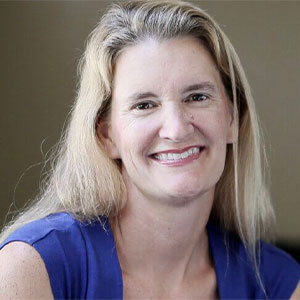
Dr. Jean Twenge
It's not about older generations complaining about younger ones. It's about each generation having their voice.
Spencer Levy
That's Jean Twenge, a professor of psychology at San Diego State University who's been studying generational differences since the 1990s using data that goes back almost a century. Her books include Generations: The Real Differences Between Gen Z, Millennials, Gen X, Boomers, and Silence, and What They Mean for America's Future. Her latest is Ten Rules for Raising Kids in a High-Tech World: How Parents Can Stop Smartphones, Social Media, and Gaming From Taking Over Their Children's Lives. Coming up, we're talking about generations as we seek to understand the real world impact of generation gaps across the culture at large and indeed on real estate. I'm Spencer Levy and that's right now on The Weekly Take.
Spencer Levy
Welcome to The Weekly Take and we are delighted to have book author and professor of psychology at San Diego State University, Jean Twenge with us today. Jean, thank you so much for coming out today.
Dr. Jean Twenge
You're very welcome. Thanks for having me on.
Spencer Levy
So big picture, Jean, what are some of the key differences between the generations you discuss in your book, Generations, and why it matters?
Dr. Jean Twenge
I think we have to start with why generations differ in the first place. So the common theory is that it's due to big events, like pandemics and wars and economic cycles. But I think that captures only a small portion of why generations different. Because when you think about why it's different to live now compared to 200 years ago or a hundred years ago or 50 years ago or even 20 years ago. It's technology. That's really the answer to that question – not just computers and smartphones and social media, but things like faster transportation and labor-saving devices like washing machines, supermarkets, air conditioning. All of these things have really had a big impact on how we live and on our day-to-day lives. Technology also has an indirect impact through other things like a slow life strategy, taking longer to grow up, longer to grown old and individualism, focusing more on the self and less on others and social rules. So these three forces, technology, the slow life strategy, and individualism, have worked together to create the differences among the six living generations in America today.
Spencer Levy
Let's just take a step back and just define, in very basic terms, what the generations are, why they're different, and why it matters to the workplace.
Dr. Jean Twenge
So the Silent Generation, most of them are retired, they're in their 80s, born 1925 to 1945. Really a misnomer, they were at the forefront of the civil rights movement and the feminist movement, so far from silent. Boomers, born 1946 to 1964. They’re still many of our leaders across different fields, very large generation, very influential generation. And they are known for a lot more individualism compared to the silent generation., more focus on the self. Then Gen X, my own generation, born 1965 to 1979. We're often seen as a transitional generation between Boomers and Millennials. More practical than boomers. And I also argue the last generation to have a really unified pop culture experience. Millennials born 1982-1994 Millennials are peak individualism. A lot of self-confidence, a lot of optimism. They were a very wanted generation, mostly parented by Boomers, and grew up in a time of peace and prosperity during their childhood, adolescence, and some of their young adulthood, and then hit the Great Recession, which kind of started a cascade where now they're more pessimistic now. But they still retain some of that optimism and self-confidence of their youth. Then we have Gen Z, where – really big break between Millennials and Gen Z – because as the smartphone became popular and teens started spending a lot more time online, less time sleeping, and less time with their friends in person, that was behind a huge rise in depression among teens and young adults. So just a lot of pessimism in this generation, a lot a cynicism, even nihilism in some cases. They have good strengths, too. In terms of what they want out of work, more than previous generations at the same age, they're more likely to say that they want a job that helps other people. And then, oh, we got another generation coming after Gen Z. We're calling them Gen Alpha. And then the Alphas in the Generations book, I call them Polars, after melting polar ice caps and political polarization. But most people groan when they hear that, so I don't think that one's going to catch on either, sadly.
Spencer Levy
It just struck me in the way you talked about pop culture and on the show we talk a lot about pop-culture in Gen X terms, but if I were to go through 10 TV shows with you from 1975 to 1982, I'm sure you would know them all. If you were to name 10 TV shows on TV today, I wouldn't know any of them. But putting that aside is
Dr. Jean Twenge
And a lot of teens wouldn't either, because there's just so many more options now it's become more atomized.
Spencer Levy
So the connectivity – the connectivity that we think has been accentuated by having all these social media tools, all of the internet and the TikToks and wherever, that actually does not create connectivity, it creates atomization. It creates–you choose your own adventure individually. I didn't choose Happy Days and Mork and Mindy, and you know The A-Team, that's all there was on TV? Every person in our generation watched The Love Boat and Fantasy Island on Saturday night. I am certain of that, Jean, because I've asked people in our generations. And when I look at people that are like it. And when I look at people that are like it, it's just...
Dr. Jean Twenge
The plane! The plane! The plane, boss!
Spencer Levy
Like I said, you see! But these things create connectivity. They create shared memories. How about that?
Dr. Jean Twenge
Yes. There's still a few things like that, but we don't have that universal experience. In social media in particular, those feeds are individualized. TikTok is a different experience for every person who uses it. And look, I have teenage kids and they talk about memes and so they have some of that common language, but it's like these little memes here and there. It's not a TV show. It's tends not to be a movie. It's just like these phrases and that's it. It's a really unified experience that connects people.
Spencer Levy
This is obviously an enormously important topic for the real estate business because it impacts the workplace. It impacts the types of places people live in, both multifamily and where they work in office. And I know that's a big part of your books too, isn't that correct?
Dr. Jean Twenge
Yeah, especially in Generations, I delve into, obviously, all the generational differences in terms of behaviors and values and incomes and all of those things, but also how long people take to grow up and enter careers and marriages, and that has a big impact on real estate and some of the demographic changes. So yeah, in this latest book, in one of the last chapters called “The Future”, there's a whole section on real estate.
Spencer Levy
But you go into tremendous detail on how each generation is different in both objective and I would say subjective ways. But the objective ways are things that you've mentioned in terms of how long it takes for them to get married, career paths, and there are some really negative things in there too about suicide rates and happiness. So this is a science. This is not just subjectivity. Is that a fair way to put it, Jean?
Dr. Jean Twenge
Yeah, absolutely. And that's, I think, in some ways, what makes my approach different from some of the other stuff out there in generational differences. In the Generations book, the paperback edition, I'm drawing from 43 million people who filled out one survey or another back to the 1960s or so. So this is based on survey data. It's not just based on, say, some of the demographic trends you might see in the census, although that's in there too. It's how people are spending their time, how they're feeling, what's important to them, how they are behaving, all of those things.
Spencer Levy
And going to your last chapter of the Generations book, I'm just gonna read a line from it and then I'll have you react. “The generational dynamic in the workplace is at a crucial turning point in the 2020s. Boomers born in the late 1940s and early 50s, the cohort that has dominated leadership for decades are retiring at a rapid clip. By 2030, all Boomers age 66 or older, leaving mostly Gen Xers and Millennials in charge. Generational and cultural changes point to seven trends that will shape business and investing in the coming years.” So is the 2020s different than any time period you've seen before and why?
Dr. Jean Twenge
It is, and I think there's a couple reasons for that. So the first is right off the top that the Boomers are a very large generation, a very work-oriented generation, and they're retiring very quickly. And a lot of organizations are struggling with who's gonna replace them. So that's a really, really big shift. The other piece is that younger workers are now almost all Gen Z. I define Gen Z as those born roughly 1995 to 2012. So that means the oldest are 30. So almost all the entry-level employees coming in are Gen Z, and Gen Z is a very, very different generation from the Millennials before them. That's the most pronounced generational break I've seen in my whole career–is just how different Gen Z and Millennials are.
Spencer Levy
And if you were to define in just a couple of sentences what some of those differences are, what are they?
Dr. Jean Twenge
Millennials were very optimistic growing up and had a lot of self-confidence. Gen Z is pretty much exactly the opposite, much more pessimistic, much more cynical, and just not as self-confident. Depression rates among young adults doubled between 2011 and 2019, so even before the pandemic. So they just have a really different psychological profile from. Millennials at the same age.
Spencer Levy
These are very tough topics when you're talking about depression, but taking it to a workplace level with these different worldviews, with the Z-ers, the Millennials, the X-ers, which I am proudly part of. What do we do about that? How do we have a cohesive workplace if people have these starkly different worldviews?
Dr. Jean Twenge
Well, I think the key is understanding. So that's going to mean learning about what the generational differences actually are. It's also going to be perspective taking and a little bit of empathy – just realizing that that person younger than you or older than you grew up in a different world, especially with technology accelerating that these are substantial differences and we shouldn't expect each generation to have exactly the same perspective. They don't because the worlds that they grew up in were fundamentally different.
Spencer Levy
You used the phrase essentially that the 2020s are different. They're different than any other time period. And I don't wanna be flippant about this, but there's songs written about this about every generation blaming the one before. Okay, that song was written in the ‘60s or the ‘70s. If somebody were to say something like that to you, how would you respond?
Dr. Jean Twenge
Oh, I've gotten that for 20 years. I head that right off at the pass in the introduction in the book because of that. So first, I think we have to think about our perspective here. These are really, really big cultural changes that have affected everyone. So the idea that it's one generation's fault is just not true. And also finger pointing is really not gonna get us very far. And for context, I say this as a Gen Xer. I'm not the generation who tends to be pointing fingers or getting the fingers pointed at. These days, most of the time, that's Boomers versus Millennials. So Gen X is this middle child of generations. Plus, I think the other thing we have to understand is when I'm talking about these generational differences, these are not observations of, say, managers of employees. These are young people, usually – usually young people themselves, saying what matters to them, what they value, their perspective. So it's not about older generations complaining about younger ones. It's about each generation having their voice.
Spencer Levy
This is a little bit of a non sequitur, but it's something that's been eating at me for years when I hear talk about this topic is, how do we get names for these generations? Silent, Greatest, X-ers, Z-ers, Millennials, who is on the committee to name these generations and can we rename Gen X to something better than that?
Dr. Jean Twenge
That'd be great. There isn't a committee. There's just general consensus, and it's what journalists end up using as a label, what the Pew Research Center ends up using as a label, and it's kind of random, to be honest. And a lot of the labels are misnomers. The Silent Generation was not silent. Martin Luther King Jr. and Ruth Bader Ginsburg being two of its most famous members. Boomers kind of make sense because of the baby boom. Beyond that, I think it all kind of falls apart. But these are the ones that have stuck. for better or worse.
Spencer Levy
I guess there's one positive about being Gen X is that was the name of Billy Idol's first band.
Dr. Jean Twenge
There you go.
Spencer Levy
So we've got that going for us.
Jean Twenge
Yes.
Spencer Levy
So let's go back to the workplace for just a moment. And I think one of the things that really is divisive today, um, among generations really is work from home, remote work versus being in the office. Tell us about that.
Dr. Jean Twenge
This is still in transition. This is something that is hotly debated. And for, I would say, Gen X and younger, who grew up, at least, with some measure of the internet, the idea that you have to be at work to do work is just not true. Boomers still often see it that way, but even they have adapted to this. There is some truth to that idea, because collaborations, those informal conversations are not gonna happen with remote work. And so that's why I think a lot of companies have settled on some sort of hybrid model as being the best compromise position. It's tough because there's individual differences, of course, within the generations as well. So Gen Z is a great example that some of them are like, why do I have to come into work and get in a car and go out of the house? It makes no sense. Everything I'm doing, I can do from home. On the other hand, there's some Gen Zers who are like, look, if I work from home all the time, it's really lonely. It's me and my cat, and that's it. And I really wanna come in. So there's personality differences here too. You know, managers who are making these policies, it's a really tough spot they're in.
Spencer Levy
You use the word empathy in terms of how somebody that's in a different generation speaks to the other. Elaborate on that a little bit. In the context of when we're in an organization, we have a purpose. And that purpose may be narrow – to be the biggest, best company, be more profitable, help our clients more. That's what we're trying to do. How do the two work together if sometimes they may be in conflict?
Dr. Jean Tweng
Yeah, sometimes they're gonna be in conflict, but most of the time, I think they go hand in hand. What I mean by empathy isn't, oh, of course you can have the day off because you're tired. That's not what I mean. I mean, trying to understand someone else's perspective and where they're coming from. And if you can do that, then you're gonna get the best work out of that person and then that's gonna be best for the company.
Spencer Levy
As somebody that's trying to help other people within your organization be their best, so the organization does their best. What do you do if I just give a different message to a boomer than I give to a Z-er and to the – and what's the name of the generation after the Z-ers again, the Alphas?
Dr. Jean Twenge
Yeah, they're not in the workforce yet, though?
Spencer Levy
Well, I would beg to differ. I have children at home, and, well, they may not be in the workforce, but they are influencing the workforce for sure, which would be an excellent transition to your next book in just a moment.
Dr. Jean Twenge
Right. This is the challenge, because the generations have turned over faster. The technology, which I think is the main driver of generational change, has really created these wildly different perspectives. First, you always have to realize not everyone is going to be a typical member of their generation. So to an extent, you're going to be treating people as individuals. That's how it should be. But understanding the differences on average can help you understand that perspective. Of other people. And you can't have one policy for one generation and another policy for another. You have to try to thread that needle of having the policies that satisfy everyone. And that's always going to be the difficulty these days. But I think that's where some of the things around hybrid work come in. It's also where the perspective of Gen X is useful because a lot of Gen-Xers see some of the work-life balance. That has become popular and said, yeah, well, we wanted that too. And we asked our Boomer and Silent managers for that in the ‘90s and we never got it. So they have that perception of unfairness, but it can also be, at least you're getting it now.
Spencer Levy
By the way, I don't use the word work-life balance anymore. I use the work-life harmony. Okay. And the reason why I use that differently is because I don't think it's one or the other. I think they've merged. So it's not balance per se. It's also not a nine to five job anymore.
Dr. Jean Twenge
Yeah, I like that idea of calling it harmony. And that has certainly been the evolution of work that it can be 24-7 now if you let it. It's not, oh, I can only do the work in the office. The upside of that is that you can do it from home. You don't have to be in the office all the time. The downside is you do have to find those boundaries. And that's where I think that work-life harmony piece has to be recognized. That it's not laziness, it's just being a full person and having time for family and friends and sleep so you can show up and be a good worker.
Spencer Levy
Well, I think this is a terrific transition point to your new book, 10 Rules for Raising Kids in a High-Tech World, because I think so much of this 24-7 thing is due to technology. Why don't you give us your summary of the book and then I will give you my reaction, particularly those about keeping the phones away from the kids.
Dr. Jean Twenge
That's a good part of it. So the idea is to let children have a childhood, to not give them a smartphone until they're 16 and have a driver's license is what I say in the book, and try to keep them off social media about that long as well. Now they're gonna have internet, they're going to be doing homework on laptops. It's not that they're are gonna be protected from absolutely everything. You can delay their introduction to these technologies and then put reasonable limits on them once they have them, your kids will be a lot better off. And that is not where we are now. Gallup found that the average teen spends five hours a day using social media. And as far as we know, the average kid in the US gets their first phone at 10 or 11.
Spencer Levy
Well, I may be a good or a bad parent, but I got my kids their first phones when they were in, I believe it was eighth grade. So I'm not as early as that, but nevertheless it's there.
Dr. Jean Twenge
And a phone is fine, it shouldn't be a smartphone. So I have a kid in eighth grade, but she has a phone designed for kids that doesn't have an internet browser, it doesn't social media, and most importantly in the last six months, it also doesn't AI boyfriends or girlfriends on it, which is the new concern in terms of apps.
Spencer Levy
I'm gonna speak out of both sides of my mouth here for a moment. Number one, amen. What you are speaking is, as far as I'm concerned, the truth. That said, I live in reality where if I didn't give my kid the phone, access to social media, it would have had significant negative social consequences to her. How do I handle that?
Dr. Jean Twenge
Sure, because I know this from my own kids and lots of other parents I talk to. Let's just take social media for a moment. It's a total myth that teens have to have social media to communicate with each other. They don't. They can text each other, they can call each other, They can FaceTime each other. They can see each other in person. And they don't need it for access information. If they have a laptop then they have the rest of the internet. So my 18 year old had a really good perspective on this in terms of friends and social media. She said anyone who will not communicate with you because you're not on a certain platform is not actually your friend anyway.
Spencer Levy
I guess it's late in the game for me because two of my three kids are already in college. But is it too late for me? How do you pivot if you're already knee-deep in it?
Dr. Jean Twenge
Yeah, so I get that question all the time – you know, you can't put the genie back in the bottle. Sure, you can. She's 16. By that age, you know, I mean, it depends, but I see no social media until 16 or later. But yeah, she's already on it. Okay. Is there a time limit in terms of how long she could spend on TikTok? Because that's what I would do. So not say you can't have it anymore, but you have an hour a day, use it well. Something like that. So then it doesn't become five hours like it does for a lot of kids. TikTok in particular has a really sticky algorithm. It's known for people picking it up saying, oh, I'm gonna spend five minutes and then they look up and half an hour or more has passed. Or they intend to spend 20 minutes and then two or three hours has passed. So even at 16, it's really, really tough to put it down. A lot of adults, a lot of older adults have a hard time putting down those types of platforms. So putting that limit on it would be good. And the other thing is, there's one rule in the book that is for all ages, no phones in the bedroom overnight. So if you can only do one thing, you can make that rule. Hey, I'm not gonna take the phone away from you. I talked to this really mean lady who said that you shouldn't even have TikTok at all, but I'm gonna do that to you, but you should not have it in your bedroom overnight.
Spencer Levy
What are some of the negative ramifications of having too much social media? I mean, what's your basic takeaway?
Dr. Jean Twenge
Yeah, so I've been researching this for almost a decade, and too much time on technology, especially having it in the bedroom, really interferes with sleep. And sleep is absolutely crucial for both physical and mental health. And the more hours a day a teen spends on social media, the more likely it is that he or she will be depressed. And that's particularly true for girls.
Spencer Levy
I'm going to read a quote from your book because I think this quote kind of sums it up that you have here on why rule. This is the quote from Surgeon General Dr. Vivek Murthy. “There is no seatbelt for parents to click. No helmet to snap in place. No assurance that trusted experts have investigated and ensured that these platforms are safe for our kids. There are just parents and their children trying to figure it out on their own pitted against some of the best product engineers and most well-resourced companies in the world.” It feels like an uphill battle.
Dr. Jean Twenge
It absolutely is. And I talk about that a lot in the book, that parents are in a really tough spot because these technologies are so unregulated. So let's say you have an 11-year-old and hand them a smartphone. They can get on TikTok, even though the minimum age is supposed to be 13, which is way too low as it is. But doesn't matter, they can just get on it. They just check a box, lie about their birthday, they're on. There's no time limits. The content moderation doesn't work very well, so they're probably gonna be exposed to inappropriate things and violence, and if they're in a bad mood, then they're gonna be shown even more videos that are about self-horror and depression. And also, if that smartphone has no parental controls, no regulation on the internet, if they are like, hey, you know, maybe I'm curious about bodies and sex, hey, let's try to find some pornography. Easy, boom, all you have to do is click “I’m 18. Enter” and the videos are already running. It is the Wild West out there and there's just very few guardrails. So at the moment, it's up to parents. It'd be great if we had more regulation, but a lot of people are working on that, trying to get that, but we don't have much of it yet, especially in the U.S., so it's it's to parents and yes, that's unfair, and yes that you're bumping up against reality as you're talking about, but I don't think you should give up. I do think you can put the genie back into the bottle to a certain extent. Try to follow at least some of the rules, and if it can't be all of them, that's okay. Don't let the perfect be the enemy of the good is one of my favorite aphorisms.
Spencer Levy
Well, I presume being a professor at San Diego State, you're on panels a lot, you speak with lots of people. If we had somebody on today from a big tech firm that's making one of these social media platforms, what do you say to them?
Dr. Jean Twenge
I would say, please verify age. Let's just start there to at least keep 12 and unders off the platform. And then if that has to be done when they download the app, this is part of the problem. So Meta, for example, says it should be Apple who regulates this and then Apple says it should be Meta. So part of it is that the tech companies are fighting. Should it be done when you download the App through the App Store, where you verify age? Or should it be done by the App itself? I don't care, I just want somebody to do it.
Spencer Levy
But right now that somebody's the parents.
Dr. Jean Twenge
It is, which, again, is unfair, but that's where we are. And the tech companies say they're working on this and so on, but it's kind of against their business model. They make the most money, they have the most people, and those 12-year-olds are spending a lot of time on the platform.
Spencer Levy
So let's shift now to other implications to real estate. There are other trends in here that I think are hugely relevant to our business, including people getting married later, having kids later, not having kids at all, impacting where they live, how they live. Why don't you talk a little bit about that.
Dr. Jean Twenge
Yeah, so this is one of the big cultural changes that I think explains so much when you learn about it. It's called The Slow Life Strategy. It means people are taking longer to grow up and longer to grown old. So the developmental trajectory is slowed at every stage of the life cycle. Kids are less independent. Teens are less likely to have a job or driver's license. Young adults get married later, have kids later, settle into careers later. Middle-aged people look and feel younger than their parents or grandparents did. Even people who used to be considered elderly, they're healthy for longer. All of these things have a huge impact on real estate. And they've been going on for a while. These are not a flash in the pan. These are things that are due to economic cycles. I think there's a common perception. Millennials got married late because of the Great Recession. Nope, Gen X got married later than Boomers. Boomers got married, later than silence. These are trends that have been going for decades. So just in terms of that perspective, people are gonna be buying houses a little bit later. And that's especially true now with housing prices being high and interest rates still being high as well. That's partially for some positive reasons, because more people are going to college, more people going to grad school, so they're kicking the can down the road in terms of being settled. So your average homebuyer is gonna be older. And yes, fertility rates are at all time lows, so less likely to have children, but because of the work from home trend, I think big houses are still gonna be a hit. Because you take a four-bedroom house, you have a couple that has no children, then they have a bedroom for sleeping, they each have an office, and then they have a guest room. So four- bedroom houses are still gonna be popular. It's not that two bedrooms are gonna come back into style. That's my best guess.
Spencer Levy
Workplaces – not just work from home or work in the office – it's got to be value-add. What's your perspective?
Dr. Jean Twenge
I totally agree. I mean, that social interaction with other people, that's the big upside. I think the difficulty is that kind of like open space pod design is kind of the worst of both worlds. It doesn't help people interact very much, and then they can all hear each other. So then they all have to put on headphones to do work. So I'm hoping there'll be a move away from that model in the coming years in commercial real estate.
Spencer Levy
This is from the Generations book, though. This is a quote from Steve Jobs. He said, “Every once in a while, a revolutionary product comes along that changes everything. Today, Apple is going to reinvent the phone.” If you were to rank things like the iPhone, the internet, social media, not in order of best to worst, but most influential, how would you break down these various things?
Dr. Jean Twenge
I mean the internet's kind of the catch-all so that would probably come first. But Steve Jobs said that about the iPhone in June 2007 and I think he was right. It did have a transformative effect in some good ways but also in some bad ones. My theory is that if Steve Jobs were alive today I think it would be appalled at the way people use their phones. I think his intention was for it to be like a Swiss army knife. They could do all these cool things. And if you watch this 2007 presentation, that's what it looks like. I don't think he would approve of everybody walking around with it, staring at it, and pulling it out during face-to-face conversations in the way that has become normative.
Spencer Levy
Should we ban phones from meetings?
Dr. Jean Twenge
That's a tough one. So if you can make that meeting efficient and interesting, then yes, but the problem is most meetings don't fall into those categories. A lot of them take way too long. They're boring. They're going over stuff that's not relevant for everybody in the room. And that's one reason why people are on their phones. Also because those phones are so tempting. I am not a believer in this idea that, you know, oh, if the class or the meeting is engaging enough, they won't pull out their phones, of course they will, but it can at least cut down on people doing that.
Spencer Levy
What we are certainly seeing, and I believe at my daughter's school, they just ban phones during a school day.
Dr. Jean Twenge
Yes, and I think that's essential. That has to happen. It's hard enough for adults, as I was just saying, to not look at the phone all the time. And then you take teenagers and children and expect them to be able to do that. Of course, they're not going to be able do that. It's a huge distraction in the classroom. And if they don't have access to their phones at lunch, they talk to each other. They develop those social skills that they're getting as much outside of school because they're spending as much time with each other in person as previous generations did. And that's really important for the workplace, because this is what I hear from managers when I give these talks on generations in the workplace. They'll say, this is my issue with a lot of young employees. You know, I like their enthusiasm, and they have a lot other advantages, but their social skills are not what we need them to be.
Spencer Levy
Are you optimistic about the future of the workplace?
Dr. Jean Twenge
I am. I think we're in a transition period now, but we're getting there. I think a lot of workplaces are coming up with those solutions in terms of hybrid work or whatever works best for their organization. And maybe I'm optimistic partially because I'm a Gen Xer. And I think our generation does have a lot of practical focus and is a mediator between the boomers and millennials and understands the impact of technology because, although we didn't grow up with it as children, it started to come in as we were teenagers and young adults. And it's Gen Xers and millennials who are gonna be the leaders as boomers retire. I think that will go reasonably well. I think there's gonna be some big holes in some industries, but that transition should be a good one.
Spencer Levy
Well, on behalf of The Weekly Take, what a privilege to have Jean Twenge on the show, San Diego State Professor, multiple book author, Generations, Ten Rules for your kids, several others, just a terrific mind in psychology, thank you for joining the show.
Dr. Jean Twenge
Thanks so much for having me on.
Spencer Levy
We hope this conversation sparked some thought or fosters productive dialog among generations at your workplace. Perhaps it's useful in your home life too. If so, we'd love to hear about it. So share your story through our website, CBRE.com/TheWeeklyTake, or with a comment on the podcast platform of your choice. We'll be back next week, shifting our lens to the wider world of commercial real estate. So join us. And if you're not already a subscriber, make sure to sign up so we can keep you informed about the show. Thanks for tuning in. I'm Spencer Levy. Be smart. Be safe. Be well.

.jpg)