Download Transcript
Spencer Levy
Office design is still in a seemingly constant state of evolution, as real estate leaders seek to tailor space to the wants and needs of their employees. The Urban Land Institute's upcoming Emerging Trends report, produced in concert with our friends at PwC, highlights the areas where stakeholders are likely to find the greatest opportunities to do so. And on this episode, we offer a preview, with insights from one of the leaders behind the report.
Diane Hoskins
That ability to kind of be in sync as an organization is enhanced when people are in the workplace. But it sure makes it a lot easier when it's a workplace that people want to be in.
Spencer Levy
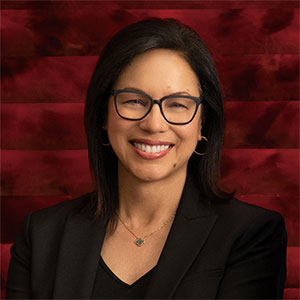
That's Diane Hoskins, the former chair of ULI, who's the global co-chair of Gensler, the largest architectural firm in the world. Gensler's portfolio, she says, primarily covers office and workplace, with major projects across a variety of lifestyle asset types including health, retail, hospitality, a substantial practice dedicated to cities and airports, and an increasing concentration in data centers, too. Coming up: Hot off the presses for ULI's fall meeting, we take you inside ULI’s latest research and also into the creativity and strategic design thinking of an architectural firm that's helping drive the future of commercial real estate around the world. I'm Spencer Levy and that's right now on The Weekly Take.
Spencer Levy
Welcome to The Weekly Take, and we're delighted to be here in Washington, D.C., in front of a live studio audience. That's of course in addition to the audience listening to the show, and I'm privileged to have today a good friend of mine, Diane Hoskins, the co-chair of Gensler, the largest architectural firm in the world, and the former chair of the ULI, and delighted to have you here today, Diane. Thank you.
Diane Hoskins
Thanks, Spencer. It's terrific to be here.
Spencer Levy
You've done so many great jobs. And I'm sure you have a better eye for this than I do, but I can almost date an interior space within a year or so, based upon what the trends of the day are. So what are the trends today, and how have they changed in the last few years?
Diane Hoskins
That is really the story. The pre-COVID workplace is a very different thing than where we are today. We are definitely in a massive evolution of workplace. It's the confluence of so many factors. We don't have to run through everything. We all lived it and are still living it. The piece that probably most folks may not have as much, kind of, tuning in on was the state of the workplace right before COVID. Prior to COVID – at Gensler, we created a research institute about 20 years ago and have been doing surveys of the workforce across the United States and frankly now in 14 different countries and 56 different cities and looking at really what are those trends and what's happening with people's experience and also their ability to get work done, which is of the fundamental purpose of the workplace – and what we found was just kind of ironic. We did the survey in November of 2019 and released it at the very beginning of 2020, right prior to COVID. I mean, the news on the workplace was pretty dismal.
Spencer Levy
Pre-COVID.
Diane Hoskins
This is pre-COVID. This is literally almost as close as you could have gotten to a pre-Covid, no anticipation even of COVID, survey of the American worker and the struggles, the level of disruption, the lack of space. As we all know, I mean, it was getting smaller and smaller and smaller and in many workplaces the whole idea of unassigned was starting to come in as well – there were a lot of complaints about that – but also no space to be able to have meetings. A lot of people doing meetings right next door to where you're sitting and a workplace that really was starting to look like – when you looked at the trend line, literally we started to see it around 2013 – where that trend line of satisfaction with the workplace was starting take a dive. And 2019 it was pretty bad.
Spencer Levy
Let's start there for a moment. And this is not to denigrate any of the ideas that came out 10, 15 years ago, but I think there were some things that were taken – I think dogma is too strong of a word, but it's close to that. I think this is the way it should be. And I think the one area that may have overshot the mark was the so-called open office concept. What's your point of view?
Diane Hoskins
Yeah, it's a great point. We have to learn from the past, right? And if we don't learn it, then we're kind of destined to revisit it. I think that you have to go further back and you have see the sort of enclosed – actually my husband just moved to new space, I think you guys were the brokers, this is in Fairfax – that had been built literally 30 years ago. It was the corridors, the solid walls, nothing open, not a thing. Everyone had private offices with solid doors and solid walls, not even glass. That was the state of the workplace for many people 20 years ago even. And so this pendulum move and recognition, this all sort of aligns with what was happening in terms of management practices as well as the inflow of technology, and the need to be agile, the need to be able to work together, not just as individuals in an office, but as an office where people get the fact that we're shifting, we're shifting, we're shifting all the time. And so this idea of needing to create, we'll use the word collaboration, communication, connection among people. So you saw more glass, you saw people moving from private offices into large workstations. And then you saw smaller and smaller workstations. And I will say, watching these changes over the years, it's often a recession or some other moments, shock to the system that you see some new entrant. And the new entrent that started – I think some of what we found in 2019 was the global financial crisis – that shock to system, really, you saw many, many tenants decide not to take more space because again that was risk and take the footprint they had and get more and more and and more from it. We saw the beginnings of what we call benching – which is no workstation and it's just kind of everyone has a spot. That all started right after the global financial crisis.
Spencer Levy
Around ‘08, ‘09.
Diane Hoskins
Around, you know, ‘10, ‘11, ‘12, and really kind of hit its stride in ‘16 and on. And co-working, which was we're not going to even have the space in our own area; we're going to send you somewhere else. You know, there were some good things in there. I mean, there probably was a good amount of agility in there, and certainly you started to have the communication. But then you started to have people sitting there with headsets on to get some privacy. And a workplace where people were starting to think there's gotta be something else. Hence, COVID, you go home and you start to realize, man, if it's quiet and I have some room to focus, I can get a lot done. That was the big shift in the realization that, yes, I want all the collaborative stuff, but I also need to be able to focus and have some space to be able to literally get work done.
Spencer Levy
Let's now fast forward to today. I think we saw the pendulum swing one way, now the pendulum’s swinging back because of COVID. What are some of those structural changes that you're seeing today?
Diane Hoskins
The first really important message is one size does not fit all, and one solution is not for everyone. Everyone's got Instagram. Everyone sees someone else's great workspace, and they're like, I want one of those. And it's like, time out, let's step back. Let's really understand who you are and what kind of space is going to optimize not only the experience, but the productivity for the people that are in your organization to really equip your organization for the future. So you're seeing a range of approaches, and that says it's a very healthy environment right now. When we start to get into that cookie-cutter approach again, that's where we need to all say, you know, let's throw the flag and say, time out.
Spencer Levy
Space itself: There's a design element to the space in terms of the individual workstations. There's a design element to try to create these random meetings, collaboration through basically the water cooler effect. Maybe that's the wrong way to put it, but that's old school way to look at it. But then there's the use of materials. And what I've begun to see is more natural materials. I see more wood. I see actually more rounded corners for people not having this, kind of, rigid cookie-cutter approach. How would you react to that?
Diane Hoskins
We need to create places that are going to facilitate our getting our work done in the most optimum way, right? So if that's an enclosed space, then it needs to be an enclosed base. If it's open, if it's glass, if it’s some other material, we need to explore that range of options. There's a whole conversation, and we may see this as a trend, but I think it comes back to really seeing the individual, is neurodiversity and how this recognition that people are different. You may have someone who, you know, they really want to sit in the middle of the action all the time. And then you have people who want to be in that quiet zone. There needs to be that range of opportunity within the space. When you're talking about materials and non-orthogonal kinds of shapes, I think some of this does come back to the COVID experience of home. We've started to see more of an influx of a hospitality attitude, if you will, in how we think about workplace. But I would also say I think the reference to more of the experience of home is also part of the drawing people back in. They don't want corporate.
Spencer Levy
By the way, I just had to look up the word orthogonal. First time being used on the weekly take. For people who want to know what orthogonal means, it means of or involving right angles. Never heard the term before. But you see that, we learned something new today. I think it's important that people are different.
Diane Hoskins
Exactly.
Spencer Levy
So let's talk now about differences you might see. Since Gensler is the largest global architectural firm you have product all over the world. So how's it different? In Europe, in Asia, the US, and I often say that when I go to an office, I want to feel not just like the same company, but I want feel the local market. I want both. Is that happening?
Diane Hoskins
Yeah, I think you see it happening in so many ways. Part of it is the cost of real estate starts to drive how much space there is. We talked about sort of this benching trend that really came into the U.S. Market in around 2016, ‘17. We saw that in London in the early 2000s, and a lot of that was really driven by the cost of office real estate. It's important that you connect with the local culture in design. There's so many great examples of this, but I'll say one that we're super proud of, and this isn't about workplace, but this point transcends just work environments to all of our built environment. We just had the opening of the new Pittsburgh Airport, which we're Super proud of. I think the city officials and everyone are.
Spencer Levy
Is it at the site of the existing airport?
Diane Hoskins
Yeah, but it's a totally separate building. And it was important to make it a building that was about Pittsburgh and for Pittsburgh.
Spencer Levy
Tell me that the statue of Franco Harris with The Immaculate Reception is still somewhere in the Pittsburgh Airport.
Diane Hoskins
Franco made it to the new building! It's funny you say that because they talked about it at the opening. I'm like, wow, these people are really into this. But, you know, there's an expression of steel, but in such an incredibly beautiful way. It also refers to sort of the nature as – I mean, Pittsburgh, you're just seeing trees and the whole idea is that it's embracing the city and the way they think about travel and the they meet their friends and family and want to meet them at the airport, not just on the curb. There's such an interesting narrative. US Air had its hub there. And of course, there's no more US Air. So there's not been a hub there for 15 years. And the original building was built to be this place of connection versus this is your destination. And that's really what they wanted to move away from. That this is our airport, this is about Pittsburgh. We're seeing that, as you just said, when it comes to workplace as well.
Spencer Levy
When you design space, who are you designing it for? And I say this with love, because I love leaders and I love employees, but sometimes there's a difference of opinion. And sometimes this delves into some controversial waters of requiring people to be back versus them wanting to be and using that architecture as the want factor. How do you approach that question?
Diane Hoskins
A lot of what we do is how we engage with the leadership of the organization regarding their vision, around their operations, around some of their policies and practices and what they're thinking. But it's also important to engage the community of folks who work there to really understand how they work, not only their opinions about where they want to work, but what's important to them in terms of work settings. We ask a whole host of questions to really get where they're coming from as well. This is why I say that one size doesn't fit all because even though a law firm is a law firm is a law firm, right? Well, law firms operate differently. We've done law firms where people do want to have more open space and we've done law firms recently where people want more enclosure. I mean, some of it is certainly the kind of law they practice or are they more team-based, but it is more about who they are and their culture and what is unique about them and how they get there, right? What we often do is visioning sessions with the leadership team. We've done work with the folks that work there. We do our workplace performance index survey. And we'll bring that into the room. We'll bring the voice of the folks that work there into the conversation with senior leadership as well. I mean, it's often a range of things that work and things that aren't working. I mean part of it frankly is if something's working, let's make sure that is something we carry to the new space. And then where are those things that we can start to address? How do we begin to address them? What are those options? So it's not either/or. And I would say that this has been an important part of our firm, from our founder. We're not only designing a space for the CEO and that team. This is a place that's going to function and work and propel the workday of every single person that works there. Working early on in workplace design and space planning, you spend as much time with the guy who runs the mailroom as you do with the senior leaders. You need to know how every space works. An organization – you know, all of the community of experience that manifests in the culture comes from how everyone is showing up and how everyone was feeling like this was designed with me in mind.
Spencer Levy
How much is new and how much is renewing what we learned a hundred years ago about how to make a better workspace?
Diane Hoskins
You're in my zone. Because I really find it very fascinating, that question. And I have spent a lot of time looking at workplace design, the evolution of workplace design from the factory floor to the sort of Taylor-esque, you know, how efficiencies would be looked at as a way of economizing and space and effort. But we transitioned in, really, it's like the ‘70s, ‘80s, from a very, kind of moving–
Spencer Levy
Utilitarian?
Diane Hoskins
–ffrom utilitarian and I'll call it assembly line way of thinking about work to knowledge work and knowledge work is where every person actually has the opportunity to add unique value into the outcomes of the organization but those outcomes and that value proposition isn't with a particular individualized task but much more about an overall system. I say that, and to answer your question, because, you know, there are some fundamental differences between work a hundred years ago and today, and really, because of that, and this idea of parcelization, or is it something that is more an outcome of a group and a department. But when you go even below that, you're still dealing with people, and that human being. What drives, what motivates, what makes people give more than just that eight hours, punch that clock. Because the other thing we know is that when people use that level of discretionary effort, that that's where the innovation comes. So how do you motivate people toward a different level of engagement? And that's really the zone that we're all in when we're talking about working for all these great companies. They're not looking to create an environment where people do the basics. They're looking for environments where people are moving into that discretionary zone where they are literally starting to do things that innovate and create the future.
Spencer Levy
Let's shift now to a few case studies if we can. I called up one of my very dear friends and senior colleagues who’s been on the show three times, Mary Ann Tighe. And Mary Ann has nothing but glowing things to say about Gensler, all the work she's done. I'll just give you a couple of names here, and then you can certainly come up with some others as well. She did 550 Madison, Conde Nast, she did Fox with You. And then we have other case studies outside there. One that I wanted to bring up was IBM at One Madison and Coca-Cola. So any of these case studies that you'd like to address.
Diane Hoskins
Yeah, so many great stories. Every one of those has withstood the test of time because some of those are actually pre-COVID, but they anticipated a lot of these trends and got ahead of it. We use the term, destination workplaces, this idea that those intangibles of being together and being in the middle of things and connecting with others and just that ability to kind of be in sync as an organization is enhanced when people are in the workplace. But it sure makes it a lot easier when it's a workplace that people want to be in.
Spencer Levy
And if you don't make people want to be there, they're not coming.
Diane Hoskins [00:22:43]
Absolutely. It's for their staff. It's for investors that come into that building. It's for recruiting. It’s for people doing their best.
Spencer Levy
We were very fortunate to have Steve Ross on this show, the former chairman of Related, now chairman of Related Ross. And when he built Hudson Yards, it was real expensive. I don't know the exact number, but call it over a thousand a foot, right? To do it today, it would be like 1400, something like that. I'm not saying spend more money. Maybe I am saying that. But what I am saying is that it's worth every penny if people want to be there.
Diane Hoskins
Exactly. We're sitting here on the west end of D.C. and it's interesting how a lot of the buildings just you can tell they were just built in a moment in time where it was just get it up don't really care about you know what it really is like to be inside the building or even what the experience on the outside is and a lot those buildings in this time of pivoting and really trying to find highest value. A lot of those buildings are going to start coming down. And that's a good thing for DC, which kind of was built in this way. And lots of cities where they're now more open to transitioning either the product type or even just the product itself into a better building.
Spencer Levy
When you say these buildings need to come down, I come to a conclusion. The best use for an A-minus office building is an office building. And I think the vast majority of these buildings are going to be reused as an office building rather than converted or torn down because the conversion is very expensive and the tear down isn't cheap either. What's your point of view?
Diane Hoskins
I think this is a moment where cities need to really challenge themselves on are they standing in the way of these transformations where, gee, that's going to be another 12 months, 18 months to get a zoning change because it's not zoned for residential. I mean, we have that in D.C., too, with some really draconian stuff on the ground floor of buildings that is supposedly zoned only for retail only. Let's put an office in there. I mean, our offices are on the ground floor. I mean there can be such rigid zoning that it stands in the way of the kind of pivots that the investors and the owners are looking to go in. Speaking of your point, I mean I know some – I won't say anybody's name – but you know, we've been talking about office to residential conversions ever since a lot of this vacancy rate issue. And actually it started in Calgary. Where they had a 30% vacancy rate, and they wanted us to help them look at the building stock in Calgary to understand the potential. Well, we were able to demonstrate that potential, and the city of Calgary has incentives in their package that they're able to offer to developers to take those buildings, because they also have a housing shortage. So are they going to find money to build new housing, or are they going to find money to help a developer turn this into housing? That's part of the question as well. It's not only the issue of, can it be converted? Is there a high demand for housing? In New York, there's huge demand for housing and we're doing a number of these conversions. Pearl House, which is probably the most well known that has been completed: 600,000 square feet of residential, it was a defunct office building and is a spectacular residential building. Some very interesting things were done. But it takes creativity. It takes, you know, you have to know what you're doing.
Spencer Levy
Let's just shift now to the ULI if we can for a moment for the new report. What does your report say, Diane?
Diane Hoskins
It's so exciting at ULI every year, coming out with the Trends report, which is probably one of the most attended sessions at the fall conference. And it's fascinating each year, the extent to which they're able to put their finger on the pulse of what is really kind of going on. And it is an interesting year, because in some ways, my general perception is that things are moving a little bit sideways, a little better, but I think they've nailed it in terms of this statement that it's a focus on core fundamentals. That people aren't necessarily expecting things to bounce back into something else or go backwards or even be on a sharp incline upwards. But people are doing what they know to do, which is to focus on fundamentals, to focus on where are the returns and frankly deploying capital into high-growth areas. When I read the report, I would say the high growth areas are about location, about product, and about long trends. And the locations, you can see on their top 10. Dallas-Fort Worth leads the top 10 markets list. And I could have told you that just from the Gensler side of it. It is definitely one of our most active markets with probably some of the largest backlog in our firm. And it's just extraordinary what we're seeing, not just in Dallas proper, but Fort Worth and the surrounding areas. Miami's on their list, which again, we see that same thing. It's a bit of the same story you were just talking about, Spencer, but also places like Houston, which has been a little bit sleepy, which is now starting to come alive again on the energy sector. And of course, on their lists is also Manhattan. which for our firm, we're seeing just extraordinary opportunities, large, significant projects that were all dormant two years ago, three years ago and that market seems to really be alive. So if that's the capital going to locations, it's also going to certain products.
Spencer Levy
Since this will be coming out when this report is published. Here are some of the cities that just pop out: Dallas – you mentioned Dallas. We have Nashville Airport. We have Pittsburgh Airport. San Francisco Airport. I mean, it's not coincidence here that four of these cities here on both the top 10 markets and then the quote “Major Jumpers” just redid their airport. But also many of them have either what I call durable demand drivers. That's why the New York Metropolitan area must show up four times here, from Manhattan to Brooklyn to Jersey City to Northern New Jersey. And then you see all of these California areas showing up, Orange County, San Jose, San Francisco. Why? Why do these things consistently show up? They consistently show up They still have great infrastructure. They have human capital. They have money capital. They have the cool factor, the great restaurants, the great art scene. And it's no surprise that they keep coming back. Now, some of the cool is the old and the new, but I think that knowing what that new is, is the key to keeping these cities fresh.
Diane Hoskins
Absolutely. I love the list of the Major Jumpers. I think it is sort of this hope. Also, you know, we were all kind of bemoaning San Francisco. And I think it's a reflection of everything you just said, but also the green shoots of basically the AI sector, the new companies that are growing, whether it's OpenAI – who is taking tons and tons of space – or even some of the longer-standing companies that now are shifting toward their initiatives around AI. I think we're seeing job creation around AI now, which, you know, again, is going to be kind of San Francisco's future. But I'm super excited to see Chicago on the Major Jumpers list. I'm from Chicago, and it's a great city, one of the greatest cities in the U.S., and clearly there are some fundamentals there that are playing into its resilience.
Spencer Levy
I actually typed into AI what represents good office space, and it gave me an answer. And it said, ample natural light, ergonomic furniture, flexible layout, biophilic design, maximum natural light. So I'm not saying–
Diane Hoskins
Good stuff! Good stuff.
Spencer Levy
See that? This AI thing might have something to it, right? But how do you see AI influencing your work?
Diane Hoskins
Well, it's not exactly what you were saying. It's not quite like abstracting leases. It is extremely helpful in creating visualizations. What we have done in the past for doing a new building or campus or something, because it is very, very labor intensive to do the kind of photorealistic drawings that everyone loves, it gets outsourced to folks in other countries all over the world to do that work. And now, AI actually can not only do it quicker, it allows our designers then to interact with those visualizations and make the changes and try other options and iterate, as we call it. And you can iterate right in front of the client. The client's like, you know, I'm not sure, maybe da-da-da. You can actually have it make that change. And now we're creating agreement and alignment. And the client's feeling confident about it's what I want rather than, well, we'll come back in three weeks with a drawing for what you just said. They're seeing it and they're like, oh, that's great, or maybe not, let's go back the other way. But I think it is enhancing the visualization of the ideas. Frankly, design only can happen in the timeframe that is allowed. We can do more design in that timeframe with AI.
Spencer Levy
Looking in your crystal ball now, five years from now when we're doing this podcast, what do the cities look like differently than they look like today?
Diane Hoskins
Yeah, I love that question. I think the cities are better. I really do. I think this focus on transformation as much as it might be at the edges, I think it is permission to turn a A-minus building into an A or a C building into a resi or something else into something else. I think, this idea of don't be satisfied with what you have, whether it's the workplace or it's the building, we can do something about this and frankly create value while we're creating better experiences and places where people can connect.
Spencer Levy
Last question: your personal story. There's a lot of people who are going to be impressed by being the co-chairperson of Gensler, being the former chairperson of the ULI. What do you say to those people? How do they become the next Diane Hoskins?
Diane Hoskins
You know, I think we're all great when we work on things that we love and that we're interested in. And I love architecture and design. I have since I was little. When I started, you know, I worked for Skidmore, Owens & Merrill and then got to do some interior stuff and found I really loved that whole design of workplaces because it really connected to the people. And the company and the goals of the company and the why. I just feel like if we dive into the things that we're interested in, we're excited by, we love it, we want to do it – it's your word, right? You want to do it – it just propels you as a person. So I would just say, you know, we're all going to have great careers and great opportunities to make a difference when we use those God-given talents and interests into things that we are excited about.
Spencer Levy [00:34:58]
Well, if you love what you do, you'll never work a day in your life. On behalf of The Weekly Take, what a privilege to have Diane Hoskins, the co-chair of Gensler, the largest architectural firm in the world, former chair of the ULI, and a great friend. And I thank you for coming here today to CBRE in front of this great audience.
Diane Hoskins
Thank you, Spencer. Great to be here. Great to see you.
Spencer Levy
For more trends and market analysis, check out our website, CBRE.com/TheWeeklyTake. There's related content, including a wealth of archived episodes that feature investing and other insights across the real estate spectrum. You'll also find our recent state of the market for Q3 with CBRE's Global Head of Research Henry Chin. So check that out and join us again next week for more. Thanks for listening. I'm Spencer Levy. Be smart, be safe. Be well.

.jpg)