Download Transcript
Spencer Levy
Coca-Cola: one of the strongest consumer brands in world history. It starts with a historic American beverage that's familiar everywhere you go, known for a secret recipe that's been guarded for more than a century. Today, the company's evolved to include 200 different brands, products that are served in over 200 countries worldwide. But on this episode, we'll dig into all the ingredients of Coca-Cola's multifaceted real estate story.
Michael Moore
We continue to remember that we are stewards of a brand and we are stewards of products that are meant to bring delight and enjoyment to people. And so I think in the workplaces that's our hope that we kind of follow that as well.
Spencer Levy
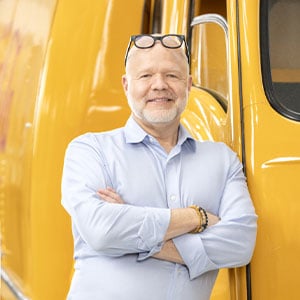
That's Michael Moore, Vice President of Global Real Estate and Workplace for the Coca-Cola Company in Atlanta. He's responsible for a wide array of international real estate holdings, partnerships and strategies, an ever-evolving portfolio that spills out across the world and covers a growing number of brands and business needs. We'll find out how one of the most recognizable companies on the planet manages its legacy, but also deals with changing appetites and evolving tastes about space. Coming up: Drink it all in – the world of Coca-Cola and the global real estate story of an iconic American company. I'm Spencer Levy and that's right now on The Weekly Take.
Spencer Levy
Welcome to The Weekly Take, and what a privilege to interview the head of real estate for Coca-Cola, a brand that needs no introduction. Michael Moore, known as Mimo – and may I call you Mimo?
Michael Moore
You may.
Spencer Levy
Michael Moore the VP of Global Real Estate and Workplace, Coca-Cola. Mimo, thank you for coming out.
Michael Moore
Spencer, thank you and welcome to Atlanta. We're glad to have you here.
Spencer Levy
Mimo, thanks for having us in today. And when people think about Coca-Cola and they think about your terrific beverages, tell us how we should think about Coca-Cola real estate.
Michael Moore
Well I think that what a lot of people don't understand is that when people hear Coca-Cola they think of the trucks, they think the bottling plants, and the reality of it is the Coca-Cola company itself is primarily just the corporate entity as well as the local OU – operating units – and we own a few bottlers, only a few bottlers and those are in Asia. But the majority of our real estate actually is offices with only a handful of warehouses and a handful of manufacturing. In those instances where we do do manufacturing, it's primarily driven by customer relationships here in North America. We have about seven syrup plants, and that's because we have such a large customer base here in North America, and it's the speed to market. And then as well, we have around the globe, we have what we call CPS plants, which are commercial product supply plants, and those plants are really what creates the formula. And put some, whether it's a bag in a box formula or the ingredients that we then send to the bottler that they then add the carbonation and the liquid, so.
Spencer Levy
We are here at the global headquarters, about three million square feet.
Michael Moore
Yep.
Spencer Levy
Could you just give us a sense of the size of your portfolio, office, and some of the other products?
Michael Moore
We have about 200 offices, 200 sites, if you will, over 82 countries. So it's pretty broad, and a lot of instances we have what we call our LASIC sites, which is London, Atlanta, Singapore, Ireland, and Costa Rica. And so those LASIC sites are kind of our hubs, but then outside of those hubs, we have satellite offices, and we have them in, like I said, about 82 countries, And in many instances, they serve to do a couple of different purposes. Work with the bottler, so it's our franchise team as well as our marketing team. That's what you can typically find in most offices is a franchise leadership, marketing leadership, and in a lot of instances, finance.
Spencer Levy
I just want to ask how you do work in the U.S. versus elsewhere in terms of the real estate function.
Michael Moore
In the U.S., we have our headquarters here in Atlanta, and obviously that's our largest location actually anywhere in the globe, but it's also obviously the largest location in the United States. But we have what we call field offices, and those field offices are strategically placed in alignment with our customer relationships. So, for example, we have an office in Bentonville slash Rogers, Arkansas. That's obviously for the partnership with Walmart. In Cincinnati, we have an office there because of our relationship with Kroger. So they're strategically located, and then we actually have an office in Washington, D.C. And that's primarily for government relations and for our public affairs group. And so we have them where it's strategically based on the customer relationship.
Spencer Levy
I find it very interesting you have both your owned real estate and then you have your outsourced real estate for your syrup makers and your bottlers. Tell me about that. Do you have any operational function there?
Michael Moore
Well, approximately 30% of our portfolio is owned. The rest of it is leased. And in many instances, our own properties are our manufacturing locations.
Spencer Levy
Ok.
Michael Moore
The other owned locations we have are here, obviously, at our headquarters. And then we have them in strategic locations where it actually makes more sense for us, either financially or for tax purpose to own them than it does to have them lease for currency issues, but in most instances the manufacturing just because of the large capital investment that's needed to stand up an operation that's going to produce all that ingredient stuff, but we don't do the operations.
Spencer Levy
Okay, very good. And then I can't wait to ask the question, so I gotta ask anyways. Is there a secret vault here at Coca-Cola that has a secret formula inside?
Michael Moore
Well, our secret formula is housed in the vault at the World of Coca-Cola. And we would encourage everyone to visit the World Coca-Cola when they're in the Atlanta area and see, you can actually go to the vault. You can't see the formula, but you can go to the vault.
Spencer Levy
You should know I visited the World of Coca-Cola with my family and it was a really cool experience.
Michael Moore
So did you, saw the vault?
Spencer Levy
I did. I did, so I kind of knew the answer, but I wanted to hear from you. Good enough, good enough, good enough. So given that you have perhaps the premier brand in the world, how does that influence your real estate decisions?
Michael Moore
Well, I think in a lot of instances, our brand gives us kind of that, I guess it's the thing where most people want us in their market, if you will. But I think that we make the decisions based on where the business is needed. So the real estate team takes our cues from the local business where if the OU, which is again an operating unit, has specific needs, we tend to then make our real estate decisions based on that. The brand is what gives us the awareness, whether it's on the sign outside the building or, you know, on the branding inside the space.
Spencer Levy
Tell us what drives your location strategy and how labor plays into that.
Michael Moore
Location strategy is based on a few different factors. One is talent and improvement. We wanna be able to get the right people based on the need. I think that the other one is, again, based on where we have the business need. Some of it is in proximity to our bottlers. So a lot of times, many of our offices are located in proximity to our bottlers or close by because of that strategic and very close relationship that we have with them.
Spencer Levy
Okay, so talent, proximity to bottlers, and when you're in a country, are they, are most countries making the Coca-Cola product in country or how many countries import the product?
Michael Moore
So, of those 82 countries that we're probably in, most of those are manufacturing it. Some of the smaller countries may be importing it. So again, we have strategic relationships with our bottlers. Our bottlers will import product if the location does not allow for a manufacturing site in close proximity. But in most instances, the 82 locations, we're, again, we're not producing it in our offices by any means, but the bottler is in close-proximity.
Spencer Levy
Got it. So we're here at your corporate headquarters, and it's beautiful, by the way, and I asked one of your colleagues, how old is this place? I think, correct me if I'm wrong, it's from the ‘50s. Is that approximately right?
Michael Moore
So, the first building on the campus, which is CCP – Coca-Cola Plaza – was around somewhere mid to late ‘60s.
Spencer Levy
‘60s, okay.
Michael Moore
Yep.
Spencer Levy
And so, it doesn't look anything like that, right? You come in here, it is the most modern, I hate to say the word, it's cool. I mean, it's really cool. It's got, it not just the signage, it's not just a fact you've got a great product, you know, it's the fit out. Tell me about that. Tell me not just the beauty of it, but the functionality.
Michael Moore
Yeah, so, as you can imagine, all of these buildings were not built at the same time,
Spencer Levy
Yeah.
Michael Moore
And there was not an architectural kind of strategic master plan done when they did them. So around 2010, there was a vision called Vision 2020 to have Workplace 2020, that we would renovate all of our offices. And so one of the things that we've done is we started with Main Street, which is basically the main level or the first floor of all of our buildings, which there are six or seven that are interconnected. And the idea was is that would create this main street feeling of where everyone would come together. And on that main street, we have essentially an IT horizons is what it's called. It's like an IT genius bar, if you will, here for us. We have two coffee shops. We have a pharmacy. We have our dining facilities, which is called the district. We have a Coke store. We have a care center. The idea is that like everything on Main Street is everything that you need throughout the day. And it's also a place to come together and congregate. And then what we did is we went strategically up floor by floor and we did renovation of the space. As most buildings that were built in the ‘70s and ‘80s, the offices were on the windows and they blocked the light. And so one of the things that we did as part of that project, I was not there at the beginning but came midway through it, was what we called the democratization of light, which was about bringing light to all the people, not just the people with the big titles. The idea was that more people had the light and we moved our huddle rooms, conference rooms, and offices on the inside.
Spencer Levy
Democratization of light. Mimo, with your permission, I am stealing that term.
Michael Moore
Happy for you to.
Spencer Levy
I'm very fortunate in this job. I've been to the workplaces of many of my clients. In fact, I was just at the workplace, completely different industry, of a large financial services firm called Macquarie in New York City. A very, very similar concept. It's not just the democratization of light, because they took the offices away from some of the perimeter. They also put a central staircase that connected the whole space, so that the space isn't just functional. It creates a mindset. Does that speak to you?
Michael Moore
Oh, absolutely. I mean, there's always that, you know, function over form. Every architect's going to design it for beauty and aesthetic, but we have to live it. And I think the beauty of doing a renovation project over multiple years is that the first floor that we renovated here versus the last floor that we've renovated, here, there were a lot of learnings and a lot of things that we did. One of the things we did early on is I think we had workstations that were too big. They didn't have the sit stand. We had some spaces where there was a probably over subscription of red to bring the brand into life and I think over time
Spencer Levy
Oversubscription of red. What does that mean?
Michael Moore
Meaning I think we doused certain things, like we had on one of our first floors, we had the entire ceiling of the space in red. And it's like, I think, we just learned over time, like we don't have to shout red. People know where they are and we can have our brand. One of the big things for us is that, I think a lot of people know us as the Coca-Cola Company and so they think of our one brand, Coca-Cola. But we actually have over 200 brands and we have a lot of beverages. And our CEO is famous for talking about beverages for life. We have something for every time of the day. You know, we have we have coffee, we have milk with Fairlife, which is amazing. We have juice, we have Coke, Coke Zero, Sprite, Topo Chica, which you're drinking and enjoying right now. So it's got something for everyone Yeah, so yeah I think that like but those brands coming to life in space I think has been really kind of neat because again people think like Coca-Cola, but I think it's an opportunity for us to educate people I don't know if you came in to our guest lounge but one of the things that we did there is this we actually you know, set up coolers, and typically our coolers always have Coca-Cola on the top of them. And none of these coolers have Coca Cola on the top of it, they're black. And why did we do that? Because, like, if you look at the inside, it's actually all the beverages, and they're speaking to you, whether it be the Fresca, the Fairlife, Topo Chico. It's got it all. And so it's like, you see it coming to life. You actually probably also saw it in the yellow truck that we have in our
Spencer Levy
I did.
Michael Moore
In the middle of our building.
Spencer Levy
So when you talk about the main street
Michael Moore
Okay.
Spencer Levy
This goes to return to office, getting people back in the office. So is the main street part of that strategy?
Michael Moore
I think it is. I mean, look, when we did it, you know, we did most of the renovation, obviously, prior to the pandemic. And I think, it was the idea that, like, giving people access to things that are convenient to make it where they didn't have to, like go out and do certain things. I think when we think about the return to office, I think it's just in general, like the true benefit of coming back into the office is the ability to collaborate and the ability to have those casual collisions. And I think that the casual collisions happen on Main Street. The collaboration can happen anywhere, but the collaboration can happen on the work floor, but it can also happen on main street. I think really where Main Street, what it does is that casual collision, where you run into someone and you're able to have a conversation that would have been 14 emails, you actually can get it done.
Spencer Levy
When I work remotely, which is like every day, in one of my offices, I never, except for phone calls, I never sit there. I sit in the most open space. I stick my computer right there. I was at 2100 McKinney on Thursday. I must've had 10 meetings of just people running into me. Is that kind of the concept?
Michael Moore
Yeah, I mean like there was a period of time and it kind of became a joke there was this space that was actually in one of our coffee shops where I sat and people like kind of coined at my office and it was just because I sat there. But what it allowed me to do was able to like run into people, have conversations and see people and even things that weren't even the highest priority for me became conversations that made things where it was less work on me later and that's happening across the board. And what we tend to see is because again that idea of like democratization of light is that we also have... Almost three acres of outdoor space which is pretty significant when you consider a metro Atlanta campus but the ability to kinda get outdoors and to be able to have people if the weather's nice, which it is right now this time of year, to be able to get outside and actually have a conversation as well so it's that kinda bleeding of Main Street with the outdoors that then they can go upstairs and put their head down if they need to but the idea of coming to office, you can't kinda do that at home.
Spencer Levy
Given that you're in 82 countries, how much of the work that's done in Costa Rica, in Ireland, in Singapore, is designed to make it all look like one company, like it's all Coca-Cola? How much of it is local?
Michael Moore
We tend to take this approach of like, the, there are things that are consistent and they don't deviate, but then there are things that are very local. And we want every place, and there again is another learning that we've had over time. I think that we don't want everything homogeneous. We want people to feel like when they come there, that they actually see themselves and they feel like that it's a part of where they are. And so in the Costa Rica office, what we did is we actually hired local artists to come in and paint murals. And that's good for two reasons. One, it gives a visual cue to what the environment is, but then simultaneously, it actually supports local artists. And so what we try to do is we try to be, whether it's through our product or our workplace, is kind of be involved in the community. So yeah, I think that what we try to is have standards. And standards are things that are kind of guardrails. We like to say this, freedom within a framework. You have a framework, it's there, but then you have freedom to deviate from it as needed.
Spencer Levy
And the standards are high quality, visually pleasing, I'm sure all of those things, but there's also cultural differences.
Michael Moore
Correct.
Spencer Levy
And some of those cultural differences manifest themselves and I think return to work is higher in Asia and Europe than it is here.
Michael Moore
Yeah, and I think that the other thing, too, is that we have a design team, we have a project team, and we have a real estate team, we have an operations team, we have an experience team on my team. But what we always do is we find local partners that are in the office. So a lot of times my team will work with the local marketing team. You know, my team will work with a local franchise team to understand the nature of their business and what's important to them. And taking that, I think we try to take this approach of to listen, and that listening actually informs the design, not kind of coming in. I think, again, that's been a learning. I think in the past, we probably thought we knew better and said, nope, here it is. I think we've learned along the way to take cues from our local people.
Spencer Levy
Well, part of the reason why people tend to come to the office more internationally than they do in the United States is they tend to live closer to the office. And they also tend to have smaller apartments in places like Singapore. I know that some companies are looking at not necessarily getting into the multi-family business, but, you know, other ways to get labor closer to the office. Any thoughts on that?
Michael Moore
I think we've considered that at different times. I just don't think that we want to be in that business. We don't want to be landlord. There's obviously security concerns. We want to offer a space where people can have work, but there's a level of separation of work from where they live.
Spencer Levy
And then emerging markets, new places, 82 countries, but there are new countries emerging. Brings unique opportunity of growth, but brings risks as well. Tell me about that.
Michael Moore
I think that there are a couple things, one is like I think that when we think about risk and when we think about emerging markets, like risk doesn't always mean danger. I think it's about what's the financial investment that we want to make in that. And so I think when we look at certain locations, Saudi Arabia is a prime example. We made a decision to enter that market and put an office there. We didn't have the number of employees that warranted us going out and doing a long-term lease. And so what we did is we started in a shared working space and then we found very quickly that it grew and it moved at such a speed that we actually needed to take on additional space in that market. And what we tend to use as a certain barometer is that if it's 15 or below, we tend to say, let's use a shared office space. It just makes sense financially. If it's anything over 15, then we look to say hey, maybe it's time for us to sign a lease and have a little bit more permanent space in this market. I think it's important, though, to know whether it is a shared office space or one that we've done a long-term lease, we actually bring our branding to life in all of it. We firmly believe that is what differentiates us, whether it's an owned property, a leased property or a shared space. You know, to be honest with you, a lot of office trends are the same in terms of, kind of, design and stylistic. What differentiates this is our branding. It is what tells our story, but it is also what gives our people a sense of pride.
Spencer Levy
From a real estate standpoint, when you're going into an emerging market, tell me about your thought process.
Michael Moore
We have a strategy that is more or leased than owned, but every decision we make impacts the local P&L. And so any decision that we have, anything that we do, it has to be in partnership with them. So in a lot of these emerging markets, you know, there's a desire, obviously, you know, for some great office space, but we have to do it with a level of sensitivity to how it impacts their bottom line. And so, you know, I think what we want to do is we want to have where it makes sense a showcase space where we can bring people from a talent perspective as we've talked about. But I think it's in some instances and in some of these African countries we're bringing dignitaries in. We're bringing heads of government into that. And so it has to reflect the nature of who we are as a company. So again, not one size fits all. That's probably nothing you're gonna find at Coca-Cola. But I do think in Africa in particular, we do a lot of them where it's shared offices like a WeWork or something like that, but then in some instances we've got some hubs even within Africa, in Johannesburg and in Nairobi, where, you know, here's key parts of talent but also some places where the bottler, because of the franchising and how it works in Africa.
Spencer Levy
Let's take a step back for a moment here. We are in world-class space with maybe the premier brand in the world. How do you know you're winning? What does success look like to you from a real estate standpoint? How do you measure that?
Michael Moore
Well, I think there are a few metrics. One of them is we have a culture and engagement survey that we do annually. And so I think it's the sentiment of our associates. Then they're not necessarily specific questions around the workplace, per se, but it is how they feel in terms of the effectiveness of the work. So I think it’s sentiment there. I think also part of my job is actually traveling around, meeting with these leaders, being able to spend time with them, understanding their successes, their pain points. I think that many of them see the office as a recruitment, but they also see it as a place where they can be more efficient to drive business and drive better business results in terms of getting, I mean again, we don't make the product, what we do is we help the marketing and we do all the strategy behind it, so I think it's how do we help create a space that allows for people in those environments to be able to succeed and I think in many instances we are creating those environments.
Spencer Levy
How much are you traveling and how important is face-to-face versus, you know, Zoom? Just tell me about that balance. How do you try to balance that?
Michael Moore
So I am typically in another country once to two times a month and I try to get out different regions because just like it is important from the standpoint of our associates where they're at a specific location to have that collaboration, it is important for us. I mean you can do a lot as we learn through the pandemic. You can do a lot through a team's call. It does not replace having a meal with someone in a country, over a dinner actually hearing what the real pain is. When I travel, there's three primary objectives. One is time with my team, building that time to build the relationships with them because just like the one-on-one that you have when you're face-to-face, that time with them is important. The second is time with the leaders and the leadership in those local markets. And then the third reason is really to see how effective we are in terms of our operations. Does the space reflect the things that we want it to reflect?
Spencer Levy
One of the things I like to measure, and again, this is where it gets difficult, is the challenge we all have of efficiency versus productivity, right? We're all here in the cost business, and I actually reviewed the materials you sent me in advance. I looked at all the case studies, and there was a metric on there: budgeted cost, actual cost. Budgeted costs, actual costs. Front and center. So, I'm not knocking it, and in fact, when I talk about operations mattering, you know, clearly that's a measurable metric
Michael Moore
Yep.
Spencer Levy
But the one that's much more difficult to measure is the: Am I working harder, better, happier, learning, productivity? How do you, how do you try to measure that, assess that?
Michael Moore
Well, what are you speaking to in terms of productivity?
Spencer Levy
Productivity, I'm meaning using the space not as a place to work per se, but a place to make you work better.
Michael Moore
Yeah. I think that there are a couple of things in terms of like productivity and effectiveness, if you will. I mean, I think it's does the technology work when they come in? Does it give them all the things that they need to be able to do the work that they need to do when they're there? I think that it's one of the things that we have done again as a company. So we've tried to create this and it's been in obviously partnership with our IT brethren. Is that, like, you can walk into any room and you're able to get up and get going very efficiently and that has taken time. That's been an investment that we've done, but that's been in partnership with IT to be able to be more productive there. I think that the other thing is creating, at least at the office, different modes of space, if you will, of work. Like, I think we've got some places for focus, for individual work when they're here, some spaces for collaboration, some places for congregation. So I definitely think that the effectiveness is probably an individual thing, but I think that what we have done is people can get up and get to work fairly easily, so.
Spencer Levy
So let's get into a few case studies here. So you have a couple of very interesting ones. Let's go to Singapore.
Michael Moore
Yep.
Spencer Levy
I understand that your head count in Singapore – they're growing a lot. And you didn't have to expand the space. What do you do?
Michael Moore
You partner with the local team and I think you understand what are the things that they really need. I think when we say we didn't have to expand space, I think we did have to modify space and we are modifying space and so I think one of the things is we've had to do a lot of education. We've had to do a lot of change management in space where we've helped people understand that where you work is not necessarily your desk. That's been a big thing in terms of like every seat that we have in the space, every area. From our open lounges to commons areas, they can be used to be a place to be productive. I think that there's been so long held this mentality of you have your specific workstation and that's the only place that you can be effective. And one of the things that we've tried to do, especially in Singapore, we're understanding as we have more and more people come back to return to office is what is the true actual demand? Because we don't do actually a one-to-one ratio. We have right now a 1.6 to one ratio. And the thinking behind that is a few things. One is that most people are not in every day. Number two is that most people when most people when they are there are in a meeting. So they're probably in a room. And we've actually found a subscription of meeting spaces. So I think it's really finding what is that sweet spot of being able to have space that's available for, you know, them to be able to use. But we've had to make some modifications to the space. And we probably will continue to have to make some modifications in that space. I think we're even looking at our desk size. You know, is our desk size, you know, too large? Can we go with something, and that's not always about decreasing size to decrease size. But what makes us give flexibility when we can kind of come into a space so that we're not having to go, let's go sign another floor lease. Let's go like renovate more space. It's how can we do things within the current footprint and you know some of it's experimentation.
Spencer Levy
You use the term change management, which is something we talk about quite a bit. Tell me a story about what you've learned over the years of what is effective change management.
Michael Moore
Well, I think that communication, I think, especially when you talk about a multinational company, is that what you say and how you say it is important, but I think it's also one of those things where there are things that we can say something in one meaning. And it'd have a different meaning in a different region or a different geography. The thing about change management that I think we have learned is that you have to do it repeatedly and you have do it often and I think that you continually have to help remind people of the step change that they're walking into. I think change by human nature, it's not unique to the workplace, it's hard for some people. You know, people are used to a certain thing so I think bringing people along on the journey and I really think the other thing we've tried to do is have empathy in the process of where they are.
Spencer Levy
Okay, a couple more case studies and we're going to talk about the future. So interesting little case study here. When you opened your location in Johannesburg, tell me about how the brand came into play because as I understand it was a local identity in the Johannesburg space. Don't quite understand how the two came together, but tell me about the Johannesburg space.
Michael Moore
That is a place where there is a lot of culture and cultural pride. And one of the things that we did as we designed that space is we actually partnered with some local artists, but we also partnered with a local art curator to not just say, let's find beautiful artwork to put on the walls here, but let's actually find local artists to be able to put some of their art up. The other things that we did is a lot of bead work. And so what we did is we had some spaces where some of our light fixtures, tables and furniture reflect some of that local identity. And so that's an example where I think that the local culture kind of really, really came to life. It's such a sense of, you know, I don't know how much you've spent in South Africa or with anyone who is South African, they're the most amazing people. Just beautiful in spirit and just in how they are. And we wanted a space that felt warm, just like they are, and so it embodied that sense of welcome and hospitality.
Spencer Levy
I was speaking with a client of ours last week and they were talking about the challenge of, because they're growing like wildfire, right? They feel like they're losing their identity.
Michael Moore
And I think that that's always the challenge, too, is there's a little bit of, like, you know, like Dublin as an example where we built an office and how much have we grown since we built that office? Seventy more people. And it's like you can't pivot that quickly in terms of, I mean, you can in terms of getting it, but like from a capital perspective it's, like it takes a lot of planning.
Spencer Levy
Going back to the Dublin example, you're spending a tremendous amount of money and you say, oh no, I have 70 more people here, do I need 70 more workstations? Walk me through that. How does that work?
Michael Moore
Well, I think a lot of times what we're finding is that either that market, the beauty of Coca-Cola is that you have a bunch of different functions. You have HR, you have finance, you have what we call platform services, and so within those groups, you have different groups that have different strategies. It's our job. We don't always get it in the best of times sometimes, but it is to understand what the trajectory of that growth is among those different groups. We often act as an integrator. Sometimes we maybe is not as quickly as we need to, but what we find is that where there is success because of either talent or because of the growth of the market, we are having to look at what are the expansion opportunities in specific spaces. And so for Dublin is an example. We've been looking at Do we need to expand the space? But one of the other things too, is that we've actually brought in other parts of our business. So we have a juice brand called Innocent that we brought in, you know, and they use part of the space. And so it's all about finding what's the maximum efficiency of space. We want our space to work hard for us, but we do realize that at certain points we have to make additional space decisions to get more space, because it's like you can't add 70 more people, you know and say, okay, well, we're gonna increase our ratio. It just has an impact at a certain point.
Spencer Levy
Let's just go to the future if we can. And you've learned, you know, quite a lot in your long career here at Coca-Cola and elsewhere. How do you see real estate changing in the next 10 to 20 years? What are some of the areas that you're really focused on in terms of the structure of the space, the location of the space, the type of space, those types of things?
Michael Moore
If anything, we've learned that things come and go, you know, the pandemic, we thought, oh, we're never gonna fly again. The pandemic, oh, we're not gonna be in the office again. And we've seen record return to air travel and people coming back into the office. I think, and my hope is that for Coca-Cola, we are in more markets. We're in more offices. We talked about we're in 82, that we're more of them. That means that we've actually been successful and it warrants having an office in a certain location. Whether the size and the scale of that office, who knows? But I think that we continue to remember that we are stewards of a brand and we are stewards of products that are meant to bring delight and enjoyment to people. And so I think in the workplaces, that's kind of our hope that we follow that as well and I think the office hopefully is not a boring place. We want it to be something that is engaging and that brings smiles to people's face, they bring their family. One of the things that I love so much about our headquarters is that you will see people bring their kids in. And their kids just light up and they just kind of look with a sense of wonder. And so I think that like, what will the future be? In some ways it's, you're going to see some new technology, but I think it's going to be a continuation of what we've done well but hopefully more amplified.
Spencer Levy
Well, I think that says it all. On behalf of The Weekly Take, what a privilege to be here at Coca-Cola with our head of real estate, Michael Moore, Mimo, and thank you for letting me call you Mimo. Vice President, Global Real Estate and Workplace Head of Real Estate at Coca Cola. What a great show. Thank you very much.
Michael Moore
Thank you, Spencer.
Spencer Levy
And thank you for joining us as well. Hope you had a Coke and a smile. If you enjoyed this multinational occupier’s perspective, there are other such conversations to be found on our website, including the visit I mentioned to the spectacular New York headquarters of the Australian investment bank, Macquarie, in an archive filled with other interesting companies and their real estate thinking, too. We hope you'll join us again soon to hear from more occupiers, investors, developers, and operators across the real estate spectrum, and lots of other business insights, too. Just check out our website to stay on top of our programming. That's CBRE.com/TheWeeklyTake. And remember to subscribe and review the show wherever you listen. We'll see you next time. I'm Spencer Levy. Be smart. Be safe. Be well.

.jpg)

