Download Transcript
Spencer Levy
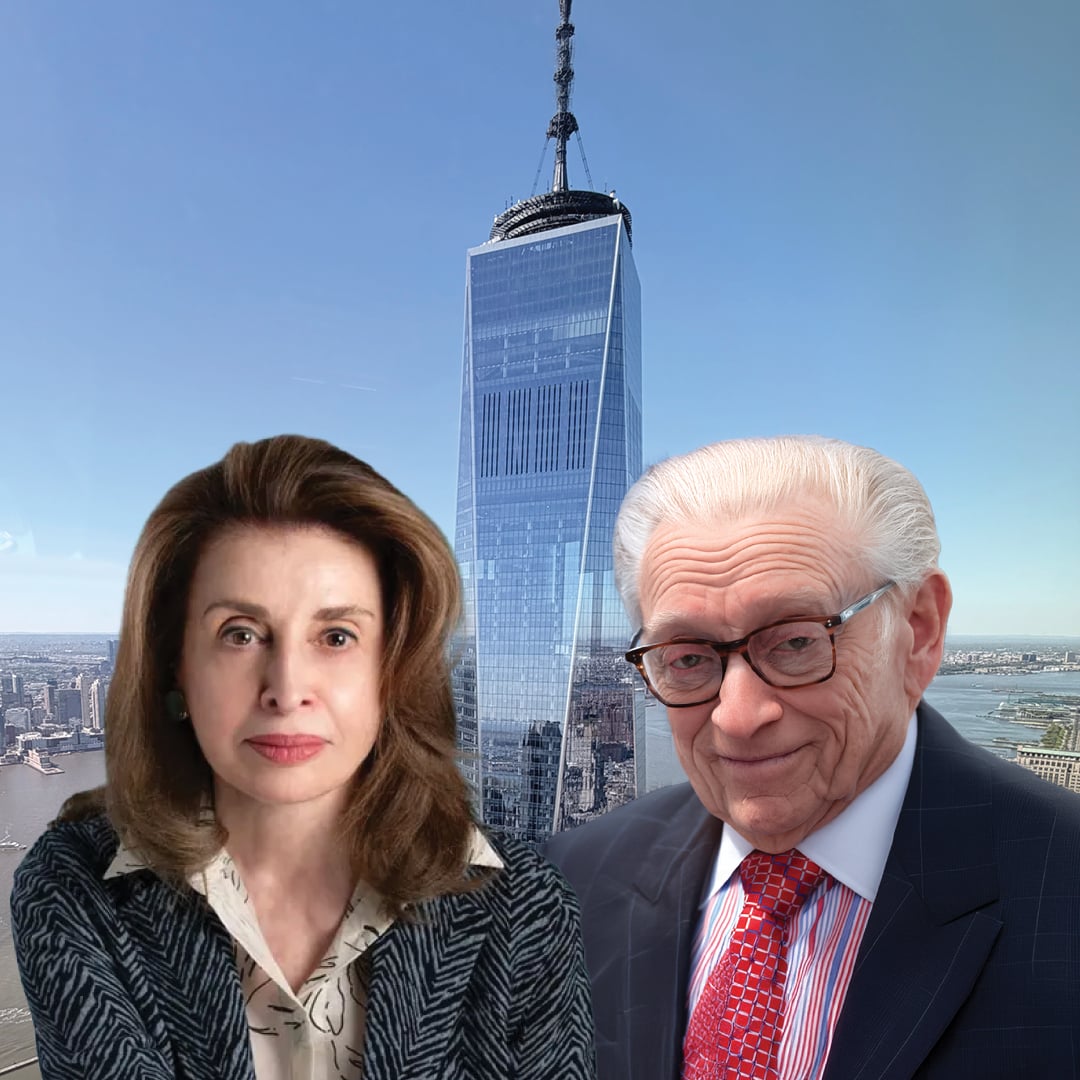
Twenty-five years ago, two dramatically different events took place in lower Manhattan. One was among the largest and most important real estate transactions in New York history. The other, a historic tragedy, 9/11. On this special episode of The Weekly Take, we visit the site at the center of those events to pay our respects to the some 2,700 lives that were lost there back in 2001. And we reflect on the remarkable rebuilding and transformation – a rising, of sorts – where New York's famed Twin Towers once stood. We sat down with two of the best in the business: skyline-shaping developer Larry Silverstein, Chairman of Silverstein Properties who purchased the World Trade Center literally weeks before 9/11, and today, in his 95th year, is still on his game. And also CBRE's legendary New York broker, Mary Ann Tighe, who's added the comeback of the neighborhood around Ground Zero to her long list of innovative projects. Coming up: The World Trade Center in New York City – a somber anniversary, but a spirit of revival. I'm Spencer Levy and that's right now on The Weekly Take.
Spencer Levy
Welcome to The Weekly Take at the World Trade Center. What a privilege it is to be here today with Larry Silverstein, the chairman of the Silverstein Properties company who has built the World Trade Center, and my dear friend, Mary Ann Tighe, on her fourth visit to the show. And every time, it's like the first time because it's such a privilege to have you here today. Larry and Mary Ann, you've been working together a long time. Tell us how you know each other.
Larry Silverstein
Only 25 years. What's the big deal?
Mary Ann Tighe
So, I was trying to think of when we first met, and I have to say, I don't think we really knew each other–we had to know each other, because I saw you on the day of 9/11. Do you even remember that?
Larry Silverstein
No, I do not.
Mary Ann Tighe
So, obviously, that was a day. How many weeks had you owned the World Trade Center, Larry? How many week had you owned the World Trade Center on 9/1?
Larry Silverstein
Six, seven weeks.
Mary Ann Tighe
So, you'd signed the long-term lease six, seven weeks prior to 9/11. And again, that day was such a difficult day. And I ran into you going into an Italian restaurant on 3rd Avenue.
Larry Silverstein
Second Avenue.
Mary Ann Tighe
On 2nd Avenue. You're absolutely right. With Jeff Wharton–
Larry Silverstein
The things one way remembers.
Mary Ann Tighe
With Jeff Wharton, at 5 o'clock that night. I always remember – how could I forget this? – and people are still coming up from downtown covered in ashes. And it's a horror. It's just a horror. And I see you and I come over to you, and I want to say something of comfort to you. We weren't involved and working at the World Trade Center at that point. And I can't think of any words, I start to cry. And you, give me a hug, and you say, “Sweetheart, we're going to rebuild.” I will never forget it as long as I live. And I remember thinking. That your purchase of the World Trade Center had been a dramatic purchase.
Larry Silverstein
It was.
Mary Ann Tighe
Do you want to tell the story of what happened when you were bidding for the Trade Center? I don't know if anybody knows that story.
Larry Silverstein
Actually, on the 25th day of January of ‘01, I was crossing 57th Street. I had a green light. And as I was crossing, what I didn't see was a car coming down on me broadside, broke my pelvis in 12 places. I thought I was gonna die. The pain was horrendous and up in the hospital. Because the pain was so severe I said give me morphine so they gave me more thing put me to sleep it was fine then one day couple days later I woke up and I said, What day is it? and they said it's the 28th day of January. I said, 28th day? Oh my god, the best and final bid was due for the Trade Center on the 30th. So I looked at the nurse and I said, Excuse me, I need a conference room. I need telephones. I need to get my people in here, I said, because we've got something terribly important. I said, And kill the morphine.” She said you kill the Morphine, you're gonna hurt. I said I can't help it, I gotta think. So that's what we did. Frame the bid, as it turns out. Coming home from the hospital, shortly thereafter. I got a call in the car, J.P. Morgan representing the Port Authority, and said, Mr. Silverstein, you're the underbidder. I said, well, my bid was $3.2 billion. I said, what was the winning bid? He said, $3.25 billion. I said what was underbid? Because there were three of us. He said it was $2.15 billion. $50 million separated us. About 18 days later, get a call from JP Morgan. Are you still interested in the Trade Center? I said, why do you ask? He said, well, Vornado's not gonna make the deal. I knew the next high bid. I said oh my God. I said that doesn't sound rational. We ended up owning the Trade Center as a result.
Mary Ann Tighe
And I have to say in so many ways, nothing has been easy at the Trade Center – not the bidding, not the winning, obviously what followed after that – and then I think the next thing I remember is that you hired us in 2004 to lease this building, which was a gleam in the eye at that point. And out there where we see everything today was horrible. And so it began.
Larry Silverstein
It was a horror scene. And it became obvious to me that if we were going to succeed in redeveloping the Trade Center, what we had to do was build the best buildings we could possibly build and make sure they were absolutely designed so that a plane hitting them could never again have the same kind of impact it had on 9/11. So, this building costs a huge amount more than I had to. But I just simply said to myself, if we build this building, we're gonna work on it. If we're going to work on it, my kids are going with me, I want a safe environment for them and everybody else. So we built this building to a degree that's unlike any other building ever built in this country. And the other buildings down here followed suit. So as a result of what we did here, the City of New York had to raise its standards for new building construction.
Spencer Levy
And it's not just the standards of the quality of the building. I was very–I noticed the cornerstone on this building: 2006. Five years. Think about that. Why was it so important, Larry, to build so quickly? To start immediately and get it up?
Larry Silverstein
What you know, there was an exodus after 9/11 from downtown. Everybody was moving out. And somehow what we had to do is stop the movement and to have people come back, right? In order to do that, you had to build something. We had to show the world out there that we were intent on rebuilding the Trade Center and we were gonna do a first-class job at it. That's what we did.
Spencer Levy
First class job then, but we're still going today. I mean, this is 25 years later, multiple towers, new tower will be going up soon. So this was a project that took 25 years, will probably take many more years beyond that.
Larry Silverstein
‘31, 2031.
Spencer Levy
2031.
Mary Ann Tighe
Tell what you're going to do in 2031.
Larry Silverstein
I got a call one day from the CEO of Amex, Steve Squeri, and he said, Larry, on 2031, I want a commitment from you. I said, what's the commitment? He said, you and I are gonna walk to open that building together. I said Steve, I'm perfectly happy to do it, but in 2031, if I'm still alive, I'll be 100. So if you don't mind holding me up, I'm happy to walk with you.
Spencer Levy
Well, that sounds like a good bargain to me. Sounds like a great bargain to me. So Mary Ann, you've done so much for this city. Few people have done more for the city than you in terms of neighborhoods. One of our episodes we had was in Times Square and–
Mary Ann Tighe
We did one on the theater district.
Spencer Levy
On the theater district and I'm proud of that episode in so many ways, Mary Ann.
Mary Ann Tighe
So fun.
Spencer Levy
Because we talked about how it was either your mother or your grandmother used to take you to the theater. My grandmother took me to the theater and it was quite an emotional moment. But that's what the arts are. And you actually have formal art training in addition to obviously your tremendous brokerage career. But this facility isn't just real estate, it's art. Tell us about that.
Mary Ann Tighe
There's so many aspects to this. And I think that part of the bond that we share is my respect for what you did here in terms of design and in terms of what you do for the art collection. By the way, as recently as we were coming here today, he said, come with me, I want to show you, and he showed me a Larry Poons, marvelous large-scale piece that he's just added to the lobby, which he said I couldn't resist. I had to have. And at Sotheby's last auction, he bought a beautiful Roy Lichtenstein piece that's now outside Tower Three. And I also have to tell you, a piece I'm crazy about – treat yourself tonight as you're going home, right? – Tower Three is just on the other side of the Oculus. There's a Frank Gehry fish hanging from the top. You commissioned that piece, right? It's magnificent there. It is the most–I think it's my favorite piece at the Trade Center. Anyway, but what I wanna point out is that the area we're sitting in, and right behind us, Larry did something remarkable at the Trade Center that I don't think has ever been done before. He selected different architectural firms to do each of the buildings here. He did not want it to be a case of just sort of rolling out the same building. But he made them come and on this floor, set up together. So Norman Foster's, Richard Roger’s crew,
Larry Silverstein
Fumihiko Maki.
Mary Ann Tighe
Fumihiko Maki's crew, David Childs, the SOM people were all here working side by side so that they could interact with each other. So that these buildings, though different, and everybody has their favorite, we shall not speak of what our favorite is, they collaborated so, for example, if you're standing at the top of 4, you're not having your views cut off by 3. If you're in 7, your views, everything is positioned and angled in such a way that they fit compatibly together on the site. And it was his idea to bring a wall in a room, big, big room. And it was fabulous actually to see them at work, wasn't it?
Larry Silverstein
It became a tour de force, but the reality was, when I first mentioned that, they said, we don't do that. We work in our own offices. I said, well, if you want to participate in the
redesign of the World Trade Center, this is where you're going to do it. And I said what we'll do, we'll make it easy for you. You won't pay any rent. You'll have 24-7 access to the space. You'll have your computers. You'll have your electricity. You'll have anything you want. Free of charge, but you just have to do your plans right here together. And it works. It did.
Spencer Levy
That's quite remarkable, Larry.
Larry Silverstein
First time ever.
Spencer Levy
Like I said, I don't know of another project where they've done that.
Mary Ann Tighe [00:12:49] No, they didn't do that at Rockefeller Center, I can tell you that.
Spencer Levy
Quite remarkable. Well, Larry, speaking of 3 World Trade Center, many of our guests here today did a tour of 3 World Trade center today and staying on the art theme, it's the budding artists that you're paying so much attention to give them space at the top of the tower to do their thing and grow their business. But it adds something as well. So it's not just world famous artists. It's also art in the community. What do you think about that, Larry?
Larry Silverstein
When we built the original 7 World Trade Center, I fell in love with the Carmen Red Granite, a stone. And because I fell love with it, I put it on the facade, the entrance, the lobby, the ceilings, the floor, the bathrooms, the walls, the elevator. I put it everywhere. And when the building was finished, I remember looking and I said, my God, I created a mausoleum. I called my wife and I said, sweetheart, do me a favor, please come downtown. She came down and she said. It's a mausoleum. I said, OK, we've got a disaster here. How do we correct this? She said, you know, maybe a smart thing to do. To look at contemporary art. So we started touring the contemporary art galleries in New York, and we found different artists whose work could cover large amounts of space because the building was a two-million square foot building. We had walls that were 60 feet in length, 25 feet in height. So big space. Big canvases were needed. We found them and one by one we acquired some significant art. So from what could have been a disaster to what became a total triumph, total work, spectacular. Art made the difference in that lobby. It became obvious that there were young people out there who desperately needed space to paint, because the one thing that artists don't have is the capacity to spend rent on space. They just can't afford it. In many cases, they can't afford the paint brushes or the paint either. So what we did was establish an opportunity for 25 people to come and share a space. They have an opportunity to share it for one year, completely rent-free, and they're chosen by a group of gallerists. And I think there are 2,500 applications for 25 openings. And so today, there's a team of painters who are busy at work, painting away, and it's really spectacular, because for some of them, gallery owners have come up, looked at their work, and have bought many of their pieces. And so we met one of them at the Park Avenue Gallery Art Show and her pieces are selling now for $100,000 apiece. As you said, it's transformed our life, which is obvious it did. But it's given these young people an opportunity to do something they never could have done otherwise. So for them, it was a
salutary event. And for us, it really made us feel pretty terrific. The fact that we were able to do it made a difference to them and their lives.
Mary Ann Tighe
Can I also say that the Trade Center has also been home to performing arts, as well as visual. And I think often of the origin of this. Because after 9/11, people were afraid to come to the neighborhood. They just didn't want to come down here. And at one point, as I was belly-aching to Larry at our regular weekly meeting, I said, this has happened a number of times over the last 25 years, I don't know what to do. And he said, I have a psychiatrist at NYU I'd like you to see. I didn't take it personal. I decided, okay. And he gave me the fellow's name and I had a consultation with him and I expressed to him my unhappiness and frustration over the fact that people were afraid to come to the site. And he said this very profound but simple thought. He said they're afraid of the unknown. Right now, this location is associated with a terrorist attack, a catastrophe, and even though there's no danger of that in any material way again, or certainly the very lingering aura of it. So if you want people to come here, you've got to find other reasons for them to come down and get familiar, he said, because familiarity will yield comfort. And once they're comfortable coming down, other things will happen. And so I remember that you began having movie premieres here, fashion shows, concerts. Larry's very involved with the philharmonic. So stuff was happening all the time and indeed it came to pass. And this was obviously before the Performing Arts Center, but it came to pass that people got in the rhythm of coming down. I mean, again, I don't wanna imply that this happened like that, because it didn't, but it was in fact the arts and the embrace of the arts that did help to reacquaint people with this location.
Spencer Levy
And I also have to give you a shout out for a good choice of Lou Reed opened up one of your buildings. My favorite New York rock star of all time so well done Larry on that one.
Mary Ann Tighe
Personal favorite of Larry’s.
Spencer Levy
Is Lou Reed one of your favorite?
Larry Silverstein
Absolutely.
Spencer Levy
This show has just taken a turn because Lou Reed and Transformer changed my life. That is literally my top three favorite albums. We can go into that later, Larry. But I do want to do two things. One, I would go back to your wife, Clara. I was going to bring it up because much like your teaming with Mary Ann, this is all a team effort here. And you mentioned one of the great things that Klara did in terms of bringing the art to bring the buildings to life. Tell us about the partnership, Clara, and how she's helped in the World Trade Center.
Larry Silverstein
Only 70 years.
Spencer Levy
Yeah.
Larry Silverstein
She's been the most fantastic partner I could have had in my life, just extraordinary. Her comprehending of the massive problems that we faced on a daily basis in terms of getting started here and dealing with government officials and the Port Authority. It was excruciatingly difficult, but she was right there by my side on a day basis. Reality is if not for her I could possibly have made it through the last 25 years. She was an absolutely central part of everything I did and without her it couldn't have happened. So I'm a very lucky guy
Spencer Levy
Indeed, Larry. So Mary Ann, you brought up the subject of confidence and people being comfortable and using the arts as a one of the means to do that. And certainly that was the case here at the World Trade Center. But I might expand the circle a little bit and say all of downtown Manhattan, because, downtown Manhattan, I used to work at one New York Plaza many, many moons ago and five o'clock came around and it was a ghost town. Not anymore. Wall Street's transformed, World Trade Center's transformed. How have, not just how has it happened generically, but how have you been involved with transforming downtown Manhattan?
Mary Ann Tighe
So, we always talk about the fact that before 9/11, 15,000 people lived south, as we characterize it, south of Chambers Street, from Chambers street to the Battery. And today, the number's over 70,000. And fast approaching, I feel certain, 80,000. And what's the percentage, Larry, of people who walk to work, who live here?
Larry Silverstein
28% of the people who live here work here. It's really, it's the highest work-live ratio in the entire United States by far.
Mary Ann Tighe
Yeah, the idea that you can actually just walk to the office.
Larry Silverstein
Quite phenomenal.
Mary Ann Tighe
But pre all of this, I can tell you that I was always trying to convince people to come downtown because there's–I always think of the downtown discount and there's value to be had here that you can't necessarily get in midtown or midtown south. So I would say I remember this so vividly because it was actually in a board setting and I was laying out a series of alternatives for this company. One of the people in the setting, when I got to downtown, the fellow, the board member said, come on, where would you get your nails done downtown? I always remember that. And of course, I knew he was absolutely right. Sexist though it was, it was absolutely, right. I mean, there wasn't a dry cleaner downtown. If you lived downtown, you carried your clothes to midtown to have things done. 9/11 and what was happening here became the catalyst in so many ways. I mean, Battery Park City, by the way, was already on its way. It was a huge effort. As you probably all know, the landfill from the Trade Center is what Battery Park City is built on. When they dug the original buildings, they put the dirt over there and then they built part of the city on it. I even remember after 9/11, getting calls from people who owned condos in Battery Park City saying, what do you think I can get for my condo? Not that I'm a residential broker. And I had to convince them the answer was zero if you try to sell right now. What really needed
to happen is all of downtown needed to repopulate. Now, of course, what's also happened is in the flight to quality buildings, we're also watching old office stock being converted. And downtown led the way on that. And as you know, this was for its time, in its time the oldest office stock in the city because it was the beginning of the city, right? But today, I mean, it's been extraordinary to watch. I mean you've been intimately involved. What's the building you just finished?
Larry Silverstein
55 Broad. Former Goldman Sachs headquarters.
Mary Ann Tighe
Which is now a rental building?
Larry Silverstein
It's a rental building, yeah, about 500 apartments.
Mary Ann Tighe
Yeah, that's what's happened with downtown. And now it's a 24-7 area.
Larry Silverstein
It's a completely changed area of the city. It's active. It's striking. You've got bars. You've got restaurants. You’ve got all kinds of places to go and enjoy, especially for young people. And it's powerful. It's a powerful draw. The fact that you also have 12 mass transit lines that get you to any part of the surrounding area or back makes commuting a piece of cake.
Mary Ann Tighe
The ultimate validation: He and Klara moved here.
Larry Silverstein
You know, we lived at 500 Park Avenue, and we had been there for many years. And I finally said to Klara one day, I said, you know, a bunch of old fogies like us live in this building. I said we get in the elevators, all everybody talks about is their aches, their pains, their medicines, the doctors and so forth. I said I don't want to die in this place. This is a crazy place. Let's get the hell out of here. Let's go to some place that's young and exciting. So we built the Four Seasons Hotel here, and we built condos at the top. And we occupy the condo at the top. So now we get into the elevator. When the building opened, there were 15 children in the building. Today there are 75. Nine years later, 75. That's really phenomenal. You get into the elevator, all you do is talk to young people. It's fantastic.
Spencer Levy
Spoken by the way like a true New Yorker. Let's get the hell out of here
Larry Silverstein
And that's what we have here at the Trade Center.
Spencer Levy
I love that. Getting people to come here, I often say – and, Mary Ann, you and I have had this debate a hundred times – what is the number one amenity in New York, and you've said famously to me, New York. I think that's right, but I also think the number-one amenity, generically, is other people. And other people means not just your tenants, but other people that want to visit here, performing arts, or otherwise. But you have some enormous
tenants here from Spotify, McKinsey and others. Let me just ask a generic question. What did it take to make them come here? Why did they want to come?
Larry Silverstein
What you see today is a result of a group effort that involved a lot of people. Probably the most impactive in terms of getting people here was somebody by the name of Mary Ann Tighe. She did an extraordinary job. We've been together here since ‘04 and I mean together. Every step of the way Mary Ann has been involved. It's been a major team effort but I have to say that without her dedication, her commitment, her determination. Without her expertise, without her genuine desire to make this happen, it may not have happened. So all I could say is, I bless this woman sitting on my left. She's really extraordinary.
Mary Ann Tighe
Wow. Well, thank you for that, but we'll tell you what we did together in this regard. The first thing I would tell you is we began redefining the building as having one foot in Tribeca and one foot downtown. Now, this is nonsense if you really think about it, right? But in fact, Tribeca was a hot neighborhood. What made three streets later a lesser neighborhood? It didn’t compute, if you will. And so when we did the first big deal, really huge deal was Conde, right. When Conde Nast came, what caused Conde Nast to come down? By the way, far and away, Sy Newhouse and a visionary owner. That's a whole conversation about the decision to come to the Trade Center – we talked about this many times – had to be made at the top. One of the reasons we had a hard time getting law firms to come here. Do you remember how hard was? Because they're consensus-driven organizations. So you'd get two partners who'd say, my wife says I can't move to the Trade Center because it isn't safe for me. And the whole deal would fall apart. Our basic early deals had to be where you had a strong CEO. By the way, that's how Amex got done. Do you wanna talk about your conversation with Steve Squeri tipped it over. I mean, I believe that that was the defining conversation.
Larry Silverstein
Steve's point was that 200 years in lower Manhattan, really quite something. He said, we've been down here in lower Manhattan, this part of the world, for 200 years, occupying space in this part of the World, lower Manhattan. He said the fact that we're going to continue to be here now, we’ve signed a lease for another 100 years, so it'll be 300 years of history.
Mary Ann Tighe
But it took Larry sitting down with the C.E.O–
Larry Silverstein
Only five years.
Mary Ann Tighe
Yeah, and five years. That conversation is what turned the direction.
Larry Silverstein
Everything here took time. Go ahead, keep going.
Mary Ann Tighe
Anyway, Conde, when you did a demographic study of who worked there, they all lived south of Houston. So it kind of was like, okay, you could walk to work and still go to your favorite restaurant at lunchtime. What's the big issue? For others – and this was so
interesting to us, like Spotify, perfect example – the global companies got the Trade Center in a way that New York companies didn’t under–again, they kept thinking it's downtown, it's the site of this terrible tragedy. Whereas Spotify, I always remember asking the then-CFO of Spotify, so why did you pick the Trade Center? And he said, oh, all the Scandinavian airports fly out of Newark and it has direct connectivity to Newark. I was like, if only we'd known when we were negotiating, right? They saw the Trade Center in the context of the region, but also in the contest of the world. Finally, finally, we broke through to law firms because I mean, again, who do you who's going to come to new construction by and large? It's got to be financial service. At that point nobody believed tech. I should tell you that nobody believed it because tech companies were all wanting older buildings and we were glass and steel. I always remember, you know, glass and steel is not our thing, but you needed financial service, you needed tech and you need law firms. If you're gonna populate millions and millions of square footage. I think the other thing I could say–
Larry Silverstein
We only have 10 million feet down here.
Mary Ann Tighe
Yeah, I mean, you know, it was one of these deals. I always remember this with Tower Three. The first tenant we brought was the digital arm of a world class, again, a global marketing company, WPP's Group M. And their initial commitment was five hundred thousand. So we were celebrating. Yippee. You know, we're signing a lease for five hundred thousand square feet. And I don't remember who on the team said, yes, only two million square feet left to go. In that one building. I mean, it's a grounding moment where you realize, whoa. But if you remember, by the time we got to Three, we had momentum. And in nine months, we did the remaining two million square feet. I'll never forget it because we were like, this was like, oh my gosh
Larry Silverstein
An amazing accomplishment.
Mary Ann Tighe
Yeah, it was amazing.
Larry Silverstein
It takes a ton of professionalism to accomplish.
Mary Ann Tighe
No, it was–by the way, the secret of leasing is always momentum, right? You know this as well as I,
Larry Silverstein
Always. Always.
Mary Ann Tighe
You got to build. You've got to get to the momentum. But I can say global companies got us and people whose workforce was either in northern New Jersey or Brooklyn or Tribeca/sort of Soho. And that was the creative firms.
Larry Silverstein
And one other thing, interesting. We paid $3.2 billion to acquire the Trade Center. To rebuild it, we have spent $10 billion on the buildings. The Port Authority has spent another
$10 billion on infrastructure. So together, we spent in excess of $20 billion to replace what I paid $3.2 billion for 25 years ago. Inflation? Yes, part of it. And if you're dealing with a public-private partnership. The public part of it owns the land, Port Authority. Things take more time, significantly more time when you have a public entity as part of it.
Spencer Levy
I'm really glad you brought that up, Larry, because I was going to bring up the importance of public-private partnerships. In your book, The Rising, I should say, and by the way, I read it and then I gave it to my mother, and she loved it too. She's from New York. It's one of the best stories I've read.
Larry Silverstein
Thank you.
Spencer Levy
And I know it was important that you wrote that book. So first, why did you write that book? But if you just talk just a little bit post-9/11 about just the battles you had go through with the government not just to build, but to maintain control.
Larry Silverstein
First the book. I felt there were so many things that I learned as a result of rebuilding the Trade Center that anybody else who did or became involved in a public-private partnership would benefit enormously from the things I learned, as a result of it. Issue number one. Issue number two: I felt the importance of holding public officials accountable. What I learned, sadly – I think I was probably naive when I expected government officials to act as they said they were going to act. Many of them comported themselves beautifully. Others did not. And the disappointment that I felt as a result of public officials who spoke genuinely, who spoke supportively, who I felt were real and genuine, turned out not to be. I felt that was really a huge disappointment. And I felt if anything the book would show the importance of holding public officials accountable for what they did or didn't do. And so I'd say that those are the main factors in terms of the desire to write the book, get it out, get it done.
Mary Ann Tighe
Just a moment on the issue of Larry and perseverance. I think those of us who've worked with Larry all these years know that every time we were in sort of a dark hole, he would say, just keep going. And I believe in that’s sort of his mantra. And it's amazing how often it's the right answer, I can tell you that. But the other thing I want to tell you is optimism has to be bred in the bone of a developer – especially a New York developer – because we would have these meetings that I thought were horrible meetings, right? And we'd leave the meeting, and Larry's like, that was a good meeting. And I'd be like, what aspect of that meeting was possibly a good meeting? They said, no, they said that I would never–by the way, I always remember this one. We had the CEO of a global company tell us that he hated. What he incorrectly called the Freedom Tower, and let's remember it's not the Freedom Tower, it's One World Trade, and he said, it is giving the finger to the world. Do you remember this meeting? Yes, I do. And I'm sitting there, they're talking to the man who built the building, it's giving the finger to the World. Classy. It's his company that ended up anchoring Tower Three, just to show you how crazy. And this was the man when we left, he said that was a good meeting. And I'm like, he insulted, etc. And Larry's like, no, we've begun a dialog. We've begun talking to him. Darn if it wasn't true. It took years, but he anchored Tower Three. And I think about how optimism is so central to it. I think about it
particularly these days because we are concerned about where the city is today. Not that –by the way, demand is off the charts in New York right now.
Larry Silverstein
For first-class office.
Mary Ann Tighe
For first-class office, exactly right. Exactly right. But we're also in an environment where people actually don't understand the complexity of development and redevelopment and don't also understand that it has to be a partnership and not just the government dictating rules and a developer or owner saluting and just following. So, I do think that the thing that carried us through this is New York itself, right?
Larry Silverstein
My attitude has never bet against New York
Mary Ann Tighe
Exactly.
Larry Silverstein
Because we've been through–I'm 95 years of age. I've been through a series of these ups and downs, right? And I've seen some really bad ones. And the reality is somehow New York always comes back a little bit better, a little stronger, a little more vital. The city has so much going for it. It is such a unique place in which to live, in which to function. If you want to excel on any of the areas which are so prominently displayed in the city, whether it's music or drama, dance, whatever, or real estate, the place to be is in New York, because this is where it's at. This is what the action is. This is where you can do things that you can't do anyplace else. And so it's an extraordinary place to be, an extraordinary place to live, and just watching how each time, after each downturn, comes the upside and the upside has always been better than the last turn. So my attitude is, I bless the city because it's given me everything that I have today. And it's a place that I just adore.
Spencer Levy
Larry, I know you also own assets outside of New York. You just bought, I believe, the US Bank Tower in Los Angeles. And Los Angeles has its problems.
Larry Silverstein
Yes, it does.
Spencer Levy
Do you have the same attitude towards Los Angeles in terms of, let's move forward?
Larry Silverstein
You know, just as we're moving forward here, we're doing the same in Los Angeles. We're trying to use the advantages we achieved, the things we learned here in New York to the benefit of Los Angeles. And it's fascinating to see if we can transfer the advantages we've been able to put our arms around in New York and have them equally effective for us in Los Angeles. It's a huge city. It's a big city, has a ton of problems. But then all these major cities and somehow the United States have a ton of problems.
Spencer Levy
That's an extraordinary building. I think it's the tallest building in the western United States.
Larry Silverstein
I think it's the tallest in Los Angeles. I think it’s about 1,400,000 square feet.
Spencer Levy
So turning to you, Mary Ann, I think there's lessons to be learned here for existing stock, not just starting from scratch.
Mary Ann Tighe
I think there's no question that we're taking so much that we've learned. For example, just about sustainability and bringing it into the conversation and hopefully into the physical environment of buildings that are being retrofit. I do feel that what happened post-COVID and its impact on office space has really been a boon to New York. I think that we had, and still have, the oldest office stock in the world. When we came out of COVID, we had 424 million square feet of real estate here – of office space. We're down to 413 million square of office base, and I think we're on the track to dip below 400 million square feet. And what's great about that is that everything we're describing has either become a residential building or become a site where we can make new buildings. And we are, again–the Trade Center led the way, Hudson Yards followed, Manhattan West followed, now Midtown East is following. And so we're reinventing the city physically, but we're taking that reinvention and also driving it through the old office stock as well, or through our residential buildings. So again, if you have the right mix of people and the right accessibility to a city, I think that the buildings will succeed and people will come and stay. And that's what we've had. And certainly that's what we had here. I mean, it means so much to us that we could take these millions of square feet and fill them with world-class buildings. I mean we talk about that the last tower of the World Trade Center should have the word “American” displayed prominently on it and American Express it will be. And that's what this has been. This has been a triumph of the city, but it's also been a triumph of Larry himself and the will to actually overcome the odds.
Larry Silverstein
I suppose one of the wonderful things about getting to be 95 is that I've had an opportunity to see a lot. The sad part of it is I'm not going to have an opportunity to see what's going to happen 25 years from today because my sense is everything we're looking at today is going to be somehow even greater than everything we've seen thus far today. I think the next 25 years will show us advances that are difficult for us to comprehend today. The changes that are going to take place in terms of artificial intelligence, so forth, the impact of it, impact of medical discoveries – I mean, there's so many things that are happening in this incredible city of ours that people will take advantage of that I think the future is going to be an exciting, a hugely exciting experience to have. I'm sorry I'm not going to enjoy it, but it's going to be fun.
Spencer Levy
If I'm gonna respectfully disagree with you there, Larry, and I'm going to say this point blank, you will be here 25 years from now because people are gonna look back on you. People are gonna back on Mary Ann. And they're gonna say, that man changed history.
Mary Ann Tighe
Yup.
Spencer Levy
And this is a big question, but I'm not gonna try for a small answer if I can, Larry. If there's any one piece of advice for the listeners in the show, the people in this audience who say, I'd love to be a little piece of Larry, a little piece of Mary Ann, What would you say to them?
Larry Silverstein
If you're going to do anything, give it all you've got. Do it with totality, because halfway measures don't work. If you really want to accomplish something, go like hell to accomplish it. Go like hell to get it. Simple.
Spencer Levy
Mary Ann, anything?
Mary Ann Tighe
No, that's why we come every week to our meetings, because that's what we get. Go like hell. Just keep going.
Spencer Levy
Go like hell. Spoken like a true New Yorker once again. What a beautiful day with Larry Silverstein and Mary Ann Tighe. From our audience, let's hear it.
Spencer Levy
On that note of optimism and remembrance of 9/11, we hope you enjoyed this conversation. If so, please share the episode and also any memories of the upcoming 25th anniversary of 9/11 or any other reflections inspired by our talk. You can send us a note through our homepage at CBRE.com/TheWeeklyTake. We'd love to hear from you. And for all of you who are listening on one of our podcast platforms, you can also watch this special episode on our YouTube page. So check it out. As always, thanks for joining us, and we'll see you next week. I'm Spencer Levy. Be smart. Be safe. Be well.


.jpg)


