Download Transcript
Spencer Levy
Fifty-five degrees and 70% humidity. Those are the ideal conditions for storing wine. But that is not the subject of this conversation. No, on this episode, we've been admitted to a place with a name inspired by those numbers. We've come to discuss not the atmospherics of wine and spirits, but the economics of private clubs.
Tommy Shuey
What we were looking for was that kind of missing spot. You can go to a restaurant and hang out and eat a meal. What if you don't want to eat? What if you just want to hang out and have a drink? Well, now your option is a bar.
Spencer Levy
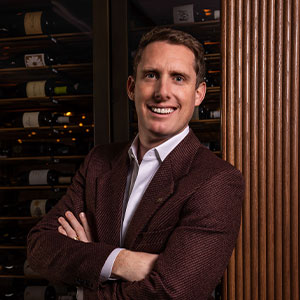
That's Tommy Shuey, who provided another option by founding 55 Seventy, a private members club that was opened five years ago in Dallas, Texas. Tommy says 55 Seventy is building a community around food, wine, hospitality, and the high-end trappings of a traditional social and business club, a space with unique real estate needs.
Kelly Whaley
Now this isn't something you want to scale to be on every corner because then it dilutes the value of it, but from a real estate perspective, we understand the need for this.
Spencer Levy
And that's CBRE's Kelly Whaley, a senior managing director in Dallas. Kelly oversees a team that's around a hundred strong, providing services for landlords across a range of financial needs in construction, acquisitions, operations, and more, including this stylish club that hosted this show. Coming up: Clubonomics, the real estate story of a business at the intersection of retail, hospitality and office space – a modern spin on old school country clubs. I'm Spencer Levy and that's right now on The Weekly Take.
Spencer Levy
Welcome to the weekly take and delighted to be in Dallas, talking about private member clubs with the founder of 55 Seventy, Tommy Shuey. Tommy, welcome to the show. Thank you, excited to be here. Oh, great to have you and thanks for hosting us here at 55 Seventy. Of course. And then we have Kelly Whaley from CBRE joining us as well. Kelly, thanks for coming out. Thanks Spencer, thanks Tommy for hosting. So Tommy, before we get into the specifics of 55 70, tell me about your background. How'd you get into this business?
Tommy Shuey
It was an accident. I started my career in investment banking. I started a couple of businesses afterwards, the most recent being a data analytics company with a good buddy of mine. We were building business intelligence platforms for operating businesses and really got some behind the scenes experience with different hospitality groups, restaurants, movie theaters, hotel groups, and through my career just really felt drawn to hospitality. COVID hits. We're looking for something different to invest in, something interesting to be a part of, my wife and I were. And so we kind of stumbled upon wine storage and saw the need in Dallas, kind of heard from a good friend of ours that he was storing wine off site and it was sold out. And I couldn't believe that, that there was enough people that needed wine storage that it was sold out in Dallas. So I drove over to that facility, and sure enough. Sold out. And they had expanded multiple times. Huge warehouse. Went to the one next door, sold out. Went to the third one, sold out. So I drove home, built a business plan and said, we're building storage. And in the meantime, one thing my wife and I looked into was maybe investing in some self-storage. We quickly realized that there are two types of self- storage providers. One is cheap. People will drive as far as they need to to get the lowest price. The second is quality and convenience. People will pay anything if it's next door and it's nice. And so we felt that the wine storage, the current offerings were a little bit far away, a little more industrial, and maybe not as convenient as they should have been for the people that collected wine. And so our goal was to build something upscale, elevated, really convenient, full service, build-in the brokerage, and then add this hospitality element. Because people that collect wine love to share that wine. And there's a huge community, not just around wine, but around food. And people that love great hospitality, they go to great hotels, they travel the world looking for the best of those types of things. So we figured it was a great marriage there, put it all together, built this business plan. And my wife was six months pregnant with our first son. And I said, hey, I'm gonna leave my day-to-day analytics company, and I'm going to start this thing. And she was not thrilled. She said, you're not leaving to start a bar. No, no, no. No, it's not a bar. It's not a bar, it is very different. But then, yeah, fast forward. So that was uh December 2020 was kind of when I told her about that and then fast forward, we opened a year later. And it's almost been open four years here in Dallas and now moving on to other parts of the country.
Spencer Levy
Kelly, I don't want to mischaracterize the private club business, but it's the private club business. It's the restaurant business. It's a retail business. How does the private-club business fit into our broader landscape when we look at the investment universe?
Kelly Whaley
That is the first question that comes up in any sort of underwriting, whether it's a lender, whether it is a landlord. And the answer is, if you look at it on paper, the tenant of the physical space is typically on the ground floor in a podium structure. And so somebody in a different market may be looking at rents on a rent roll and says, this is a retail tenant. There's other groups that'll look at this and say, you know, that is an amenity to the overall, whether it be neighborhood, whether be a mixed-use development, whether me the actual project itself. And the reality is kind of somewhere in between. I've seen it both ways in my previous life as an in-house leasing broker for a family office and developer. They would take these spaces, they would operate themselves, and they run that through operational costs on a space where I presumably – I don't know if you own this building or not, but...
Tommy Shuey
Not here. I do in Houston.
Kelly Whaley
Yeah. This is papered up like a lease and viewed as kind of a retail lease with some amenity-like benefits to the overall project and neighborhood, meaning the additional foot traffic that is coming from 55 Seventy benefits the surrounding retail, restaurants, office space because Specifically, this location, where it is in between Park Cities and Preston Hollow and the office sub-market and surrounding retail, it checks all the boxes. But in this specific case, it's probably looked at as a retail lease.
Spencer Lev
So I'm gonna ask a very big picture question and then we'll get much more micro. Why this? We are living in a world with restaurants. We're living in world with golf courses and places to go like that. Why this, why now?
Tommy Shuey
I wanted to build a place that I wanted to go, that's why this. This is what I wanted. And when my wife and I would go out to dinner, it's a transaction. You go, you eat, you pay, you leave. You don't know the person sitting next to you. Maybe if you go enough, you know the hostess or the owner, maybe your favorite bartender. But it's very transactional. And I think what COVID really enlightened everyone to is that we love community. And we love being around other people that love other things that we do. That's why golf clubs are so successful. It's not always about the golf. You don't go play golf by yourself. You meet new people. You've got games going on in the weekends or during the week. You've the club championship. It's all about building the community. Now you do have an older generation of private clubs. London is the pinnacle of all of that, right? Mayfair. Annabelle's Mayfaire, yes. You're talking about hundreds of private clubs in London. New York. Certainly has some very prestigious older clubs. Dallas has some. Some of the big club players have developed clubs over the past years. The problem is they haven't really kept up with the times and so you're not seeing the old school clubs progress with the needs and the demands of the new economy. There are other clubs that really lean into the social scene and somewhere in the music scene and you know Soho House is really big in the art scene. So you got to have your place and I think what we were looking for was that kind of missing spot. You can go to a restaurant and hang out and eat a meal. What if you don't want to eat? What if just want to hang out and have a drink? Well, now your option is a bar. I don't really like that bar vibe. I'm not looking for that. Maybe I haven't seen my friends in a while. We want to sit down and have a conversation. There's just no place that really lent itself to kind of relaxing, hanging out, feeling comfortable and really being that third place outside of your home that you could really enjoy time with friends.
Spencer Levy
So I get the home: place one.
Tommy Shuey
Yep.
Spencer Levy
Office is place two.
Tommy Shuey
That's right.
Spencer Levy
And this is the third place. That's the first time I'd heard that term, the third place, was today.
Tommy Shuey
That's right. And you're even seeing clubs named some version of the third place. And that is really what it is. And that's what we need to be. And that how we run our business is making you feel at home.
Kelly Whaley
I think that the idea of what Tommy's talking about has enough demand where maybe the supply side hasn't kept up for spaces like this. Now, this isn't something you want to scale to be on every corner because then it dilutes the value of it, but from a real estate perspective, we understand the need for this. And I think the pandemic changed how we use physical space. Office buildings were at lower occupancy, retail, was sometimes some cases shut down and landlords are looking at themselves of how do we activate this space? We may have bought this as an office building and underwrote it with a Performa, or if it's a mixed-use development, it's got multiple components of it. Those spaces aren't being utilized the way that we underwrote, and they're not generating revenue associated with what we underwrote. How do we get creative in how we activate this space, and so this concept checks one of those boxes. The other component of it is like, there is a capital markets angle to this. This went from something to like, that's interesting, I don't know how to underwrite it to let's see the membership data and I'll structure around it. Show me the membership date, show me the retention rates, and we can get through that in the underwriting process.
Tommy Shuey
Well, and it's such an interesting dynamic in the lease and or more so the lease phase – if you're gonna buy a building, it's a little bit different. But the value that a private club is potentially bringing to a neighborhood of development, a shopping center, is so different than a regular retail store. There's some other larger clubs where their MO is, you're going to–Mr. Landlord, you're to pay for my build out because I am going to drive so much value here that you want me here. We don't take that approach. We try to find great partners from a real estate side, but we also are conscious of that, that we are an amenity, whether it's to a condo building or office or a high-end retail center, and we are driving the right people here, depending on where it is, that can boost sales, and they're gonna see increases in traffic and really, in some cases, elevate the prestige of the center, depending on what it is and which club goes in there. There's a lot of other elements outside of, hey, I sell clothes or I sell food that a private club brings to the table.
Spencer Levy
Is this complementary to traditional restaurant retail? Is it cannibalizing traditional restaurant retail? That's part B. But then I'm thinking, this doesn't even have to be in a retail location. What do you think?
Kelly Whaley
I think you're spot on. I'll switch my brain from the investor side to the occupier side if I'm somebody who is leasing office space and I'm in a wealth management company and I want my interaction with my clients to be more than a 20-minute phone call once a quarter. I want them to come visit me. This is the type of concept where you make that sticky. Yes, they're coming for a business meeting, but they're likely to, if you're surrounded by retail. Or you're close to the office, or you try to buy multi, it becomes like a three to four hour experience versus just, hey, check in with your financial manager about X, Y, Z. So from an occupier side, we've seen the success of the office market in Preston Center. There's no doubt that something like this is admitting to the overall Preston center district has played a part in that. So it helps. And is complementary to the existing F and B concepts that surround you in retail. In fact, I think it keeps them stickier and more captive to a general area, but it also has the ability to stand on its own.
Spencer Levy
I was going down the list in preparation for today, just looking at some of the other private clubs out there. And for what it's worth, I've been to several of them and they were different. Some of them have a huge gym component to them. The Core Club in San Francisco is the one I'm thinking about. Some of them have a full dance club. And I've done Annabelle's in Mayfair, right? Walk through the decision-making of, this is what we're gonna offer, this is we're not gonna offer.
Tommy Shuey
That's a really interesting topic. What I'm seeing in the club space right now is you're starting to see segmentation of full-blown private club, because how to being at the top. And let's ignore golf clubs, just because it's kind of its own subset. What you're seeing is the full- blown private club. That's what we do, Soho House, Park House, the Battery. And then you're seeing the subsets, which are private restaurants. We're only open at night, and you can only eat dinner. You're seeing private dance clubs, like in New York, they've got a number of places that are–you're not going to hang out during the day. You're going at night to party. Then you're seeing private rooms in the back of restaurants. Then you are seeing private bars. And so it really, like we are going to start to see that segment more and the question is not, hey, you know, Mr. Landlord, do you want a private club? It’s which segment do you wanna be in? Do you just want a bar as an amenity? Do you want private restaurant? Or do you a full-blown private club. So back to your question, how do you make that decision? It depends where you are and what you want and what your goals are. There are people that have come across that they're billionaires and they build a club and the mandate is don't make money. This is amenity; it's a passion project. I love it and I wanna be here and I want to have fun. And there are people like myself who are operations focused and ROI focused, I have investors, we need to return capital. So we're trying to do it in an efficient way, but we also understand that we have to deliver an exceptional experience. And so my decisions may be different than somebody who doesn't care if they ever see another penny. And then it comes down to the operator. I only want to build 55 Seventy’s. That's my goal. And we want to bill 10 to 20 of them around the country. There are other people that have already–they've got five concepts and they're all different and they don't want the same name because maybe it dilutes the exclusivity if there's multiple of them or maybe they just see an opportunity in a different market where a different concept works better. It's hard to stay focused, for me personally, but that's what we want to do. Our goal is to build the most loved food and wine community in the country. And so we're focused on that. But it depends if you're a landlord and you're trying to build an amenity. It depends if your just an operator trying to start a business. So it's a really–I know I didn't give you a great answer there, but it's a hard question to answer.
Spencer Levy
No, it's not. It's not a bad answer, it's a hard question, because in addition to trying to determine what drives demand, what drives value, you then have to get into the nitty-gritty of will zoning permit me to have a dance club downstairs?
Kelly Whaley
That's exactly what I was gonna say. Tom and his teams, they've threaded a needle with this location. It checks all the boxes for what everybody needs in this part of town, and it probably pulls from other parts of the Metroplex. But you probably couldn't go do a segmented, art-focused private club, maybe in Preston Center, because there's challenges from the timing of use when you're busiest. That can be constrained by parking, can be constrained by. Noise ordinances, so maybe the arts one is a bad one, but a dance club and press and center that is making their margins from 10 p.m. To 2 a.m., that wouldn't work here. It wouldn't be adopted by the neighborhood. This is not the location that would pull that here. Tommy's got to find the puzzle pieces of the consumer demand location, and then he's got to deal with the constraints of the real estate and zoning. And so the fact that you've done that here is what makes this place so special.
Tommy Shuey
Well, I think there's two ways to approach it. One is kind of, we'll call it the top-down. Let's go into a market, and let's develop a club and name your location, Newport Beach. Great. We can all sit down and design a club that's going to work there. Maybe not be my club. The bottoms up is, we are building 55 Seventy’s. How do we find the markets where this is going to work, and that's where CBRE has been really great in helping us identify those markets. And it's a long-term vision. You're not going to find all of those markets on the right spot in a year, or two years, or three years. We've got a long term play here of finding the right markets that work.
Spencer Levy
Tell us about where you're expanding and why, and what the long-term vision is.
Tommy Shuey
So we're looking for cities, again, where this concept resonates. And I don't really want to compete in the overcrowded markets – the New York City and LA, primarily. Miami is another one. They're just tough. There's a lot of people there. They're doing an amazing job. There's a lot of money. And it's just not a market that I know well enough. So we love a little bit smaller demos like Dallas, like Houston.
Spencer Levy
By the way, not small demos, but smaller than some of those other places.
Tommy Shuey
Correct, smaller than New York city and LA. And they're huge wine markets. I don't know if people understand how big the Houston wine scene is. I've been saying this for a while, but I think it's bigger than New York City. I think it's bigger than anywhere else in the country outside of Napa Valley. It is unbelievable the number of wine collectors and just the appreciation for food and wine in Houston. It's an incredible city. So. Other than that, we are looking at other cities where wine and hospitality exist already, where there's great food, and we can kind of be a part of that. And so that kind of lends itself to the East Coast. Florida certainly has some great markets. They already have that country club culture. Nashville's an exciting market. We like markets where people are moving to and not from. DC, great market. We've got feelers out in a lot of different markets trying to find the right, you know–the right location is key for us. We're not trying to force something.
Spencer Levy
Well, here's my take. My take is, I travel the world. I see a lot. I see old school cities. I see new school cities, but I see opportunity for this concept, not just in the places that people are moving, because I was in Nashville yesterday, right? By the way, that place was hopping, right. But I would go down that, was that main drag, their Second Street or whatever it was. I mean, hopping. Is that a market that's saturated?
Tommy Shuey
Nashville is an interesting question specifically. It's a market we love. Is it saturated? I don't think so. So you've got some great operators there. You've got Soho House who recently opened a club there and they're more focused on the downtown. And if I had to choose between being near your office and near your home, I wanna be near your house. So, where we're looking for locations, not necessarily down in the business district of a lot of cities. It could be, but primarily, we're lookin' to be in the outskirts. We wanna service people where they are. And in Nashville, I think what you'll find is a lot of locals don't really wanna go to the Broadway bar scene, right? They're trying to avoid that.
Spencer Levy
Just like you don't wanna go to The Strip if you're in Vegas.
Tommy Shuey
100%. You're trying to avoid that like the plague. So, is there an opportunity to build a club? Where they don't have to do that, but they still get the energy, the excitement, and Nashville, the live music, amazing food, amazing hospitality, without going there, because traditionally what you'll see in a city like Nashville is that's where the operators go because that's the people are, it's where volume is. That's where you can make a lot of money as a restaurant operator or a club operator. Can we sort of buck the norm there and build something special outside of that?
Spencer Levy
The concept that you brought up is the concept of CBD-adjacent. It's one of the fun parts about my job is I cover every asset type, so I get to see trends everywhere. And I'm seeing this CBD-adjacent trend for office, for retail, for multifamily. What do you think, Kelly?
Kelly Whaley
I can speak to what's going on at DFW, there's been a migration from CBD to Uptown over the past 20 years. We are now seeing that spend further north to Knox and Preston Center and then Dallas grows north, so that's all the way to Celina and Prosper at this point. But I do think that that's probably a structural shift that we're seeing. And if you bring it back to the private club space, I think that there's going to be some cyclicality to operators and square footage and uses, but I think the floor for that need, for that experience-driven space, that has been raised, and that's why concepts like 55 Seventy and some other segmented focuses are going to be successful in the long term. And then to bring it back to real estate, that's where we come in to show, hey, this is one of the hottest sub-markets in the country, Preston Center. How do you convince a landlord to take the risk on a long-term lease with a startup? First question is, is this a guarantee? Who's guaranteeing this? What's their credit? And we come in here and we look at this and we peel back the layers and we talk about this is the structural way the consumer behavior is shifting and we can go move the variables – of whether it's TI or whether it is free rent or whatever it may be – to go solve for this type of need because it is going to benefit and enhance the value of your asset long term. And that's where – in an AI driven world, AI can't solve that problem – that's relationships and that's you, the operator, the landlord, the lender, the contractor, all of those things. Like that's where the relationship component of this. Comes into play and where you can build the tailwinds off some of these structural changes that we're talking about with adjacent-to-CB opportunities.
Spencer Levy
We are in what I would call a traditional retail location if this was considered a traditional Retail location and I made the comment and I and I stand by this comment having been to many of these other clubs. They are often not in traditional retail locations. They are in what you might call either a cuspy residential location or office – somewhere in between. What's your point of view on that?
Tommy Shuey
I think it depends on the market. You know, if you look at Houston, we acquired some land in Upper Kirby, if you're familiar with that market, adjacent to River Oaks, right next to West U. Great egress. There's homes next to us. It is Houston, so there's no zoning, but there's a preschool near us. There's homes near us. There's restaurants near us. But we are not in what you would consider a residential. We were not competing with Lululemon for space. And now we have a standalone building. So I think it depends on the amenities, the offering, and what you're trying to accomplish. What we were able to build there on a standalone piece of property is going to be exceptional. It was so much better than what we could do within combined spaces of a retail center, like this one, where they said, hey, here's your box. Do what you want inside, but it is what it is. So I think, it really depends on what you are trying to achieve.
Kelly Whaley
The other component of that is you're not building out just retail space. This is bar, lounge, dining room, event space, banquet space, and think about all that.
Spencer Levy
How big is this space?
Kelly Whaley
We're currently in 12,500 square feet. So think about it, you got to have commercial grade kitchen to solve for lunch, dinner, events. You've got to–and I'm thinking about it from an MEP perspective of all the different components that go into designing this–that makes kind of a true retail location like this incredible and maybe the same thing in Houston where you may have challenges like that on the 34th floor of an office building.
Tommy Shuey
That is absolutely right. And it also changes the dynamic. It changes the vibe, it changes the feel of the club. Am I going up an elevator? Am I walking into an office lobby? Am I walk into an apartment lobby? Am I through a retail center? Am I parking in a garage? Am I valeting out front? All of those things change the experience, which is why in Houston we opted to own the whole thing. The second you drive in, you're there. It's kind of like a golf club, right? And you can control the entire experience from drive-up until leaving, which makes it really unique.
Spencer Levy
I think that's important and you know some of this stuff sounds like you know do you have gates and people are somebody at the front. You know, it gives it a not just a sense of exclusivity but real exclusivity.
Tommy Shuey
Sure.
Spencer Levy
And so, because I know my listeners say well how much does it cost, if you don't mind divulging – what does it cost to join?
Tommy Shuey
So we–our initiation fees are $10,000 one time, and then our monthly dues, we have a couple different tiers, but around $494 a month.
Spencer Levy
Around $494 a month. It reminds me of my student loan payment when I had law school. It was $581.77 per month. What does that get you?
Tommy Shuey
So it's going to get you access to the club. We have a ton of programming. So we're doing over 100 wine tastings a year that are all free to members. We've got wine dinners. We're bringing in Michelin-starred chefs. We're doing live music every Friday and Saturday night until midnight. We've brunch on Sundays. We've got trivia night, mahjong. We do bingo. We bring in executives from the area to talk to our members and share their experiences. And then If you want, you can also add a wine locker. And I think that's a really unique part about our concept and kind of back to the retail piece. So it's kind of that traditional self-storage reoccurring revenue from a business standpoint. And you also get access to our wine brokerage. So we're selling wine at the best price in Texas. We're sourcing from all over the world. We have seven sommeliers on staff right now in Dallas. We'll have 10 in Houston that are full service. You want to buy a special bottle, you want to build a collection, you're just looking to come select something cool and new, we're here for you.
Spencer Levy
Much like I see opportunities in a completely different asset class – office, right? I think the buying opportunities in office today are the best I've ever seen, period – I think that buying opportunities for older clubs is the best that I've seen right now in a lot of these older cities. You ever think about that?
Tommy Shuey
Yeah, yes. I mean, I get calls weekly from operators that have a location that maybe want us to take over, or an old–or a developer who wants a private club, or somebody who started a club and needs to raise money. It's exhausting, but it's interesting. I love that. I came from the investment banking world, and I love seeing deals. The hardest part is saying no, and just trying to stay focused on what we do, and we had to say no to a lot of stuff. To do that. But there is so much opportunity right now in the private club space, specifically around taking over…
Spencer Levy
Older clubs.
Tommy Shuey
–some older clubs. Yeah. But you don't always want somebody's old set of members. It's really, really hard to take a membership that's maybe not engaged or a different demographic and say, turn them into a party club, right? You can't take a bunch of 80-year-olds and convince them that they need to come clubbing. So you've got to have the right location with the right concept and the right energy and the right repositioning that's going to make sense for that building.
Spencer Levy
Coming back to Dallas for just a moment, OK. We are in uptown Dallas and Dallas, I think, is a perfect example of how the real estate market is evolving. It's evolving in the ways that was just discussed about going to be CBD-adjacent versus CBD, being close to where people live. People don't have to go to the office at all anymore in many cases. How do you think Dallas is a good example of an evolving market in the way that we talked about before, and how do private clubs fit in?
Kelly Whaley
For my office leasing team, I will stand up for–office in Dallas has been fine since COVID. It's not dissimilar to what you were just talking about. The higher ends of the market continue to grow at a pace that we would have thought was unachievable in Dallas. What kind of rents are you getting, top-end rent? Our team just signed a lease in this sub-market that was 90-plus, triple net, triple-net–
Spencer Levy
90 plus triple net. And for our listeners who aren't familiar with triple net, that means that the tenant is paying for all the expenses on top of the 90. What do expenses run in this market?
Kelly Whaley
Probably 25 to 30 in that specific location.
Spencer Levy
So let's do a real, these are tenants paying 120 bucks a foot in Dallas. Okay. That is a hundred, over a hundred bucks a put had never been achieved in Dallas until recently. Over a hundred books of foot was never achieved in LA. And now we're getting in century city. We're now getting it in San Francisco. We're now getting–in New York we're getting $300 a foot. It's remarkable about how there's–going back to the concept of K-shape, the high end is getting–never been better.
Kelly Whaley
Yeah. Agree. And that's matriculating down. That's just the office building. You're seeing that with the quality of operators from a hospitality standpoint, whether that's hotels or restaurants. You're seeing that in the multifamily space. You're seeing it in the true retail space. In these micro markets that have that top-end luxury brand reputation, there is almost no–there is no dollar amount that will preclude a decision-maker from penetrating that specific market.
Spencer Levy
Productivity. I think that people are price insensitive when it comes to things that make them better, that add value, that make them think more, that has a better relationship with the client. And what's changed in people's thinking now is once people started looking at office differently, they said, is this making me and my company better? If this makes me better, I'll pay more. If this club makes me be better, and productive isn't just an economic concept. It's a utility concept of happiness. That's why now is a different time for private clubs than say 10 years ago.
Tommy Shuey
Yeah, I agree. And I think we're definitely leaning into that. We're definitely the beneficiaries of that. But Kelly knows better than me kind of what it looks like – back to work. I think Dallas generally is sort of back to the office. But it certainly has benefited us. We do a lot of business meetings here. There are a lot people that come here for happy hours or private meetings, or they need a private boardroom to celebrate a board dinner, whatever the case may be. I think they are leveraging it. We're seeing people leverage the club in a way that it's an amenity almost to come back to work because we're so close to so many offices and/or close to their home where they can all kind of travel back here after work and then head back home.
Kelly Whaley
This was accelerated by COVID, but the trend was happening pre-COVID. It was experience. People were willing to pay for experience over stuff. And this use, the private club, whether it's 55 Seventy or other successful competitors, is experience-driven space that fits somewhere between personal and professional that you can blend in this location. And that's a really neat concept. Yes, it existed in the form of country clubs and golf courses, or in maybe the coastal cities of historical private clubs, but for Dallas, it's something still fairly new. We've got the old school petroleum clubs and the Crescent Club that were primarily business-focused. You had events there, speakers, weddings, that type of thing, but something like this kind of bridges the gap of, hey, it doesn't have to be in a formal presentation or event. Let's go grab coffee at 55 Seventy because you office that building, I office that building or this is you know kind of the bullseye for Dallas proper.
Spencer Levy
I think, in addition to COVID, making people understand value more. Am I getting value here – and this is not to knock restaurants – but there's a real change that's happened in the restaurant business in the last 50 years. And I have a very unusual background because my dad was a big time New York City lawyer. And he started taking me to big time, New York city steak joints when I was a kid. And I'm telling you that that was an unbelievable experience. But you know what it was? We had the corner table. We sat there for three hours. Every day and knew everybody in the restaurant and everybody would come over. I had a private club experience at a public restaurant. I don't feel that anymore.
Tommy Shuey
Those days are long gone. I think with the world of just faster, better information and influencers and everyone sort of looking for that next hot thing, that's gone. It's really hard to get repeat customers in a restaurant nowadays. There's so many options. I think it's hard to maintain that personalization.
Kelly Whaley
Yeah, definitely. And to your point about kind of old school New York restaurants, like I think that part of that was the sense of community, and that's what makes concepts like this so great. You're talking about, you know, it is membership-gated, and there's an ethos about what you're going to do. You're not going to have somebody on a Zoom, you're talking really loud here in the dining room with everybody else. So the people that join understand the community you're trying to build, and they're embraced. They're given the opportunity to participate via programming. They build relationships, and it kind of creates something that's unique that you can't go replicate exactly in any other market. You can take the foundations of 55 Seventy, but the community in Dallas is gonna be different than the community and whatever other market it is.
Tommy Shuey
Yeah, I'll be interested to see, to your analogy about steakhouses 50 years ago versus today, where's the private club market gonna be in 50 years? What I've generally seen is this kind of mentality of, oh my gosh, let's just open it. It's gonna be amazing, we're gonna print money. And I talk to people–as frequently as there's somebody opening a new club, there's someone shutting one. And they don't realize how hard it is and what it takes to be successful. And they all think, Oh, I've got a hundred friends that'll join. Well, you need a whole lot more than a hundred and you've got to go way outside of your own circle to find people and bring them in. We're seeing, I mean, NeueHouse is a good example of that. They just shut three locations overnight. And there's other clubs that are struggling. There's other operators that have not had success in this space. Is it going to slow down a little bit? Maybe there'll be some consolidation. But I think operating expertise and just knowing what you're doing is going to be really valuable from a landlord's standpoint, rather than a startup and somebody with a cool idea that maybe could make it work.
Kelly Whaley
The hospitality driven mindset – and I don't mean hotel, I mean what you're talking about where you've got all the data on these individuals and somebody's greeting them by name when they walk in and you know where they went on vacation last week and you their favorite cocktail – that's not something that should even try to be scaled per se. That's what makes it unique and makes it community based and so I think that you'll see five, ten, fifteen years from now, the private club operators that take that level of detail approach are going to be the ones that are going to be successful. And they can scale it, but they have to have that same mindset in every respective market or location they go into. For the people that are identifying space, you know, building things out to ride this wave are probably going to be re-evaluating what to do with that space in five, ten years.
Spencer Levy
For the customer you want, they demand that service. Because I think the customer that you want – and I'm not just going to point to myself and my experience in New York restaurants – I think a lot of people have been losing that experience at an alternative venue and need it someplace else.
Tommy Shuey
Or they haven't had that, right? They didn't get to grow up going to those New York steakhouses with their dad, or maybe they lived in a city where that wasn't an option. And now they get it. They come here. Or another club is doing a great job and receive that personalized service, and they realize how awesome that is and how cool it is to be a part of a community.
Spencer Levy
The value of shaking the owner's hand, of walking into a restaurant is worth more than any meal I've ever had.
Tommy Shuey
Yeah
Kelly Whaley
Yeah.
Spencer Levy
Well, on behalf of The Weekly Take, what a great conversation with the founder and CEO of 55 Seventy, an absolutely stunning private club, Tommy Shuey. Tommy, great job.
Tommy Shuey
Thanks, Spencer. Thanks for having me.
ç
Thanks for having us. And my friend and colleague, Kelly Whaley, Senior Managing Director, CBRE, right here in Dallas. Great job, Kelly.
Kelly Whaley
Thanks Spencer, we know we love having you in Dallas.
Spencer Levy
Thanks guys. I promise to put the wine back.
Spencer Levy
For the record, I didn't in fact help myself to any of 55 Seventy's tempting wine offerings, at least not during the show. But it's always happy hour here on The Weekly Take. And with that in mind, we invite you to join us again on our next episode. Next week, we'll raise a glass to the retail sector with a visit to the latest ICSC event in Las Vegas – speaking of happy hour, by the way. As always, you can find more about what we've got coming up by visiting our website, CBRE.com/TheWeeklyTake, or by subscribing on your favorite podcast platform, Apple, Spotify, YouTube, and all. Thanks for joining us. I'm Spencer Levy. Be smart. Be safe. Be well.


.jpg)