Download Transcript
Spencer Levy
Vegas, baby! We recently hit the town running to catch up with the big players at the latest ICSC event. On this episode, what happened in Vegas. It's all about retail.
Adam Ifshin
There's a lot of inbound interest, and there's been some real action.
Spencer Levy
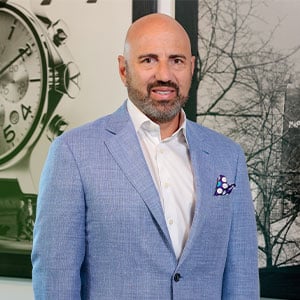
That's the familiar voice of Adam Ifshin, the founder and CEO of DLC Management, one the nation's top owners and operators of retail properties. Adam's a returning guest who came sporting a stylish Panama hat and, more important, armed with fresh insights into a sector that's still on a path of reinvention. Adam and DLC recently published a piece on changing fundamentals in this sector as part of a campaign called “The Rent is Next” and we'll talk about it on the show. Coming up, tips and takeaways from a high-rolling retail player at the ICSE. We decked out the Sirius XM Studio at the Wynn Hotel and Casino for a sweeping conversation about the sector that you'll only find here on our show. I'm Spencer Levy, and that's right now on The Weekly Take.
Spencer Levy
Welcome to The Weekly Take and I'm delighted to be here in Vegas at the ICSE with our old friend Adam Ifshin, CEO of DLC on the show and today we are doing this from the Sirius XM Studios right here at the Wynn. Adam, thanks for coming out.
Adam Ifshin
Thanks for having me back Spencer. You know, it's a long time since when you first started The Weekly Take and I was on at the beginning of COVID. So I'm actually excited because I think the industry's a fair bit better off now than it was then. So I am excited.
Spencer Levy
Well, it certainly is a fair bit better off and I'd say retail, more than any other asset class, has gone from being not institutional to being squarely main and main institutional in the last five years. Is that a fair way to put it?
Adam Ifshin
I think it's a very fair way to put it. The amount of institutional interest and action–I think there's a difference between interest. They were tourists for a while. They're looking to move here now and they want a permanent visa. So it's been great. We started doing institutional joint ventures coming out of the global financial crisis and quite candidly, it was for a very long time, really, really difficult to consistently raise capital. For open air retail. Now it has become, it's not easy, but it has become markedly easier.
Spencer Levy
Since we're friends for a long time, I've gone with you on your journey along the way. And I've seen that institutional change of them saying, well, we're not taking the call to get them in here. And just talk about for a minute before we get into the types of institutions that are out there, because I have seen some changes in that. Talk to me about DLC’s portfolio – what it looked like five years ago, what it looks like today.
Adam Ifshin
So five years ago, we were at the sort of beginning of the tail end of the pandemic and the start of the supply chain induced inflationary period that we went through in the following two years. At that point in time, we we're about a two, just, maybe a little bit over $2 billion of AUM, roughly 70 assets. We were not on the west coast. We were as far west at that point as Dallas. And so what has changed? The portfolio is more than two times the size that it was five years ago?
Spencer Levy
About four billion AUM?
Adam Ifshin
We are up over four billion. We have recently closed $300 million worth of assets.
Spencer Levy
About how many assets?
Adam Ifshin
A hundred.
Spencer Levy
A hundred, wow.
Adam Ifshin
And we're up to close to 23 million square feet. The portfolio – all the metrics have been up into the right consistently occupancy up rent up I, you know, we use some of the same metrics that the REITs use, even though we're private, just to benchmark ourselves, re-leasing spreads, same store NOI growth are all, you know, off the charts high numbers. The way I like to phrase it Spencer is not only is the portfolio twice the size, the caliber, the quality of the portfolio is markedly better and fundamentals performance is markedlky better.
Spencer Levy
Five, six years ago, you had a high concentration in the Northeast. A lot of it was in what I think it's fair to say, some would call secondary markets, but you have moved up to some degree in terms of the size of the market, in terms the quality of the market. Is that another fair way to put it?
Adam Ifshin [00:04:33]
I think that is certainly a change that has gone on in our portfolio. We have progressively become less weighted to the eastern seaboard and more fully nationally dispersed. We are in more primary markets than we were five years ago, absolutely, but we remain highly convicted about the secondary market trade, too. If you look at what we did last year, for example, some of the markets that we bought in are clearly primary markets, Southern California. Phoenix, Dallas, Florida, Charlotte. But we also bought in Baton Rouge. We bought in Waco, Texas. We bought it in Oklahoma City. We bought in–well, we had already been in Denver. But we really continue–it's not like we changed the investment criteria and now we're only about primary markets. I don't think that would be fair. We may be more convicted than ever about secondary markets. We just closed last week in Omaha, Nebraska, $100 million transaction.
Spencer Levy
Did you get a Dairy Queen with Warren Buffett while you were there?
Adam Ifshin
Warren was regrettably unavailable, but that's okay. The answer is I did get Dairy Queen, because I grew up going sometimes in the summer to northern New Jersey where the only ice cream in far Sussex County was Dairy Queen.
Spencer Levy
Well, where we grew up, it was Carvel, and Dairy Queen was a treat, though. Dairy Queen was like one ring outside of the Carvel area.
Adam Ifshin
I live where Carvel started, now in Westchester County, New York, Thomas Carvel started in Yonkers, New york, so my wife is very much a Carvel person.
Spencer Levy
Well, I love fudgy the whale and Wednesday is Sunday in Coralville too, but let's talk now about your Strategy of not going completely primary and by the way, I'm agreeing with you for two reasons. Number one I believe the next five years, you're not going to see a tremendous amount of interest rate Compression, which means you're not gonna see a lot of cap rate compression, which means you should take the yield today. And if you're going to a Baton Rouge or an Omaha versus say a Dallas or Los Angeles, you're probably looking at, for comparable demographics, a 100 basis point discount, maybe mnore.
Adam Ifshin
That gap was consistently over 100 basis points. More recently, I think best in class secondary is now closer to 50 to 75 basis points, but that doesn't mean that, you know, good operators and good allocators can't find spread. I mean, we bought Whole Foods anchored, thousand dollars a foot in sales, Baton Rouge, Louisiana – 66th largest MSA in the country, power four, LSU three miles away, state capital – almost an eight cap. Whole Foods, great lineup of both convenience, value, and lifestyle tenants, Nike, Barnes and Noble, great, great asset. And almost an 8 cap. That asset in Dallas? Sub six for sure.
Spencer Levy
That's 200 basis points, but I think what our listeners – and here comes the first math warning on today's show – if you're buying a great asset in Baton Rouge at 8%, your cost of debt at, call it a reasonable amount of leverage, 60% leverage, you're probably looking at 6%-ish kind of debt.
Adam Ifshin
Or less.
Spencer Levy
Or less, and the reality is that 200 basis point of positive spread is unachievable in industrial. It's unachieveable in multifamily.
Adam Ifshin
Look, it's clear that, you know, look at the multifamily situation, they don't have those same robust fundamentals we have either. I mean, when we look at things, we start with the fundamentals, right? We wanna be able to create CAGR off the strength of our team, our team's relationships, our team’s track record, its experience. We wanna create that CAGR. If we can couple that CAGR with 200 basis points plus of spread, we're gonna be able to generate, even for assets that appear on the surface largely stabilized, we are going to be able to consistently generate value-add returns. And that's the bread and butter.
Spencer Levy
So math warning number two for our listeners, CAGR stands for compounded annual growth rate. And let's talk about how you define CAGR in the context of buying a new center. How much of it is top line rent growth? How much is it expense savings?
Adam Ifshin
There's very little to be had in expense savings right now to be perfectly candid with you. We continue to see upward pressure on real estate taxes. We continue to see upward pressure on insurance, particularly in Sunbelt markets, where in addition to insurance rates being higher, there's been a re-marking of what is a tier one wind area, right? So insurance and real estate tax and some other energy-based components of operating expenses have gone up. But remember, we're largely in a net basis business, Spencer. I would say that most of what's driving it is rent growth, but at DLC, we're very focused on net effective rent growth. So the dirty little secret is, yeah, you can generate an immense amount of releasing spread. The issue is how much money do you have to spend to get it? And as an investor, right, who has a fiduciary relationship to not only our capital, but our institutional partners capital, we have to be extremely focused on the capital efficiency. We know we can get the rent growth because the team's awesome, fundamentals in our favor right. But if you get it and you don't do it in a capital-efficient manner, you're not going to generate the kinds of returns we're in we're in business for.
Spencer Levy
So let's define the type of retail that you pursue. I'm sure, I know you pursue a variety of types, but is the majority of it grocery anchored? Is some of it power? Describe your portfolio.
Adam Ifshin
So it's both at our size and scale at four billion dollars. It's very hard to be exclusively in grocery anchored. It's very hard to be exclusively in power. We’re in both. Roughly 70 percent of the portfolio has a grocer or a grocery component of a super center in the fee. And close to 85 percent of the portfolio has either some grocery component in the feed or shadow. And we actually very often like the shadow. And I'll tell you why, Spencer. It comes back to the fact that for us, CAGR may be the more important percentage math than cap rate. How much can I grow it? And very often, you know, look, grocery anchor’s amazing, particularly when you have the great grocers and we do business with all of them, with the Publix's, with the HEBs of the world, with the Kroger's, with the Aholt's, with the Albertsons, the world. But those leases are very often flat for a very, very long time and they're flat through their options. So sometimes you may be better off–
Spencer Levy
With a shadow
Adam Ifshin
--with a shadow because what's left, I can really drive NOI growth, I can drive CAGR, I can driving NOI Growth, and I'm not held back by, you know, you have 100,000 square foot center, 50,000 foot gross, so the typical classic single anchored center. If that grocer is Publix or that grocer's Kroger or that grocer's Walmart Neighborhood Market, it is highly likely that you are gonna be flat forever on that rent through the option.
Spencer Levy
And I think it's fair to say this may be an overgeneralization, but I think you just maybe made it a fact, is that in a grocery anchored center, most of the money is always made in the inline space. And then in a power center, one of the things that has happened recently is where you've seen some weakness in some of the big power center occupiers, you've seen people breaking up the boxes and getting even better rent.
Adam Ifshin
Look, we've been talking about this a lot lately. Our calling card from 2011 to 2022 was backfill. We were as good as anybody back filling the box. In that period of time we did eight K-Marts with low to middle digits, single digit rents. And we turned them into TJ Ross, Burlington, Five Below Ulta, a bunch of the furniture guys, Aldi, Lidl. I mean, I could go– Harbor Freight. I could go on and on. Sierra. Marshall's home could go on and on and on. We did 140 box deals in six years from 2018 to 2024. We had 140 box deals, right? The thing about a center that has multiple anchors and is larger and is not purely grocery anchored is you have a lot of ways you can win. And to me, as a risk mitigator for capital to which I have a fiduciary obligation I want to be able to play offense in multiple different ways. With a power center, hopefully it has a grocery component in it, but in a power center, there's much more likelihood I can densify the site, much more likely to be over-parked, much likely I can add pads, much more likely I might be able subdivide and spin some of those pads off at an accretive spread to what I paid for the whole center, much more likely that I can not only move rent if I can get a box back, materially. Right? I may be able to get a box back that pays eight, 12 bucks and make a $20 plus deal. I can make money at that, but I can also still move right in the inlines. And if I can do both or maybe even three or four of those, then I have multiple avenues to get to that value-add return, which is why we want to be in the space.
Spencer Levy
And value-add in retail, you define as mid-teens?
Adam Ifshin
Mid-teans.
Spencer Levy
So in terms of other value-add levers that you can pull, in addition to breaking up the box, bringing in new box tenants, you could also bring in health care tenants, different categories. You can also bring multi-family. Tell me about those.
Adam Ifshin
So we're doing a lot of both – health, wellness, fitness. That's not new. What is new there is the willingness of tenants who you might need consent from to bring a non-traditional retail use in their willingness to do that.
Spencer Levy
What are these today because back in the day these were like we don't want bowling alleys What are they? What are the uses that they're concerned about today?
Adam Ifshin
Retailers are evolving. They're less concerned about what I would consider to be sort of high intensity traffic uses of which they would have normally put health and fitness both in. I mean we recently secured a waiver from a Fortune 100 company known to be very demanding on the lease side so that we could put a fitness center immediately adjacent to them.
Spencer Levy
I recognize the fitness center question about parking. When I say health care, I want to expand the definition to include things like dialysis centers, like true MOB types.
Adam Ifshin
We do tons of business with all the major dialysis players nationally. We see much less pushback than we used to see from traditional retail anchors about putting them in centers. But the one that's really, I think, fascinating and driving is what I call big-boy medical. So this isn't like a 4500 square foot urgent care. I'm talking about doing a deal with a hospital system. We've done a bunch of these. They take 20 to 40,000 square feet. You're getting investment-grade credit. We did one outside of Hartford in Vernon, Connecticut with Hartford HealthCare, double-A Moody's credit – same credit as the federal government in the United States. 30,000 feet, PEDs, ENT, OBGYN, radiology, orthopedics, physical therapy, all under one roof. 30,000 feet. I needed a waiver from a grocer, multiple waivers from TJX, I needed a waiver for Staples. It took a very long time, but we got them. And that's five, six years ago. I would get that one faster now.
Spencer Levy
The beauty of that type of use is they don't necessarily need the retail frontage that a traditional retailer would need because people are going to drive to the back of the center for their dialysis. They'll drive to Mars for that. And when you need it, you're going there.
Adam Ifshin
100%. That said though, many of those clients – and we consider them very valued clients, Spencer – are increasingly focused on a retail experience for, in that case, a patient. I'll give you one. We've done one with a veterinary clinic. We took an AC Moore in Frederick, Maryland, and we turned it into a full-scale 25,000 square foot veterinary hospital. Extraordinary net effective return on cost. For our investors, extraordinary service to the community. And you know what? Once we educated the retailers about the demographics, who was going to come to this facility? And we really partnered with the operator. They gave us so much data to help the retailers get comfortable with their use. It turned out to be a win-win-win.
Spencer Levy
This will be a story for another day, but one of my great case studies is when I did a veterinary deal 20 years ago. And what I learned very quickly is that people, the last thing they're going to get rid of as an expense is helping their pets.
Adam Ifshin
It is pretty extraordinary. I am not a pet guy. My wife and I had three kids in 33 months and squeezing another living being into our house at that point in time would have been a challenge, I think, emotionally. But the reality is that, look, pets are parts of 70% of American families. They are part of the family and they are getting the opportunity to get better care and better experience and they're turning out to be excellent, excellent retail partners.
Spencer Levy
Well, this is what I will call the Murphy moment, which is the name of my dog, Murphy. And he is as integral a piece of my family as anything else I could imagine. But I want to turn to your article that you wrote recently, Adam. And I know the title of it is different – I believe the title is, “The Rent is Next” – but there's a section of it that really spoke to me, which was, quote, “The age of the operator”. And what I've been saying to all of my friends in all asset classes, this is the best time ever to be in real estate. You know why? Because for the last 20 years, certainly from 2012 to 2022, the capital markets people were the winners. Now, you know who's going to win? People who really know real estate, and there's going be a separation. You agree.
Adam Ifshin
I do agree. Everyone will accuse me of talking my own book perhaps, but I do agree. So if you look at the arc of institutional investment in retail real estate, right? It was historically a 15 to 25% allocation in the mall bust after the global financial crisis. It probably got down in a lot of institutions to five to 10% and now they're edging their way back up. I think the key difference is that one of the things they understand is that retail is that form of real estate that's a lot closer to being an operating business than it is purely an investment business. And therefore, if you wanna make the returns you're setting out to make in the space, you need to partner with a great operator. And a great operator is not just the best local sharpshooter. You have to be able to service that institutional capital. You have a great asset management team, great accounting team. Yes, you always have to have great leasing. You always have great owner's rep construction management. You always have to have all of those pieces, but you need to be able to also help that capital manage its capital, right? So a big part of it is operators need to be able navigate–what I like to say is we have three sets of key stakeholders in the DLC ecosystem. The most important one is our team. And then 1A and 1B are capital partners, investment partners, and retailer partners. And if our team is best in class, what it is doing. It is creating an intersection between that capital and that retailer in a manner in which we generate an outsized return, right? Only the operator can do that. Otherwise, you're just picking assets and your market cycle timing. And the reality is that history has proven – not just in retail, but we've seen this in multifamily, we've seen this in logistics, too – if you get that wrong and you don't have an operator to help you figure out how to turn it around. You're gonna have a real problem.
Spencer Levy
Let me push you a little bit. So one of the material changes I'm seeing in the office sector today is that not only are we seeing the same trend in retail where operators are winning, but operators are changing. And when I say changing, I now know a lot of office owner operators that own the retail in their own buildings, which is a big change. Are you seeing any fundamental changes in operating today versus, say, five or 10 years ago.
Adam Ifshin
I think the biggest change in operating today is scale matters more than ever. Having really, really powerful relationships with the retailers matters more then ever. The nature of how you unlock value has changed. It's no longer the distressed straight lease up play. There aren't a lot of, there's not a lot of quality real estate out there where you can buy it at 70, 80, even 85% occupied. And just lease it up to 95 to 100 and call it a day and go home. So you really have to work to unlock it. So we've had to shape and continue to continuously train and upskill the team and help them understand the change in the market as the market has actually gotten stronger. You would think it would make it instantly easier, but the low-hanging fruit is just to lease the vacancy. If there isn't any vacancy, you gotta work harder to get to that CAGR that we've been talking about. I think that that's a big difference. And that made–I think, there's a big difference between someone who's just going to hire a third party broker and say that they're going to be able to do that. You've really got to work. You've got to dig. And I think just one of many places where the operator skill set really, really comes to the fore now. And I don't think we're going to continue to see that. I think you're going to see it in office for sure. I mean, I think it's already there in office, too. We've seen it for years now in our space. But I think the other– great team plus scale. I mean we have such deep, huge relationships now with all of the best retailers in open air, particularly in open-air value. They want to do business with us. We have a track record of delivering them. Right. What does the retailer want? They want the store on time, on budget, and they want to make the cash register ring as soon as possible. And the operator side of doing that, permitting, design, construction, owners rep – all of that stuff really matters to the blood and guts of the retailer because, you know, If you miss giving them the store on October 5th, they gotta wait till March to get the store. They've ordered goods. They've order fixtures. That doesn't work
Spencer Levy
We just had on the show, and it may sound like apples and oranges, but it's the same story. We were very fortunate to have Bryan Steinwutzel on this show when he was talking about his conversion of 25 Water Street, SOMA. Fastest, largest office to residential conversion ever. They bought it in ‘22. The first tenant moved in 25 months later after probably close to a billion dollars of capital, digging two light and air holes.
Adam Ifshin
This is where they cored the building out?
Spencer Levy
They cored the building out.
Adam Ifshin
Amazing, amazing project.
Spencer Levy
People don't realize that of all the things we can talk about, and there's a hundred of them, I'm not saying any of them are unimportant, I think time is by far the most important.
Adam Ifshin
I couldn't agree with you more Spencer. And I think that, you know, people always wanna talk about, you know, how great this deal was, that deal was. That deal for the investors, right, got a lot less risky and got a lot more profitable, which are the two things that investors want to hear about all the time, right. When are you de-risking me? When am I getting my money back? And when am I getting my profit? And the answer is, speed is the single biggest determinant of that. And a best in class team and a high quality operator should be able to bend that curve better than without.
Spencer Levy
Have you seen a change in the capital background today, foreign, high net worth, otherwise, in addition to the traditional institutions?
Adam Ifshin
I'm glad you asked this because I think very much so. There is no question that that–let's talk about the foreign capital first. The foreign capital historically shied away from open air retail. Wasn't sexy, wasn't high street, wasn't CBD. They're rethinking that now because those yields are undeniably attractive. So that's a big part of it. And then they have the same issues, right? They're overweight Europe. They're overwhelmingly overweight Europe. They want to be less overweight Europe. Large portions of the world geopolitically now it's a lot dicier to think about deploying capital in those places. And in many instances they're quite flush, right. They have more mandatory contributions to those programs and therefore they've got to deploy the capital. So they're much– they are still very interested in the United States and they're more interested in our product type than ever before. The key is being able, again, to partner with somebody who can bring them scale. The thing I hear from the foreign capital the most is like, you know, don't tell me you need $20 million in capital. That doesn't work for me. That's not efficient for me. They need to know not only that they can put out a significant amount of money upfront and scale, but then you can programmatically build from there. I hear all the time. But there is a lot of inbound interest and there's been some real action. In some cases, direct. In some cases partnering with the same groups that advise, you know, classic domestic pension fund capital.
Spencer Levy
So last question, Adam, I think it's the second time we've taped at the ICSC.
Adam Ifshin
It is.
Spencer Levy
And I hope it doesn't – well, the show's been around for seven seasons, unbelievable. But the next time you're on the show, which is hopefully sooner rather than later, two years from now or sooner, how is the retail space going to evolve?
Adam Ifshin
So I think the, I think, first of all, I think we have a really long runway here of positive fundamentals. And we say this all the time, investment performance follows fundamentals. The fundamentals are the driver. The reality is that we have such a huge gap right now between what market rents are and what rents would need to be to incentivize new development at scale. There's always a little bit of new development. There's a historically low level of it now. I think we're delivering five million square feet of open air retail in the country this year total, which is like a minuscule number. It's like one percent of what it was in ‘05, ‘06, ‘07 a year. So it is incredibly–the runway is long because rents would have to rise so much to make the math work. The math just doesn't pencil right now for new development. And the reality is it took a very, very long time for our industry to wean itself off of the crack cocaine of new development. But it has done that in part because it was forced to because of other structural issues that went on in the space. But the reality is that what really puts a dent in strong market fundamentals and causes the beginning of the downward part of a cycle? We just saw this in multifamily. What was it? It was aggressive supply, aggressive supply delivery. Go to Austin. Go to San Antonio. Go to Houston. And other markets too. I'm not hating on those markets. We're big owners in all three of those markets. We are actively encouraging better days for multifamily and all the markets we operate in. But the reality is that we don't have any imminent risk of there being a supply induced weakening of the fundamentals. And look, getting entitlements for retail product and open air retail project has the gestation period of an elephant. So the reality is–
Spencer Levy
What is the gestation period of an elephant, Adam?
Adam Ifshin
You gotta check. But I think the reality is in the next two years I think fundamentals, rent's going up. Net effective rent is going up. I mean, retailers are already actively trying to get in front of 2028 lease expirations. That's a new phenomenon.
Spencer Levy
Well, you know, it sounds like data centers. You’ve go to think five, six years ahead before you can get your data center in there.
Adam Ifshin
I just hope we can all get power.
Spencer Levy
Amen. So on behalf of The Weekly Take, my good friend who I've known forever, Adam Iffchen, CEO of DLC, one of the industry leaders and I might add an extremely well-dressed man today.
Adam Ifshin
Always a pleasure. Thank you for having me and thank you for the kind words about my attire.
Spencer Levy
You bet. And thank you to our friends at SiriusXM for letting us use their studios. Another great show about retail here at the ICSE in Vegas, the Super Bowl of retail. Great day. Great to be with our good friend, Adam Ifshin.
Adam Ifshin
You're the man when it comes to the real estate podcast world. We love it, we love coming on. Appreciate it.
Spencer Levy
Rock on, brother.
Adam Ifshin
Thanks.
Spencer Levy
For more on retail and other sectors, please visit our website, CBRE.com/The WeeklyTake and look for more from ICSC and related content as well. And if you're interested in DLC's campaign, “The Rent is Next”, you can find that online and on the DLC Management website. Follow our show to stay on top of all our programming and we'll return next week as usual to bring wholesale insights from the world of commercial real estate. For now, thanks for joining us. I'm Spencer Levy. Be smart. Be safe. Be well.

.jpg)

