Download Transcript
Spencer Levy
Richmond, Virginia is a growing market. One of the drivers that's making Richmond a hit these days is none other than baseball. On this episode, a trip to the ballpark to learn about teamwork – specifically, that is, the teamwork between commercial real estate and sports.
Larry Botel
A minor league baseball stadium is very important to downtown Richmond or to CBD-adjacent Richmond. A brand-new soccer stadium of six or seven thousand seats is very important to downtown Omaha.
Spencer Levy
That's Larry Botel, the Founding Partner of Joss Realty Partners, a national investor-operator with over a billion dollars of commercial real estate assets, and also the President of Alliance Sports. In that role, he's a General Partner of the Richmond Flying Squirrels, the double-A affiliate of the San Francisco Giants, with ownership stakes in other sports properties around the country. Those include colorfully named teams such as the Montgomery Biscuits, the Omaha Storm Chasers and even a pro soccer club, Union Omaha.
Pam Strieffler
It's exciting to see the changes and it just makes me happy that Richmond's cool now.
Spencer Levy
And that's Pam Strieffler, a Richmond native who now serves as a CBRE Vice President in her hometown. Pam has covered industrial and now specializes in working with local, regional, and national retailers, repping a range of landlords and tenants. Coming up: batter up! We visit brand new CarMax Park for the X's and O's of Richmond real estate and the inside baseball, if you will, on how sports can be a significant driver of economic activity, especially in markets like this. I'm Spencer Levy and that's right now on The Weekly Take.
Spencer Levy
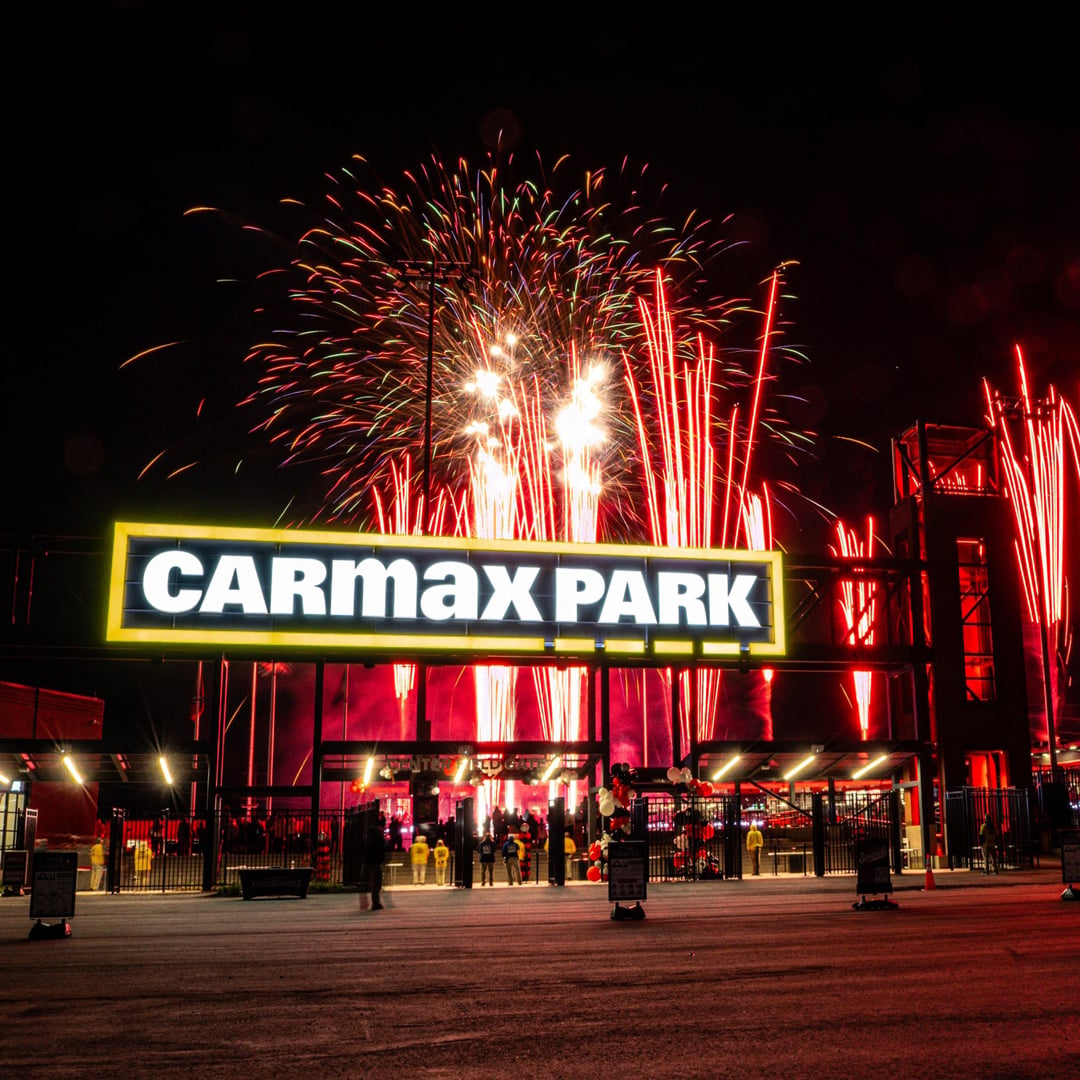
Welcome to The Weekly Take and we are delighted to be here in Richmond, Virginia at beautiful and brand new CarMax Park, home of the Richmond Flying Squirrels. And we couldn't be happier to have with us today Larry Botel. Thank you so much, Larry.
Larry Botel
Glad you're here.
Spencer Levy
And then we have our friend and colleague, Pam Strieffler. We're so happy you're here to tell us all about the Richmond market, why CarMax Park is gonna be such a centerpiece of this community.
Pam Strieffler
Thanks for having me.
Spencer Levy
Before we get into the confluence of the stadium and the real estate around it, just tell us the process of how do you build a new stadium?
Larry Botel
Yeah, well, you have to go back about 16 or 17 years when we relocated our minor league baseball team from Norwich, Connecticut to Richmond, Virginia, under the promise of getting a new stadium. Been a lot of trials and tribulations. We could probably have an entire podcast and a half about that and what's happened over that time period. But what we recognized in Richmond, which did come through was that it's a great market, that it is a great city, that it has a lot of corporate sponsorship and a lot a corporate anchors that anchor the city, that it a great place from a living perspective, that it’s not expensive as other cities that have like cultural and amenity and weather and things like that that you see out there. And we've been able to, through the Flying Squirrels, establish ourselves as an important pillar of the community. You got a million two people in the market you got i think it's 12 Fortune one thousand companies. It's a federal reserve town. It's the state capitol so there is a lot going on here. We're kind of at the top of the list which is pretty cool.
Spencer Levy
Very cool, and you didn't mention just simply your proximity: couple hours from DC, couple hours from the beach, not even a couple hours. Pam, you've been in Richmond for your whole career. Tell us about why now is the right time to be building in Richmond.
Pam Strieffler
We've always been centrally located, and I think what's really interesting now is that so much growth is happening here. It used to be a lot of local developers, and now you're seeing a lot of people who didn't think about Richmond. And now, you're seeing developers from all over the country buying things. I mean, Ian, my partner, and I see a lot of development across the whole state of Virginia, and there's land that has been sitting for 100 years, and now there's like three offers on each piece of land. If you drive around Richmond, and there's new developments coming up everywhere. Scotts Addition, which is where we are, used to be an industrial market and now it's a lot of breweries, a lot of multi-family and you're seeing people moving here from big cities having the Flying Squirrels right here where all the multi-families going around. It's, like, cool to see everything happening and I do think it's because we are affordable and our city has had a lot of incentives to try to drive businesses here. And so that's been a huge part of why we're booming.
Spencer Levy
So Larry, right back, let's go to the core question here. How has the world changed in that sports and real estate now go hand in hand? I'm not saying they were separate before, but now they're hand in hand.
Larry Botel
Yeah, I mean, what's interesting and specific to Richmond, it takes more than just a stadium. I mean we were right across the street. That stadium has been around for 40 years. We were there for 15. We did really well, right? Because we established ourselves in the community. The Squirrels are a big deal here. And we were able to put seven or 8,000 people a night into The Diamond. But the area around this didn't really gentrify until the rest of Richmond started to gentrify in this area. You know, what's interesting about it is it takes a little bit more than just, let's plop a stadium down here. You need public-private partnership. You need resources from the municipality to make the numbers work. I mean, that's the bottom line. If you go through the history of how we got here, if the city didn't just step up – Richmond and the mayor – and write us a check. To help build this stadium, it would have never happened, right, because the numbers just don't work. It has to all come together one way or the other, and then you can reap the benefits of it.
Pam Strieffler
Twenty years ago, we tried to get a new stadium, and no one could pull it off until you guys. So it's been a major feat, and I know a big process. But it's huge that it's happened, and you're right. Everything seems to be converging on this area at the right time, and that's why it's almost like the perfect storm or the perfect thing to happen at once.
Spencer Levy
The public-private partnership, that seems to be how all these major stadiums are being built. Tell us how it works.
Larry Botel
It comes down to financing, right? This is a $130 million stadium. How does that get financed? We signed a lease and it's been pretty publicly documented. We're paying $3 million a year in rent, which is a burden for a minor league baseball team. But it doesn't nearly cover $130 million in debt service, right. And the other part that's interesting is that a stadium is–it's not like a strip mall or an office building or a hotel. If we're not playing here, it has no value, right? So it's about what surrounds it that really makes it a real estate venture that can have a profit aspect to it, or that the team does well enough in the stadium to be able to become profitable and enhance value on the team. If you're building an office building, you go get a loan, you get some equity, you return lots to people when you sell it, right, and that's how you do a real estate development. But a stadium doesn't work that way. A stadium needs outside resources. It needs TIF. It needs financings that are backed by the municipality so that the interest rates go from 8% to 5%. These factors all contribute where you can actually make the numbers work. The city wrote us a check, literally, off of their general obligation bonds, for $110 million. We wrote a check for 20 and we have this. right, which we think will be wildly successful and will enhance the value of all the land around it, which is a big part of it. That's the way it has to happen or things like this don't get built.
Spencer Levy
And by the way, for our listeners, every time we have an acronym, I always say, let's define it, TIF, tax incremental financing, what is that?
Larry Botel
Tax incremental financing is basically the city giving up the tax revenue from increased development over a time period, allowing a developer or a municipality to effectively make those payments in lieu of taxes and then create a bond out of that. So if I'm writing a check for a million dollars a year in real estate taxes — and I'm just gonna do simple math – and for 20 years, the city says, you know what, we're gonna defer that real estate tax revenue. You still have to pay it, but take it to the bond market and go finance at a million dollars. Let's say you get $15 million out of it on a 20-year basis. We then take that $15 million and we put it into the stadium that gets built. Again, enhancing all the value around it and increasing real estate taxes around that. And then 20 years from now, this city gets all that tax revenue, not only from the surroundings, but also from the stadium because the TIF is up. So it's just a form of financing that allows for–and the city is participating, right? They're giving up tax revenue that they wouldn't have, or that they, obviously, they wouldn't have if the stadium wasn't there, but they're giving up revenue. They're participating. They're using their balance sheet. They're doing things that banks or developers do to enhance the value of a capital structure.
Spencer Levy
So Larry, I know you have interests obviously here in Richmond. You've done a fantastic job with CarMax stadium and the surrounding areas. Beautiful. I know you're about to close on a deal in Omaha, Nebraska for a soccer stadium. So our listeners are all over the world. They're in most markets. Why Omaha? Why Richmond?
Larry Botel
I guess mostly because we own the teams there, right? And I wish I was buying major league sports teams, but I'm not, I'm buying minor league sports teams, which is fine. But basically moving that model of mixed use development around the stadium to secondary markets is what generates real gentrification and activity when it comes to real estate, because a minor league baseball stadium is very important to downtown Richmond. Or CBD-adjacent Richmond. A brand new soccer stadium of 6,000 or 7,000 seats is very important to downtown Omaha. If you can use those as anchors for mixed-use development, it creates value in the surrounding real estate. That's sort of the fundamental. However, if you're going to anchor something, it needs to be activated more than just 20 times a year for soccer, more than just 70 times a year for baseball. We at Richmond have started an events company called 804 Live, which we're hoping that will generate another 50 to 70 nights a year of entertainment for the city of Richmond. In addition to the community events we have, in addition to potentially VCU playing here eventually. We're going to activate this ballpark and its spaces, including some interior spaces, for weddings, for corporate events, what have you, 250 times a year. That's important because if we just have 70 nights a year and we're bringing half a million people into the site, into the surroundings, we could bring twice that if we're activating the rest of the stadium properly. Same thing in Omaha. I think the numbers aren't quite as big, but this doesn't work if the stadium's dark 90 percent of the time throughout the year, or even 50 percent of the time throughout the year. You need to have real activation no matter what to really make this whole thing work and we're focused on that in addition to providing a great facility for our teams to play in.
Spencer Levy
It's interesting how the story is so similar to the story when we spoke with the Carolina Hurricanes about what they're doing there and the use of that stadium. The financing aspect of it is pretty extraordinary as well. So, Pam, let's talk about the area around this because we're here not just because the Squirrels are going to win big tonight.
Pam Strieffler
Yes.
Spencer Levy
But tell us about the surrounding area. What are some of the exciting things that are happening in and around the ballpark?
Pam Strieffler
Lots of things happening, lots of developers coming from outside of the state. You'll see lots of multi-family all around The Boulevard. There's a new hotel where Hardee's was that's going up, which is great because there really isn't a nice high-end hotel in this little district. But lots going on. Growing up here, a big place where you would go hang out would be The Fan. And it really is called The Fan because it fans out from The Boulevard. And The Boulevard itself is really an industrial area that we talked about, and really because of its close proximity to 95. And you can see basically from Hamilton to The Boulevard, it's a lot of warehouses. So basically most of that has become multi-family. You've got The Ace. You've got Soda Flats. You've got The Otis. Tons of multi-famly.
Spencer Levy
And all different developers?
Pam Strieffler
All different developers.
Spencer Levy
And from outside the market?
Pam Strieffler
Outside the market.
Larry Botel
Part of the stadium development was the city ran an RFP process for the entire 64-acre development site and I think I want to say there were 38 respondents to the RFP on the first round. And every national developer was on the list: Related, Tishman, you go down the list of, like, major real estate developers, they all wanted to invest you know close to two billion dollars
Spencer Levy
And when was this? When was that?
Larry Botel
Oh, boy, five years ago, I want to say, I think was right coming out of COVID–
Pam Strieffler
Right out of COVID.
Larry Botel
–was when they started the process. And obviously, there was a lot of work. As Pam said, this was all industrial, right? The Diamond was there. We had a parking lot. Everything else was warehouses and industrial. There was a bus station across the street where you now see retail development, but everything that you see was industrial. And that's until really the last five years. All these buildings have popped over the last five years. You know, the city and the state started buying the pieces to assemble 64 acres. They were mostly warehouses. That finished the 64 acres and then they put it out for an RFP because they had control of it. Scott's Addition is full. Like, there's no more development sites in Scott's Addition. Now it's moving over here, right, where a New York developer just announced a major high-end apartment complex. On the old bus station right across the street from the old diner, so you're seeing money come in from New York and other places that wasn't here for our 15 years being here before.
Spencer Levy
Not to oversimplify it, but when I see markets and I see sub-markets, I always go to my five factors of awesome, okay? This is: capital, human capital, live-work-play, infrastructure, and then the key – the key – foreign money. Now, most of the time when I say foreign money, I mean international capital. capital that comes from outside the market, super healthy, because it gives your market the good housekeeping seal of approval. Capital and labor can go anywhere, but they'll go to where the best opportunity is. And I guess that's what they're seeing today, right, Pam?
Pam Strieffler
You're seeing it all over the place. And it used to be you could name exactly this person owns this, this person owns this. And it's just interesting. I mean, just the flood of people that are coming here and they're all from out of the market. So it's an exciting time for Richmond. It's exciting to see the changes. And it just makes me happy that Richmond's cool now because, you know, it wasn't before.
Larry Botel
And you mentioned human capital, right, and I'm a big proponent of how important human capital is. I mean, look at New York and how it's recovered through what everyone thought was the end of New York, which I think I've now lived through three or four times.
Spencer Levy
By the way – and the number one reason is talent.
Larry Botel
Talent, human capital, they want to be there. Our kids want to be there. And that's why it bounces back every time. Segue to Richmond, right, which you don't think necessarily human capital in Richmond, but VCU, the University of Richmond, the education system that's here. You know, the Richmond Flying Squirrels are the AA affiliate of the San Francisco Giants, right? Thousand miles away. They love it here. Because the players, and AA is a big development level, they want their players to stay here. They want them to go through a whole season. The Giants just love it here too much because their players love it too much. And that's been going on even before they've been playing in now what is a major league facility.
Spencer Levy
So, let's take a little side bar here for a second, because I don't think a lot of people understand exactly how minor league baseball works. You own the stadium, but the team controls the players.
Larry Botel
The city owns the stadium.
Spencer Levy
The city owns the stadium. You lease–
Larry Botel
We lease the stadium. We've leased it for 30 years, triple net.
Spencer Levy
But you don't own the team per se, like the players.
Larry Botel
It's evolved. But where we are right now and the big change that happened just out of COVID was Major League Baseball took over Minor League Baseball and the fundamental aspect of that. And what we all were reminded of is that Minor League Baseball is for development, it's for player development. Major League Baseball got very frustrated because there were owners out there that just weren't doing the right thing with regards to maintaining their stadium. providing the right facilities, taking care of the players, whether that's lodging, food, what have you. So they're like, well, the only way to do that is to take over the business, which they did. So we are now franchisees of Major League Baseball, which has a lot of positive aspects to it. Like we're run by probably the best league in the world, which was a big change from where we were before, but we have to be focused on development. And part of why the stadium got built was because Major League Baseball was like, Richmond, we're done with you. You've refused to build a new stadium. The Braves left. Now we're gonna take the squirrels from you unless you figure this out. And that eventually led to the city writing that check, which again, I think was the cornerstone to this getting done. Fundamentally, it's about development. So we don't pay the players. We don't pay the management. You gotta make it about fun, family, affordable entertainment, right? So that's how the business is sort of coalesced and come together. And it works, right, because that's what it is. It is good, family, affordable entertainment. Now we have a new stadium where we can also maximize revenue with premium spaces and clubs and suites and things like that, which we never had before. So we have this diverse fan base and a diverse set of offerings now that we can really monetize this.
Spencer Levy
How much is that affordability angle making Richmond, not just the ballpark, not just the stands, fans, but all businesses around saying, you know, I want to do this. And I'll mention one other thing. I know a big data center is going up right here. Why that?
Pam Strieffler
I mean I think affordability is huge for Richmond, it's just how it is. They are not showy people, Richmond people. They're very frugal. You've got all the businesses – and I'm seeing it happen – they are all sponsoring here. They're all getting boxes, let's do it on a Tuesday night, a Thursday night CBRE, our office is doing it tonight. And I think it's affordable, it is walkable, and it's something that everybody wants to be involved in. And I think that's one thing that I didn't mention before is because people want to be in this area so much, you're seeing even large office users trying to find space in Scott's Addition, which is very hard to find because you want to attract young professionals. They don't want to be out in the suburbs. They want to be somewhere cool and hip and then they can walk across the street and have a beer afterwards.
Spencer Levy
This is a very good transition to real estate. How has the real estate market evolved post-COVID in office and elsewhere?
Larry Botel
Yeah, I'm going to keep it to sports, though, because the big, I guess, example that everyone throws out to the success of sports, real estate, mixed-use development is The Battery in Atlanta. And I'd never been, you know, I sort of understood Atlanta with the rings and keep pushing out further and further and how big it is and how that has worked over the years. The stadium has jumped three times in my lifetime further and further out. And you're like, okay, The Battery, right? And it's wildly successful. And I went for the All-Star Game last year and what is glaringly apparent to a real estate professional is the reason that it works so well is because of the office space. They have millions of square feet of office space. Before COVID they signed and started the development and they signed multiple headquarter leases for firms in Atlanta who wanted to be in Class-A office space. Then everything else came. Then you have the stadium, all the retail, all the multifamily. It wouldn't be there without the office. We saw it here when we were at The Diamond. We didn't generate any development. We were there for 15 years, being very successful, bringing in four or five hundred thousand people a year. There was nothing happening around here. You need other things. And I think office is the most important thing to these mixed use developments, because it brings somebody there every day, it brings them for breakfast, lunch, and maybe even dinner. And without those economic drivers, it's really hard to build a mixed use development around. Somebody living there who goes off to an office somewhere else. Or 80 days a year in a ballpark, you need office because that's what brings the people, that's what brings the spending on a very consistent basis. Right.
Spencer Levy
This is what I call now, here's your new term of the day, CBD-adjacent, right? We are not in the tower section of Richmond, which is probably what, four miles from where we're sitting right now. We're CBD-adjacent. And you know where CBD-adjacent is doing great things? Everywhere. It's doing great thing in Los Angeles, where Los Angeles, the downtown is not doing as well. Century City, amazing. Dallas, one of the great cities in America. Downtown Dallas, not doing great. You know what's doing great? North Dallas, CBD-adjacent. Third Ward in Milwaukee, I can go right down the list. So Larry, in your experience of being, in your own words, an office person, do you agree that that's been a significant change in the market?
Larry Botel
I'm not sure it's a change. We've done a lot of investing in D.C., right, which has Tyson's Corner, it has Bethesda, it has Silver Spring. And that was sort of driven by the fact that you couldn't build anything over 12 stories in downtown D. C., so it had to spread. I think when you think about Richmond, especially with regards to office, you have the state government, it's lot of greenery and the state capital, and it just doesn't have that downtown feeling that sort of sucks everybody in. If you look at where office space has developed downtown, it's by the water, on the river, and the park. And they've just built an amphitheater there. So you have this little sub pocket, which I would call CBD-adjacent, even though it's kind of right there, that has developed where new office's product has been built. This should become that too. It needs to evolve that way. And in these secondary markets, I think you can create a CBD-adjacent with a driver like this, along with the de-gentrification that surrounds it.
Spencer Levy
And Pam, when we're talking about drivers, what's it going to take for Richmond to get to that next level?
Pam Strieffler
I mean, I feel like we're on our way. I mean I remember when we were bidding to try to get our airport to the next level and for whatever reason, it didn't work out. And so what happened, it became Charlotte. Like, they got what we basically turned down and didn't do and you could see what's happened in downtown Charlotte, how much it's grown and thrived.
Spencer Levy
By the way, near the ballpark, I mean, yes, again, near the ball park, Charlotte, Charlotte is a classic example of CBD adjacent.
Pam Strieffler
They are, they are. And a lot of that started with the airport. And I remember that whole thing where we lost it, and it was like a loss for us. At the same time you've got Richmond people who will say, you know, I'm glad we don't have that. I think we're on our way, and I think you can see the growth. You can see every day when we're looking at land vision and land glide and you're looking at pieces of property, if you go down Arthur Ashe and you take a left on Broad or a right, you can go down each parcel and you can what's traded hands and how fast it's happening. And The Fan that used to be affordable now is–a house that used be 350 is now a million and a half. Like, we're kind of D.C. prices, but a little bit cheaper. Traffic, that's a lot better than D.C., but it's picking up. So I think we're kinda in growth mode now, where it's taken a long time to get here, and now we've got the foot on the pedal, and we're moving quickly.
Spencer Levy
We had on the show, the CEO of the Carolina Hurricanes.
Larry Botel
Yeah, I listened to that.
Spencer Levy
And we talked about how that development was anchoring a new part of town. The city is growing out to it, and it's gonna take 10 years
Pam Strieffler
Right?
Spencer Levy
NC State plays in the same arena as the Hurricanes, which are going to win the Stanley Cup this year, in case our friends of the Carolina Hurricanes are listening. But the point is that, and some of the things that Raleigh has done right, I think the number one thing that Raleigh has done right. In addition to the real estate story, in addition the sports story, is the education story. It's just, talent wins. And they've got the research triangle there and I know that Richmond's got great education as well. As you keep those students here, that's what's going to take it to that. I think it's more important, and it goes hand in hand. But I think the talent level is gonna be the key.
Pam Strieffler
You know what else is interesting? I mean, there's not a whole lot of towns that have two large universities like we have here with VCU and University of Richmond.
Larry Botel
That makes a big difference. And I also–you know, what's interesting is like, Richmond is an older city, right? And what you find is I think some of these newer cities that don't have the legacy issues, don't have some of the infrastructure issues that they need to keep up on, right, that it holds them back in some ways, right. Like, if Richmond is making a decision about whether they put a billion dollars into the airport or a billion into schools, that's the decision that's going to go to the schools all day long, just because they've been managing these schools for a hundred years and they have to keep them up and have to do the right thing for the community. So a place like Raleigh and Charlotte 20 years ago, they don't have to that, right? They can do both because they're just starting from scratch. There's something to be said to just having land that you can just sort of go at it versus trying to rebuild. You know, you can go to like renovating office buildings into multifamily. I'd much rather have a piece of land to build multi-family than an old office building.
Spencer Levy
Well, I think there's truth there. When you have an older city, there are challenging issues as it relates to how do you build a CBD.
Larry Botel
And that was part of the whole 64 acres is a huge piece of land in a city like this
Pam Strieffler
Huge. Huge.
Larry Botel
And that was that was the real driver you know I think Raleigh they're talking about like a billion or two billion dollar development around the hockey stadium yeah this is four right when it's all filled in this is a big deal and it's gonna take time right and we can get into it a little bit with Omaha you know the one thing about mixed-use development around stadiums is, it’s a lot easier to talk about it in New York, Queens, Philadelphia, Washington, places like that because those cities absorb thousands of multi-family units every year. They do millions and millions of square feet of office leasing every year. Richmond doesn't do that. Richmond will absorb 1,200 units a year. So how do you develop 64 acres in an expedient or when you can only absorb a thousand units? It takes time. It takes time, it takes patience, and it makes a big difference what the size of the municipality that you're in.
Spencer Levy
Larry, you mentioned Omaha. I know you have a soccer stadium there. Talk to us just a little bit about the broader sports story, starting with Omaha, about why it's attractive to you, why soccer is different than minor league baseball.
Larry Botel
Yeah, I mean I mentioned it before soccer, you got to pay the players so you tend to be chasing losses every year, trying to basically just increase the value of the franchise. Soccer is developing a footprint in the U.S. that it really hasn't had. It's going to take a long time for soccer to become the true fifth sport. It does drop off substantially. Although the MLS has done a great job covering the major cities and creating real value in their franchises, when you drop off of that, it gets a little more complicated. Omaha is probably 60% of the size of Richmond, is in proximity to nothing. I mean, it's a three-and-a-half hour drive to Kansas City. That's the closest city. And when I say Richmond will absorb 1,200 units a year, Omaha will probably absorb half that. So we're looking there at a 20 acre site. That we should close on or the city should close on in the next day or so. 10 will be dedicated to a stadium, a new soccer stadium of about 6,000 seats, but with all the premium amenities and things like that, you need to generate revenue. And 10 acres will be for mixed use development. That's about all you can take on in Omaha and feel comfortable that you can, within a reasonable time period, get something done. That's one third the size of this. What you don't see when you're sitting on that site is all the buildings that are popping up around it. So when you talk about this panacea of mixed-use development creating a stadium and really driving great real estate and great real-estate profits, it's not so easy. And we're working with this city there and the state. We just got a turnback tax, which is another form of TIF from the state to the tune of about $15 million, working with the city to help us with the bond financing and use their credit to lower the interest rates, which the last few weeks haven't really helped, right, with the markets in general, and trying to stitch all this together to develop a $120 million soccer stadium. Which, by the way, if we built this today, it would probably be 160 or 170 if we started today.
Spencer Levy
Let's talk about this for a second. When did you put the first shovel on the ground here, Larry?
Larry Botel
Two years ago.
Spencer Levy
Two years ago. And so what we're talking about here is two years ago, the 10 year treasury, it was still hovering around four, right now, it's about four-six. Is that the primary difference? Or is it the cost of labor?
Larry Botel
It's the cost of everything and I'm pretty sure the city financed these bonds at sub four percent. So treasuries must have been a little lower, right, and they did a tax-free bond, general obligation bond offering, but I think treasurers are probably somewhere in the threes, but the cost of construction relative to today versus where it was then, you're looking at 50 percent increases on hard goods, you're probably looking at 30% on labor. Again, I may be overestimating or underestimating what the cost of building this today would be. So the 130 could easily turn into 170, 180, just by inflation across the board, right? It's just everywhere. Everything costs more. I mean, we see it in the office business where I think in 2015, I could build out office space for 40 or 50 bucks a foot. Nice office space. Now that's twice as much, easy. Easy. I'm lucky if I can get a lease signed and not have to spend $155 a foot to get a tenant in there. And that's just pure cost. There's nothing I can do about it. And it runs the gamut from financing costs all the way straight through to what you're paying the day laborer. It’s a big issue.
Pam Strieffler
Well, it's funny because you see people who are like early 20s or 19 and they're like, I don't know why I was like playing with Legos when I was little. I should have been investing in houses because things have gone up so much that it's hard for people to keep up, especially the younger people trying to buy a house and stuff like that. I mean, construction has just gone through the roof and everything's really expensive.
Spencer Levy
Well, that's why there's a competitive advantage that you are here. Right?
Pam Strieffler
Absolutely.
Larry Botel
People are making it work. There are buildings popping up all over the place especially around the Diamond District. They're making it work.
Spencer Levy
I want to wrap it up and just say final thoughts regarding Richmond, regarding the Squirrels. What's the future of Richmond, this neighborhood and beyond?
Pam Strieffler
I think it's just the growth that I said before Scott's Addition, I see it growing to Staples Mill, which is right at Willow Lawn. And I think we're just going to continue to see refurbishing of buildings that are already there. I don't even think there's going to be a whole lot of scraping. I think people are going to to continue use infrastructure that's there. And I think growth is just going to continue happening. I think that we're going to see more and more capital, like you said, from across the country and foreign money. And I think. You know, you're seeing Richmond changing. You know it's been a slow move–not a slow moving town, but a slower southern town. And I think you've always gonna have people that want it to stay the same. But I think it's changing and I think it's in a good way. And I'm excited to see the possibilities. We're excited that they're doing it here and lots to come.
Spencer Levy
Larry, how do you see the next five years of your business?
Larry Botel
I hope office values increase. That's 80% of my answer. The other 20% of the answer’s, look, having this come to fruition and then hopefully the same thing will happen in Omaha. Now we have to execute. And I'll say the same things about Richmond. I love Mayor Avula. I love the administration. They've been very supportive and have done great things. But they need to ride this wave properly. I don't know what that right answer is. And there's certainly a broad swath of different things that they have to address, but you got to articulate what you're doing, right, to improve everybody's lives, right? And that's a big part of where the world is right now, right, is getting out there, expressing what you are doing. We've done a great job of that. We have a great social media presence. We are out in the community, telling everyone that we're a part of the community. That's been a big part of how we've established ourselves and been so successful. We wouldn't have this stadium if it wasn't for the Squirrels’ staff over the last 15 years building this brand and making it such an important part of the community. But government needs to do that on a big level – other private public partnership around that, right? Corporations need to do it, right. They can't just build a building downtown and then everybody go to the suburbs every night. It's not gonna be five years, but in 10 years, maybe. Maybe that happens here and then in 15 years it will happen in Omaha on one third the amount of acreage. But obviously event risks are always out there, right? And it doesn't seem like interest rates are going to cooperate very much forever, but you find these little pockets where you can be successful and do the right thing and you work as hard as you can to make it work out.
Spencer Levy
There you go. Well, on behalf of The Weekly Take, what a great discussion today with Larry Botel, Managing Partner of Joss Realty, President of Alliance Sports. He's been a tremendous host to us here with the Richmond Flying Squirrels.
Larry Botel
First pitch.
Spencer Levy
I am throwing out the first pitch today with my son, Will, and we're gonna hopefully get it over the plate.
Larry Botel
Hopefully.
Spencer Levy
But you certainly got it over the plate today, Larry. Thank you very much. And my friend and colleague, Pam Stryfler. Vice President, CBRE, great job on today's show, Pam. Thank you so much.
Pam Strieffler
Thank you so much for having me.
Spencer Levy
Well folks, I'm happy to report that my ceremonial first pitch was just a bit outside, but I didn't bounce it. You can look it up. And for more information on the Flying Squirrels and Richmond, as well as stats and scouting reports on other markets and sports that we've covered, check out the archives on our website, CBRE.com/TheWeeklyTake, or on your favorite podcast platforms. That also includes the conversation we mentioned about Raleigh, North Carolina, home of the NHL's Carolina Hurricanes, a team that just took home the historic Stanley Cup. Was coming on our show good luck? I'm just saying. But keep an eye on the Richmond Flying Squirrels, too. If they don't win, it's a shame. Thanks for joining us. I'm Spencer Levy. Be smart. Be safe. Be well.

.jpg)