Download Transcript
Spencer Levy
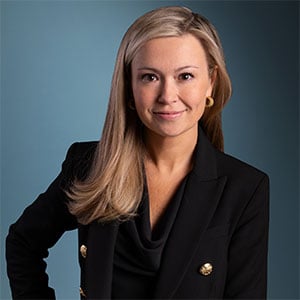
In 1997, musician David Bowie, the artist who gave us Ziggy Stardust and Major Tom, Let's Dance and so much more, changed the game – not with his music per se, but by transforming the business of being a rock star. Bowie created a plan to securitize the royalty streams of 25 of his early albums. Those so-called Bowie Bonds would raise over $50 million, an unheard-of figure at the time, without selling any copyrights. It was a huge change – in financial thinking, that is – by an artist who was already at the top of his game. On this episode, we delve into the mindset behind that kind of creativity. At the spring gathering of the Commercial Real Estate Finance Council in New York, I was joined by Julie Ingersoll, the Chief Investment Officer Americas Direct Real Estate at CBRE Investment Management, an independent thinker in her own right, and we give you floor seats to hear our presentation: where rock and roll meets real estate. Coming up, CBREIM's Julie Ingersoll at the recent CREFC conference and the idea of making ch-ch-ch changes in our industry's routines. I'm Spencer Levy, and that's right now on The Weekly Take.
Spencer Levy
So Julie, rock and roll and real estate, what a great combination. What are we up here to talk about today, Julie?
Julie Ingersoll
I honestly have no idea how rock and roll and real estate relate to each other at all.
Spencer Levy
Well, thank you for that, Julie, and all those hours of practice. But I would say that not only are people confused about rock and roll and real estate, but I bring friends with me. And that other friend I brought was David Bowie. But why are we talking about David Bowie? Why are we talking about rock-and-roll today? The reason why we're doing it is because David Bowie was one of the great change agents in rock. When David Bowie came out with Ziggy Stardust, he was the best in the world. It literally made him the number one rock star in the world. But notwithstanding that, he changed because he wanted to get better. That's precisely what's happening in real estate today. We have to change to get better because of the changes in market conditions. Wouldn't you agree, Julie?
Julie Ingersoll
Yeah, I think if there's anything we want to take away today, it's you have to innovate. You have to consider new sectors. You have to consider new markets. With the pace of change, also comes the pace in a different way to invest and a different way to look at our investment opportunities.
Spencer Levy
And the changes have to do with a lot of factors that you're gonna be talking about for a long time. You're gonna talking about inflation being higher for longer, interest rates being higher for longer. And because of that, you're going to have to change the way you do real estate or you might get left behind. But who was David Bowie? He's a musician. He's a fashionista. He was an actor. That's not why we're talking about him today. We're talking because he's an influencer. He was an innovator. We're here in the Commercial Real Estate Finance Council. Bottom line is he did Bowie bonds in order to be able to securitize his future earnings, just like CMBS bonds. And then of course he was fearless. Folks, it's pretty simple. So Julie, we talked a little bit about Bowie here and rock and roll, innovation, fearlessness. How do those things play into real estate?
Julie Ingersoll
When I entered the business a couple decades ago, there was this long-duration buy it, set it, forget it. And that was really comforting. Every asset you purchased, you held on for a long time. You constantly improved. But the pace of change is such that buy it, set it, forget it is a bit of a thing of the past. Now it's buy it, operate it intensively, and a little bit intensively analyze it – when you have to sell, how often you have to sell. We could buy and have a 10-year business plan, but every year you need to re-litigate your business plan and that just makes the pace of change a little more exciting but a little harder.
Spencer Levy
Well, I agree with you. When I got into this business 30-plus years ago, set it and forget it. I used to call office buildings a box of bonds. That's what I called them, because it was long-term cash flow and then you forget about it. But that's not the case anymore, given all the changes. What can commercial real estate learn from David Bowie? Let's start with the macro, shall we? And how do you see the macro?
Julie Ingersoll
For the investors in the room, you do need to be worried about the macro. And the math is important, but the way we're building portfolios today, they need to be durable in terms of a couple of different economic scenarios. A recession, a deep recession, a light recession, stagflation. So how do we build a durable portfolio that can react to a number of evolutions in the economy? And the way we're looking at it is long-term durable income with the ability to grow, assets which can move with inflation, and also thinking about ways we could play on the affordability in terms of buying assets that are gonna perform well. If the economy and the consumer becomes a little more stressed. For those of us who have a client to serve and returns to create, you do need to be very considerate of a couple of different economic scenarios playing out.
Spencer Levy
Does that mean you're expanding the types of assets, the markets, both, or abandoning some asset types altogether?
Julie Ingersoll
It's more about the quality and consistency of the cash flows. So take the labels off. How are these cash flows going to perform after capex, especially? And let's put together a couple of cash flow streams that are going to behave a little differently. That way you can balance your portfolio.
Spencer Levy
But let's now get into the economy. I still think it is highly unlikely that we see a drop in interest rates this year. What do you think, Julie?
Julie Ingersoll
Yeah, we've been in the higher camp for longer. And in fact, our CPI forecast out in the future is a little higher, maybe, than yours, Spencer. So I think we're in this higher for longer. We've be calling higher for longer for a long time, which has really saved our bacon over the past couple of years.
Spencer Levy
Dare I say it? I'm gonna say it. If your CPI forecast is higher than mine, are you expecting an interest rate increase?
Julie Ingersoll
Well, not yet, but that may be coming.
Spencer Levy
Okay, fair enough. And what this all means is that short-term interest rates are gonna stay higher for longer. And what matters on this to me, Julie, isn't the fact that interest rates are coming down from a high of around five to around three, is that they were zero in 2021. But the most important number in finance is the 10-year treasury. What do you think, Julie?
Julie Ingersoll
I think that for many years, some of our colleagues were hoping that there would be a little more cap rate compression coming into the system. And I think the reality is set in that we're here. There's one sector that Spencer and I disagree on in terms of cap rates are where they are. Do you want to let the audience know what that is?
Spencer Levy
Is this something that starts with an M?
Julie Ingersoll
Yes.
Spencer Levy
Okay, well, we'll get to multifamily in a few minutes. But what we are gonna say right now is that whatever we agree or disagree on cap rates, we all both agree, they're gonna stay higher for a very long time. Agreed?
Julie Ingersoll
Agreed.
Spencer Levy
Our house view is that GDP is gonna grow around 2%. This is our house view. We think we're gonna grow slow and steady around this 2% level. Indefinitely, I certainly want to grow faster. The only way to get out of our federal debt, which is now over 100% of GDP, is for inflation and to grow faster. What do you think, Julie?
Julie Ingersoll
I think these numbers are going to be even more of a stretch than you think. The only supercharger, the only unknown unknown, is AI. Will AI increase–
Spencer Levy
Well, see that, I'm emphasizing your point here, Julie. AI may be that productivity driver. I'm very mixed on it, what do you think?
Julie Ingersoll
I hope so, right? Especially if we look at the future of office and what is the optimistic view for office. The AI productivity story is incredibly conducive to thinking through the future of office, the haves and have nots. But AI is a big part of that because if corporate productivity floats all boats, corporates will reinvest, they'll reinvest in their office space. And here we go.
Spencer Levy
But I think you use the key word, and the key word being productivity. Now a lot of people talk about efficiency, they talk about productivity, they are completely different. I don't care what name is on the door when I'm underwriting a deal. I care what they're doing inside that door. Because anything that is less productive, that can be automated, is at risk. Which is why we're gonna talk about why I like manufacturing in a minute, because it's highly productive use in that space, even if it's grittier, even if it's in a secondary market. So I think that productivity is not just what will AI do but what won't it do, which places will be more secure.
Julie Ingersoll
I think there's also a case there for, as we stare at our labor, our reduction in population, immigration reform, what can we do with less bodies in our space? And I do think AI is gonna be quite helpful there.
Spencer Levy
Okay, let's switch to the capital market, shall we? Can you tell us what you think about the capital markets right now?
Julie Ingersoll
I think investors have been on the sidelines. The concern is real estate allocations. Real estate allocators are between 8% and 10%. And what we're seeing from our investors is they're not going up. Infrastructure is the pretty girl at the dance today. So how do we continue to raise capital, attract new flows, if allocations are not increasing? Well, the obvious answer is you raise capital from folks who have a 4% real estate allocation. But I do think that the consolidation, the struggle for those dollars are real. And it's going to inform this cycle in terms of consolidation across the real estate investment management segment. But also it's gonna inform risk taking and risk appetite. Because some of those new flows, those investors today that are 4% to 5%, they're looking for a core plus value add returns, not core.
Spencer Levy
And I think it's going to change not only the asset type, but the market, but most importantly, the structure of the investment. You're gonna see more op-co investments than you've seen before, either directly, through secondaries or otherwise, as cash has never been more king than it is today. So what are we gonna see in terms of overall deal volume? Well, we think we're still gonna have a pretty good year. We're going to continue to improve over where we were the last couple of years and the reason why I think we're gonna continue to do improve is because the market I believe has adjusted to a four to four and a half percent interest rate and i think that people have a lot of dry powder sitting on the sidelines what kind of year are we going to have this year julie
Julie Ingersoll
You forgot to mention there's a bunch of closed-end funds that are very long in the tooth, and investors are tired of waiting for their cash. So that is gonna help us move the market as well.
Spencer Levy
And then we have foreign money. What do you think? Which slices of this pie do you think are gonna be coming back better?
Julie Ingersoll
I think Australia is coming back. I think many Asian investors are looking at the energy dependence of some of those economies and are looking back here. But also last year around this time, our Canadian brethren put a full stop on investing in the U.S. They have come back. I think some of that volatility has ended.
Spencer Levy
Retail is one of our top stories moving forward.
Julie Ingersoll
I like retail, open air retail, not malls, which I think Spencer and I disagree on slightly. I'm going to flip multi. I'm gonna put it all the way behind office. So that's the thing you'll hear from me today. Our multifamily returns are falling below office for the first time in a decade. And so when I talk about office, of course, I'm looking at prime, modern, One Vanderbilt-type office. But we really like office today. And multi, it's not a red line, but the demand fundamentals are pretty weak and that's just eating into the go-forward return stream.
Spencer Levy
Well, I think this is the news flash today, because I think if we had this very same conversation for the last five years, it would have been multi and industrial, multi and industrial multi. You're off that train.
Julie Ingersoll
Sadly.
Spencer Levy
OK. So one of the things we're gonna talk about today is operations, about how important operating differently is to your returns, right, Julie?
Julie Ingersoll
Yeah, in this cycle, NOI returns are going to be the hallmark of the returns for the next 10 years. No more cap rate compression bailing us out. And so you need to be operational ninjas with your real estate. And that includes on the expense side, but of course, anything you can do to drive revenue. And as I mentioned earlier, build your portfolio so it's reactive or resistant to some of the various forces in the economy today. That's how you're going to beat on a relative performance perspective.
Spencer Levy
Operate, operate, and by the way this is why I think now is the best time ever to be in real estate, because today is the day that people who really love real estate who really understand the dirt win.
Julie Ingersoll
The dirt under your fingernails.
Spencer Levy
Exactly.
Julie Ingersoll
Back in vogue.
Spencer Levy
Megatrends. There are several segments of our business that are significantly under pressure. I would say that life sciences from a sub-asset class perspective, very much under pressure, but it's one of the places I think is tremendously oversold, particularly those places that manufacture drugs, not just the R&D side. But the other place that's materially under pressure is the publicly traded REIT space. And we were very fortunate to have, just before he passed away, the founder or one of the grandfathers of the REIT industry, Sam Zell, on our show, who founded REITs and equity residential, equity office, among other things. But the bottom line is the REIT space is getting hit today And this is how it's getting hit: REITs are trading well below their net asset value. And I've been in this business for 31 years. You know what this screams to me? Opportunity. What does it say to you, Julie?
Julie Ingersoll
That relative implied cap rate is pretty attractive from a private real estate perspective. So we've pursued a number of opportunities that are well publicized out there in the take-private side. And you have a lot of underscaled, non-efficient reits that have been even worse than some of the big boys beaten up. And those make a pretty compelling, attractive investment opportunities, especially when you pair. Valuations and operating expertise. So if you don't have that operating expertise in house, the ability to bring that in in conjunction with an attractively valued portfolio, very, very attractive.
Spencer Levy
I agree with you, it's hard to take a REIT private, but nevertheless, it has been done a lot recently. I think we're going to see a lot more of it. I think that we're gonna see some more consolidation of REITs coming together as well because of this valuation mismatch. I think one of the single best opportunities in real estate and real estate finance is buying manufacturing by traditional real estate investors, not just the infrastructure folks, and this is why. You could net lease anything, you could net-lease parking lots, you can net lease cell towers, why not net lease manufacturing?
Julie Ingersoll
Well, net lease manufacturing is the largest component of many net lease portfolios today that are not retail. And it's true that EBITDA and rent coverage ratio is there. You have to get a little comfortable with tertiary locations. You have get comfortable with quite a mix of credit. So the name of the game there is large-scale portfolio, a lot of diversified credits. And I would say, two billion, three billion is a great place to start.
Spencer Levy
Okay, Kansas City. Julie, why are we talking about Kansas City?
Julie Ingersoll
Actually, our multifamily research analyst said three years ago, it's time to look back in the Midwest, and Kansas City was his big call for multifamily investing. And the investment committee looked at him and said, are you kidding me? We are not investing in multifamily. In the Midwest, and that actually ended up being the wrong call, because we are seeing, we have seen lower construction and a resurgence of manufacturing again, and that is driving, an ecosystem of demand, not just from multifamily, but also warehousing.
Spencer Levy
Well a lot of the infrastructure that is driving Kansas City and the Midwest has to do with construction. Sometimes you gotta lead the money, sometimes you gotta follow the money and following the money into construction for factories is one of the reasons. But this new train line that was formed two years ago that connects Canadian, Mexican, and U.S. manufacturing running smack dab through – dare I say it again, doggone it, I'm gonna say it – Kansas City and the Midwest. The Midwest looks really attractive because you can get deals at 100 basis points or more discounts that you can in other markets. It has the nexus of economic activity. This is before we even start talking about data centers and all that water up there that can help cool them. How do you look at infrastructure when you're investing, Julie?
Julie Ingersoll
Well, I send all attractive infrastructure investments to my infrastructure investment team. But actually, we've worked even more hand in hand than we had in the past, because power, power, power is the new location, location, location, so I'm relying a lot on my infrastructure team to help me assess where I can build and where I get access to power in a very cost effective
Spencer Levy
Interesting. I had a meeting with a big investor the other day and I went around the room and said what is the number one investment idea you have and you know what they said, powered land. And powered land could be an old industrial because you can turn it into manufacturing. Dare I say you could turn it into data centers as well. But. Julie, since this is your moment to tell the audience your contrarian or maybe less well-known view on housing, why are you so bearish on housing today?
Julie Ingersoll
Well, first of all, I was hoping we were going to talk about manufactured housing, which I am not bearish on, and I think has really compelling continued demand drivers and go-forward returns. But on the housing side, specifically on the multifamily side, we have a confluence of demand issues. We don't have enough babies. We have people living with their parents. So I think 50% of 18 to 24 year olds are living at home. Think of this as the Europeanization of housing in America. Frightening. I actually have a mother-in-law also living with me as we speak. We also have the, you know, the affordability–
Spencer Levy
I'm sure she's a very nice lady, Julie.
Julie Ingersoll
I actually get along with her really well, thank God. But we also have an affordability–the reason my mother-in-law is living with me is because she cannot afford to live elsewhere. And everyone likes to say, ah, well, the 10-year rate mortgage costs are gonna prevent folks from obtaining a house. Well, guess what? They don't need to rent a house, they can just move in, back in. And then immigration, right? We have lower immigration. That's going to reduce demand. So here, our view is it's the demand side coupled with continued, very robust construction of multifamily. Many of you in this room are enablers of that. Thank you, but also that really puts a damper on our go-forward forecast of rent growth. So multi, we believe, will be sub-inflationary in terms of rent growth for the next five plus six years, and it's all demand-based.
Spencer Levy
But there are segments of multi or at least housing that you're playing. You mentioned manufactured housing. What about, like, SFR-BTR? What about senior housing? What about student?
Julie Ingersoll
Senior housing is the chicest flavor of 31 flavors and Baskin-Robbins. Student, due to the demographic cliff we're seeing kind of play out right now, has made the school selection and where you're going to play in student that aperture has narrowed a lot more.
Spencer Levy
But one of the places I find very interesting today is industrial. And this is the demand for industrial for the new stuff, and then the everybody-else stuff, which is negative or non-existent. New stuff looks great. It also means that you're not building any more of the industrial sector. Before I go into my great closer on this section, what do you think about industrial, Julie?
Julie Ingersoll
Well, you know, Spencer, this was one of our calls a few years ago, which is, a lot of our warehouse stock is becoming obsolete. And so we spent the last couple of years selling older product in favor of buying newer, future-of products. So the right slab thickness, the right clear height, the right battery storage, the write roof loads for solar in the roof, why did we do that? Well, we viewed that this consolidation of 3PLs and logistics providers using AI to run the inside of the warehouse has required more power, required a certain slab thickness so you could build your racking systems on top. And the other benefit we're seeing – and we bought an asset in Phoenix earlier this year – our tenant was able to take 100 workers in the warehouse, deploy his new AI system, and now he's got 13. So he's not worried about his labor issue. His economics in the four walls are much better. And where we're seeing demand today: so this year, our leasing is up 150% versus last year in our modern logistics warehouse footprint across the US. And that is not the case in the older stock.
Spencer Levy
So what are you doing with the older stuff?
Julie Ingersoll
Well, hopefully I've sold most of it but my few legacy assets I'm having to lease to lower credit.
Spencer Levy
Part of the implication is that there's been a significant fall off in new construction, but I actually disagree with this. And I disagree with the market's move because when I'm not up here lecturing about the economy and real estate, I actually am home coming up with t-shirt slogans. And one of the slogans I came up with did not work. It was, “Indecision makes a flat squirrel". Nobody seemed to like that one. I guess maybe they don't live in rural neighborhoods. You see the squirrels running? But this is the one that I think is gonna stick with everybody in this audience: “New is the new new”. You got me? New is new new. Because new stuff always does better in industrial, in office, in everything we're talking about here. So why aren't people building today?
Julie Ingersoll
Because you need rents to justify the new. And look, we're coming out of the trough, I think, in logistics. Not in Seattle and not in some pockets of the Inland Empire east. But Dallas, Atlanta, many of the pockets in the southeast, we've hit bottom and are now leasing it above appraisal rents.
Spencer Levy
OK. Changes. Well, the reason we chose Bowie in the first place is because there have been lots of changes going on in our business. We're trying to emphasize a few basic points on these changes. And Bowie, for all of his greatness, he offended a lot of his audience because he kept changing. The Bowie from Let's Dance sounds nothing like the Bowie form Ziggy Stardust, nothing like the Bowie today. That's why I think he's so attractive. But nevertheless, he isn't everybody's most popular for that reason. But I think the key change we need to talk about is operational real estate. And one of the my heroes in this space is Steve Ross who is the former chairman of Related now the chairman of Related Ross. He went down to West Palm Beach and he just recreated the market. He not only has the highest rents in West Palm Beach in his office buildings, he just bought the Ben Hotel next door. He bought retail next to it because he's not an office guy. He's not a retail guy. He's a real estate guy. And he will buy everything to create his own demand. Mr. Ross didn't focus solely on his office buildings. He focused on the retail. He focused on a hotel, which I think is a mind blower for a lot of traditional investors saying, we can't just buy that building, maybe we gotta buy things around it. How do you see it, Julie?
Julie Ingersoll
I don't buy mixed use. It always underperforms. One of your assets always underperforms the collective whole. So I love the mixed use environment. I'll buy the multi or the retail or the office, but I will rarely buy the whole thing.
Spencer Levy
Okay, well I think Mr. Ross might disagree with you on that one.
Julie Ingersoll
Yeah, I think this decade will be informed by what we're calling sector convergence, which is you're not going to be able to drive alpha from your sector calls. So normally in our model portfolio, we're able to generate 200 basis points, 150 basis points of alpha, just by getting those big calls right – beds and sheds versus office going into alternative investments. But our call is that the go-forward five-year return by getting your sectors right is only going to add about 50 to 60 basis points of alpha. So we're back to the hard work of stock selection. And our call that stock selection is going to drive this decade and this cycle of outperformance, the haves and the have-nots.
Spencer Levy
I love this kind of market. It reminds me of when I got into real estate in the early 1990s. Everybody operated. Then there was a financialization period. I'm not saying financialization is over. What I am saying is that operation is back in vogue. All right, so let's wrap this up with beyond Bowie. And we'll try to make you think differently, think wider. But the only way you're gonna get there is to have just a touch more fearlessness when you go into investment committee and you say some of the things that Julie and I have suggested. And to sum up my best ideas: My best idea, as I mentioned before, is Southern Europe. I love Portugal. I love manufacturing, not enough traditional real estate investors are there. And this is where Julie and I differ the most: I'm still very bullish on all forms of housing. I think we are overestimating the negative impact of immigration. I think it's a short-term thing. If it's long-term, I'll be more in Julie's camp. I like trade-sensitive areas. I like the Mexican-U.S. border. I like the Canadian-U,S. border, because again, I think people have over-weighted the negativity. I wanna follow the infrastructure. And most importantly, I want you to operate like Bowie. Julie, what are your best ideas?
Julie Ingersoll
So I like manufactured housing. I think the tailwinds are there. It doesn't have to be age-restricted and it can be in the Midwest. I like open-air retail, all forms, even dare I say lifestyle.
Spencer Levy
I said that five years ago, but thank you just for reminding me.
Julie Ingersoll
Of course you did. Anything AI-enabled, modern warehouse, modern office – where is AI and productivity going to inure to the benefit of the four walls? You should invest in it. Future of – this is the new, new, new. But how is real estate going to continue to evolve? Where do people want to live? Where do they want to shop? How do they wanna operate in the warehouse? Modern logistics, of course, plays on all those themes. And finally, operational ninjas. We've got to harvest every expense saving, every nickel and dime to be a winner in this cycle.
Spencer Levy
And I think this is where we come together. And I think while you're very focused on the bottom line and you should be, I'm very focused on the top line, I am very focused on what Steve Ross is trying to do, which is grow his own demand. Rather than waiting for demand to come to him, growing the demand. So I think top line growth is unlimited. I think the bottom line is going to be limited by the fact that AI is going to compress all of the operational excellence there. So as our final thoughts: under pressure? Yes, there are some sections of our business that are under pressure but Julie, you're seeing opportunities there like in the REIT space, correct?
Julie Ingersoll
Absolutely.
Spencer Levy
Changes – that's all we're talking about here, about changing from financialization to becoming better operators. But the final point, the one that Julie and I agree on the most, is if you just think more about the business, about where it's going, and then you're able to take one step into the fearlessness camp, and you bring these to the investment committee, you could be heroes. Is that a fair way to sum it up, Julie?
Julie Ingersoll
These folks, they use the word credit committee, not investment committee. But I think as you guys go back to your credit committees, bring a new sector, bring manufactured housing, bring manufacturing or net lease. Think about new markets like Kansas City, like the Midwest. In fact, we didn't talk about it today, but we're looking at Detroit again from a logistics perspective. So be a little brave and also, as Spencer has taught you all, have a little fun, please.
Spencer Levy
Great. Rock on.
Spencer Levy
We hope you enjoyed the show. For more information, or to drop the needle on our other greatest hits, we encourage you to turn your dial onto our website, CBRE.com/TheWeeklyTake, or, to our show page on your favorite podcast platform. You'll find an archive filled with more interesting ideas, sprinkled with more pop culture flavor, of course, and featuring the best guest list in commercial real estate. And the hits just keep on coming. We'll be back next week and look forward to seeing you again. For now, thanks for joining us. I'm Spencer Levy. Be smart. Be safe. Be well.

.jpg)