Download Transcript
Spencer Levy
In a business that sometimes feels as if it's navigating uncertainty at warp speed – from interest rates to tariffs to geopolitics and the unfolding effects of the AI boom – it's important to step back and seek perspective from a time-tested veteran who's practically seen it all. On this episode, that's just what we do, with insights and analysis from a real estate pro with a PhD and decades of expertise in the business.
Ken Rosen
We have to think differently, ane we have to make the real estate work.
Spencer Levy
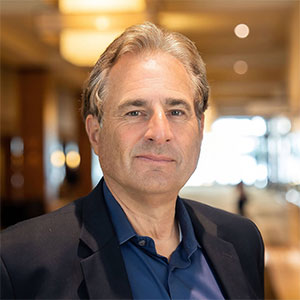
That's Ken Rosen, a managing director at the global consulting firm Anderson. He's well known for his decades of work as a real estate economist, researcher, advisor, and thought leader with a resume of over 50 years in the business. Ken founded and ran the highly regarded Rosen Consulting Group for more than three decades before selling his business to Anderson. Today, he also chairs the Fisher Center for real estate and urban economics at UC Berkeley's. Haas School of Business where he's a Professor Emeritus. Ken has written four books on real estate and real estate finance, and is also a trustee at the Urban Land Institute. Coming up, class is in session with one of the most esteemed real estate minds in America, Ken Rosen. I'm Spencer Levy and that's right now on The Weekly Take.
Spencer Levy
Welcome to The Weekly Take, and I couldn't be happier with our guest this week, Ken Rosen, one of the greatest thinkers in real estate research. Ken Rosen what a pleasure to have you on the show.
Ken Rosen
Oh, thank you, Spencer.
Spencer Levy
What attracted you to real estate?
Ken Rosen
Well, I was very fortunate. My father happened to be a realtor and I saw the interesting things he did with small real estate in eastern Connecticut and it intrigued me, especially housing markets. So I was very fortunate to see him work in that area and then I got a job with the state of Connecticut where I was director of research for the Department of Community Affairs in the late 1960s when we started to see urban renewal, a whole set of urban-focused policies at the time, spearheaded by George Romney. And that was inspiring to me as a young person to do those type of things.
Spencer Levy
And George Romney is Mitt Romney's father, former governor of Michigan, is that correct?
Ken Rosen
That's correct and again, a little bit like his son, a moderate Republican, but very pro-business. And so that was exciting to me to see that. And I got a chance to do that as a 20-year-old, as director of research for the Department of Community Affairs and the Model Cities program was started then, all the exciting things that we've seen over the years. Some have succeeded, some have failed, but it got me excited about the policy side and the business side of the business. I've been fortunate to be able to be involved in many different aspects of that with companies and governments of various types and globally – not just in the U.S. but in Australia and Europe. And it's a very exciting business to be in. Economics is a good profession, but real estate economics is more exciting.
Spencer Levy
Ken, you've been in this business for a long, long time. What keeps you going? What keeps you energized?
Ken Rosen
I think you come up with new situations all the time. It almost changes daily, the macro environment, and real estate has no choice but to react to the macro-environment through capital markets and government situations and there's so much variation around the world and countries but there's some themes. One main theme is long-term capital is what real estate's about and making that happen and providing homes and shopping venues and space for people to work in. It's a big part of the world economy and somewhat neglected by the macro economists of the world. At MIT, where I got my Ph.D., there were only three or four of us who majored in cities and urban economics. Almost everyone else wanted to be macro and theory. So it's a very good applied way to look at economics. Some of the initial economists from hundreds of years ago, real estate was a part of their whole analysis.
Spencer Levy
And one of the things you just mentioned there I think is a really important thing that we should dig into a little bit deeper, which is the long-term nature of real estate capital. A lot has evolved, a lot has changed over the last 52 years. I've been in the business 31 years. A lot has changed in my 31 years. In fact 31 years ago when I got into the business, there was more long-term capital than there was 25 years ago, when a lot more institutions got involved, and it became not necessarily worse thinking, but shorter term thinking. Do you agree that the world has shifted materially from a long-term to a short-term mentality, but maybe we're going back to a long-term mentality in a high interest rate environment?
Ken Rosen
So I think you're absolutely right. Up until the early 90s, we had a very long-term mentality dominated by insurance companies, wealthy families, long-term perspective and long- term holdings. I think beginning with the crisis that we had in real estate, in the early nineties we had the first set of opportunity funds and they had a typical life of seven year funds, short-term focus, high IRR focus rather than long-term return of capital. And that then switched to the public markets, the REITs, who had to give quarterly reports, quarterly earnings. And so we shifted from, I think, a long-term environment to somewhat of a short-term environment where people were looking at IRRs which I think is a very useful tool but it made things too short-term and that's been true for the last I'd say almost 35 years but we are moving in the other direction again. I feel that already. And the capital is the key. But capital, as you know, tends to be very short-term focused. That's why we have these big cycles in stock prices. Real estate's a little bit out of synch in that environment because it is not a short-term asset. It's a long-term asset.
Spencer Levy
Well, speaking of long-term assets, keeping it very macro, San Francisco may be one of the most, if not the most volatile market in the United States. And when things are down, they seem really down. But they seem to be quite the opposite right now with AI. And it seemed to have turned on a dime. How do you see it, Ken?
Ken Rosen
Yes, so we have been probably the biggest boom and bust regional economy, starting with the gold rush in 1849. We've gone through these huge cycles. When things are good, they're so good, the speculative excesses. And when things are bad, it feels like a deep recession. I think we have that probably most of any economy in the U.S. I mean, clearly, capital markets do some of the same things in New York, but it's a very volatile market, and I would say a very risk-loving place. People take big risks. But also it's a place that people like living. We've had net population flows over the long term because it's a great quality of life. We don't have winter – or we have winter in the summer. We don't have winter generally.
Spencer Levy
Well, it was Mark Twain who said, the coldest winter he ever had was a summer in San Francisco.
Ken Rosen
Right, 45 to 50 degrees and cloudy. But it's also, when it's 90 or 80 in the East Coast, it feels pretty good.
Spencer Levy
Well, San Francisco is perhaps the most dynamic market I've ever been to, but that dynamism is up and down. But the thing that keeps it coming back, if I were to name one factor – and we're going to get into forecasting right now – is simply the high level of talent. And that is both attracted to the market and is created in the market, in terrific schools like Stanford and Berkeley and so many other great institutions in or near the Bay Area. So, Ken, I know we can't get to all the niceties of forecasting, but the major factor to me has always been demographics. It's always been the quality of the talent in San Francisco and other markets. How do you see it?
Ken Rosen
I think that's actually true, that innovation is really the key and has been for a long time. We have these innovation booms. The great universities here help a lot, very similar in some ways to Boston where they have a lot of great universities, there. And that's the anchor that moves us in that direction. We have some of the same problems of older urban areas, even though we have the dynamism on the other side. And that's caused quite a bit of conflict. So one of the things that's happened in the last several decades is we've had businesses relocate because of the high taxes and regulation to places like Texas and Florida, Nevada, which are a steady out-migration of businesses and people. And I think it's begun to affect the market much more so in the last half decade, where we've very little population growth. And the other thing that we've had, it's a place that people want to come worldwide. And of course that is true of New York as well, and Boston. So we have a very global outlook, mainly Asia-focused, rather than Europe-focused. But that creates a dynamism, because these are first-generation Americans who want to make it. So it's immigration, and people from outside the country come here, they come to New York, as well in Boston. But that's really what our cities have done, and our city especially is like that.
Spencer Levy
Well it's interesting, sometimes a tough business environment actually helps existing owners. I've spoken to more owners recently that have put San Francisco as number one in their target markets for multifamily as an example.
Ken Rosen
That is definitely true over the last year, but the last five years, we've had the worst multifamily market from I'd say 2020 to 2024, really bad multifamily markets – rents down, vacancy rates high – and all of a sudden it turned because of the boom. So–and that happens. Each time we get a boom in jobs, we get, again, the multifamily stock, vacant stock, shrinks dramatically, rents go up. So we're the number one – San Jose and San Francisco – number one rental market today because of rent growth. But two years ago, three years ago we were at the bottom of the chart. So it is much more volatile and the difficulty of building in California adds to the volatility. It's not just demand side volatility but difficulty to add supply quickly. So it makes that standard error much higher here. In the long run we are also constrained, I think, by our geography against the ocean. That makes things hard. So you have to spread inland, and that creates commuting problems, other things. So it's a combination of the volatility of the demand side with the slow response of the supply side for every type of real estate.
Spencer Levy
Well, Ken, we're talking about factors that are changing rapidly. And I say this just based on my 31-year career, this is one of the fastest changes in market preferences that I've seen maybe over the last 31 years. Specifically, our two top asset classes for the last decade were industrial and multifamily. And in certain pockets, like San Francisco, and market rate housing in New York City, probably still at the top for multis. But multis have been more challenged in the Sun Belt and Texas and places where there was overbuilding. Industrials had a little bit more challenging times because of overbuilding and now if you take a look at the CBRE report on what our number one and two asset classes are, it's office and retail. What a switch so quickly. What do you think about that, Ken?
Ken Rosen
So I think that's the advantage of looking at the cycles. Office got so beaten down in San Francisco, that buildings were selling at 25% of replacement cost. And so that created a great–and still has created a market advantage. When you can buy much below what it costs to build something new, you're gonna be able to ride that market up, especially in the higher quality buildings. And the supply curve is very steep, very hard to get it done. So there's a time period where you get to catch up. This was our deepest market cycle ever. We had vacancy rates in San Francisco in the mid-30s, office vacancy rates. The last cycle, after the internet boom and bust, it was 20%. We've never seen anything quite like this. This is the biggest ever. And so it creates a great opportunity in that environment. And I think that the Sun Belt has a much more horizontal supply curve, so much easier to build and overbuild. And that's exactly what happened. There's still decent growth in the Sun Belt and Mountain States, but we built maybe twice as much space as we needed because everyone saw the returns that happened during the COVID period, and I think that's the difference. San Francisco is probably the most difficult place to get stuff done of major cities. New York, even though we think of it, it's not as hard. It's a better environment to get stuff done. We're probably the most difficult supply side, but we've had a lot of changes the last three years in response to the big recession that we had that are going to make it much more easy to get things done especially for housing.
Spencer Levy
Well, I would note that we had two episodes of the show – one was about four or five months ago – about New York, a specific project called 25 Water Street, known as SOMA, which was a million square foot building that from the day the developer bought the building to the day that they added 10 stories, built two light and air holes, and moved in 1,400 units, was 25 months. That's the timeframe it happened in New York City. But we just taped an episode last week on Calgary, which has changed a lot of its laws in terms of how you are able to convert these buildings as well. So the long story short is it can be done. You agree with that Ken?
Ken Rosen
Absolutely agree with it. And in San Francisco, it has not been done. We are just changing the rules in both state and local to try to encourage the conversion of older, obsolete buildings to residential. And we have been way behind in this component, but I think it's about to take off. New York, at least in the U.S., has led the way here. And I think that's something that we are excited about because we have a shortage of housing And we have an extra supply of B and C old office buildings, so hopefully that will happen here, but it took I'd say three years of very hard work to get the legislation through the local Board of Supervisors and to get incentives out of Sacramento, but I think all the things are aligning now and I would expect that will be the story of the next two to three years in San Francisco.
Spencer Levy
People are always saying well what does this period remind you of? And the period that we're in right now is a period of sustained high interest rates, maybe rapid change in terms of which are the most popular asset types and markets, and we can point to a lot of examples. Some people have pointed to the late 1970s with stagflation and high interest rates. So in your experience, if you were to say, boy the period in 2026 reminds me of this, what might this be?
Ken Rosen
First of all, it's important to say that I was fortunate as a graduate student to get a fellowship to work at the Treasury Department under Paul Volcker, who was my boss. I got to spend three and a half months with about ten other graduate students with Paul Volcker and at the Treasure Department, and he was an amazing human. He'd sit there with a cigar, feet up on his desk, and we were all 21, 22 years old, so we learned a lot. But I'd say that this time period, the last 17 years has been highly abnormal. We've had interest rate repression from the central banks where the real interest rate – and this is very important, the single most important thing – that real interest rates have been one percent or below for the last 17 years. So it's been a very great environment to add leverage. Real estate benefits from that as a long-term asset. And so we've had a third to half of the return in real estate has come through positive leverage. Now we're in a very different situation. We have real rates on the 10-year bond about 2.40, on the 30-year bonds about 3%. Average real rates over the last 100 years have been 2% or above. So we have a very different financing market. And this is almost back to the future. So we have to make money the hard way in real estate, which is leasing and picking the right markets and the right sub-markets. We're not gonna make it through leverage if real rates stay high. And my view is the new chairman of the Fed made it clear the last three times he's spoken that he wants basically inflation back to two percent and wants the real rate to be more normal back to the days of Alan Greenspan and Paul Volcker. So that is a huge change if it's sustained in the financing environment for real estate and how to make money in real estate which is going to be long-term supply and demand vacancy rates and rents and it's not going to be excess leverage that's cheap.
Spencer Levy
It is back to the future. It is old school. And interestingly, we have had a lot of case studies of what does it mean to be a great operator. And people often go straight to the bottom line and say, well, you know, you reduce insurance costs, you reduce electrical costs. I look at it very differently. I look it from how do we grow revenues faster than the next person? And the case study that I often point to is: We were very fortunate to have on the show last year, Steve Ross, the chairman of Related and now the developer of West Palm Beach, not just the office buildings, but bought a hotel, has retail, built a golf course, put private schools in, I mean, did all these things that many institutions can't do. They can't because they will focus on their swim lane, which is one of the five major food groups, and that's it. But Steve, in my opinion, created demand. And I think that is why, well, he's not just very wealthy, he is a tremendous real estate professional. But I think the lesson for us as real estate professionals is that not only did he create demand, but it can be done. Because very often in conversations like this, like, well, we can't create demand. We take demand. What do you think, Ken?
Ken Rosen
Well, first of all, I should say that he's one of my best friends. We were the consultants on Time Warner Center, on Hudson Yards and I’ve been consultants with him since 1991. And you may remember at that point, the world was upside down, and I had an opportunity to possibly become partners with him, but I didn't do it. Probably the second biggest mistake I've made. But he's a great friend and just a brilliant thinker. And remember, he's a lawyer. He's not an economist. But he's done fantastic things, starting with lower and moderate income housing. So I do think you can create value by creating demand for space that the tenants want, whether it be office buildings, whether it'd be apartments. Hotels is more complicated, but he has created two new big areas in New York, obviously, and of course, West Palm Beach and Boca. He's fully there now, and it's very exciting. I will be with him in a month. I'm looking forward to spending time with him. And a creative genius, and we've had a number of them in real estate, whether it be in the shopping center business or the multifamily business or creating whole new towns. And we go back to the days of the new towns of Columbia in Maryland, and of course we've had basically a new town movement at times. But he's done something which very few people have done. It's probably 10 people are in the same class as him, someone like a James Rouse, the Reichmanns, again, creating a whole new area. So I give him great credit. As a professor, I like writing about him, being a consultant, I could never take the risk that these people do. They take huge risk and get close to bankruptcy, both, many of these people have, but then create huge value.
Spencer Levy
What's interesting – and I can give a hundred case studies – I use the Steve Ross case study often, but when I've seen some of the most successful developments, what's unusual about West Palm Beach is that it's an existing market with existing buildings as opposed to say Lake Nona in Orlando which was done by the Tavistock Corporation. It was a canvas – a blank piece of land that they own the whole canvas and were able to put in the largest VA hospital, the largest children's hospital, great retail, great multi. So to me real estate isn't just about making the best amenities. It isn't about thinking outside the box. Real estate is about good old-fashioned control of the real estate. Does that resonate with you Ken?
Ken Rosen
It does, and I would say each category of real estate has a special set of things – retail, office – that matter. I'd say restaurants, hotels are really operating businesses. Real estate is third in those environments. It's really the operating business itself. At least that's my experience.
Spencer Levy
But let's go back to the macro. Where are we? And where are we going? Where are interest rates today? Where are they going? What's your point of view?
Ken Rosen
So I think the number one thing I would say for every real estate player is we have the highest real interest rates – that is interest rates basically above and beyond inflation – that we've had since 2004, ‘05 and ‘06. And that is a completely different environment than we've had the last 22 years. So we have to think differently and we have to make the real estate work. We also have a very big change in demographics. I am about to be fully retired in a few years. And so we've got the Baby Boom generation, which was born from 1946 to 1961, all approaching retirement – massive increase in those over 65 – and that is gonna create a different set of demand, whether it be senior housing, assisted living, different locations. So we've a big demographic shift coming. And we've also, for the moment, at least, stopped net international immigration to the U.S. You may know that 45 percent of the population growth the last two decades has come from legal international migration. And we had a period of time under the first three years of the last administration where we had asylum, where we had two to three times the normal number of people coming into the country. So roughly 20 percent of the population today is first-generation immigrants. So that's going to change the demographic demand in a dramatic way, both geography-wise and what people are looking for. If we go to the zero immigration or very low immigration strategy over the next few years, I think that's going to be quite negative for real estate, especially in inner cities where many of the first generation immigrants go. So it's a demographic shift that's coming. So aging population, immigration are the two big things. And the other is higher real interest rates. Those are the three things I think about on a daily basis: Long-term demographics, short-term immigration policies, and high real interest rates.
Spencer Levy
I know what our listeners are thinking now is that, well, what does Ken think about when interest rates are gonna come down and how? How do you think about that?
Ken Rosen
So this is an interpretation. We don't know yet what Chairman Warsh's policy is going to be, but he set up five task forces to analyze various aspects of monetary policy. So my best view is we're going to have higher real interest rates for the foreseeable future. That is 2 to 3 percent, 10 to 30 year bonds, real interest rate above inflation, which means you're going have to have cap rates reflect that. Cap rates have moved up since now 2022 and ‘23, but they’re still just barely flat or even somewhat below borrowing costs. So we're gonna have to have cap rates move up, which seems counterintuitive to what everyone thinks is gonna happen. I think that Chairman Warsh is committed to change policy, completely different than what the president wants. He wants low real interest rates or much lower nominal rates. And that's gonna be a very big conflict. So I think that's the environment we have to live in. I don't think rates are gonna come down until we get inflation down. To get back to 2%, I think the only way to do that is create a big recession, and no one wants that. So I don't think the 2% target is going to be hit. If I were chairman of the Fed, I would have come in and said 3% is our target, not 2%. Two is just–it's a made up number started in 2012, and my friend Ben Bernanke, brilliant man, that was the number he thought was the right number. But it shouldn't be the same everywhere. And it shouldn't be the same in slow growth economies or high growth economies. And it's totally different than the last 17 years where we had interest rates 1% on average and many times negative 1%. So this is a structural shift that no one in real estate is talking about. It's a big one along with the demographics and public policy. It's gonna be a difficult environment to make money in real state. You have to do it the old fashioned way: Pick the right project, the right location, leasing, and make a quality environment.
Spencer Levy
Why are federal deficits such a challenge when it comes to fighting inflation?
Ken Rosen
Basically, you're creating more demand without creating supply. And so you create excess demand, and that's what deficits do. The fact that our deficit, about 6% of GDP, is higher than almost any country in Europe, except France, is pretty close. They're at three. We are basically abandoning economic theory. Deficits and full employment are not acceptable. Everyone knows that. And yet there's no political will to either pay back spending growth, and it's hard because a lot of it goes to entitlements, or basically raise taxes, because no one wants higher taxes. And with the aging population, that creates a huge issue. I think that's gonna be the issue that will be front and center. Over the next 10 years. How do you handle the higher aging population relative to the total? Is technology going to be able to offset that? So I think it's an inflationary situation and the deficits, it's just unacceptable. If John Maynard Keynes were alive he'd say yes, have big deficits during recessions, but not during full employment. It's irresponsible.
Spencer Levy
This is a little bit of a side question, but it goes to your expertise. I see a capital shift happening in the world today where we're moving away from some traditional capital sources, university endowments being among them, and we're shifting more back to what I would call traditional capital sources: High net worth individuals who were the name of the game in real estate 35, 40 years ago are now becoming a more prominent part of the business. How do you see the capital world changing by identity because of current market conditions?
Ken Rosen
I think you're absolutely right that the institutionalization we've seen since the early 1990s is probably hit at peak, and high net worth individuals do have long-term perspectives. That is why I'm working with Anderson, that's what they're doing, is working with high net worth families and organizations, and I think that we've created a lot of wealth and real estate is a substantial part of portfolios. Unlike institutions, it might be happy with five or seven or ten percent. Individuals might have a bigger appetite for long-term, modest returns with much less risk. And I think we are moving somewhat in that direction. Part of it is people are always chasing the next hottest thing, and it's AI right now. Venture capital, I think 80 or 90 percent of it's going to AI. Real estate’s, I would say, on a lower tier in terms of people's desires. But again, for the aging population, for high net worth individuals, it's a nice safe haven. It should be part of anyone's portfolio. We've had a great run with the REIT industry. We've gone from a market where individuals had more difficulty investing. The average person today has the opportunity to invest in 4% to 5% yield, pretty stable assets. So I think that's pretty exciting. And I think as more and more people get to retirement age, they're going to look at that as a nice income source, because your portfolio shifts from high growth to income as you age.
Spencer Levy
Well, Ken, at the crossroads of AI and real estate, you're calling them maybe apples and oranges, there really is a middle ground. And that middle ground is data centers. You mentioned that the shiny new toy, if you will, of real estate people are chasing, and people are certainly chasing data centers today. How do you see data centers, today, any other areas of emerging growth, some areas that are being overlooked?
Ken Rosen
Data centers are the hot topic, and as you know, AI, at least as it's practiced in the U.S., seems to require a huge amount of storage and data facilities. It's a huge boom, a lot of pushback, however, and also it's important to say that it's an international competition because of the way things work. China's producing some of these large models that require a lot less basically storage space and the pricing is maybe one half to one quarter of what our users are charging. So there is no question that it's a long run, big positive, or data intensive world. Being a big data person, even starting in my career at MIT, I used the largest computer, had to run it all night on our economic models.
Spencer Levy
Was that a Univac machine by any chance with the punch cards?
Ken Rosen
No, it was an IBM. It was an IBM. But it had cards, absolutely. I had stacks and stacks of cards. But the bottom line is I think we're definitely moving in that direction. I am certain that this is being overdone. We might have two or three more years to run before we have a comeuppance, but we've seen basically asset light companies, really great companies that have big cash flow, asset light, and now become asset heavy companies. It's either directly or indirectly they're owning data centers, putting on debt to own data centers. So the cash flows are all being put to this use that we don't know if the end is going to be there. So I use three of the models myself, our company does, and it's an enhanced search process so far. I haven't seen the intelligence side. I cannot write my memos. They cannot write the memos as well as individuals. That could change. And we have a lot of people think that half of white-collar jobs will disappear, but I'm not a believer in that. I do believe it's a very good supplement, but I don't think it's going to be anywhere near as is the Internet itself, which was huge. This is a boom that unfortunately is going to end not well, because the alternative uses for these data centers in remote Louisiana or Michigan, there is no alternative. It could be five-year, 10-year or 15-year leases. Who's going to be the end buyer of an outmoded data center? Remember, the chips, people are performing five to six years. I think with the technology moving so fast, it might be two to three years. And 70% of the data center value is in the chips. So I think we're going to have a correction. Go with the flow, but protect yourself is the way to put it.
Spencer Levy
So Ken, let's go back to data for just a moment, since you are one of the pioneers of use of data, use of computers in the real estate business and beyond. We are now awash in data. Everything you do, every move we make, somebody is sensing how much energy we're using, how much water we're using. And so we are awash in data today, more than ever before. Are we better off today with this much data than with the data that you had back in the early 1970s? And what I mean by that is, do we even know what to do with the data we have today?
Ken Rosen
So that is a great question, and it's on everyone's mind. I think that real-time data today is much more valuable. We had to create our own data. We had government data. But I was, in my PhD thesis, I was able to survey companies to get moving data, because I thought the interregional movement of people was very important to real estate. And I got every major moving company to provide me data, state by state, month by month, moving data. That was part of my PhD at least. So I think the data helps with decision making, and whether it be retail, anything that we look at. On the other hand, doing it right, analyzing it right to think a machine is gonna do it, it's just mistaken. As we've heard this day, garbage in, garbage out. And I love data. But it's gotta be a human interaction. It's not gonna be the machine doing it. Now, it might be a little bit different in medical science. As I said, I'm involved with our big hospital here. The medical science researchers were using primitive data analysis before, very primitive relative to what economists or other people are doing. And now it seems to be creating breakthroughs. A lot of it is using simulation models, other things. So I am very optimistic that we'll get a lot better at doing things in various areas. But it doesn't mean that everyone's going to make lots of money. We're investing huge amounts. We're talking about two to three trillion dollars. And the question is, will you get an adequate return on that, especially what I call cutthroat competition. In economics, we never like to think that way, but cutthroat competition has been a theme of economics for the last 200 years. Something good happens, too much money goes in, they overdo it. You get the economic benefits of it, whether it be railroads, electricity, but a lot of losers as well in terms of individual investments. So it's going to help society, but it might also not be as viable as an investment in the aggregate. You got to pick and choose your spots. And that's true of everything, of course, we do.
Spencer Levy
I want to go back to something you said, because I want all of our listeners to hear exactly what Ken said about how he started off early in his career. He created the data and he analyzed it himself. He probably inputted himself into that computer. Is that right, Ken?
Ken Rosen
I punched cards, early 20s, I spent a lot of time creating data.
Spencer Levy
And creating it. Working it. Owning it. And this is probably the wrong word, loving it, in which Ken actually almost said he loved data, which is great, but in order to truly understand data, you need to spend time in the pits, putting it in, thinking about it, owning it and there is a little bit of love to this. If you created it, you are going to understand it better. That is what's missing. What's missing today isn't reams of data. What's missing today is people who are going to love it, live with it, put it in themselves, because it makes not only the data better, it makes your analysis better, it makes the data more valuable. Good way to put it, Ken?
Ken Rosen
Totally agree and also a lot of common sense. People think that you can just put stuff in and get the answer. A lot of common sense. It has to make sense intuitively. Very seldom have I had results that are not consistent with your intuition and they produce sometimes interesting opportunities but has to be very careful. You've got to understand what you're doing and I'm afraid that a lot of this younger generation, it’s data in, data out and we know that that creates issues. I understand it and got to interpret it with a business perspective in mind because that is really what we're in. We're into advising businesses how to use this to get better profits.
Spencer Levy
And if you own it, if you understand it, and you dig into it, not only do you get better results, better, it's more useful, but it prevents catastrophe. And I'll give you the one catastrophe story I always mention, which was the mortgage crisis that we had in 2007. And a lot of the mortgage crises in 2007 was based on one assumption. The one assumption that the average price of a single family American home could never go down. Well, you got that assumption wrong and it almost took down the whole world of finance because people just took it took as gospel one bad assumption
Ken Rosen
Totally agree, and we were the bear. You look back and read the Wall Street Journal articles, other. About two years before this collapse, we saw it coming. And I had a money management company which – supported by big names, as I mentioned – we went short all these things too soon, but then it happened, and it happened in a big way. As it was just clearly, it was leading to very bad analysis, very bad business decisions. When big people doing this, You sit in the back of the room with the head of the capital markets division of a major bank or investment bank, you said, I don't understand it. I said, that is not good. If you don't it, your guys are producing these things that are going to cause problems. And we saw it all break. But you could see it happening. But people didn't want to actually admit it until it did break in 2007. But you could see it two years before. And it was very difficult managing money when I said no, this is going to break badly and in the end we did make a lot of money for everybody but it was a difficult period of time because as an economist you see these things too soon. If there's one problem with economic research we see the problems a year or two before and you're out on the island by yourself.
Spencer Levy
I used to work for Legg Mason and we had a tremendous money manager, still there, now it's a different company: Bill Miller. He also goes to the same Chinese restaurant as I do, but that has nothing to do with today's story because I live in Baltimore. But Bill Miller famously said, and he was the only person I think maybe in history to beat the S&P 15 years in a row. He said, being early sometimes is the same thing as being wrong. That's the challenge. You were right, but by being early–it's timing of the conclusion that's most challenging.
Ken Rosen
That's true, and I guess that's the other thing to say. We've built some great companies. Obviously, the company we're at now is one of the premier three or four, and there's just a lot of great companies, and that's been the fun part, working with these great companies. I try to encourage our young people to go into research, but it's not wanting to happen. They don't want to do that. They want to go out and make money.
Spencer Levy
Let me tell you something, some of the seniormost leaders of this business started in research, started in financial consulting, started in appraisal. And why? Because so many people want to go narrow early. Go narrow late. Start wide. Learn everything. Is that a pretty good piece of advice, Ken?
Ken Rosen
No question about it and it's important to be as wide as you can, know as many as people can and there's great organizations and the industry has done a great job. Everything from ULI to NACREF, NAREIT, there’s great organizations. Go to everything. I told my son – he's 37, he's in real estate – just get involved, talk to everyone, listen. That's how you learn.
Spencer Levy
Well, on behalf of The Weekly Take, what an honor to have you here today, Ken. Ken Rosen, the Chairman of the Fisher Center at UC Berkeley, Managing Director at Anderson, and I say this with great pride, a true legend of our business. Ken, thank you for joining the show.
Ken Rosen
Thanks for having me, Spencer.
Spencer Levy
There's more to come as usual in the weeks ahead, with deeply informed insights on hot topics like office conversions, leasing office space to the federal government, as well as conversations about other asset types. Tune in for all that and stay on top of the show through our website, cbre.com/TheWeeklyTake, or the podcast platform where you listen. Thanks for joining us. I'm Spencer Levy. Be smart. Be safe. Be well.

.jpg)