Market Intelligence
Distributed Generation Guidebook
Choosing the right on-site power asset for reliability, economics, and speed to power.
August 24, 2026 3 Minute
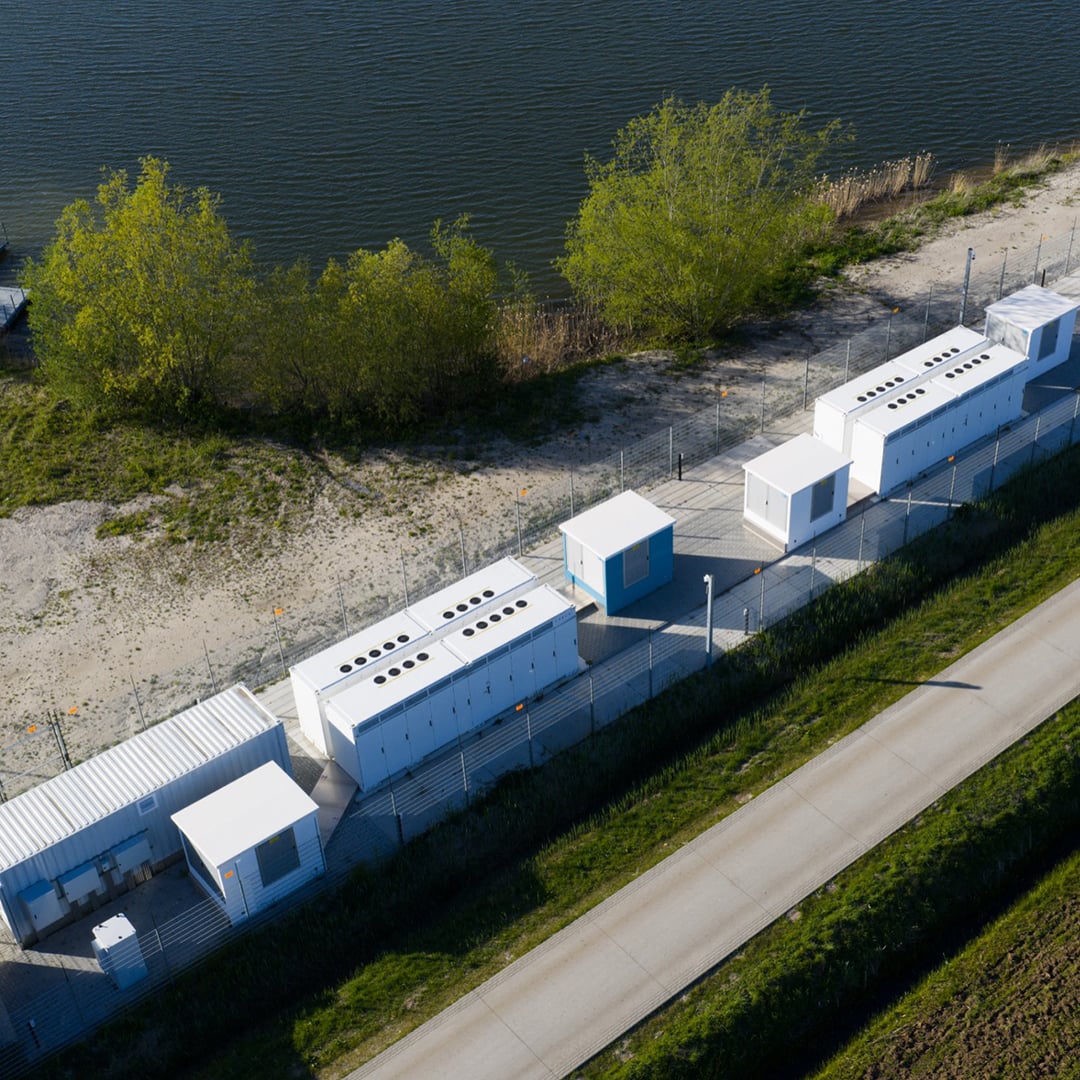
Reliability Is Now a Facility Decision.
Grid reliability has been a 25-year challenge that’s not expected to improve for years to come. Commercial and industrial (C&I) energy users pay for this unreliability through outages and voltage sags hobbling production as well as rising utility rates and capacity charges that fund the grid’s maintenance and upgrades.
Relief for the grid is likely a decade or more away. On-site generation and storage, deployable in 6 to 30 months, is the most readily available lever that a facility controls to improve reliability. These projects have shifted from cost-saving measures to essential infrastructure at most facilities. What differs site to site is the technology choice to meet the facility’s main priority: reliability, all-in economics after incentives, or speed to power. This primer quantifies reliability trends, facility-level cost data, and the economics, incentives, and deployment timelines behind each technology, giving energy buyers the tools to match the right asset to their own facility needs.
Grid reliability has become a structural risk.
In 2024, the average U.S. customer lost power for 11 hours, the worst year in a decade. The number of hours lost to weather-driven outages has roughly doubled over the past 10 years, according to U.S. Energy Information Administration (EIA) and U.S. Department of Energy (DOE) estimates. Meanwhile demand is growing faster than at any point since the 1990s. The North American Electric Reliability Corporation (NERC) raised its 10-year North American peak demand forecast by 224 GW and expects half the continent to face elevated or high risk of supply shortfalls from 2026 to 2030. New capacity is also not coming online quickly, with the U.S. completing just 783 miles of new transmission in 2025, against roughly 4,900 miles a decade earlier. The American Society of Civil Engineers (ASCE) projects up to $702 billion in grid underinvestment by 2033. Grid generation queues now stretch past seven years, as limited system upgrades don’t accommodate new supply.
Facilities absorb reliability costs in two different ways.
Grid failures directly damage facilities. Outages cost U.S. customers $121 billion in 2024. A single 24-hour interruption costs a typical large industrial site $190,000 on average. The tail can be more severe: one semiconductor’s U.S. fabrication (fab) plant disclosed $270-360 million in damages from one Texas blackout, and 20% of data center operators report the cost of their last outage exceeded $1 million. Voltage sags are the quieter system threat. A typical industrial site sees 50 to 66 sags a year, with roughly 15 deep enough to trip sensitive equipment.
The second cost exposure is reflected in the utility bill. Capacity auctions to secure reliable supply have cleared at record highs, with PJM at its roughly $330/MW-day price cap for three consecutive rounds, and MISO jumping to about $666/MW-day. All-in C&I retail rates are up about 25% since 2019, with California industrial rates up 58%. Utilities requested more than $18 billion in new rate increases in 2025 alone, leading to further rate hikes in the coming years.
The tools for improved reliability exist, and each solves a different problem.
No single technology covers every failure mode or reliability need, so the right asset choice typically follows the site’s unique exposure:
- Power quality (voltage sags, momentary interruptions): a battery-based uninterruptible power supply (UPS) or lithium-ion battery rides the load through brief disturbances with zero transfer time.
- Short-duration outages (up to four hours): the fastest ways to secure backup generation (typically requiring 3 to 12 month lead time) are lithium-ion batteries and diesel or natural gas generators. Batteries can also reduce demand charges and capture federal tax credits (up to 50% of the upfront battery costs), as well as state-level incentives in Illinois, New York, Massachusetts, Connecticut, New Jersey, and Maryland.
- Long-duration, 24/7 supply: gas reciprocating engines and aeroderivative turbines deliver the lowest-cost power, but require full air permits and gas laterals. This requires 16 to 30 month lead time to procure them. There are higher costs associated with fuel cells and linear generators, but this is offset by 30% federal tax credits, air-permit exemptions in some states, and faster procurement timelines (9 to 18 months).
- Bridge power: mobile rental turbines deliver firm supply in four to eight months at a premium to permanent on-site alternatives.
Technology Assessments for Reliability Purposes across NERC Risk Areas
Contact us via our Insights form for the full report.
Energy Solutions
We advise global organizations on managing energy costs, generating revenue and reducing risk.