Report
Growing regional differences amplify yield dispersion in the logistics sector
Greater yield disparities between dutch logistics hotspots
July 31, 2025 9 Minute Read

Read our full report
Logistics real estate remains attractive to investors, but dynamics in the occupier market are shifting. While the Netherlands was previously seen as one large logistics hotspot, clear regional differences are now emerging. Declining occupier demand is leading to greater variation in vacancy rates and initial yields – a trend already visible across Europe and now increasingly relevant for the Dutch market.
Trade tariff uncertainty slows occupier market recovery
The logistics occupier market is more sensitive to macroeconomic developments than other sectors. Since 2023, occupier demand has declined visibly following a sharp slowdown in GDP growth, international trade, and consumer spending. This resulted in historically low net absorption in 2024, with just 185,000 sq m taken up.
In 2025, a cautious recovery is underway, but expansions remain limited. As the development market adjusts to reduced occupier needs, new development activity is expected to decline further this year.
The announcement of new U.S. trade tariffs in April 2025 and uncertainty around future supply chains prompted many occupiers to postpone relocations and site selection in Q2. As a result, total take-up in H1 2025 fell well below the five-year average.
Although the EU–U.S. trade agreement signed on 27 July provides more clarity, companies still need time to adapt their supply chains to this new reality. According to the WTO[1], European trade dynamics are expected to recover from 2026 onwards, supported by a resilient internal market, a strong trade network, and a shift in trade flows toward alternative regions.
Rising regional disparities in the occupier market
Today’s market is characterized more by strategic relocations than by expansions. Occupiers are prioritizing high-quality, proven locations that support operational efficiency, such as modern, automation-ready distribution centers with multimodal access, lower transport costs, and sufficient labor availability.
However, in recent years, significant supply has been added in alternative regions, as established hotspots faced constraints such as nitrogen regulations, limited grid capacity, and land scarcity. These alternative regions are now proving more vulnerable. With expansion demand having faded and relocations to these areas remaining limited, future demand will depend heavily on the pace of economic recovery and the size of the development pipeline.
Lowest volume in a decade; more activity expected in H2
Although logistics vacancy rose to 4.5% in Q2 2025, this remains low from a European perspective (average: 5.2%). The Netherlands is still considered a core destination by international capital.
Still, investment market activity declined sharply in the past six months, partly due to global economic uncertainty in Q2. While total industrial and logistics investment volume reached approximately €1 billion, logistics-specific volume amounted to just €305 million in H1 2025 – the lowest level in a decade. Large-scale transactions were notably absent, resulting in an average deal size of only €13 million. Most transactions involved Core+ or Value-add strategies.
Climate for Value-add and Core+ strategies softens due to a occupier market challenges
While Core+ and Value-add strategies remain viable, occupier demand and rental growth expectations are limited. At the same time, interest in Core products is rising, as the Dutch logistics sector is still seen as resilient – even amid global trade disruptions.
At the start of 2025, investors struggled to find suitable assets above €50 million. Since then, supply has increased, with several large portfolios – both Dutch and pan-European – and single assets entering the market. This development creates room for a significant rise in total investment volume in the second half of the year.
Yield dispersion increases across the logistics market
Net initial yields for prime logistics assets in the Netherlands have remained stable at around 4.75% for nearly two years. However, early signs of yield compression are emerging in top European locations, and the Netherlands is expected to follow soon. While yields for prime assets remain stable, the spread above prime is widening.
European correlation between vacancy and pricing
Although it remains difficult to identify clear yield spreads based solely on Dutch transactions, a broader European perspective shows a clear correlation between vacancy risk and pricing. In our report’s analysis of major European logistics regions, a strong link is evident between higher vacancy and lower pricing. The established link between regional vacancy and yield levels suggests that growing regional vacancy disparities in the Netherlands will likely lead to a broader yield spread.Greater yield differences between logistics hotspots
Developments in both the occupier and investment markets indicate that the logistics sector is entering a phase of repositioning. While the occupier market is temporarily subdued due to macroeconomic uncertainty and trade tensions, investor interest in logistics real estate remains strong.
However, growing regional differences in take-up, vacancy, and development pipelines will increasingly manifest in diverging rental growth, incentives, and vacancy periods. This shifting dynamic requires investors to sharpen their focus on location quality and long-term resilience, inevitably leading to a broader spread in prime yields across locations.
As economic prospects improve and more investment products become available, total investment volume is expected to rebound in H2 2025. A broader mix of investment strategies is likely, with greater yield disparities between locations becoming the norm.
Read our full report
Related Insights
-
Press Release
Commercial real estate investment volumes continue to grow despite higher interest rates
October 14, 2026

A total of €3.4 billion was invested in Dutch commercial real estate during the third quarter of 2026.
-
Report | Intelligent Investment
Netherlands Real Estate Market Outlook Midyear Review 2026
September 1, 2026

In this repory, we set out our expectations regarding the key developments in the property investment market for the remainder of 2026.
-
Book | Intelligent Investment
European Real Estate Market Outlook Midyear Review 2026
August 6, 2026

How is European real estate performing at midyear 2026? CBRE's review updates forecasts across the economy, capital markets, living, logistics, and offices.
-

For the first time since 2023, more occupiers plan to expand their European logistics portfolio – a key finding from CBRE's survey of 109 decision-makers.
-
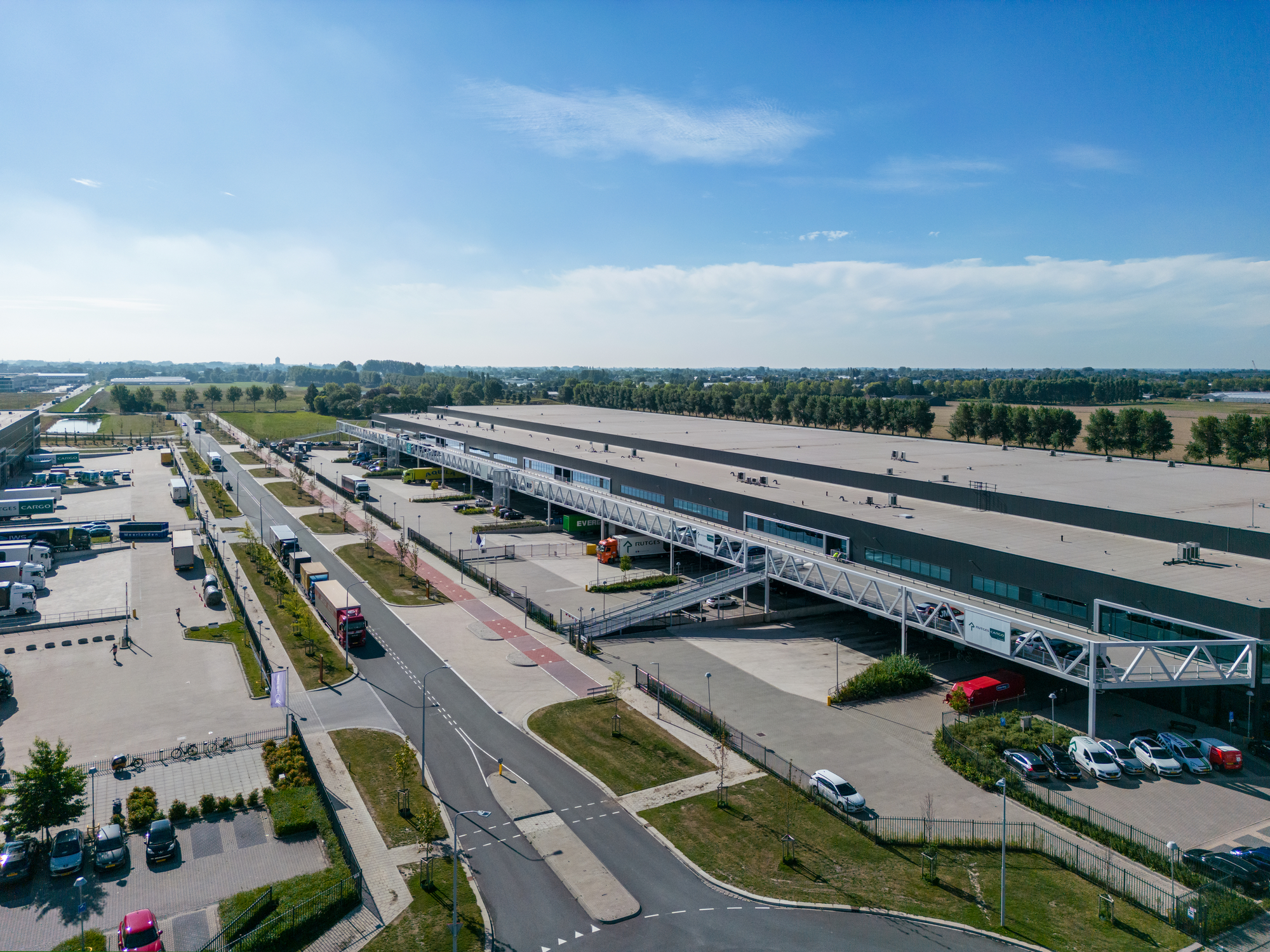
AIT Worldwide Logistics B.V. has signed a long-term lease for over 13,000 sq.m. of industrial space at AMS Cargo Center II, located at Changiweg 10-12 in Rozenburg.
-
Press Release | Intelligent Investment
Commercial real estate investment volume records strongest quarter ever
April 14, 2026

In the first quarter of 2026, €4.1 billion was invested in commercial real estate. This represents a 65% increase compared to last year.
-
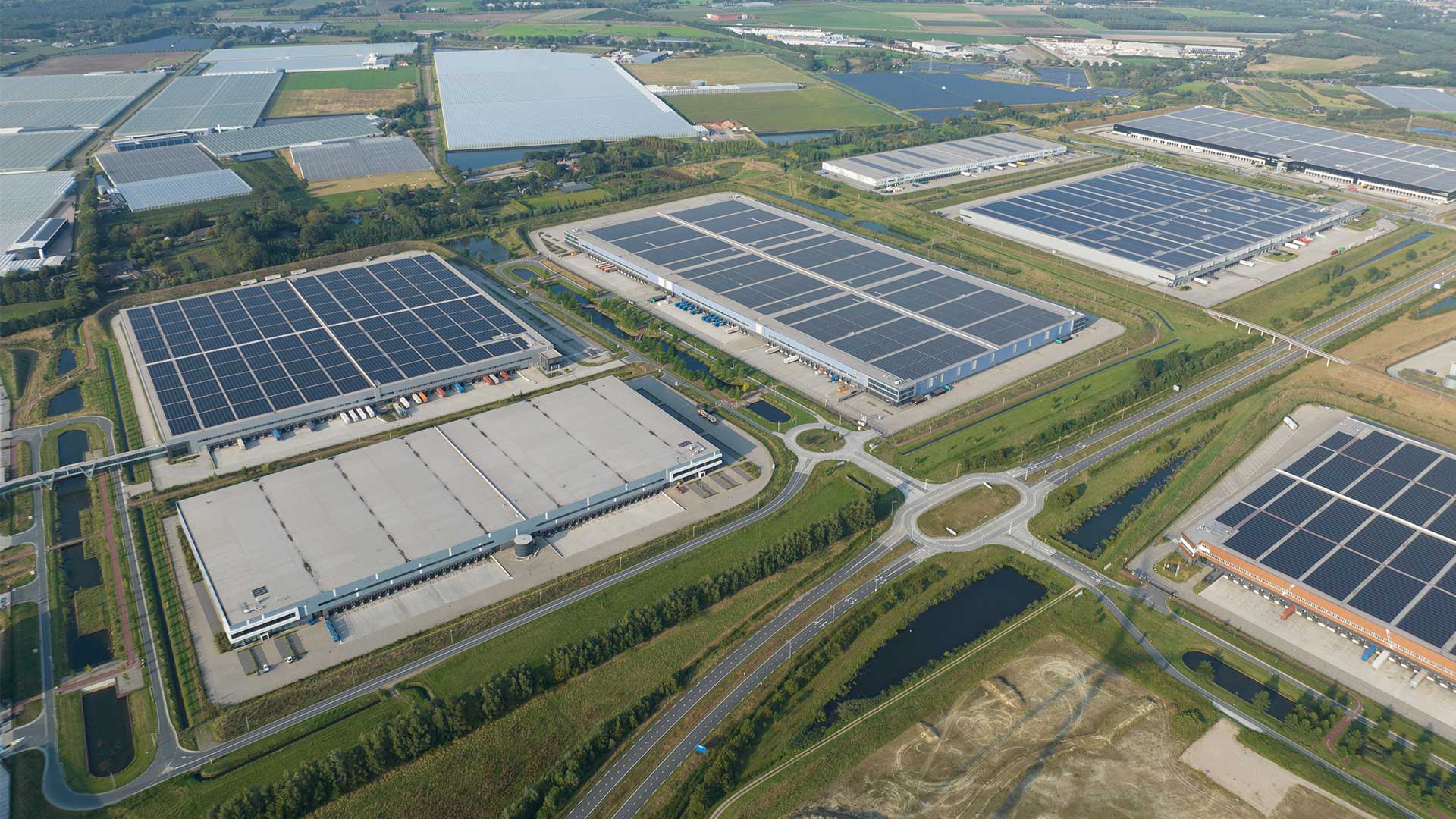
The logistics market is entering a new phase. Following a period of growth, which peaked during the Covid-19 pandemic, it is now giving way to consolidation.
-
Press Release | Intelligent Investment
Commercial real estate investment volume grows by 15% in 2025
January 22, 2026

Investment volume of €13 billion in commercial real estate mainly driven by domestic capital