Report
Pressure on warehouse upscaling in logistics real estate
March 26, 2026 11 Minute Read
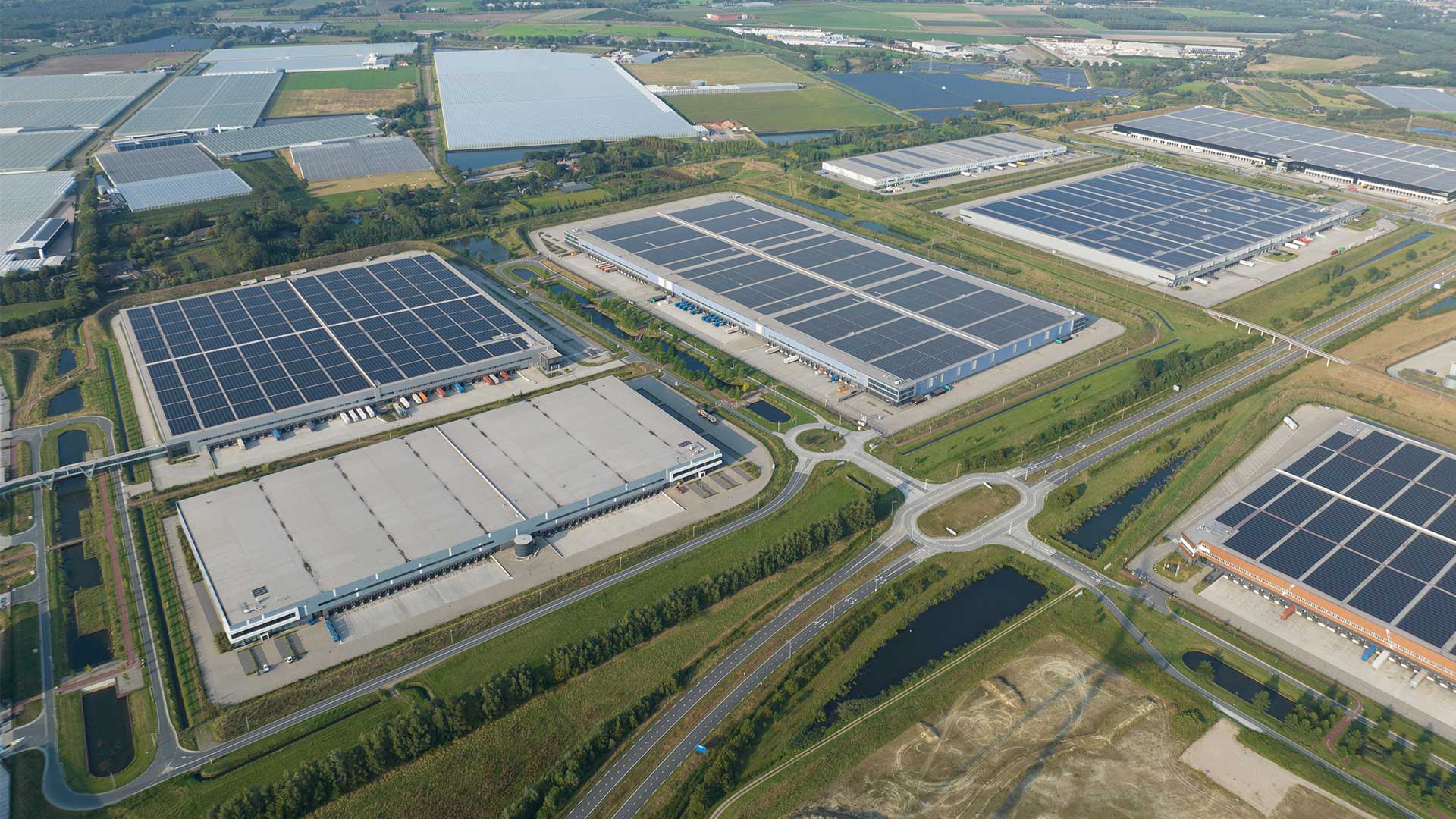
The logistics sector has operated with tight profit margins for many years. Companies primarily create value by organizing their logistics processes as efficiently as possible. This has become increasingly challenging due to recent and upcoming cost increases. These financial developments directly affect the very core of the sector’s operations. Labor and fuel costs have structurally increased, and on top of that, the introduction of the truck levy this year will add further costs, rising up to 9.8%. This pressure makes it necessary for logistics companies to optimize their operational chains more rapidly and design them more intelligently.
Upscaling and consolidation are increasingly becoming strategic necessities to remain competitive. This shift has direct implications for logistics real estate. First, it changes the location requirements for distribution centres, while the demand for scale, quality, and technological capability continues to rise, further reinforcing this transition.
Margins under pressure due to sharp cost increases
Declining expansion needs due to moderate economic growth
From expansion to consolidation
As shown in Figure 1 on page 4 of the full report, the market experienced strong growth and a period of expansion between 2017 and 2023, peaking during the COVID‑19 pandemic. That period of expansion has now shifted towards consolidation.
On the demand side, economic uncertainty, slower economic growth and trade tariffs have led to greater caution in the market. As a result, the annual increase in occupied floor space lagged behind. In 2024, net absorption reached approximately 600,000 m², and in 2025 roughly 1.3 million m², clearly below the 10-year average of about 2 million m².
Cautiously positive outlook
CBRE expects moderate growth in the coming years, in the range of 1.3 to 1.4 million m² (Figure 1 on page 4). E-commerce will remain a major long-term driver of demand. The e-commerce penetration rate is expected to grow to 22.1% by 2030, compared to 19.1% in 2026.At the same time, economic forecasts paint a cautiously optimistic picture. Geopolitical developments, such as the conflict in the Middle East, could still influence this outlook, but will depend strongly on the length and severity of it.
Labor shortages driving rapid wage increases
Expansion demand shows a cautious recovery compared with previous years, but within logistics chains the challenge of keeping costs under control has increased significantly.
Labor scarcity & aging workforce
Labor has become one of the fastest‑rising cost components. This is due in part to a tight and rapidly aging workforce. Approximately 31% of truck drivers are over the age of 55[1], which means outflow is expected to grow faster than inflow. This persistent scarcity continues to push wage growth upward: since 2022, annual collective labor agreement (CLA) wage growth in the transport & storage sector has been at least 4%, peaking at 8.3% in 2023.
Dependency increases spatial pressure
Labor migrants help temper wage costs. The sector depends heavily on this group, with estimates ranging from 350,000 to 400,000[2] workers. The 2026–2030 coalition agreement allows continued reliance on labor migrants, but imposes strict requirements for adequate housing. If concrete policy follows, sufficient housing will become a firm precondition for establishing new logistics operations. This spatial constraint makes new developments more complex and accelerates the search for alternatives, such as increasingly automated distribution centres.
Transport costs rise due to road charging and higher fuel prices
Labor costs are already increasing significantly. In addition, transport costs are rising sharply due to two major factors: the truck road‑charging scheme and rising energy prices.
Cost pressures in road transport due to the truck levy
From 1 July 2026, trucks weighing 3,500 kg or more will pay a road charge per kilometre driven. According to a cost estimate by Panteia, this leads to a cost increase of 9.8% for certain companies. Although the AanZET subsidy program supports the purchase of electric trucks and can mitigate part of the additional costs, the charge still forces companies to invest substantially. Examples include electrifying their vehicle fleet or strategically repositioning towards hubs and corridors to limit total kilometres driven.
Other transport modes offer only a partial alternative. Nevertheless, dependence on road transport remains high. The growing e‑commerce market relies heavily on dense, fine‑meshed distribution close to urban areas and therefore requires flexible road transport.
In addition, a shift towards other transport modalities requires substantial investments in infrastructure, such as budget allocation to address deferred maintenance in inland waterways. According to Rijkswaterstaat, significant additional investments are needed to bring critical infrastructure back to the required standard [3].
Rising fuel prices increase the pressure
Finally, geopolitical tensions further drive up costs. In recent years, a volatile geopolitical climate has already caused fuel prices to rise sharply. The conflict in the Middle East pushed diesel prices (excluding VAT) up by 27%[4] as of the end of March 2026 compared with the start of 2026. Prolonged conflict, and therefore prolonged elevated diesel prices, results in further increases in transport costs and additional pressure to reduce kilometres driven.
From expansion to acquisitions and consolidations
Upscaling due to cost pressures
Significant cost increases force logistics companies to critically reassess and reorganize their operations more efficiently; a dynamic that has characterized the logistics sector for decades. The most recent acceleration in scale and efficiency has largely been driven by globalization, which has expanded supply chains. This development increased the complexity of goods flows and inventory management and further reinforced the need for scale.
Outsourcing to logistics service providers
Many companies choose contract logistics after scaling up. In this model, logistics processes are outsourced to specialized logistics service providers, also known as third‑party logistics providers (3PLs). This trend has clearly been visible in the real estate market over the past five years: 3PLs accounted for approximately 43% of total logistics take‑up in the Netherlands.
An example is Hunkemöller, which is outsourcing its European logistics activities for the first time to logistics service provider GXO. With this step, Hunkemöller focuses on further automation and higher operational efficiency.
Cost reduction as top priority
Due to the combination of rising costs and increasing complexity, the pressure on the sector continues to grow. Recent research by Reuters and CargoWise[5] shows that 67% of surveyed supply-chain managers view cost reduction as their top priority. Digitization and automation through new technologies are the most important tools for reducing costs and making processes future‑proof.
Wave of acquisitions accelerates
As a result, the required investments in technology and efficiency place particular pressure on smaller transport companies and logistics service providers. These players often lack the scale or capital to keep pace, which makes them attractive acquisition targets for larger organizations.
These factors contribute to a consolidation phase in the logistics sector. For example, in 2025 DSV acquired logistics service provider DB Schenker. The French company Jacky Perrenot Group also expanded its position by acquiring Vos Logistics. This acquisition was also driven by the need to meet stricter environmental and decarbonization requirements.
This example demonstrates that sustainability is becoming an increasingly decisive driver of market consolidation, alongside scale advantages and cost savings. The truck levy that comes into effect on 1 July 2026 increases this pressure further and keeps the consolidation wave in motion.
Real estate as a means for cost reduction
The need for scale and automation increasingly influences the real estate choices of logistics users. As a result, the role of real estate within the logistics operation is shifting. An efficient location and an appropriate building structurally reduce operational pressure, meaning real estate increasingly functions as a strategic tool for cost savings.
Share of real estate costs in operations is declining
Due to increased supply and reduced expansion needs, the market is more balanced. This has stabilized rental levels for logistics real estate since 2024. Although strong rental growth between 2021 and 2023 temporarily increased the share of real estate costs in total operations, real estate remains a relatively small cost component. In fact, due to rapidly rising costs elsewhere in the logistics chain, its share is decreasing sharply.
In 2025, the share of rent and service charges typically ranged between 5% and 10% of total logistics costs. In previous years, this percentage was still above 10% for a significant proportion of users. The share of real estate costs is expected to shrink further in 2026.
Location and quality gaining importance
CBRE’s Logistics Occupier Survey, as well as interviews with logistics occupiers for this report, shows that logistics occupiers increasingly value that both the location and the building contribute to operational efficiency. For an optimally functioning logistics operation, both the selection of the location and the design of the building are crucial.
Building design increasingly requires attention to sustainability, sufficient power capacity, and a future‑proof and efficient layout. Together, these factors form the foundation for strong operational performance and long‑term structural cost savings, for example in labor or transport costs.
Derrek-Jan van Schip, Commercial Director ID Logistics: “Labor, energy, transport and rent are all putting simultaneous pressure on our operations. This has made us view logistics real estate differently at ID Logistics. For us, accommodation is no longer just a prerequisite, but a direct lever for efficiency and continuity.”
The term high‑quality logistics real estate is continuing to expand
Scale remains essential for more efficient operations
The demand for expansion in logistics real estate remains lower than during the Covid‑19 period, but due to sharp cost increases, expansion remains necessary for many companies. Since the end of the previous decade, logistics companies have increasingly opted for larger distribution centres. From 2019 onward this trend accelerated, resulting in a growing number of buildings with a volume of more than 500,000 cubic metres.
Logistics campuses
More recently, this scale expansion has continued in the form of logistics campuses and parks. These logistics parks consist of very large buildings that focus on a limited number of goods flows, primarily within contract logistics. Since 2025, the completion of DSV Logistics Park Moerdijk, with nearly 2.5 million cubic metres, has been the largest distribution centre by volume in the Benelux.
Profitability of upscaling
Although this trend toward larger facilities raises spatial planning concerns, scale offers clear advantages compared with smaller locations. First, larger distribution centres spread fixed costs over more volume, reducing cost per order and lowering building costs per cubic metre.
Automation investments generally only generate returns at larger sites, leaving smaller service providers at a disadvantage. These investments enhance the deployment of personnel and systems and strengthen operational alignment. As a result, companies can organize their transport and procurement more effectively. The outcome: less waste, higher productivity and structurally lower operational costs.
Multiple relocation drivers due to changing cost structures
Between 2015 and approximately 2023, strong expansion demand in the market led to a significant increase in large‑scale completions. During that period, the product supply was relatively standardised and primarily focused on storage capacity. Although expansion remains an important driver for location choice, around 80%[6] of relocations indicate that logistics companies are moving primarily to achieve quality improvements. Occupier requirements are increasing: criteria such as floor flatness (for automation), greenery, power capacity, daylight penetration and charging infrastructure are becoming more important.
Increase in consolidation strategies
In addition, a clear rise in consolidation strategies is visible in logistics take‑up. Rising costs, particularly in road transport, reinforce this trend. One large location offers scale benefits: space savings, higher efficiency and lower structural costs across the logistics chain. An example is Lekkerland, which consolidated three locations into one new distribution centre. Together with developer–investor Montea, the company received the Logistics Award for sustainability and innovation for this new facility.
Table 1: Core developments in logistics and the expected impact on location and building preferences
|
Core development in logistics operations |
Expected impact on location preference |
Expected impact on building preference |
|
Growing scarcity of labor |
Proximity to sufficient workforce | Flat floors compliant with DIN standards, sufficient daylight, clear height > 12 metres, floor load at least 5,000 kg/m² |
|
Higher ESG targets (CSRD & EPBD) |
Proximity to hubs or corridors | Higher BREEAM rating, greenery and daylight access in the building, energy‑efficient cooling systems, Net‑Zero buildings |
|
Electrification of transport (Truck levy) |
Proximity to hubs, corridors, or multimodal locations | Sufficient charging infrastructure, power capacity |
The increasing need for quality strengthens the necessity to redevelop outdated distribution centres
Additional requirements accelerate functional obsolescence
Standards are increasing
Quality requirements for logistics real estate have steadily increased over the past five decades. Clear heights have structurally risen to increase storage capacity per square metre, while advanced systems such as mezzanines, Automated Guided Vehicles and shuttles require floors with higher load‑bearing capacity.
Although a floor load of approximately 5,000 kg per m², a clear height of 12.2 metres and a dock ratio of 1 dock per 1,000 m² remain the norm, the definition of quality is broadening. Users now also take into account factors such as floor flatness, energy supply and sustainability. Daylight, solar panels and charging infrastructure all play an important role.
Functional obsolescence weighs on existing stock
The debate around logistics real estate often focuses on new development. However, the greatest challenge lies in the existing stock. Buildings constructed before 2010 increasingly fail to meet current requirements. Higher sustainability standards and the growing need for operational efficiency, including automation, accelerate functional obsolescence.
From quantitative to qualitative shortage
CBRE expects greater demand for logistics space due to continued international growth in e‑commerce and forecasts that the logistics stock in use will increase to 58.4 million m² in 2030. This represents an increase of 7 million m² compared to the beginning of this year.
At the same time, approximately half of the current logistics stock dates from after the Global Financial Crisis and largely meets today’s standard requirements. The other half originates from a period with very different quality standards. As a result, while more space becomes available on the market, a substantial share of it no longer meets today’s quality expectations.
Qualitative shortage in traditional hotspots
Due to recent supply growth after a period of exceptionally low vacancy (around 2%), the market has shifted from a quantitative to a qualitative shortage. Vacancy in high‑quality buildings at strong locations is therefore significantly lower.
In most established hotspots, such as Bleiswijk–Waddinxveen, Tilburg–Waalwijk, Eindhoven, Venlo–Venray and Rotterdam, the vacancy rate for modern stock generally lies between 0% and 3%. In older construction categories this percentage is much higher; for example, in Venlo–Venray, vacancy for the categories ‘before 1980’ and ‘1980–1999’ is 8.6% and 8.3% respectively.
Conclusion
Efficiency, scale and quality determine competitiveness
The logistics sector is moving into a phase in which scale, quality and efficiency determine competitive strength. Rising costs and labor shortages increase the demand for larger and better‑equipped distribution centres.
Although XXL logistics facilities are subject to public debate, a generic ban would hinder the development of the most modern, sustainable and efficient facilities. Therefore, the challenge does not lie in limiting size, but in developing future‑proof logistics in the right locations: large where possible, carefully integrated where necessary, with quality as the guiding principle.
Real estate as a lever for chain efficiency
Rising costs for labor, transport and sustainability force logistics users to take a more strategic view of accommodation. High‑quality real estate represents only a small share of total costs, but strongly influences efficiency and cost savings throughout the logistics chain.
Modern and well‑located distribution centres shorten driving distances, optimize the use of labor and support automation. As a result, logistics real estate is shifting from a cost item to a strategic instrument. Quality real estate thus functions as a lever for a robust, efficient and sustainable logistics chain in the long term.
Read the full viewpoint here
Related Insights
-
Press Release
Commercial real estate investment volumes continue to grow despite higher interest rates
October 14, 2026

A total of €3.4 billion was invested in Dutch commercial real estate during the third quarter of 2026.
-
Report | Intelligent Investment
Netherlands Real Estate Market Outlook Midyear Review 2026
September 1, 2026

In this repory, we set out our expectations regarding the key developments in the property investment market for the remainder of 2026.
-
Book | Intelligent Investment
European Real Estate Market Outlook Midyear Review 2026
August 6, 2026

How is European real estate performing at midyear 2026? CBRE's review updates forecasts across the economy, capital markets, living, logistics, and offices.
-

For the first time since 2023, more occupiers plan to expand their European logistics portfolio – a key finding from CBRE's survey of 109 decision-makers.
-
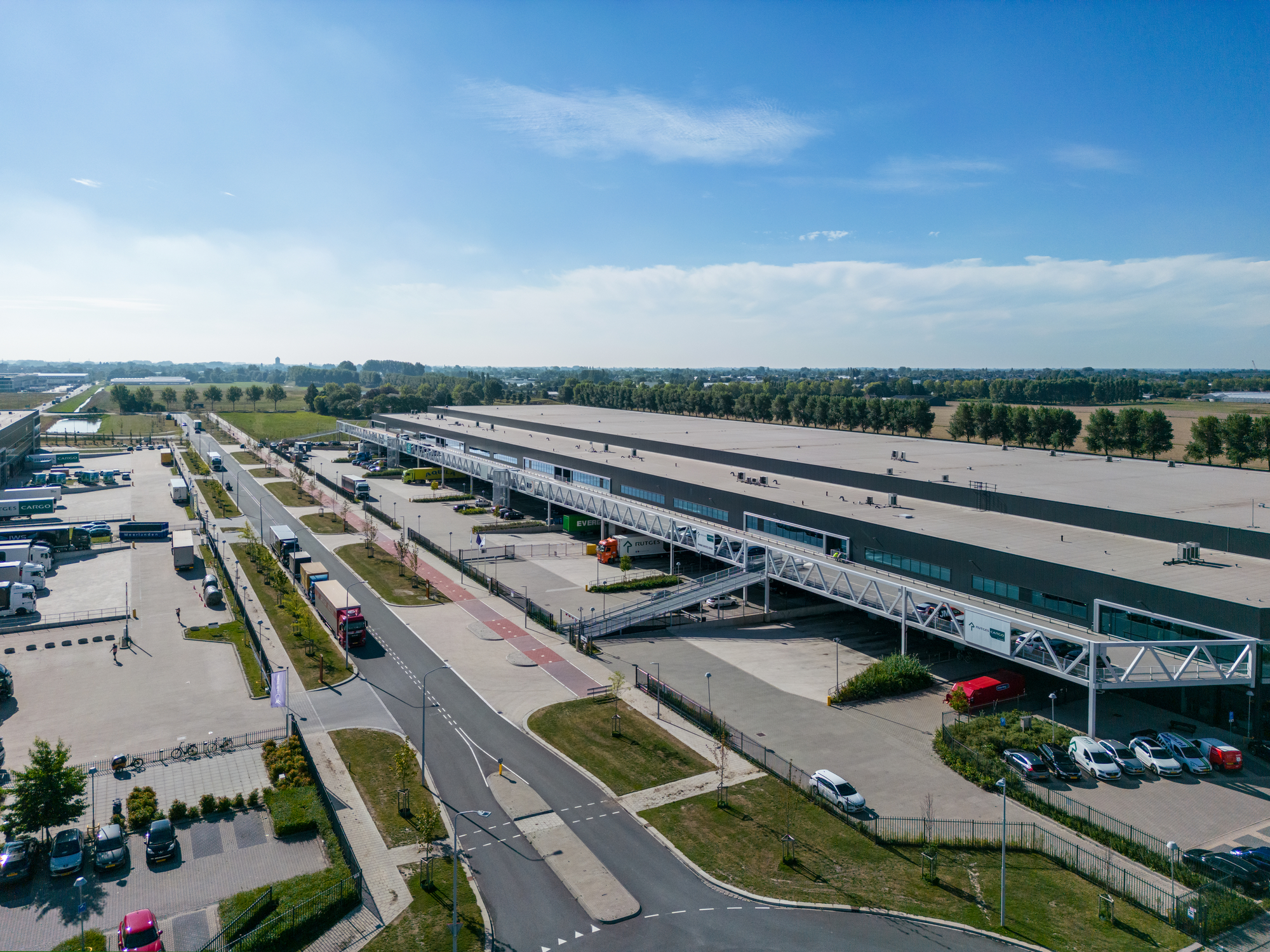
AIT Worldwide Logistics B.V. has signed a long-term lease for over 13,000 sq.m. of industrial space at AMS Cargo Center II, located at Changiweg 10-12 in Rozenburg.
-
Press Release | Intelligent Investment
Commercial real estate investment volume records strongest quarter ever
April 14, 2026

In the first quarter of 2026, €4.1 billion was invested in commercial real estate. This represents a 65% increase compared to last year.
-
The logistics market is entering a new phase. Following a period of growth, which peaked during the Covid-19 pandemic, it is now giving way to consolidation.
-
Press Release | Intelligent Investment
Commercial real estate investment volume grows by 15% in 2025
January 22, 2026

Investment volume of €13 billion in commercial real estate mainly driven by domestic capital