Evolving Workforces
Business Insights | Closing the Relationship Gap in Workplace Strategy
June 23, 2026 3 Minute Read

Connect With Us
The case for the office is fundamentally relational, but most companies continue to optimize their workplace strategies around indicators like attendance rates, space utilization and policy compliance. Meanwhile, the in-office relationships that determine an organization’s health are unmeasured and increasingly unmanaged.
This is the relationship gap, which is widened by hybrid work. While this gap isn’t yet visible in the metrics most organizations track, the data to identify it already exists. And closing it requires designing a workplace strategy aligned with why employees come into the office in the first place.
Why Employees Come to the Office—and What’s Missing?
Hybrid work remains a desirable model for most employees, though they also recognize its trade-offs. The reason? Many organizations lack the infrastructure to meet employee needs across both environments.
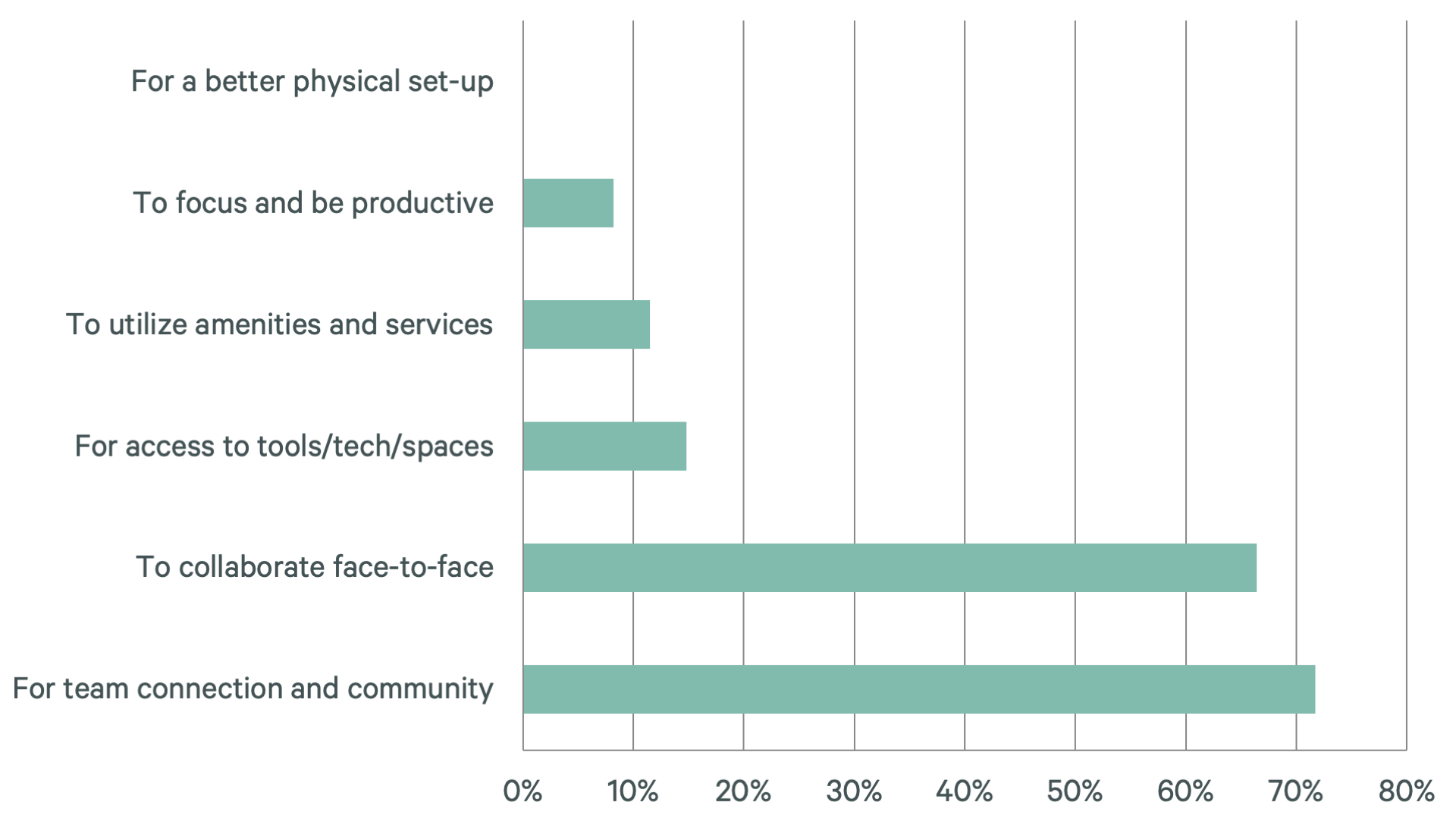
According to CBRE's Workplace Strategy Employee Survey, nearly 60% of respondents say they would prefer to work mostly or fully at the office. And it’s clear why: almost three quarters of employees say team connection and community are their primary reasons for being onsite, and 66% cite face-to-face collaboration.
These findings are in line with employees’ changing attitudes toward remote work. Among survey respondents, roughly one-third cite social isolation as a top challenge of remote work, while a similar share cite diminished connection to colleagues and managers.
While being in the office meets employee appetite for in-person connection, the relationships they’re forming have become increasingly narrow. They primarily collaborate within their immediate teams. Cross-team relationship building—the kind that drives knowledge transfer and organizational resilience—is not occurring organically.
Figure 1: Post-Pandemic Work Location Preference
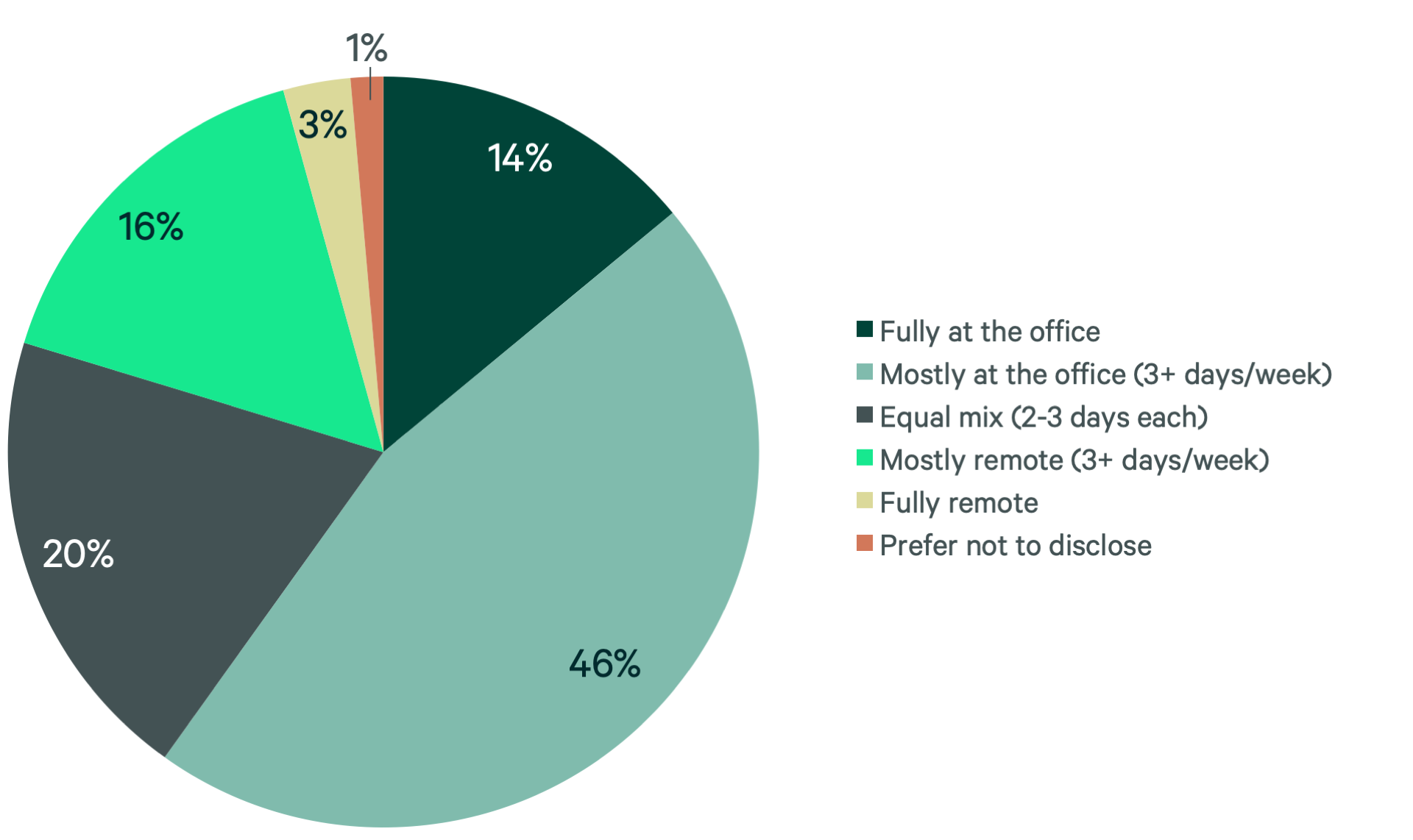
Figure 2: Primary Reasons Employees Come to the Office
Relationships Are More Than an Amenity
Organizations often treat workplace relationships as a dimension of company culture. They’re considered important but difficult to quantify and prioritize. However, the data suggests relationships—and particularly those that span across teams—are more than a cultural amenity.
Cross-team relationships are the primary way organizations share knowledge, generate new ideas and adapt to periods of disruption. When the ability to build those relationships erodes, the impacts are not immediately apparent in productivity scores or satisfaction ratings. They accumulate over time, reducing innovation, making employees feel disconnected from the broader organization, and limiting career mobility.
All of these impacts stem from a lack of visibility, but career advancement is the most notable. In CBRE’s survey, nearly a third of employees identify limited career development opportunities as a top challenge of remote work. That’s because employees’ career growth depends on being known by colleagues and leaders outside their immediate team.
The Blind Spot in Leadership
Leaders see hybrid work as highly collaborative because, for them, it is. They report spending 60% of their time working with others and 40% working alone, according to CBRE’s survey. In contrast, individual contributors spend most of their time working alone (71%), whether remote or in-office.
Organizational health is often assessed through leadership’s own experience, which differs fundamentally from that of those they lead. As a result, the employees most affected by the relationship gap are the least visible to those who can close it.
This blind spot is exacerbated by how leaders assess their own effectiveness. Seventy percent of leaders in CBRE’s survey say building team culture is their single greatest challenge in managing hybrid or remote teams. Yet 60% rate themselves as effective or very effective at managing those same teams.
These disparities cause leaders to overlook what matters most to employees when it comes to a fulfilling workplace experience.
Closing the Relationship Gap
Organizations that are closing the relationship gap approach workplace strategy differently.
They begin with structured listening, using employee data to understand how people work, whom they interact with and where social disconnection exists by role, team and work setting. This approach produces more accurate information for decision-making than leadership intuition or utilization metrics.
With that information, they make deliberate choices about space programming and policy design, recognizing that:
- Cross-team encounters don’t happen automatically in a hybrid environment.
- Informal mentorship doesn’t occur without proximity and time.
- Visibility for individual contributors doesn’t come from scheduled collaboration time alone.
Each of these outcomes requires organizations to design spaces that encourage unplanned interaction. This can be achieved through coordinated schedules and cross-team programming.
Above all, data shows that attendance mandates don’t solve this problem. They can increase the frequency of in-office presence, but presence without design doesn’t provide the connection that employees desire.
The organizations getting this right are asking what employees truly need when they come to the office, then building environments that deliver it.
A New Dynamic
The office has always been a catalyst for building relationships. But in a hybrid world, the relationships it once supported passively now require active investment. Chance meetings, cross-department exposure and informal visibility are no longer byproducts of being in the office—they’re design challenges.
Organizations that rely on attendance and utilization to measure workplace success are overlooking a critical metric. Performance depends on whether employees are forging the connections that make the office a place they want to be.
Contact

Related Insights
-
Article | Adaptive Spaces
Data at the Heart of Hybrid: Leveraging AI & Tech to Optimize the Workplace
March 24, 2026

The path to smarter workplace strategy runs through data quality.
-
Article | Adaptive Spaces
Beyond the Desk: How to Design Offices That Draw Employees In
February 18, 2026
Discover how collaboration, amenities and activity-based design are redefining the office as a place employees choose to be.
-
Article | Adaptive Spaces
The Hybrid Reality: Why the Office Is More Important Than Ever
January 20, 2026

Transforming any workplace into a dynamic hub for collaboration and connection is a challenge. Explore how some organizations are optimizing space.
Related Services
- Transform Business Outcomes
Consulting
Gain comprehensive guidance on insightful, executable real estate strategies for both investors and occupiers.
- Plan, Lease & Occupy
Workplace Strategy
Build resilience, attract and retain talent, and foster connection and collaboration in your workplace.