Intelligent Investment
The Vanity Economy: How Beauty & Specialty Fitness Are Influencing Retail Demand
August 10, 2026 2 Minute Read
Executive Summary
- Consumer spending on cosmetics, beauty services and specialty fitness increased to $132 billion in 2025 from $86 billion in 2020, reflecting a structural shift in preferences toward appearance and wellness that is redefining retail occupier demand.
- Cosmetics has become a model of omnichannel success, with brick-and-mortar stores accounting for 74% of the category's sales and online shopping driving repurchases.
- Beauty services and boutique fitness tenants are largely insulated from cannibalization by e-commerce. As a result, they account for a growing share of retail leasing activity, with more than 700 boutique fitness openings totaling over 1.5 million sq. ft. planned in the near term.
- GLP-1 weight-loss treatments are an unexpected demand driver for medical aesthetics services and health-focused fitness concepts, positioning the vanity economy for continued growth well into the next decade.
The Vanity Economy Will Drive Near-Term Occupier Activity
The omnipresence of camera phones and the meteoric growth of influencer marketing have heightened society's emphasis on appearance. This has altered consumer behavior and laid the groundwork for the "vanity economy," which spans cosmetics, beauty services and specialty fitness retailers.
Consumer spending across these three categories increased to about $132 billion in 2025 from $86 billion in 2020, while their share of overall retail spending increased to 2.4% from 1.4%, according to Euromonitor and Kentley Insights. These categories also accounted for 37.5% of total leased retail space as of Q2 2026, according to CoStar. The vanity economy’s share of leased space is expected to grow further as spending on these categories increases.
Cosmetics Epitomize Omnichannel Success
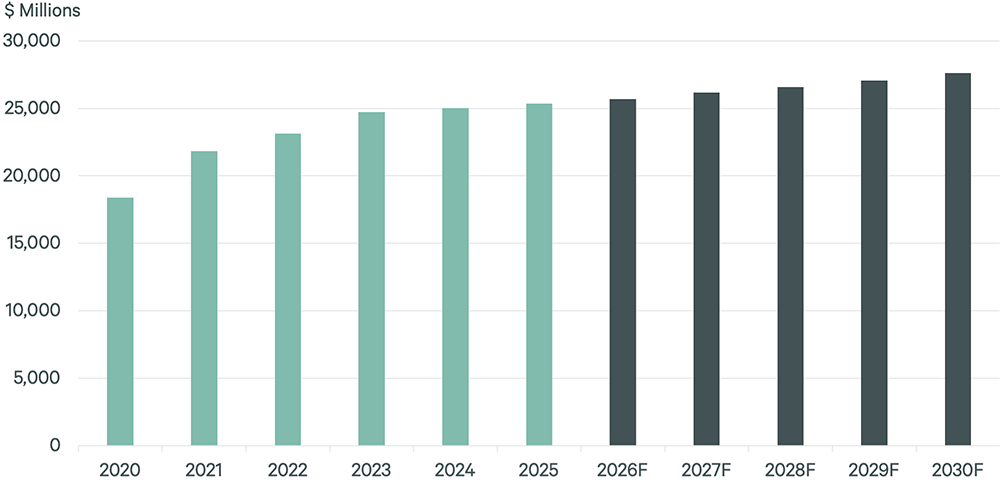
The beauty boom is a global phenomenon, bolstered by omnichannel strategies that cater to evolving consumer preferences. The beauty market is valued at $450 billion globally and is forecast to grow 5% annually by 2030, according to McKinsey. Cosmetics, as a subset of beauty, has seen growing popularity driven by social media and celebrity beauty partnerships. This growth helped increase U.S. consumer spending on cosmetics by 38% in the past five years to $25.4 billion in 2025 (Figure 1).
Physical retail has been the primary channel for the cosmetics category's growth. Brick-and-mortar stores accounted for approximately 74% of cosmetics sales, compared with 65% of apparel sales and roughly 50% of electronics sales as of Q2 2026, according to McKinsey and the U.S. Census Bureau. Consumers prefer physical stores to discover and purchase new beauty products but often shop online to replenish products they already use. These habits emphasize the need for robust omnichannel fulfillment strategies.
Figure 1: U.S. Cosmetics Market Size & Forecast
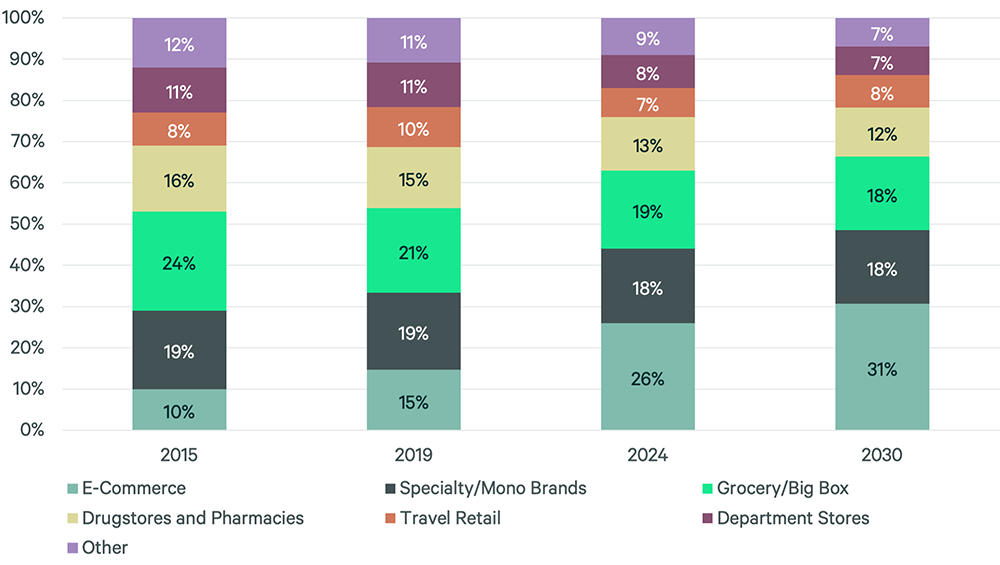
Ulta Beauty and Sephora ("Mono Brands" in Figure 2) dominate the brick-and-mortar cosmetics market. Due in part to the beauty boom, Ulta's net revenue rose by 68% to $12.4 billion in 2025 from $7.4 billion in 2019, according to public filings. The company capitalized on this momentum by opening 60 new locations in 2025. It also plans to open another 140 locations in strip centers and off-mall formats across the U.S. by 2027. Meanwhile, Sephora's U.S. sales increased to more than $9.0 billion in 2024 from $5.9 billion in 2019, according to estimates from the National Retail Federation.
Figure 2: Beauty Sales by Channel
The growing popularity of Korean beauty (K-beauty) products, spurred by social media exposure, is also boosting cosmetics sales. U.S. sales for K-beauty products exceeded $2 billion in 2025, prompting Ulta, Sephora, Costco and others to expand their in-store offerings to meet growing demand. Additionally, K-beauty brands are actively seeking physical retail space and driving incremental leasing demand. Olive Young, South Korea’s largest beauty and wellness retailer, opened its first standalone U.S. location earlier this year in Los Angeles County and plans to open five more locations in California before expanding to New York City.
Beauty Services Are Driving Service Leasing
In May 2026, U.S. consumers spent more than twice as much on services than they did on goods, according to the U.S. Census Bureau. Retail real estate has already adapted to this shift, with service tenants accounting for more than 50% of total retail leasing activity in 2025, up from 40% in 2015, according to CoStar.
The beauty services category, which includes beauty salons, nail salons and barbershops, is poised to grow by 10% annually over the next five years, according to Kentley Insights. Beauty and nail salons led the category in 2025, with consumers spending $48 billion and $12.9 billion on these services, respectively. These tenants, in addition to other beauty services operators like lash technicians, hair removal experts and medical estheticians, frequently lease in-line spaces at open-air and strip centers, helping maintain optimal occupancy levels and driving repeat foot traffic.
The increased use of GLP-1 weight-loss treatments is a tailwind for the beauty services category. The percentage of U.S. adults that use these treatments grew to approximately 15% in 2025 from less than 6% in 2024, according to Bernstein. This adoption rate will likely grow with greater availability of oral treatments and as seniors have access to GLP-1s through Medicare. GLP-1s will be a boon to beauty service providers: Medical aesthetics spas are key providers of these treatments, and GLP-1 users’ shifting beauty needs will increase demand for other aesthetic procedures.
Boutique Fitness Concepts Ramp Up Expansion
Beauty services are not the only category benefiting from GLP-1 adoption in the U.S. The fitness sector is especially well-positioned to capitalize on consumers’ increasingly health-conscious lifestyles. With $45.7 billion spent on the fitness category in 2025 and a strong ability to generate repeat foot traffic, these tenants add value to the centers they occupy and are particularly effective at absorbing second-generation big-box space. Boutique fitness concepts have become especially popular in recent years, driving plans for more than 700 new U.S. store openings totaling over 1.5 million sq. ft. in 2026.
Figure 3: Boutique Fitness Expansion
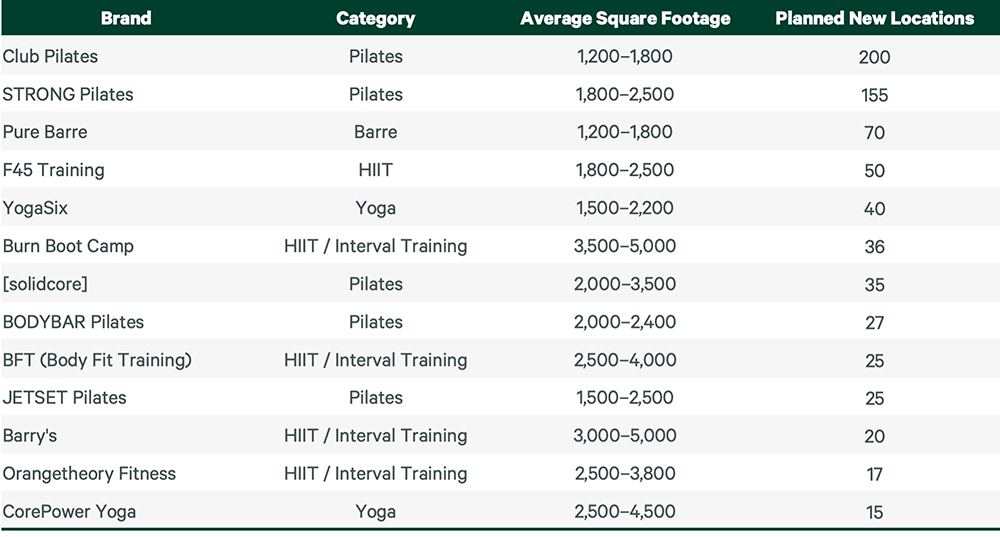
Pilates concepts are leading this expansion activity, with Club Pilates and STRONG Pilates planning to open more than 350 locations combined. Interval training concepts follow Pilates in expansion activity, with F45 Training, Burn Boot Camp and Barry’s expected to open more than 100 locations. Yoga concepts like YogaSix and CorePower Yoga round out the most active boutique fitness retailers with more than 50 new stores slated to open. These retailers provide a steady source of demand for both in-line and reformatted big-box spaces, while attracting an affluent consumer base that benefits other tenants.
Downtown Availability and Suburban Demand Create Distinct Opportunities
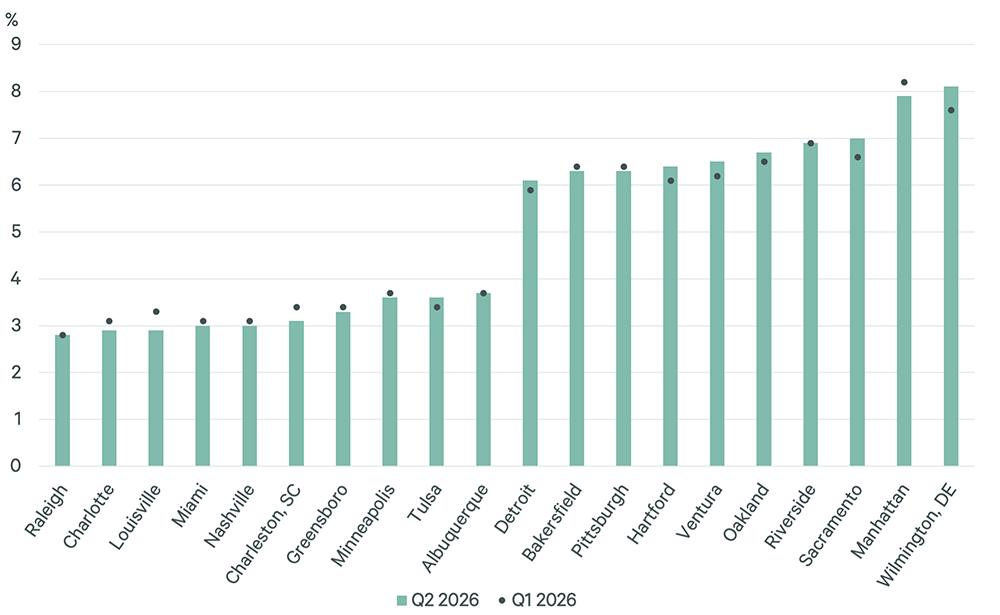
The availability of retail space is limited with little prospect for increased supply in the near term. Retail construction completions totaled nearly 5 million sq. ft. in Q1 2026, the lowest quarterly total in CBRE's historical dataset. Meanwhile, downtown and suburban retail has diverged, according to CBRE's 2026 U.S. Real Estate Outlook Midyear Review. Downtown availability has continued to rise steadily since 2022, while demand for open-air retail is absorbing available supply in the suburbs.
Beauty services retailers will find ample opportunities to reach their target consumers in downtown markets like Manhattan and Los Angeles, especially as the latter emerges as a premier testing ground for new retail concepts. Retail property owners in these markets may find these occupiers an attractive option for their available spaces. However, these tenants’ preference for strip and open-air centers will likely drive leasing activity in Sun Belt markets like Miami, Charleston and Nashville, where the majority of these centers are being built.
Figure 4: U.S. Retail Availability Rates, Highest & Lowest
What This Means for Investors and Occupiers
Beauty and wellness retailers represent a compelling opportunity for shopping center owners. These tenants generate outsized dwell time, resist e-commerce displacement and foster a complementary retail ecosystem.
For example, more than 37% of beauty retailer visits exceed 30 minutes, compared with an average 20-to-30-minute dwell time across all retail, according to Placer.ai. Beauty retailers’ extended dwell time reflects the experiential nature of the format. Moreover, when cosmetics, beauty services and boutique fitness tenants are clustered together, customers can satisfy multiple vanity-related needs in a single trip, increasing visit frequency and generating foot traffic.
Service tenants now represent a larger share of total retail leasing activity than tenants selling goods, and societal shifts toward health and personal care—accelerated by GLP-1 treatments—suggest that share will continue to grow.
For other retailers, vanity economy tenants are reliable traffic generators and locating stores next to them can increase visibility and sales. Moreover, their expansion patterns serve as a bellwether for broader consumer demand. Beauty services and boutique fitness target markets indicate healthy discretionary spending and favorable demographics. Occupiers should treat this category as a strategic signal when evaluating their own expansion targets.
Barring any further slowdown in discretionary spending, all signs point to impressive near-term growth for the vanity economy.