Download Transcript
Spencer Levy
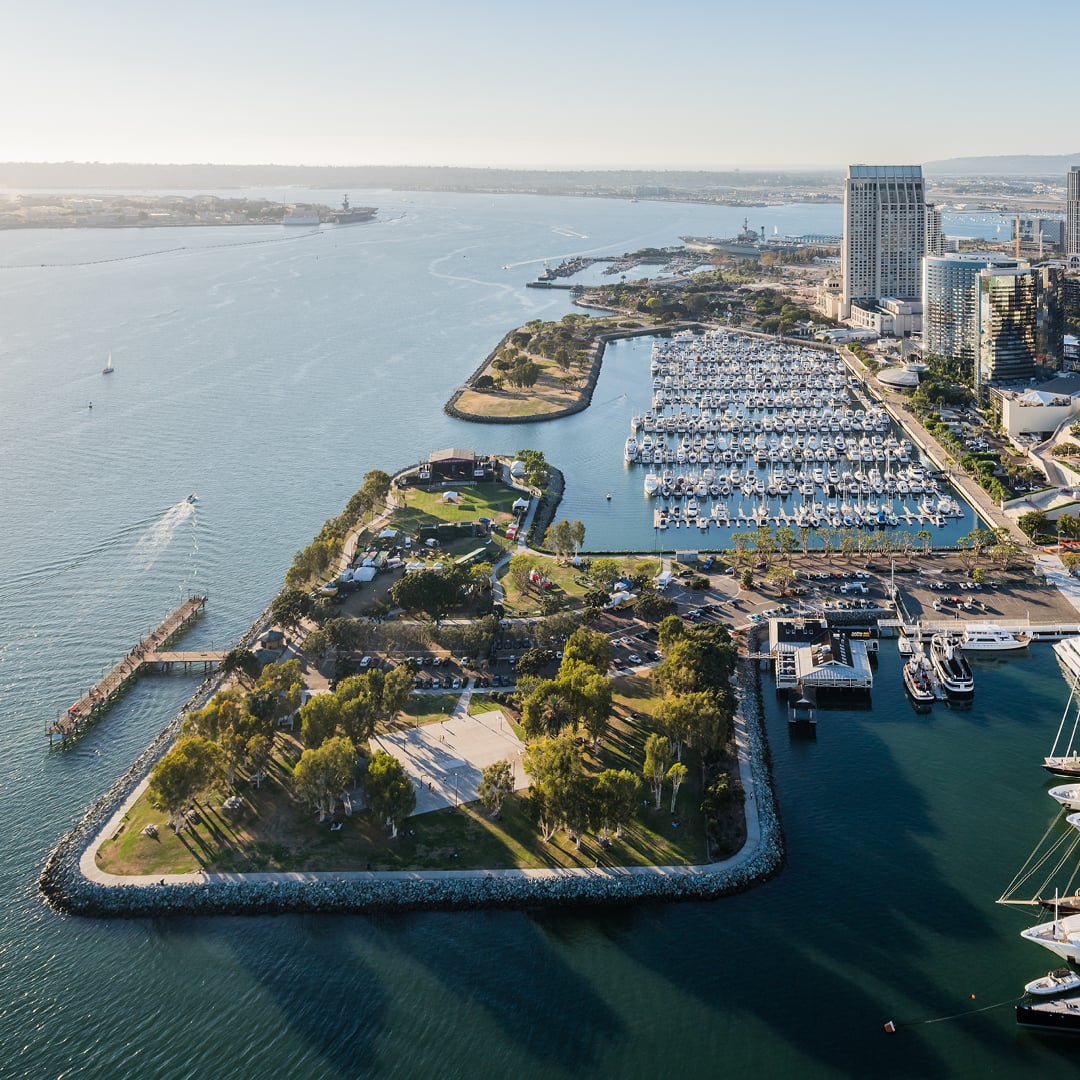
LBA Realty's San Diego office sits just north of the city, a couple of dozen furlongs from the famed Del Mar racetrack, which is one of the largest horse racing venues in the western United States. It's a prime location for a firm that runs with international scale and entrepreneurial pace. On this episode, a panel of leaders from the area who cover a wide range of industries and assets, from class-A office to last-mile industrial, and are seeing the action picking up speed.
John Garrigan
Sellers believe that it's going to improve. Financing still remains strong at the moment, but decision makers on the tenant side, they're now making decisions.
Spencer Levy
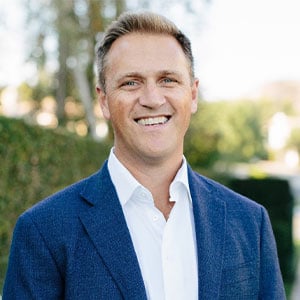
That's John Garrigan, a partner who is based out of that picturesque office on the outskirts of San Diego. He oversees the firm's national industrial business, LBA Logistics, which has properties in all the major industrial markets across the United States.
Eric Brown
It's really market by market, and we do really try and take a careful and thoughtful approach in evaluating every investment that way.
Spencer Levy
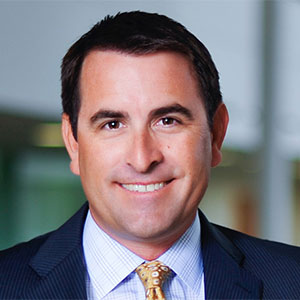
And that's Eric Brown, a partner who oversees the office portfolio, LBA Properties. Eric made the short drive from LBA's Orange County corporate headquarters to shed some light on strategies with office space across the western region, including Texas and the sun belt. And to help tie it all together, we have Matt Carlson, a veteran San Diego broker who now serves as a CBRE Executive Vice President and Co-Head of CBRE's National Office Partners, which in 2025, transacted more than 500 properties and sales, totaling nearly $11 billion.
Matt Carlson
The market's strong. It's still bifurcated, where we see a number of the assets are still distressed assets that are moving through the system. But every month we see more and more quality assets.
Spencer Levy
Coming up: shining some rays on all that activity around sunny San Diego and beyond, with a big time spotlight on LBA and the wider landscape of office and industrial. I'm Spencer Levy and that's right now on The Weekly Take.
Spencer Levy
Welcome to The Weekly Take and I am so happy to be here in Del Mar and if you want to see the nicest place on the planet, this place is on that list. Starting with our very own Matt Carlson, thanks for coming out, man. Thank you, Spence. And then two of our great friends and clients, John Garrigan, Head of Acquisitions for LBA Logistics. John, great seeing you.
John Garrigan
Thanks, Spencer. Good to see you.
Spencer Levy
And then we have Eric Brown, who is a principal at LBA Properties. Eric, thanks for coming out.
Eric Brown
Thank you, Spencer.
Spencer Levy
Well, since you're outnumbered here, John, we're going to start with office.
John Garrigan
Love it.
Spencer Levy
You know, as Meat Loaf said, two out of three ain't bad. And I commend you, and I commend because you were an early mover going back into office. Tell us about that.
Eric Brown
Yeah, we've been having a lot of fun on the office side. Going back five years ago, it was: office has seen its challenges. But as we've come out of the post-COVID era, we're seeing demand returning for the right product, and we really have been thoughtful going back. Really, when you look at the strategy today to attract the right tenants, you have to have the right amenity base, and you really got to lean into quality. You hear about it all the time that the flight to quality is very real, and that's really been a focus of ours. And we're excited about what we've been able to acquire.
Spencer Levy
So, Matt, let's follow up on that. How is the office market today?
Matt Carlson
The market's strong, it's still bifurcated, where we see a number of the assets are still distressed assets that are moving through the system. But every month, we see more and more quality assets in the prime competitive set or in just below a prime competitive set, like a strong class-A asset that are trading with really good fundamentals at decent returns that feels a lot more normal than what we've seen in the last couple of years.
Spencer Levy
I want to define a word. I know it's a squishy word, but you say quality office, right location. What does that really mean?
Matt Carlson
It really comes down to where does a tenant want to be, right? It's all driven by the tenants. And so if it's an asset that's highly amenitized, that's easy to commute to, whether that means close to rail or an easy drive with good parking, has all the bells and whistles of where a tenant wants to be – then that is a high quality office building. And institutional capital is following those really good fundamentals.
Spencer Levy
John, we'll turn now to industrial, but before we go, I'd like to pull the lens out for just a minute. Give me just a sense of the LBA mothership, LBA logistics. Just give me a big picture of LBA.
John Garrigan
Sure. We do both industrial and office. Eric and I are partners and friends. We have offices all throughout the United States as well as in London, England. We own and manage about 115 million square feet today of industrial and we have about five million square feet that we own and manage of office. We partner in join ventures that are strategic and we really are a close end fund operator primarily. We're a private REIT, We're privately owned and headquartered out of Orange County, California.
Spencer Levy
Why'd you expand into Europe?
John Garrigan
We saw a really nice opportunity to go across the pond, if you will, and what's interesting is a lot of it had to do with relationships. Some of our customers articulated that they'd like to see us there. Some of our limited partners, our investors, said they'd liked to see us there, and we assessed it as an opportunity to grow and provide greater services. So England was the stepping off point. The fortunate piece is they speak the same language. Your firm in particular has been tremendous to us. As we've made the migration and we're now looking at other countries like Germany and it's all about opportunity.
Spencer Levy
I'm pretty bullish on Germany right now. I'm also bullish on southern Europe, so it's kind of bifurcated. I'm bullish on Germany because I know they're going to be spending a lot of money on defense spending and other manufacturing. But I'm bullish on southern Europe because they were really hurting for about 10, 15 years. And now they're underbuilt. They're underdeveloped. So there may be opportunity on both ends of the spectrum. Is that a fair way to put it?
John Garrigan
That's exactly our thesis. And when you look at Germany, we all know that their automotive industry is having some difficulties at the moment. Could be a great segue with this new investment and their target to have, I think, 3.5% of GDP spent on defense by the year 2029. The investments are real. It's happening. And I think the skilled labor and some of these manufacturing plants that might have been automotive may even transition to aerospace and defense
Spencer Levy
Spending on manufacturing. Big spending creates demand, and in fact, it's all a virtuous cycle. And so I do believe that the automobile manufacturing and defense spending is going to be a virtuous cycle of same skill sets, same automation, same types of people that are going to make it a big success.
John Garrigan
Yeah, and I agree with you completely and I think it's going to be a big driver of demand, not just on the manufacturing side, which I 100% again am in agreement on, but the suppliers for warehouse and distribution for all of the ancillary support should also drive demand.
Spencer Levy
So let's shift back to office now. What's LBA looking to buy today? What would be an optimal office building? Is it 80% leased, one block off main and main? Or is it a brand new building fully amenitized? Tell me what your thinking is?
Eric Brown
Our history as office investors has been on the value-added side or opportunistic side. So we really seek opportunities where we can come in and use our skill sets to enhance what may be a building with great bones that we can tweak and add amenities and renovate a lobby and really create a unique environment. We've had a lot of success with that over the years. So, I think we're really looking for that location that has walkability, a building with great bones. We're not afraid to take on vacancy risk.
Spencer Levy
Now, was it an older building or is it a building that's been built in the last 10 years?
Eric Brown
It's interesting, Spencer, you look across the markets and in a market like L.A. that has an older building stock, you can get away with maybe buying an older building and investing into that building and then really creating that tier-one asset. You go to a market, like Silicon Valley – where nearly 30% of the office stock has been built in the last dozen years – you have to be a little bit more careful in buying older products. So it's really market by market. And we really try and take a careful and thoughtful approach in evaluating every investment.
Spencer Levy
But you're basically taking a building that requires a significant amount or at least some capex to not just refresh the lobby, but you may put additional amenities in there.
Eric Brown
Absolutely. There's an example of a building we acquired down here in San Diego. We like acquiring on both the office and industrial side, corporate assets. You know, corporations invest heavily into buildings that they're building for themselves. Usually they have extra power, maybe extra clear height, full-floor loading capabilities. And we were able to find an opportunity, again, working through Matt down here, in San Diego for a building that had a lot of those. Create bones where we can come in, add some amenities, multi-tenant the building and create a really unique mousetrap in a market that is lacking a building of that quality.
Spencer Levy
And Matt, what's your take on the fundamentals of the business right now?
Matt Carlson
The fundamentals are strong where they're strong. And I would say every major market around the country has at least one strong sub-market. And that's the sub-market where the top businesses need to be, where the talent has to go, where the building stock is newer, where the amenities are good, where the commute's easy. But the amount of cities that are starting to see multiple sub markets be strong is why you're seeing that 3% improvement that you just talked about. The prime assets have been performing well for six or seven quarters now. And just in the last two quarters, we've started to see non-prime assets also. Perform well. And so we've seen eight quarters of positive absorption in office. And our strongest leasing quarter was the one that we just finished in Q1 of this year. So this is an accelerating trend. This is not a couple of decent quarters have we turned a corner. We are well on our way to a recovery.
Spencer Levy
So John, when we take a look at the logistics market, it's fair to say, and I'm here with nothing but love, but I'm here with facts, southern California was soft in logistics, particularly the Inland Empire, until recently. How are you seeing the market right now?
John Garrigan
We’ve had a lot of volatility in the debt markets and the tariffs. We obviously now have this thing going on in the Middle East, which is more than a conflict at the moment. So there's been a lot of volatility and disruption. The west coast has suffered a little bit. Certainly, when you look at the ports, L.A.-Long Beach is still far and away is number one when you combine those. I know the east coast ports like to separate them for the tally. Leasing is improving all throughout southern California. Where there's really a gap is in the capital market side. There remains a capital markets gridlock because of the bid-ask gap between what a willing seller and a willing buyer are willing to transact at. Sellers believe that it's going to improve. Financing still remains strong at the moment, but decision makers on the tenant side, they're now making decisions. So it's real-time improving in southern California from a leasing velocity and leasing demand perspective.
Spencer Levy
But let's talk about the capital markets for just a second here. Are you able to get positive leverage today?
John Garrigan
On the industrial side, there are many places in the United States where you can yet. To positive leverage day one with a great basis and quality assets. What has remained a positive are the annual increases that we're still achieving in Southern California, which are typically three to three and a half percent, sometimes slightly higher, but certainly no less than three. I think everyone realized you need to keep up with inflation.
Spencer Levy
You know, it's interesting. We were all psyched when the Inland Empire was getting 20%, 30% annual rent increases. And then we actually saw some declines for a few years. But now we're back at 3%. And I used a funny line today. I said, the future is the new normal. And the new normal looks just like the old normal. The old normal was 3% rent growth. And we're kind of seeing that now in industrial. We're kind seeing that in office. And so it's funny. And again, I think I'm funny. There's two there's two ends of the spectrum. One end of the spectrum is this time is different, which is 20% rent growth. The other is reversion to the mean. I think what we're seeing now is just a normalization of the office and industrial market. Am I taking it too far?
Eric Brown
Well, I think that's fair. I think from an office perspective, specifically, it's a bit of a, I guess, a K-shaped recovery, like people are suggesting we're seeing in the economy. For the assets that are well-positioned that have what the amenities and qualities that tenants are looking for, there's absolutely demand there. But there remains. A substantial amount of product where there just isn't a market for it today. And that product remains challenged and will be for the foreseeable future.
Spencer Levy
So, Matt, we talked about industrial kind of stretching today to try to get to that positive leverage maybe in year two, year three for certain assets. But one of the positives about office today is kind of like the positive in retail. You can get positive leverage. Tell us about that.
Matt Carlson
That's right, Spence. That's also why we're seeing so many institutional investors coming back into office, because there is a spread. And now that there's liquidity back in the market from the debt side, it's really allowed more institutional investors to come back into that market. And so whether it is stabilized, best-in-class prime deal, where you can get really aggressive financing and a tight spread, or whether it's a value-add or opportunistic deal that a year ago would have been seven, eight hundred over. All of those metrics allow for positive leverage.
Spencer Levy
And that deal today is what, 300, 400 over?
Matt Carlson
A value add deal is three to 400 over.
Spencer Levy
That's a huge move for our listeners. 300, 400 basis points makes the difference in doing the deal or not.
Matt Carlson
Makes a difference between a market that could only sell best of the best and totally distressed and now there's a middle. Now there's value-add and opportunistic deals.
John Garrigan
And I might add, Spencer, what we continue to hear, and I say this with humility, the banks in particular want to do more business with fewer sponsors. And we're fortunate in that regard that we're able to get competitive bidding and competitive pricing.
Spencer Levy
I think that's a really good segue into relationships and how relationships make the difference over the long term and maybe one of the secret sauces of LBA.
John Garrigan
We pride ourselves on our relationships and doing what we say we're going to do. And I am a proud CBRE alum, although it was only for a couple of years, 20 some-odd years ago. But the relationships that we have with your firm here in the United States and now across the pond in the United Kingdom are really tremendous. And it's all about people at the end of the day. It sounds cliche, but it is not about the bricks and the mortar and the concrete tilt panel as much as it is the relationships with the people that we transact with and our customers who we want to have in our buildings and retain as our customers.
Matt Carlson
We're sitting here because of relationships. We're sitting here because we're all friends. It makes deals happen, and it makes the real estate world go round.
Spencer Levy
So let's go back to the capital markets question, but now let's turn it to office here. Assuming you're selling a value-add office building, 80% leased, need some capex, are you able to get positive leverage today?
Matt Carlson
Yes.
Spencer Levy
OK, so tell me about that. Tell me, what's the spread? Part of the reason why I like retail for the last several years is that unlike multifamily, unlike industrial, you could get positive leveraged. Now, I see that same positive leverage story here.
Matt Carlson
With office, really, especially value add office or distressed office, you're really looking at return on cost metric rather than a cap rate. And then really what's going to drive your value is the amount of time it's going to take you to get leased up and the capital that's going required to get there. Two years ago, there would have been absolutely no capital for a deal like that from debt funds from banks and today on value-add type product, you can get I mean, how deep was our bid list, right? I mean I know we ran a slightly different process, but it was deep, right, and you're talking about an asset that at the time was 50% leased, and there was plenty of debt for that kind of a deal.
Spencer Levy
And when you say plenty of debt, just describe for our listeners, are these banks, are they–
Matt Carlson
Debt funds,
Spencer Levy
And the cost of debt was below the going, well I guess it was no cap rate per se, because it was price per pound.
Matt Carlson
But those debt funds are providing good news capital, and at times, we've seen 65% LTV with that good news. Those spreads totally depend on where you are in the country, but a year and a half ago, you could have seen spreads on that kind of a debt fund, 700, 800 over. Now they're more like high threes to 400 over, and with some instances, under three if the building is high enough quality.
Spencer Levy
John, let's turn back to you for a moment. The industrial warehouse distribution space is a big space. It includes last-mile. It includes IOS. And I would say IOS, industrial outdoor storage, may be the hottest subsector of industrial today. So I recognize that you have a global strategy, and that's a big question. Focus in on asset type of which type of industrial you find attractive today, and which is less attractive.
John Garrigan
And I would give a caveat, we're really a continental US, and we're currently in England looking to expand in Europe. So yes, we are international, but I don't know that I would quite say global yet, but we're expanding. So I'll come back to you and say what we do, we really work every end of the supply chain from the port all the way to the middle America. So we touch IOS, small-bay, midsize, food logistics, all the way to bulk. We're fortunate that we've developed vertical multi-story industrial.
Spencer Levy
Where do you do that?
John Garrigan
Maspeth, Queens, New York, which you know well. So we're really trying to service our customers from end to end as best we possibly can. And obviously with a bent on ensuring we're gonna get the best returns for our investors. Today, you mentioned IOS, it is hot. It's warming up. It was cool, it's back. We own a fair amount of it. I think shallow-bay is really important as we sit here today. I'm not talking about incubator multi-tenant. It's really the 10 to 50,000 square foot suites that have a mix of grade level and dock high loading and the credit tends to be a little bit better than you find in the business park incubator, multi-tentant size suites. And then I'd go on to say that from the manufacturing perspective, we're seeing a resurgence here, obviously, in the United States. The smile states from really Phoenix, Texas, through the Southeast and all the way up into Columbus, Ohio, there's a real resurgence. And we're trying to capture some of that, not just on the advanced and light manufacturing side, but also the suppliers that support them.
Spencer Levy
Well, John, you know, I know Queens actually better than you think I know, Queens. I grew up in Queens.
John Garrigan
No, I knew you knew it. That's why I threw that.
Spencer Levy
And my grandmother lived there until she passed away a few years ago. So next time you do a property tour, I'm taking you to Ben's Best Deli on Queens Boulevard, where you will get a corned beef sandwich, which will blow your mind.
John Garrigan
I'm ready.
Spencer Levy
All right. You see that? You buy industrial in Queens, you get a good corned beef sandwich.
John Garrigan
Is that on rye with spicy mustard? I'm in. A little coleslaw on top. Okay, let's go.
Spencer Levy
No, that's hardcore, cole slaw. That's the only way I eat it. That is the only way I ate it. So in office, you talked about corporate parks. We just did an episode up in San Francisco for a place called Bishop Ranch. And Bishop Ranch, very interesting case study. We had Alex Maron on the show, the CEO, who I think is a candidate, by the way, for the world's most interesting man. This guy literally took a sailboat across the Atlantic. Crazy stuff. Nothing to do with today's show, but in any event, what they did was this complex at its peak had 10 million square feet of office. And now they've knocked it down to about four, and they're putting multifamily and towns and new schools and retail. Is that the future of corporate office? Or do you still think most of it's going to stay office?
Eric Brown
You know, it's funny, I've met Alex, I don't know him. Many years ago, gosh, it was maybe a dozen years or so ago, he's a friend of Phil Belling, who's our CEO, and he came down and toured a project that we owned in Orange County while he was working on Bishop Ranch because our project happened to have these large 50 and even 100,000 foot floor plates, which is similar, as I understand it, to what he was dealing with at Bishop Ranch. Really nice man, I know he has an incredible reputation. As far as what we're gonna see going forward in office, I think what we've seen in Orange County and maybe to a degree in the Silicon Valley where you have these suburban environments that have surface-parked campuses, today, in most cases, the highest and best use, if you can get it entitled, is residential development. And so–like in Orange County, as an example, I think we'll see 5% to 7% of the total office inventory go away over the next three or four years, which is an interesting story across some of these suburban markets where, again, I think not only is supply not being delivered nor will it be delivered at any scale any time in the near future, we're seeing supply go away. I don't necessarily see that.
Spencer Levy
But I think it's fair to say even if we don't see a demolition story, we're definitely seeing a low, if not no supply story, which reminds me quite a bit of where retail went. Because retail–part of the reason why retail has really recovered is there's been no new supply. You simply can't replace it for the cost of buying an existing–
Eric Brown
Well, in our more recent investments in our Realty Fund 8 on the office side, we're buying in some cases at 20% or 30% of replacement costs on really high quality assets, which is pretty compelling. So that's definitely a part of the story. On the supply side, I read not long ago, since CBRE has been tracking supply data, 2025 is the first year in history where office supply actually went down nationally.
Matt Carlson
In the middle of last year, we demoed or removed from the stock more assets than delivered. And so the overall stock actually reduced. And now we're going to see it continue to accelerate.
Eric Brown
So certainly, maybe markets like New York or Dallas, there is some speculative construction. But those are definitely more the exception than the rule.
Spencer Levy
Well, what's happening in Dallas is interesting because we have uptown Dallas, which is doing very well, but we have downtown Dallas, which is not. And we've seen a lot of companies actually move even further out into Frisco by the Star, the Dallas Cowboys practice facility. But that trend of what we call CBD-adjacent, right where we're sitting right now in San We're not in the CBD, we're outside. And you see the same thing in Charlotte. You see the same in Boston. You can go right down the list. Even in San Francisco, the financial district is one thing, but the CBD-adjacent, Soma, Jackson Square, whole other market. How do you see the change? Do you people moving more to these CBD-adjacent places?
Matt Carlson
The CBD-adjacent locations have everything that people want. It's easier to live there or live close by. It's easy to get the things that you want. They're easier parked. And usually, there's newer office stock in those locations because they're a little bit more infill, a little bit more mixed-use. So all those markets that you just talked about have a really strong CB-adjacent submarket that is leading the charge. Right, Del Mar where we're sitting right now. Del Mar Heights is right on the other side of the hill, right? We're sitting here right next to the beach, but Del Mar Heights is right there because people want to drive from Del Mar and head over to that office market. They want to dry from Rancho Santa Fe and go to that office market. They get a nice class-A product. They've got walkable amenities, taking surface streets to get there. Those sub markets are always going to do well.
Spencer Levy
John, you were talking about the ports here in LA, and infrastructure is enormous. In fact, we can both agree that infrastructure matters. And I think that the infrastructure is at both the port, digging out of the port but also road and rail. And so, how much of your warehouse strategy is focused on the infrastructure that's there or expected to be there?
John Garrigan
It's really–and the one thing I'd add that you didn't say is power. I think it's becoming--that in particular is more important to our customers than ever before. And as these customers and tenants and operators have electrification of fleets and their systems become more automated, I think that power is going to be even more important. Certainly when we're selecting sites, places that we want to develop or acquire properties, we're conscious of the supply chain access, meaning intermodals, rail, trucking. bridges, quality of the infrastructure, and it really comes down to where do our customers want to be located, – whether it's a manufacturing facility, light distribution or a bulk facility – location matters at the end of the day, as we all know as real estate professionals, it's location, location, location.
Spencer Levy
How has technological changes that are today or that are anticipated in any way changing your investment philosophy?
John Garrigan
I'll go back to power, we're certainly trying to find assets that are power advantaged. It wasn't that long ago we had a corporate opportunity to acquire an asset in the Meadowlands in New Jersey and I think the building had 200 amps and the joke that I made was I think my wife's flat iron uses more power than that. We want those buildings that have at least what the market needs today and the preference is to have what they need tomorrow and at least access to get there from here. In terms of technology, I can't predict where we're headed. I think our daily lives are changing dramatically with artificial intelligence. We're using it, all of us, every day in our work to be more productive. And I'm certain that the supply chain experts and consultants are figuring out a way to become more efficient as a result of it as well.
Spencer Levy
So, San Diego. We're sitting here in San Diego right now. And we talked a little bit about being CBD-adjacent, but I want to talk about two other things. I want to talk about what I call a durable demand driver, which is the military, and I'm proud to be sitting next to my friend John, who is a ex-Marine, ex-helicopter pilot with Brunson Howard, our colleague downtown, so thank you for your service.
John Garrigan
Thank you. Brunson’s a good friend of mine.
Spencer Levy
And for all that you've done. But I think there's a few ways that San Diego, and I say this with love, punches below its weight. I think it could be better. I think it could be better if it leveraged more off the military with Blue Tech. I think you could do better if it leveraged more off of its proximity to TJ because of the manufacturing cross-border. So Matt, you're here in the market. Any comments on San Diego – what it does right, what it could do differently?
Matt Carlson
San Diego is a really unique place. We're geographically constrained, right? We have the border, the international border. We've got the mountains to the east. We've the beautiful Pacific right out here to the west and then military base Camp Pendleton to the north, right. We are hemmed in. So land is incredibly valuable and incredibly important anywhere across the board within the county. But we're also a very diversified economy, as you said. The defense contractors that are here, the ones that are stalwarts that have been here a long time and the ones who are new to the industry, we're seeing a ton of activity with them right now. Life science is in a little bit of a slower period than what we've seen over the last couple of years, but we're sitting right here, three miles from Torrey Pines, which is one of the healthiest life science markets anywhere in the country, anywhere in world, with world-class medicine and therapeutics being made right up the road. And then we've also got tech here. What's happened since COVID, where people said I want to go live somewhere and then I'll figure out what my work is going to be. Big tech has moved here in a big way because they know that the population is here and the talent is here. So we're a pretty unique microcosm that's hemmed in and we have all those different business drivers to drive a successful economy.
John Garrigan
COVID was a big catalyst for our town here in San Diego. My entire professional career, I've resided in San Diego. It's clearly a place that many people want to live. Our climate is tremendous. But there's been a transformation. You think about the quality of our universities, number one – between UCSD and San Diego State and other smaller feeder schools that are here. Phenomenal education in science and STEM related schools, as well as business. But my point about COVID, it's pretty interesting how many people migrated here, relocated here during COVID, when they realized that they could operate from wherever they wanted to be in the universe with technology, and many of them have stayed. And as a result, we've had a lot of these technology firms migrate into San Diego. For many years, the biggest employers were the Navy, the Marine Corps, and Qualcomm, along with SDG&E. I believe they still are. We're a major biotech cluster, world-class. Yes, it's having a moment, but it's going to recover for sure. It's resilient. But it's really interesting the technology companies that want to be here, many of whom actually migrated from the Bay Area.
Matt Carlson
When you add AI to life science, it could supercharge life science. The amount of illnesses that are out there that do not have a cure, right? The ability to synthesize data with AI within a lab, the ability to have robots within lab space being able to run multiple experiments that one person couldn't end up doing – I think we're going to see a ton of innovation coming out of the synthesis between technology and life science. And I think we're gonna see the same thing when you go back to the defense contractors. I mean, we're already seeing it. We are seeing AI impact, autonomous defense type products here that have already taken space in the last year that are growing rapidly.
Spencer Levy
Future outlook. It's a big question, so we can take it any direction you want. But let's start with you, John. Next five years for logistics.
John Garrigan
I think the positive outlook and the durability of the space and the necessity, because of manufacturing and the resurgence, the nearshoring and the on-shoring that's occurred, I think is only going to continue. It's not happening as much here as we would like in southern California, but the research and development is absolutely happening in places like LA, Orange County and San Diego, but states like Arizona, Texas and the southeast in particular are really vibrant. There was a lot of population growth there. The fundamentals and the incentives by the municipalities has been fantastic and the cost of living is tremendous. So I think the United States logistics market is only going to continue to improve over the next several years.
Spencer Levy
Eric, the future of the office market. Right?
Eric Brown
You drew an analogy to the retail market some years ago. I think people started to write off retail as an investable asset because of e-commerce and all of a sudden some retail went away, nobody's building it and here we are. That market has really rebounded pretty remarkably. I do think there are some similarities on the office side. I mean, we're clearly entering a period where new supply at scale is not going to be delivered in most of our markets in the near future. Supply is going away. And I think we've also reestablished that people and companies are successful when they're working together. There was so much noise years ago that everyone was gonna work from their kitchen table the rest of their lives. That's just not the way it's playing out. And we're also seeing it's increasingly important for corporations to deliver a high quality solution to their employees and they're willing to pay for it. It's really our job to make sure we're finding the right opportunities and we're gonna continue investing. And look in the near term, we're able to acquire assets so far below replacement costs we think their return metrics are really attractive.
Spencer Levy
We’ll give my friend and colleague, Matt, the final word. What's your outlook for office over the next several years?
Matt Carlson
You know, I think Eric had a great answer to the future of the office market and making the parallel to retail. We're incredibly bullish about office because there is not a lot of new construction and the new construction that is happening right now has already got tenants. Those buildings are already filled. That's why they're able to build them. And that's why they're able to get them financed. But tenants are coming back into the office. Tenants are expanding. Tenants are worried about what the environment is that they're going to offer up to their employees to keep them there and to keep a place where they're gonna innovate and they're to grow. And getting away from that over the last five years has really demonstrated that the right growth industries need to be in the office. And so we're believers in that. We're believers in the fact that the supply is gonna stay constrained, believers in that demand is increasing. And there's a lot of opportunities to buy opportunistic and value-add real estate and improve it. There's a lotta product out there with really good bones that just need capital and they need a new owner and a reset.
Spencer Levy
So on behalf of The Weekly Take, what a great conversation today here in Del Mar and I can't wait to go outside because it is that nice out there. And I am here with my good friend, John Garrigan, Head of Acquisitions from LBA Logistics. Great job, John.
John Garrigan
Thanks again, Spencor.
Spencer Levy
You bet. And then we have Eric Brown, principal at LBA Properties from the OC coming down for the show. Eric, great seeing you. Thanks for coming out.
Eric Brown
Thanks, Spencer. It was a lot of fun.
Spencer Levy
And my old friend, Matt Carlson. And Matt is Executive Vice President, Co-Head of U.S. Office Capital Markets, CBRE. Terrific job, Matt.
Matt Carlson
Thanks, Spencer.
Spencer Levy
For more on industrial, office and other sectors across the commercial spectrum, check out our website, CBRE.com/TheWeeklyTake. You'll find info about episodes you might have missed and what's coming up. That includes a special episode on a particularly important office destination, New York's World Trade Center, and its ongoing revival with legendary developer Larry Silverstein and our friend Mary Ann Tighe, a legend in her own right. And that's also available, of course, on Apple podcasts, Spotify, YouTube, and all the major platforms. So check it out and stay tuned. Thanks for joining us and we'll see you again next week. I'm Spencer Levy. Be smart. Be safe. Be well.

.jpg)