Download Transcript
Spencer Levy
About a dozen years ago, our upcoming guest followed an unexpected opportunity to start a new business founded in workforce housing. The company would endure the ups and downs of the next decade – a dramatic marketplace, including the pandemic of course – as it grew into a diversified and highly regarded platform. On this episode, we look at the landscape through the eyes of this veteran investor, to learn from the instincts and experience that built a multi-billion dollar, multifamily enterprise.
Bob Hart
Right now the sponsor is not in the driver's seat. The equity is in the driver's seat. And so there's a cautious optimism out there.
Spencer Levy
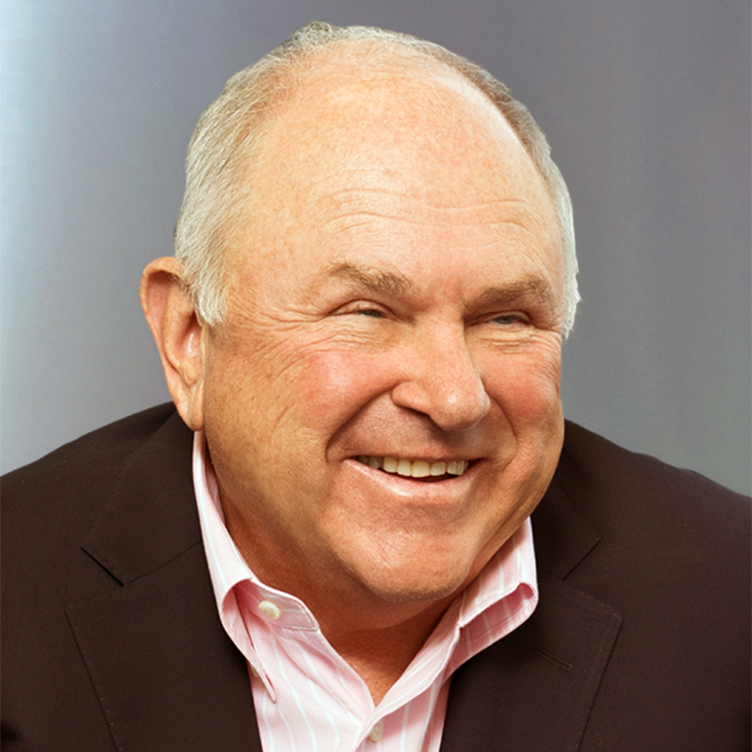
That's Bob Hart, the President and CEO of TruAmerica, a company based in Los Angeles since its inception in 2013. Today, TruAmerica has a national portfolio with $17 billion of assets under management and is one of the top multifamily owners in the United States. Bob's not only a housing leader, but also a podcast host in his own right with a program called Building Better Communities. Coming up: insights for building better communities, building an entrepreneurial career, and of course, building long-term asset performance in the multifamily space. I'm Spencer Levy and that's right now on The Weekly Take.
Spencer Levy
Welcome to The Weekly Take, and we are delighted to have one of the largest multifamily owners in the United States, Bob Hart of TruAmerica. Bob, thanks for joining the show.
Bob Hart
Spencer, thank you for having me.
Spencer Levy
So Bob, most people don't know TruAmerica. Well, actually your residents do. But tell our audience what TruAmerica does.
Bob Hart
Let me start out by saying that I've been involved in multifamily personally for over four decades. So it's been the embodiment of my career and TruAmerica, when I formed it in June of ‘13 was what I hoped would be the culmination of that. And the company we started, which was dedicated to the growth, rehabilitation and management of workforce housing around the United States. We started the company with Guardian Life Insurance Company, who's our partner today with 10 million of working capital and 10 people. Today we stand at $17 billion of assets and growing, about 65,000 units under management across 40 MSAs in 17 states. So we're very proud of our growth and what we've established as a company across the multifamily platform.
Spencer Levy
Well, that's a tremendous story, Bob. And I know you spent time prior to this at Kennedy Wilson. You were at Heitman. But you decided to put out your own shingle. What motivated you to do that?
Bob Hart
Well, at the time, Spencer, I really wasn't planning a transition. I had been enjoying a career that I had developed at Kennedy Wilson, starting 26 years ago when I joined them as an acquisitions officer, having followed the downturn period of the early nineties and continued doing workouts for seven years up until 2000. I started out as an acquisition officer there and built a multifamily platform within the New York Stock Exchange company, Kennedy Wilson. We built Kennedy Wilson Multifamily, a subsidiary that I'm proud to say still exists today. And the team that I put in place there over the years is still there running it. When I made the turn toward TruAmerica, it sort of happened in an organic, unexpected way. I had gotten to know Guardian Life Insurance. They enjoyed working with me and my group, and they wanted to build a platform which I could lead for them. And those conversations over a period of years led to the formation of TruAmerica. So I give them a lot of credit for putting that thought into me that I could basically do the same thing but with my own platform with them.
Spencer Levy
When you change jobs, whether it's changing from an identical or a similar organization, or to do something as entrepreneurial as you did yourself, Bob, the single biggest limiting factor is your tolerance for risk. And how did you overcome that tolerance for risk?
Bob Hart
I've always been a risk taker. I started investing for my own account in my 20s before I could even spell real estate. I started out very humbly, bought a duplex in LA as a 28-year-old and started investing a lot. So I've had a high tolerance for risks, but I've also done it in a measured way without using synthetic financing, like preferred and mezz, always putting in a lot of equity, always making sure I had the right amount of debt, not too much. And as a result of that, we've never had to give anything back to a bank. Even in any downturn, we've always worked through it. So as you know, real estate is a risky business. Once it was described to me as a pig that sucks and devours cash. So you have to be prepared. And if you're going to take a risk, you've got to be on the other end of that risk.
Spencer Levy
So let's talk about multifamily now. Let's start with the big picture.
Bob Hart
Right.
Spencer Levy
Five, six years ago, we were in an incredibly low interest rate environment. The demand side was better. The supply side wasn't quite as big as it was today. So it's an academic way of saying the market has changed not necessarily for the better in the last five or six years. How do you see it?
Bob Hart
Well, five or six years ago, we were caught in this – I don't even have the right word to describe it. It was a phenomena created by the onset of COVID with the U.S. Treasury pumping a lot of money into the system. And this created a larger than life demand for apartments and for suburban apartments throughout the United States. And as a result, it created very, very high rent growth, coupled with extremely low interest rates that we hadn't seen at least in my time in real estate. And we were sort of all in Disneyland. Someone had to pinch you to say, hey, stop. This isn't real. This isn't going to continue. And what we're living with now is the reality, the smoothing out of that big, big curve that was stimulated by cheap money and access demand for apartments.
Spencer Levy
And so how would you describe today's market overall?
Bob Hart
I would use the word it's much more sober. I think growth has to catch up again because we're still absorbing supply, although we have household formation in the United States. I think this may be the first year of neutral or declining household formulation. And I think that growth is flat in most markets, although there are green shoots to merging again, but. We're not talking about the COVID growth of, you know, double digits.
Spencer Levy
We're gonna get into asset types in just a moment. Any markets in particular you find to be most attractive? Would love to hear your answer.
Bob Hart
Well, the Midwest has been the big sleeper. While the coasts were growing like mad over the last five or six years, the Midwest just maintained a steady, progressive growth that wasn't hit with oversupply. And that's why markets like Columbus, Ohio and Kansas City, Missouri, or other spots in Indiana and other places in the Midwest have all done steadily well. The coastal markets have been on everybody's radar because it's where the brains of the country tend to go. And if you follow the phenomenal growth of young people, that's why New York City is so strong. It has the highest influx of young people. I think it leads the nation in dating apps and all these things. And it's created this phenomenal apartment growth in New York metro. So we've concentrated on markets now that are outside the Sunbelt, like New Jersey. We just bought a very large deal in Somerset, NJ, which we're very happy with. And I think those markets surrounding New York City are gonna continue to do very well for the foreseeable future.
Spencer Levy
Well I think New York City, if I look at my statistics, is the number one growth market for market rate product rent. And I think San Francisco might be number two. And these are markets where it's very difficult to bring in new supply, but they are bringing in a new supply of highly educated individuals who will pay market rents. Is that a fair way to put it?
Bob Hart
It's a fair way to put it. I mean, San Francisco, New York, Austin, these are markets where–and Austin's a different phenomena because it's had so much supply, but it's had young talent and young population growth, and I think that's why we're seeing what we're seeing. The Bay Area is a little different, Spencer, in that it's a much smaller place than New York or Los Angeles. When it's gone down, it's gone down quickly. When it’s come back, it’s come back quickly and a lot of the smart money was buying there two or three years ago. So we're seeing tremendous comeback in and around the San Francisco Bay area.
Spencer Levy
Let's talk now about the various asset types that you focus on. You do market rate. You do affordable. You build. You do structured finance. Of these areas, which looks most attractive today?
Bob Hart
Well, let me start with–we stay focused on our core business. So we believe that workforce housing is still a very good business, and that is the centerpiece of what we do from an acquisition, management, rehabilitation, repositioning standpoint. We have diversified our offering in that we also buy core real estate for some separate accounts we have in select markets, and core has been very good of late. And then we also pivoted toward–we were never a developer until recently. In the last five years, we started to diversify into development, starting with built-for-rent and now doing market rate. And because we're now in the affordable housing business in a bigger way, we're gonna be doing more and more affordable housing. Affordable is probably the stickiest category in the country. It's where the greatest demand is. And we're doing a lot of infill projects in and around California, north and south. We like that business a lot. And we made a big commitment to the LIHTC business three years ago. And we've acquired about 5,500 units across 50-plus buildings and we're gonna build on that business and build that infrastructure.
Spencer Levy
So for our listeners, LIHTC stands for low-income housing tax credits. That is the capital-A affordable for people in the business. I suppose–
Bob Hart
That's the capital.
Spencer Levy
Yep. That's the capital-A and that is contrasted with what many call – and I'll quote you Bob in this – workforce housing. And workforce housing which may incorporate some form of capital-A but doesn't necessarily have to. And in fact, correct me if I'm wrong Bob, you just raised a large fund in that area?
Bob Hart
Yes, we did. We raised an aligned fund with a large insurance company, Manual Life, and we've enjoyed a great relationship with them. We've done a lot of things with insurance companies over the past 13 and a half years and Manual Life is one of the great ones and we enjoy this relationship with them that's growing.
Spencer Levy
Let me ask a direct question because we have a lot of developers on this show and recognizing that development isn't your core, it's sort of a new add-on to it, B
Bob Hart
Right.
Spencer Levy
But are you finding that acquisitions are more attractive today than new build?
Bob Hart
New build is still tough, Spencer. It just–there's no way around it because costs are still very high and the capital wants a big enough spread. They wanna see six and a half to seven percent spread. And it's hard to achieve that in many markets because the costs are so high. But I think development is getting done. It's gonna be getting done at a slower pace, which I think will normalize the markets. But with affordable, you don't need that. You have other things working for you in terms of subsidy and soft money and everything else. So it's really a matter of entitlements, putting the deal together and getting the allocations you need. So it’s a little different phenomena.
Spencer Levy
Yeah, and in Capital-A affordable what people don't understand about it's attractiveness is not just once it's built it is inflation-adjusted rents. It's also the fee structure early on is very attractive.
Bob Hart
You're spot on. I look at it as a barbell to our small-a business because our small-a business, although it's done very well from a cash flow and fee management standpoint, is not the same as the affordable business. But the back ends are very attractive and call it the small-a businesses because of promote. On the other hand, the stickiness of the affordable side, particularly from a rentership and cash flow, and fee standpoint is very attractive.
Spencer Levy
And you mentioned a moment ago, Bob, you've expanded your business into the build-to-rent business, which would be– the way I would describe it – as single family homes that you rent rather than sell. Is that how you do it?
Bob Hart
We started doing that when we were starting the development, and we've pivoted since then. We're now doing more townhome configurations and vertical construction as well. I think the built-for-rent space got a little crowded very quickly and we saw some challenges with it that survived this ROAD to Housing Act. So we're doing all aspects of call it non-high rise, you know, anything from single family, built-for-rent up to mid-rise and in a configuration of townhouse and vertical and so forth, but not high-rise.
Spencer Levy
For our listeners, there's a term of art we use in this business, which is called stick-built. It means you don't have to use steel, or certainly not as much steel, to build a townhome as you do for a high-rise, which keeps your costs down. Is that part of your strategy, Bob?
Bob Hart
It's always been part of our strategy, especially–we do not want to price out the renter, whether it's a building we're acquiring and rehabbing, whether it's the building we’re trying to build, we're trying to meet the market without trying to create new heights of rent.
Spencer Levy
Let's just go right back to that last phrase that Bob used: renters by choice rather than renters by need.
Bob Hart
By necessity.
Spencer Levy
By necessity. Thank you, Bob. And once you get closer to that capital-A affordable, these are renters by necessity. Bob, a big part of your business that you just described is – stop me if I'm off base here – is what I call one of the more traditional strategies within the, call it the workforce or class-B business, which is you buy older product, you buy product that might be class-B, you renovate it and you can get return on the capital you put in there in excess of the return you're getting on the initial acquisition. Is that a big part of your strategy?
Bob Hart
It's definitely a big part of the strategy. And not to accuse you of oversimplification, a lot of it is made on the margin. A lot people are doing it, but it's how you do it, how you execute on it, that makes a big difference in overall success or failure in that business. We've seen a lot of, shall we say, startups or newbies come in that found themselves in pretty big difficulties here in the change of cycles. So it's how you do it, how you manage costs, how you manage expenses that really defines success in today's market, because you're not gonna get bailed out by outsized growth. Just not right now. You have to execute.
Spencer Levy
And I think that for our listeners, I mean, I think it seems very attractive. And maybe, Bob, when you were 28 years old you were maybe doing some of this yourself – buying older product and renovating it and selling it for or renting it for higher rents – and it sounds very attractive maybe at the smaller end of the scale to do it even today for entrepreneurs. But when you're dealing with larger products for a hundred plus unit products and you think oh, we'll just paint, carpet, put in new refrigerators, improve the cabinetry. Yeah, there's a return on that capital that's in excess of what you buy. But if you don't do it right, it could be an enormous risk. Is that a fair warning to our listeners?
Bob Hart
That is a very fair warning and we probably spend more time focusing on analysis, cost analysis, doing the speed of execution, all these things that it's almost like you're manufacturing a car or something where it's going down an assembly line. We're rehabbing in the thousands of units per year. So the execution, the vendor relationships, the speed of it, the choices, all those things start to become very important as opposed to doing a few here and there.
Spencer Levy
Talk a little bit about your capital structure. I know you raised the workforce fund. Do you have a series of funds? Do you do some side deals? Tell us just the capital structure of TruAmerica.
Bob Hart
When we started, we were raising non-discretionary third-party capital, deal by deal. Other than my strategic alliance and partnership with Guardian Life, which is my co-GP, we would raise the LP side, the 90% side, from insurance companies, from opportunity funds, from all sorts of household names throughout the world that are in the equity business. As we evolved, we became a fund manager. So we have a series of funds now. We're halfway through investing our second fund. And in about a year, we'll be on to our third fund and probably have other fund offerings as well. So, we're becoming more of a fund manager as well, although we do have separate accounts. We do have joint venture partners and we do it out of the fund. So, those are the three main sources that we rotate depending on the situation and the demands.
Spencer Levy
And I want our listeners to pay attention to one point that – or all the points, but this is the one I want to focus on for just a moment – that Guardian is a co-GP here. They are not just an investor. They own a piece of the company. And I mention that because I would say until 10 years ago, that was kind of rare. But that has become in vogue today. I think that there are benefits to having them in the GP side of the equation, not just LPs, that people are beginning to appreciate. Do you agree with that?
Bob Hart
I could not agree with you more and had they not been in that slot, I probably would still be either retired or running my business at Kennedy Wilson. Because when you have unlimited supply of GP capital, you have more swagger. You have more of an ability to go get deals done. So having them as a partner in the company, they were a real early mover into that space you're talking about where you're taking a position in an operating company, as well as being a GP partner. And they have now repeated that several times in other instances, and they've done a remarkable job doing it. So they were a real early mover in their space.
Spencer Levy
I like the word you used there. I like the word swagger. It defines what you have, not because you just have deep capital sources, but people should understand how this business really works. We need to have as brokers or other professionals in the space, we need to have confidence in our counterparty. And by having a great partner in your GP gives you swagger with brokers and the rest of the community. That gives you access to deals that you might not otherwise have had. Is that another benefit to it, Bob?
Bob Hart
That is. And the truth is, when we started, even though we were raising the other component, the LP side, the fact that we were backstopped by Guardian, and I'm an investor myself of a material nature, but I'm a guy and they're an insurance company, that firepower gave the perception early on that we had complete capital. So. Having that was a big competitive advantage that we were able to utilize throughout our ownership. And as we evolved, we've been able to obviously evolve into the fund space and different things as a result of that start that we had.
Spencer Levy
Well, I also note in your evolution, you've also evolved into having some investors from Asia.
Bob Hart
Yeah.
Spencer Levy
You have in your fund, Japan's – hopefully I pronounce this correctly – Nankai Electric Railway. You have Kintetsu Real Estate in there. How did you get these Japanese investors into your fund? And what do you say to others that want to get more foreign investors into their vehicle?
Bob Hart
As long as they go over there and spend time and don't bother my investors, I'm good with it, you know? Well, okay, so that I have to tell you, Spencer, I've been going to Japan for over 20 years.
Spencer Levy
The key point you made is you gotta go there. You can't fax a handshake if anybody still has a fax number on their machines, but you also can't fax a relationship. You have to physically go there. Is that a fair way to put it?
Bob Hart
It's a very fair way to put it. And the trust you build by showing up is the trust that then permeates into the relationship later, right, and everybody's doing what they say they're going to do. But particularly with Japanese investors, they rely a lot on affinity, trust, friendship, showing up. Probably the best place in the world to do business. It's an incredibly friendly, incredibly honest place to do business.
Spencer Levy
Well, I just did a Japan-U.S. summit in Dallas maybe a month and a half ago. And the enthusiasm for Japanese investors to come back to the U.S. is palpable. The U.S. looks attractive and the U.S.-Japanese capital relationship I think is only gonna get stronger.
Bob Hart
I couldn't agree with you more. I was there about a month ago speaking at the AFIRE conference in a bilingual panel with one of my investors on the panel with me, and you could tell the enthusiasm for all things foreign, all things foreign investment for the Japanese. And they are open for businesses, There’s a sign out that says, come on over, let's do some things together. And it's very encouraging actually. And I think that, yeah, there have been some cycle timing issues for them, but there's no more loyal people than the Japanese investors. They're incredible.
Spencer Levy
We've been talking about what we call a K-shaped recovery. I don't want to get all fancy talk here but fancy talk means the rich are getting richer and people that weren't doing as well aren't thriving as much. Have you seen that same phenomenon? How is that impacting the multifamily sector?
Bob Hart
Well, are we talking about from a consumer standpoint or an investor standpoint or both?
Spencer Levy
I think from a consumer standpoint.
Bob Hart
I disagree with that. I'm going to tell you why. The reason why we're able to get rent growth, particularly over the last number of years until this recent period, is because the American family's household income has gone up. If you research that – as I know that's your middle name research – our average household income when we started 13 years ago that we were targeting was in the $45,000 to $50,000 range. Now it's in the $70s. Yes, there are more people at the entry level of our society in terms of household income, but the middle market household income has gone up. So it may be a K-shaped recovery in that the folks that are at the upper end can invest more and do more, but I think overall America is doing very, very well despite a lot of difficult world events, despite phenomenal changes that we're seeing due to AI and, you know, other things but i don't agree with that i I think the workforce has done pretty good.
Spencer Levy
So let's shift from the consumer to the investor. You said the consumer is much stronger than we think, but we did agree that investors have been difficult, particularly on the development side. How are you seeing investor sentiment today?
Bob Hart
I would see it as, today, cautiously optimistic but very, very discriminatory, very, very careful and very cautious in how they're putting out money and where they're putting it out to and who they're putting it out with. Right now, the sponsor is not in the driver's seat. The equity is in the driver’s seat. And so there's a cautious optimism out there. Investors aren't just throwing money at any deal that just shows up on their desk. They're looking at 20, 30, 40 deals before they make a decision.
Spencer Levy
Yeah, and what I'm hearing today is that the market is flush with debt. It is not flush with equity. Is that too much of a simplification?
Bob Hart
A little. I mean, yes, it is flush with plenty of debt. There's plenty of equity out there. It's accessing it and getting it to commit that's hard. Maybe I'm mincing words here with you a little bit, but it's not like there's a shortage of people that wanna put out equity. It's a matter of them finding opportunities with enough growth and that they believe in the business plan that makes sense. And in multi, unfortunately, yields have come down.
Spencer Levy
Where would you see you, Bob, TruAmerica, on the risk spectrum, core through opportunistic, and how do you like to play it?
Bob Hart
We play all different ends of it because we have capital that wants to do core and they're not expecting double-digit returns from that because they understand the whole pricing model. From a risk standpoint–it's a tough one because we don't take wildcat risk. We take very measured risk. I think that anybody that's investing in a value add right now is investing with the hopes that all the forecasts and all the modeling and all of the growth perception things are gonna come true. Because they're not underwriting 5 or 6% growth. They're underwriting 3 to 4% growth in most markets at best right now. So the risk is in the business plan itself. Can it be achieved based on the realities of what's gonna be happening in the economy in the next three to five years?
Spencer Levy
So we've gotta prepare for all different scenarios. Do you agree with that?
Bob Hart
I do. I do. That's why the use of debt and the use of leverage is very, very important right now in how much you use because as we saw in this run-up, those that were doing, call it, north of 75% financing or using preferred or mezz found themselves in severe difficulty during a correction period. So I think less debt right now is a better way to go. And that way you can survive a change or a downturn.
Spencer Levy
We both agree that there are challenges in multis today, but there are also opportunities because of those challenges for well-capitalized companies like TruAmerica. So if you were to say, without giving away the farm here, Bob, where are you seeing some of the best opportunities today in part because of some of the challenges in the sector?
Bob Hart
I think the opportunity set will be deal-by-deal in various markets. I think there'll be some great opportunities still in the coastal markets and Sunbelt where we see these times up situations where either the sponsor can't hold on or it's a fund that just has to get a redemption. And I think we're only seeing the very early stage of that. This has been a very slow transition, this transition. It's actually been one of the longest resets I've seen in my 40-year career. So I think you have to be patient and really look for those sweet spots of opportunity.
Spencer Levy
So Bob, in addition to being a great podcast guest, you are a podcast host and we're very fortunate that you've had several of my great colleagues on that show. Tell us about your podcast, what you're doing and what you are trying to achieve.
Bob Hart
Thank you, Spencer. I'm no Spencer Levy, but I try, okay? But I launched Building Better Communities about three years ago at a time when I felt people in our industry want to hear thought leadership. They don't wanna hear simply that you closed a deal or you sold a deal or you bought a deal. They wanna hear how you think. And I felt I wanted to channel the minds of other great real estate people out there that had a great story to tell, and also to talk about how they're building a better community in addition to the great work they're doing, what mark do they want to leave on society, what are their charitable pursuits and to really cast a better light to people in real estate than maybe exists in the media, because there's a lot of really great people in our industry. So we have featured attorneys. We have featured entrepreneurs. We've featured a lot of founders. It's been a great experience and we'll continue to do it.
Spencer Levy
Well, good for you. How often does that show air?
Bob Hart
Oh, we do about 10 to 12 episodes a year, so about monthly.
Spencer Levy
And, you know, as a guy who's been around this business for over 30 years, like yourself, what I have found is the nature of communication has changed. Is that part of the reason why you're doing the podcast? Because the nature of the listener has changed and how are you getting through to that listener and how–what's been some of the feedback?
Bob Hart
100% agree with you. I think attention spans are shorter. But at the same time, when people are in the car, they have an extra moment, they do like to listen to podcasts because of the verbal nature of it as opposed to just reading. I think you'll find that people don't read as much as they used to. They're listening more in almost every walk of life that they're in. That's part of the genesis of it. We post on LinkedIn, both my personal, as well as the company's LinkedIn page. And we also have a following in the tens of thousands of people that regularly listen to us.
Spencer Levy
Well, you know, keep rocking. The more good podcasts out there, the better. I might recommend a certain podcast guest to you, but that's a conversation for later in the day.
Bob Hart
Does his initials have S-L in it?
Spencer Levy
It might. It might. Home and home series.
Bob Hart
I would love to have you on, Spencer. You're a phenom. I'd love to have you on air..
Spencer Levy
Oh, well, Bob, you're too kind. But the more that you can have thoughtful conversations about what's really going on out there, about the positives of our industry, how we are trying to build a better world out there. I think we're all better off for it. So thank you, Bob for doing what you do.
Bob Hart
Thank you. Thank you for summarizing that Spencer. That was really well said.
Spencer Levy
You've been around the space now for 40 years in your current capacity at TruAmerica, Kennedy Wilson, at Heitman and elsewhere. How do you see the next five years playing out?
Bob Hart
I see the next five years as a phenomenal new beginning. I see it as an opportunity to really grow businesses, to grow verticals, to really become, at least in our case, a much broader living company – not just a pure play multifamily company, but a company that really is involved in a deeper way in the residential space. Which is why we started a structured finance group. Which is why we started a development group. And why we started an affordable group in addition to our small-a business. So I'm a believer. I remain a believer. I think these resets are temporary and I think the opportunity set will be good. I think we'll get back to orderly immigration and our basic industries in this country will continue to grow and create jobs.
Spencer Levy
Well on behalf of The Weekly Take, what a great conversation today with Bob Hart, the president and CEO of TruAmerica, one of the largest multifamily owners in the United States with a diversified strategy. Bob, terrific job. Thank you for coming to the show.
Bob Hart
Thank you, Spencer. It was wonderful to talk with you.
Spencer Levy
Wonderful indeed. If you enjoyed learning from Bob Hart's strategies and stories, we've got the wisdom of other real estate entrepreneurs in our archives, and also from leaders at some of the most influential institutions in the country. You can check them all out at CBRE.com/TheWeeklyTake or on any podcast platform where you find the show. We'll be back next week with more. For now, it's thanks for joining us. I'm Spencer Levy. Be smart. Be safe. Be well.

.jpg)