Viewpoint
Core logistics back on the radar
March 26, 2024

Looking for a PDF of this content?
The low point for the value of logistics real estate seems to be behind us. The initial yield has been fairly stable for almost six months and, after a sharp increase, prime rents continue to rise - albeit moderately. After a drop - of an average of 19% - the capital value has also increased again and is expected to increase further considering the future rental development. With these good prospects, it seems the time for investors to refocus on prime logistics. Internationally, we now see the first core deals starting to come through.
Initial yields reach peak
Since the summer of 2022, the ECB has gradually increased the fixed interest rate for basic refinancing operations from 0% to 4.5% in just over a year. This is historically fast and also historically high. As a result, for example, the interest rates on government bonds also increased. These peaked in October 2023 at just over 3.2%, but in the United States, for example, this was even 5%. These have now fallen slightly, but it means that there are currently many alternatives that are more interesting from a return perspective than prime logistics. The historically low initial yield of 3.1% that was recorded for logistics in mid-2022 was therefore no longer sustainable. This has increased to approximately 4.7% and has been fairly stable for almost six months.
The decline in capital value is therefore significant, at almost 19%. However, this decline is less than in other asset classes such as offices or retail. This indicates that investors have come to see logistics as relatively less risky. It has thus become a real safe haven. For example, the prime initial yield for logistics is now even lower than that of offices, which has never happened in the past. And we see more and more international capital shifting to European logistics funds. This is due to the strong fundamentals for logistics: a continuing demand for logistics real estate, while due to various restrictions - discussed later in this piece - there will be less and less new construction. Moreover, the current vacancy rate of 2.2% is very low, which boosts rental growth.
Shift to core+ and value-add
A total of €2.4 billion was invested in business premises and logistics in 2023. Although this represented a halving compared to the previous year, it still made this asset class the largest within real estate. So, while some investors (partly) moved their assets, the investment allocation certainly did not shift only to other investment products outside of real estate.
It was notable that there were relatively fewer purchases of core logistics. This is due to several reasons. For instance, the number of core logistics developments has decreased. This is due to factors such as scarcity of land, congestion on the electricity grid, nitrogen regulations, increased construction costs and the 'boxification' debate. In addition, the core product often does not meet the yield requirements of many purchasers, causing their focus to shift to, for example, core+ and value-add, where the returns are generally higher and more value can be added through active asset management. On the seller side, the new reality of at least a net prime yield of approximately 4.7% is not yet fully accepted. Moreover, core products that were purchased in 2021/2022 are generally financed for 3-5 years, so there is no need to sell now.
Interest in core remains
Despite a decrease in core deals in the logistics sector, there is still demand from investors. Although slightly diminished, a recent survey shows that nearly 15% of investors are still interested in this category, compared to almost 20% two years ago. Logistics has also become the favorite asset class among investors, with 34% indicating their preference, with half of them specifically looking for modern logistics real estate in prime locations. In the Netherlands, investors have remained cautious due to the changing market and have become more selective in their choices, making exceptions to acquire certain properties. Internationally, we are seeing the first core acquisitions at the prevailing prime levels, such as in Scandinavia, where more than 10 bids were received for a core distribution center.
Incidentally, selectivity is by no means always a bad thing. Particularly in terms of sustainability, a more critical perspective would be justified. Many investors are currently satisfied with, for example, BREEAM Very Good certification. However, considering EU regulations, this is no longer sufficient. From 2021 onwards, logistics facilities built on greenfields or in biodiversity-sensitive areas are not considered sustainable according to the EU taxonomy. The energy challenge is also more relevant than ever. There needs to be sufficient capacity to feed the generated energy from solar panels back into the grid. If this is not the case, off-grid solutions need to be implemented. So, if investors want to mitigate sustainability risks into the future, they need to address this now.
Rising capital value
In 2024, the Dutch economy is expected to grow by 0.7%, and by 2.2% in 2025. Consequently, there is also expected to be moderate growth in the demand for logistics space in line with the overall economic growth. Although vacancy rates have slightly increased recently due to the economic situation, and subleasing has become more common, overall vacancy rates remain very low. The limited supply of new construction, as mentioned earlier, is increasing the pressure on existing high-quality logistics real estate. While the significant rental growth observed during 2022 is now some time behind us – with some regions experiencing approximately 40% growth – it is expected that rental growth will continue in a more moderate form, and that the spread between rental prices for low- and high-quality real estate will widen, especially in regions with relatively more supply.
At the same time, the initial yield has remained stable for almost a month, ranging between approximately 4.7% and 4.8%. It is expected that it may slightly increase in some regions but will decrease in the medium to short term. The first interest rate cut by the ECB seems to be slowly approaching. It is expected that the policy rate will decrease by 50 basis points this year, reaching 4% by the end of the year. Of course, this is still uncertain and the magnitude and speed of the interest rate reduction depend on various factors, particularly the development of inflation. The expected decline is already partially priced in by the financial markets. As a result, on one hand, real estate financing has become slightly cheaper compared to six months ago. On the other hand, government bond yields have also declined slightly since the end of 2023, so the gap between government bond yields and prime logistics has widened slightly again. It is still low, but now more justifiable at around 200 basis points.
The rental growth has already led to an increase in the capital value of prime logistics real estate. As rents, albeit at a more moderate pace, will continue to rise and initial yields decline, the capital value will increase further. The low point for logistics thus appears to be behind us. With that, this seems to be the ideal moment for investors to shift their focus back to core logistics.
Related insights
-
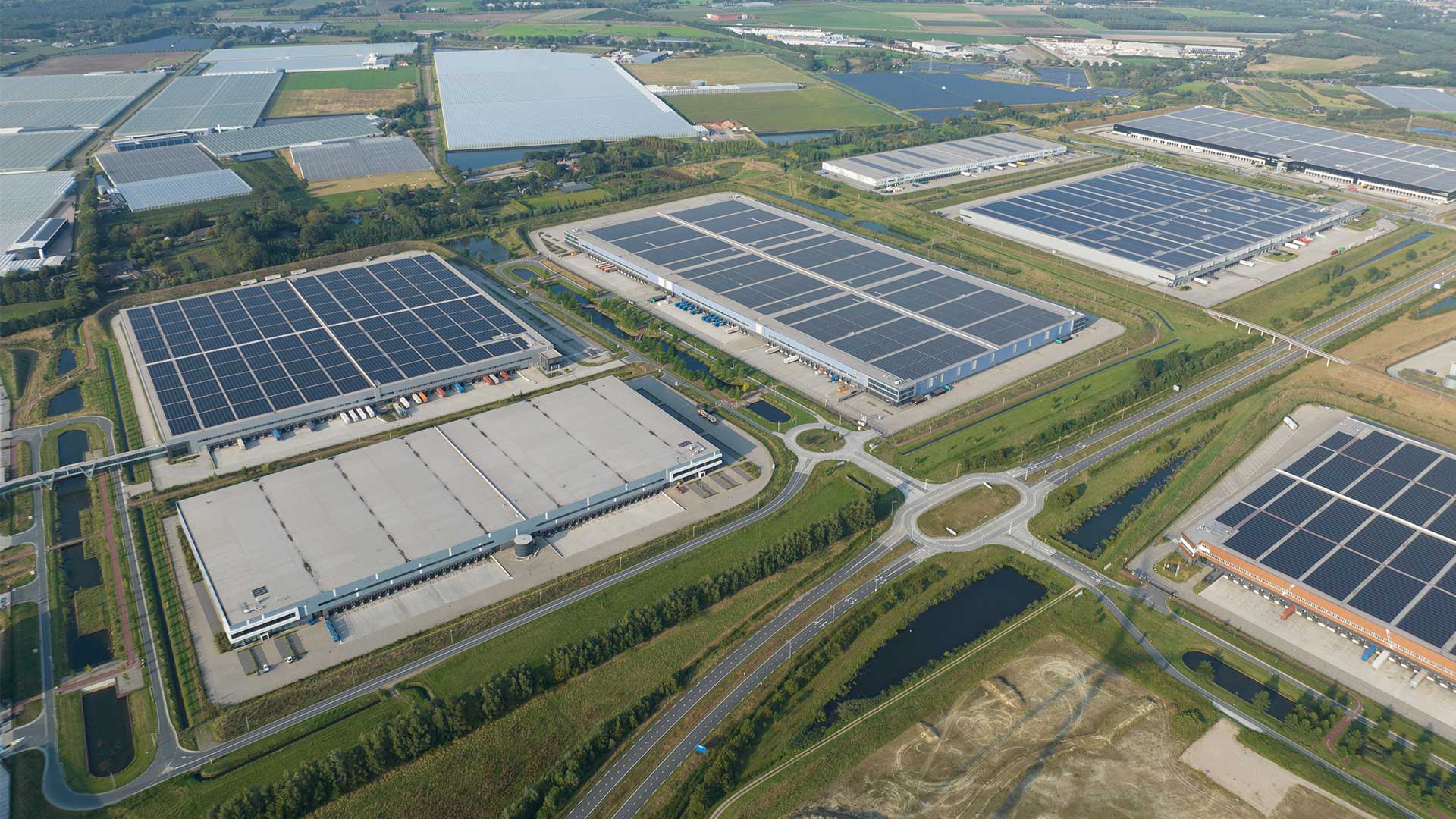
The logistics market is entering a new phase. Following a period of growth, which peaked during the Covid-19 pandemic, it is now giving way to consolidation.
-

In this publication, we share our expectations for the most important developments in the real estate investment market in 2026.
-

Discover the evolving real estate market cycle for the year. Learn why elevated interest rates, income-driven returns, and proactive asset management are key. Explore growth in the living sector and data centers amidst improving financing conditions.
-
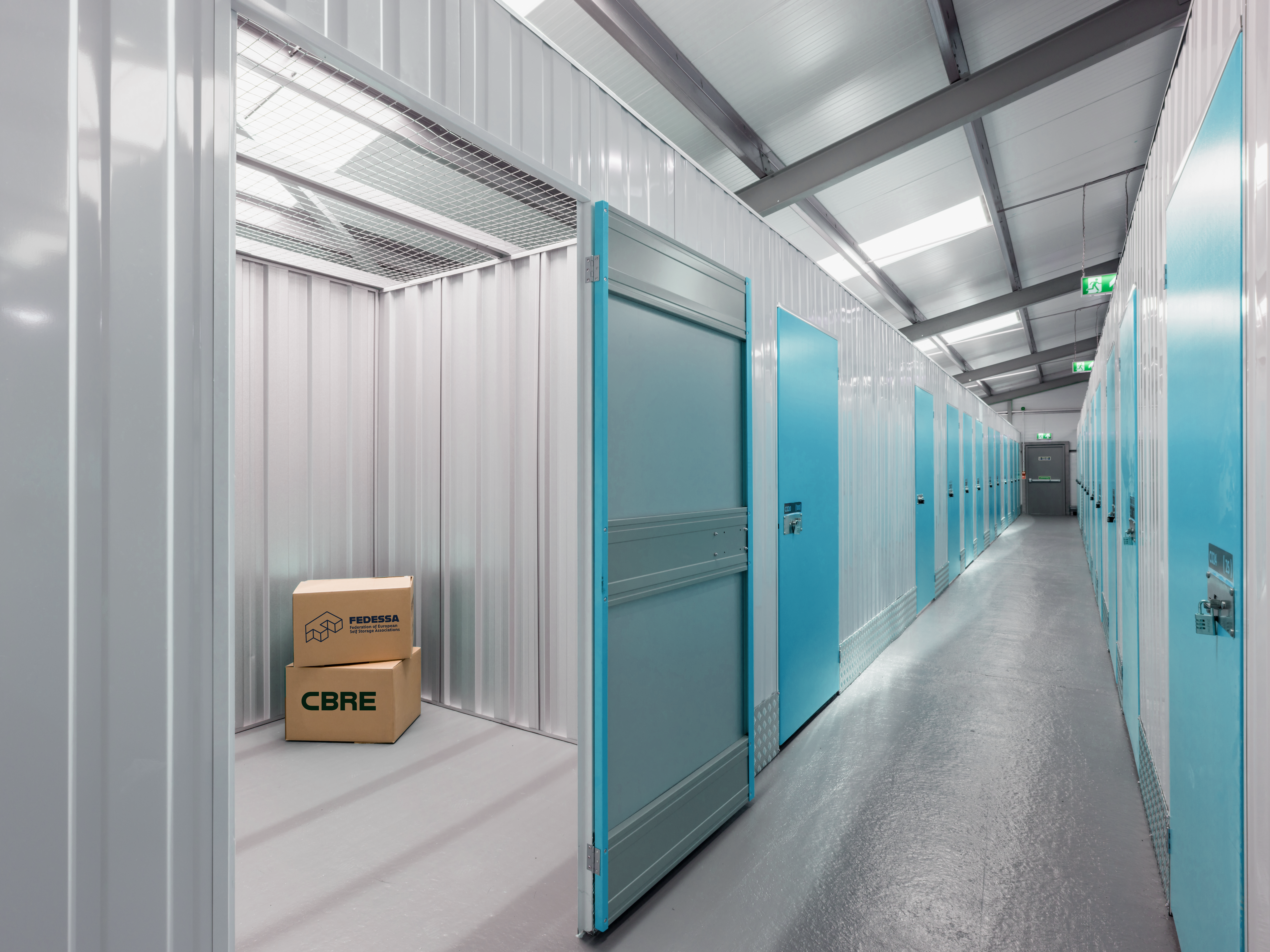
In collaboration with FEDESSA, the 2025 European Self Storage Industry Report presents a comprehensive view of market dynamics, investment trends, operational performance, and consumer behaviour across 16 countries.
-
Book | Intelligent Investment
European Real Estate Market Outlook Mid-Year Review 2025
August 7, 2025

Welcome to CBRE’s 2025 European Mid-Year Market Outlook. In this report, we revisit the predictions we made at the beginning of the year, assess their accuracy, and share our perspective for the months ahead.
-
Report | Intelligent Investment
Growing regional differences amplify yield dispersion in the logistics sector
July 31, 2025

The cooling economy and uncertainty surrounding trade tariffs are depressing occupier demand for logistics real estate. This is creating striking regional differences in supply and demand, and ultimately also greater differences in returns.