Evolving Workforces
Show up for the People
By: Lenny Beaudoin, Executive Managing Director, Global Workplace, Design & Occupancy, CBRE
March 23, 2026 5 Minute Read

The office isn’t coming back. Something better is.
Our Take Newsletter
Our Take is CBRE’s monthly newsletter, delivering unique insights into today’s most pressing topics.
Learn More
In nearly every conversation I have with senior leaders today, the topic arrives at the same place: people. Not space availability. Not square footage. Not lease terms. People—and the growing recognition that bringing them together, intentionally and meaningfully, is one of the most consequential, strategic decisions an organization can make right now.
I’ve spent a lot of time thinking about why that is. And I’ve come to believe that three forces—each significant on its own—are converging in a way that will fundamentally reshape what the office is for, and why it matters more, not less, in the years ahead.
The first force is affiliation.
Ask most C-suite leaders why they want employees back in the office, and you’ll hear words like collaboration, culture and mentorship. What they're really describing is affiliation—the sense of belonging that turns a collection of individuals into a team, and a team into something with a shared purpose.
Affiliation is not a soft concept. It has hard edges. Research tells us that employees who have a best friend at work are seven times more likely to be fully engaged in their jobs. Engaged teams outperform disengaged ones by 23% on profitability. And the cost of disengagement—measured in lost productivity—is now estimated at $8.9 trillion annually, roughly 9% of global GDP.
The return-to-office conversation is often framed as a tug-of-war between employers and employees. I don’t think that’s right. The most thoughtful executives I advise aren’t mandating attendance out of distrust or a desire for control. They’re acting on a deeply held conviction that long-term affiliation—the ability of people to develop skills, build relationships and grow within an organization—is better cultivated through shared, in-person experience.
In fact, the leading reasons businesses cite for returning to the office are collaboration and teamwork (68%), productivity (64%) and communication (61%).
These aren’t about monitoring. They’re about connection.
The second force is AI—and the reason may surprise you.
The speculation around artificial intelligence tends to focus on job displacement. That’s an important conversation. What I find more compelling is what AI will do to the nature of work itself—and by extension, to the purpose of the office.
The shift is already underway. Microsoft data shows that since February 2020, people are spending three times more of their working hours in meetings and calls than they did pre-pandemic. Today, 57% of the average knowledge worker’s time is consumed by communication—meetings, email, chat—leaving only 43% for actual creation. Meanwhile, Gallup has found that the share of employees who clearly know what’s expected of them has fallen from 55% in 2019 to just 44% in 2024—clear evidence of the global engagement decline.
Agentic AI—systems that don’t just answer questions but autonomously complete multi-step work tasks—is positioned to absorb much of this burden. Salesforce research projects AI agent adoption will jump 327% over the next two years, a pace nearly twice that of generative AI. And while the instinct is to assume this will free up time, the early evidence suggests something more nuanced: Workers in AI-intensive roles are working 3.5 hours more per week, not less. Productivity gains, at least initially, are flowing to organizations and their consumers—not to employees in the form of reclaimed leisure.
But here is where it gets interesting. When AI assumes the burden of processing and routine, it clarifies what humans are uniquely positioned to do. The work that remains will be defined by intuition, creativity, shared judgment and dialogue. These are not things you do alone at a screen. They are things you do with other people. Well-designed AI, academic research suggests, may actively encourage more and better human-to-human interaction—nudging people toward connection, not away from it.
The third force is the office itself, which is changing faster than most realize.
Our own data at CBRE tells a striking story. Global office utilization rose from 35% in 2023 to 38% in 2024—and then surged to 53% in 2025, a 15-basis-point increase in a single year. Peak utilization is now averaging 80%, surpassing the 65% target most organizations set as their benchmark.
The office isn’t emptying. In many places, it’s filling faster than organizations can accommodate.
What’s also changing is what people do when they get there. Our Global Workplace & Occupancy Insights research reflects a meaningful shift in how space is allocated—with individual workstations giving way to collaborative settings, and a notable rise in amenity spaces designed specifically for social connection and shared experience. This is not coincidental. It reflects a growing understanding that the office’s competitive advantage over the home is not the desk. It’s the people, the serendipity and the culture that only physical proximity can reliably produce.
The flight-to-quality trend in office leasing reinforces this. Vacancy in premier, amenity-rich buildings is significantly lower than in the broader market—because occupiers understand, intuitively, that the quality of the environment shapes the quality of the experience. And it’s the experience that drives affiliation.
What does this mean for the decisions ahead?
The future of work is not a pendulum swinging back toward the pre-pandemic office. It is something new—more intentional, more human and more valuable precisely because it has been tested and refined. As AI takes on more of the transactional burden of work, the things that only happen when people share a room—trust, creativity, mentorship, belonging—will become the defining source of organizational advantage.
The organizations that recognize this early, and invest accordingly in the spaces, cultures and strategies that foster genuine connection, will not just retain their people. They will earn their fullest commitment.
That, to me, is the opportunity in front of us. And it’s one worth showing up for.
Contact

Related Insights
-
Article | Adaptive Spaces
Beyond the Desk: How to Design Offices That Draw Employees In
February 18, 2026
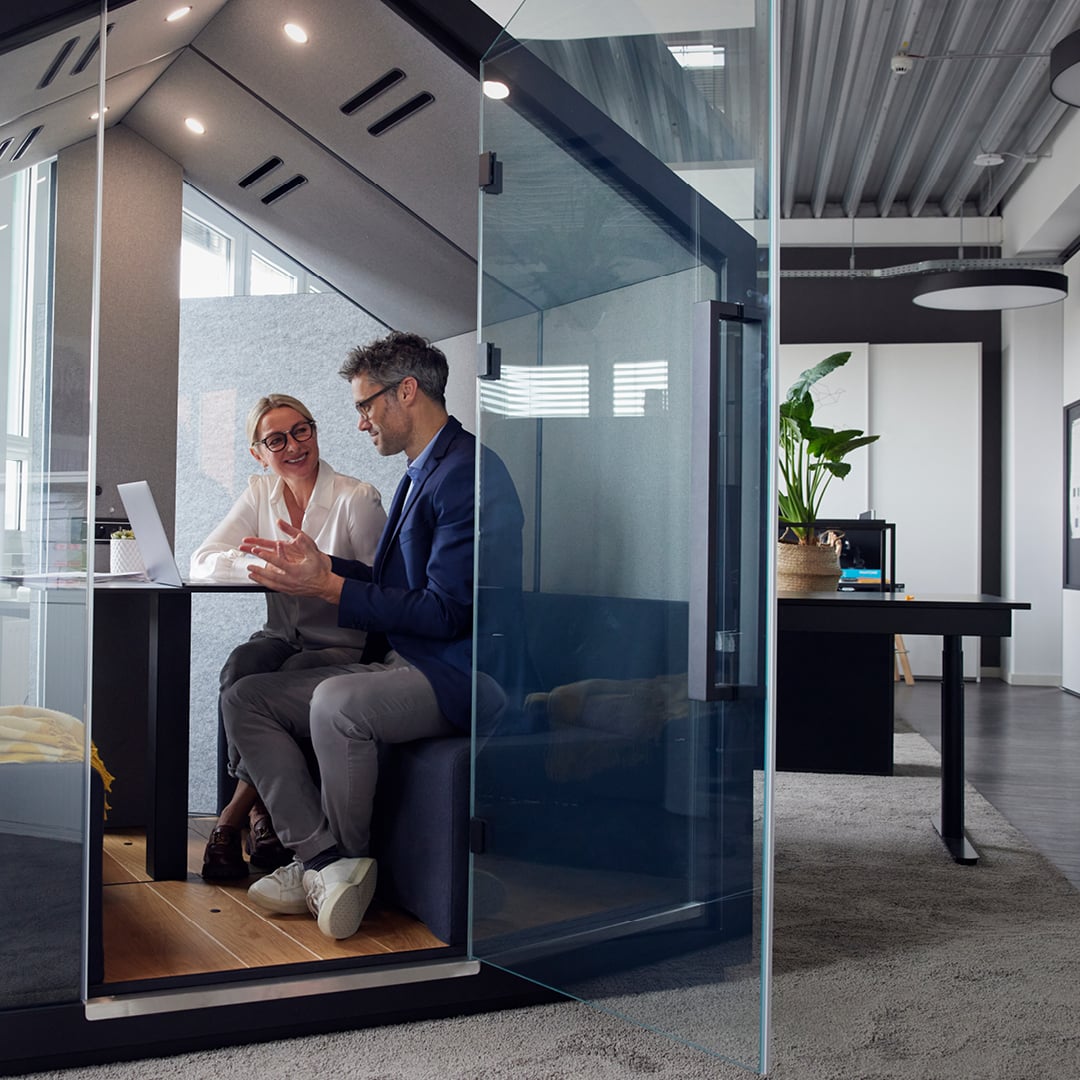
Discover how collaboration, amenities and activity-based design are redefining the office as a place employees choose to be.
-
Brief | Intelligent Investment
Expansions by Large Occupiers Dominate Top 100 Office Leases of 2025
January 23, 2026

Large occupiers drive office expansions in 2025, with Manhattan leading and demand rising for prime, downtown space.
-
Article | Adaptive Spaces
The Hybrid Reality: Why the Office Is More Important Than Ever
January 20, 2026

Transforming any workplace into a dynamic hub for collaboration and connection is a challenge. Explore how some organizations are optimizing space.
-

This year, our series offers a data-driven roadmap to help organizations adapt to today's hybrid workplace, covering design, leadership, technology and the future of work.
-

180+ corporate real estate leaders share their perspective on portfolio strategies and office attendance policies.
-
Article | Evolving Workforces
Business Insights | Everyone Can Have a (Digital) Assistant, with Ellis AI
February 13, 2025

CBRE's Ellis AI platform revolutionizes commercial real estate with GenAI, enhancing productivity and efficiency through advanced AI digital assistants.
-
Article | Adaptive Spaces
Business Insights | The Role of AI in Workplace Technology: 10 Ways Companies Are Maximizing its Impact
February 12, 2025

Artificial intelligence (AI) has become a fundamental component of modern workplace technology.