Intelligent Investment
Surge in Mega Industrial Leases Signals Renewed Occupier Confidence
July 27, 2026 2 Minute Read
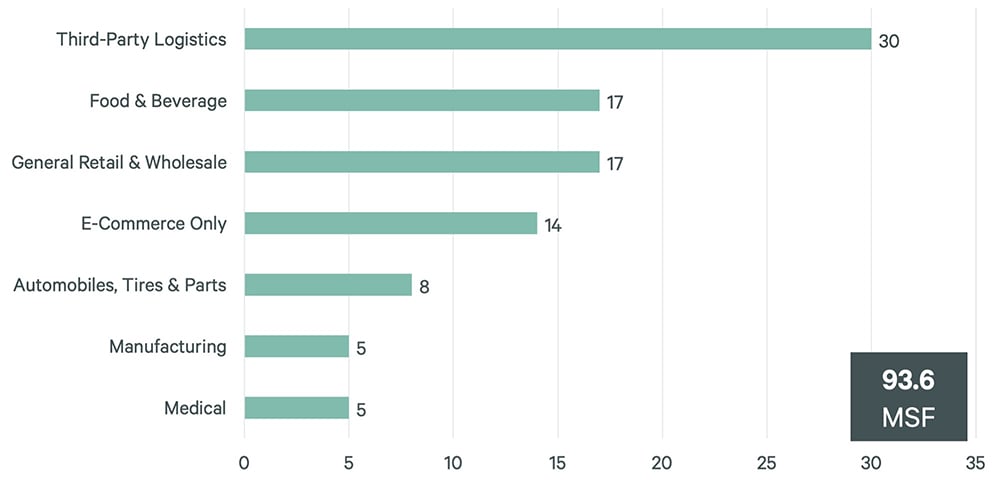
The top 100 industrial leases of H1 2026 totaled 93.6 million sq. ft., a 26% increase from the 74.4 million sq. ft. in H1 2025 for a boost in average size to 936,000 sq. ft. from 744,000 sq. ft. Mega leases of at least 1 million sq. ft. more than doubled to 38 from 16, as occupiers showed greater willingness to make long-term commitments to modern distribution facilities.
The composition of demand also shifted. Third-party logistics providers (3PLs) remained the largest source with 30 of the top 100 leases totaling 27.9 million sq. ft. However, their share declined from H1 2025 as demand broadened across other industries. Food & beverage occupiers recorded the biggest increase, more than tripling leased square footage to expand regional distribution networks for greater supply chain resiliency. General retailers & wholesalers accounted for fewer of the largest leases than last year, reflecting a focus on optimizing existing distribution networks rather than pursuing aggressive expansion.
New leases continued to account for most of the top 100 leases, with 66 deals totaling 61.9 million sq. ft. Although the number of renewals fell to 34 from 40 in H1 2025, their total square footage increased to 31.7 million from 26.7 million. Meanwhile, the average lease term lengthened to approximately 89 months from 84 months, suggesting occupiers are making longer-term commitments to strategically located facilities as available Class A space becomes more limited in many markets.
Figure 1: Industry Share of Top 100 Industrial Leases in H1 2026
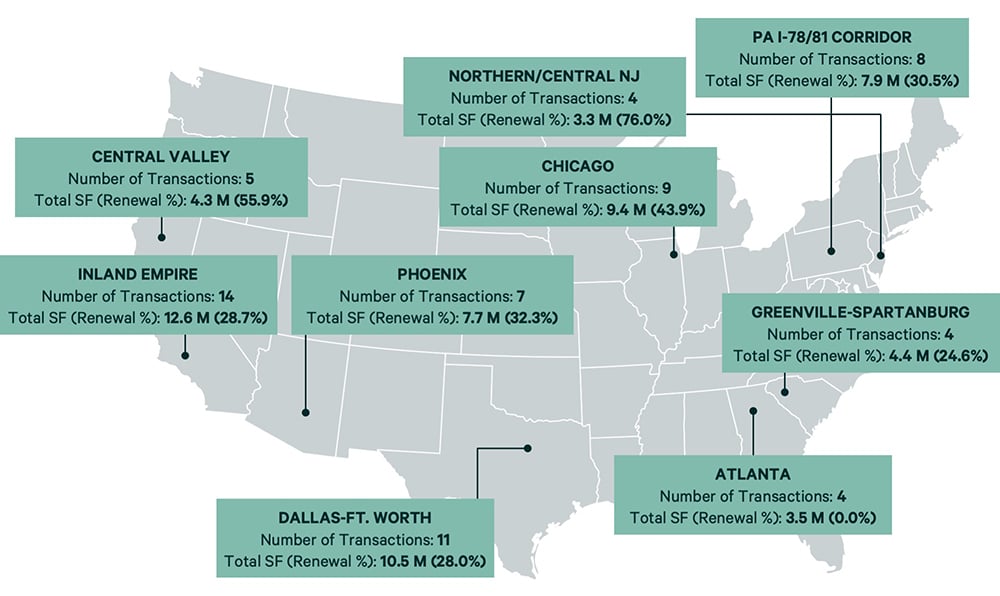
The largest logistics hubs continued to capture the greatest share of big-box leasing activity. The Inland Empire led all markets with 14 leases totaling 12.6 million sq. ft., followed by Dallas with 10.5 million sq. ft. and Chicago with 9.4 million sq. ft. These markets continue to benefit from extensive transportation infrastructure, established labor pools and access to major consumer markets.
Big-box industrial leasing is expected to remain healthy through the remainder of 2026 as occupiers continue to pursue supply chain resiliency and transportation efficiency. Growing North-South freight flows, continued domestic manufacturing investment and ongoing supply chain diversification should support further demand for modern distribution facilities.
Figure 2: Leading Markets for Top 100 Lease Transactions in H1 2026
Related Insights
-

A majority of industrial occupiers expect to either maintain or expand their real estate footprint this year, according to a recent CBRE survey.
-
Brief | Adaptive Spaces
Shallow-Bay Industrial Availability Remains Tight Amid Strong Demand
March 24, 2026

Limited new development and strong demand from small occupiers keep shallow‑bay industrial vacancy low and rents rising across major U.S. markets.
Industrial & Logistics
Contacts
Christopher Zubel
Executive Managing Director of Industrial & Logistics, Americas