Adaptive Spaces
Business Insights | U.S.-Canada Law Firm Fit-Out Cost Guide 2025
Dissecting costs to build and outfit law offices in 24 major U.S. and Canadian markets.
August 6, 2025 15 Minute Read

Introduction
Workplace space efficiency and effectiveness trends are driving a redistribution of office fit-out costs for law firms. A greater percentage of the project budget is being allocated to improving the quality of space, amenities, social spaces and technology than to individual attorney offices or libraries, for example.
Total office fit-out budgets are largely increasing due to higher costs for labor and materials, which is being exacerbated by tariffs. However, increased technology adoption—which reduces administrative headcount and workstations—and smaller space standards are countervailing trends that help to contain the extent of the costs increase. Conversely, costs are also driven higher by increased use of glass, better quality materials and finishes as well as a proliferation of social spaces like cafes, collaboration areas and well-appointed conference rooms with state-of-the-art audiovisual systems.
Lead times to procure office products have shortened since the 2024 report, though certain items remain challenging to acquire. Construction cost escalation is increasing and remains above historic levels. In 2025 the Trump administration’s imposition of higher tariffs is beginning to impact material and finished product costs as well as the supply chain. The shifting tariffs and economic policy have created uncertainty for U.S. and global businesses, slowing investment and corporate decision-making. The overall impact of tariffs and other economic policy changes will become clearer in the second half of 2025.
Mitigation Strategies for Evolving Tariff & Trade Policy
The impact of tariffs and other policy changes on the North American economy remains uncertain. Supply chain pressure may disrupt critical raw materials imported from overseas into North America. Construction costs are expected to rise amid the ongoing uncertainty of material and equipment import costs. Labor shortages remain, and the current administration’s immigration policies may increase labor shortages for various trades. The following mitigation strategies can assist clients with capital planning:
Planning Stage
- Develop early scenario planning and budget
- Identify project pipeline with suppliers
- Explore structured procurement programs
Design Stage
- Evaluate alternative materials and domestic sourcing throughout the design phases
- Pre-purchase key materials and equipment to lock in pricing and lead times
- Adjust contract terms to balance risk-sharing
Construction Stage
- Competitively bid high-quality contractors
- Re-balance budgets for cost-plus contracts
- Build in open-book options identifying tariff impacts and develop contract terms to share savings between Owner and Contractor should tariffs be relaxed
- Review supply chain financial stability to avoid disruptions and claims
This report benchmarks data points—such as high-, mid- and low-level capex estimates—and compares office fit-out costs for a range of U.S. and Canadian markets.
Workplace Trends
The shape of the post-pandemic law office market continues to solidify. More attendance policies now apply firmwide, as opposed to different policies for lawyers and business professionals. According to CBRE Americas Consulting’s Law Firm Benchmarking Survey Highlights 2025, 87% of Am Law firms indicated their office policy calls for at least an equal mix of time to be spent in the office. The top ways to attract people to the office—events, food and beverage, policy communication and partner role modeling—all increased from the previous year, and their staying power shows a continued commitment to utilizing the office.
Mandates for attendance and space-sharing strategies are fading. Universal office size is still the most common way firms are making space more flexible, followed by smaller offices and workstations, then desk sharing. Desk sharing in the legal industry occurs most often for small pockets of headcount based on very low utilization or an opt-in policy.
In a pivot from the previous year, the Law Firm Benchmarking Survey Highlights 2025 show unanimous agreement: Professional opportunities favor those who spend time in the office. The Am Law 200 relies on badge swipes to track space use as cost gets a closer look. Overall, footprints are stabilizing, with more than half of Am Law 200 and boutique firms intending to maintain the same footprint over the next three years, with one exception: Am Law 50 firms expect to downsize. For some firms, maintaining the same footprint means accommodating headcount growth within their existing space. Others are renovating their space to suit new ways of working or subleasing excess square footage.
A flight-to-quality trend remains a significant factor for law firms. Occupiers are looking to invest in higher-quality space, even while optimizing their portfolios. A smaller, more efficient footprint in a superior building can be a better financial outcome. Creating a positive experience in the office and the overall well-being of their people remain top priorities for law offices. Most firms called out attracting and retaining talent, along with improving the workplace experience, as key to their real estate goals.
Mandates for attendance and space-sharing strategies are fading. Universal office size is still the most common way firms are making space more flexible, followed by smaller offices and work-stations, then desk sharing.
Methodology
CBRE analyzed 24 U.S. and Canada markets to determine how much law firms typically spend for high-end space fit-outs. The following cities provide a representative spectrum of costs across the U.S. and Canada:
- Atlanta
- Austin
- Boston
- Charlotte
- Chicago
- Dallas
- Denver
- Detroit
- Houston
- Las Vegas
- Los Angeles
- Miami/South Florida
- Minneapolis
- Nashville
- New York
- Philadelphia
- Phoenix
- Sacramento
- San Francisco
- Seattle
- Washington, DC
- Montreal
- Toronto
- Vancouver
This analysis comprises a range of potential costs, with varying specification levels for features such as space program, design layout; lighting; ceilings; glass-fronts; architectural woodwork; mechanical, electrical and plumbing (MEP) systems; furniture; technology; security and soft costs. This report shows these costs in a range to provide better understanding of how individual law firms compare in the industry.
Design Inspiration
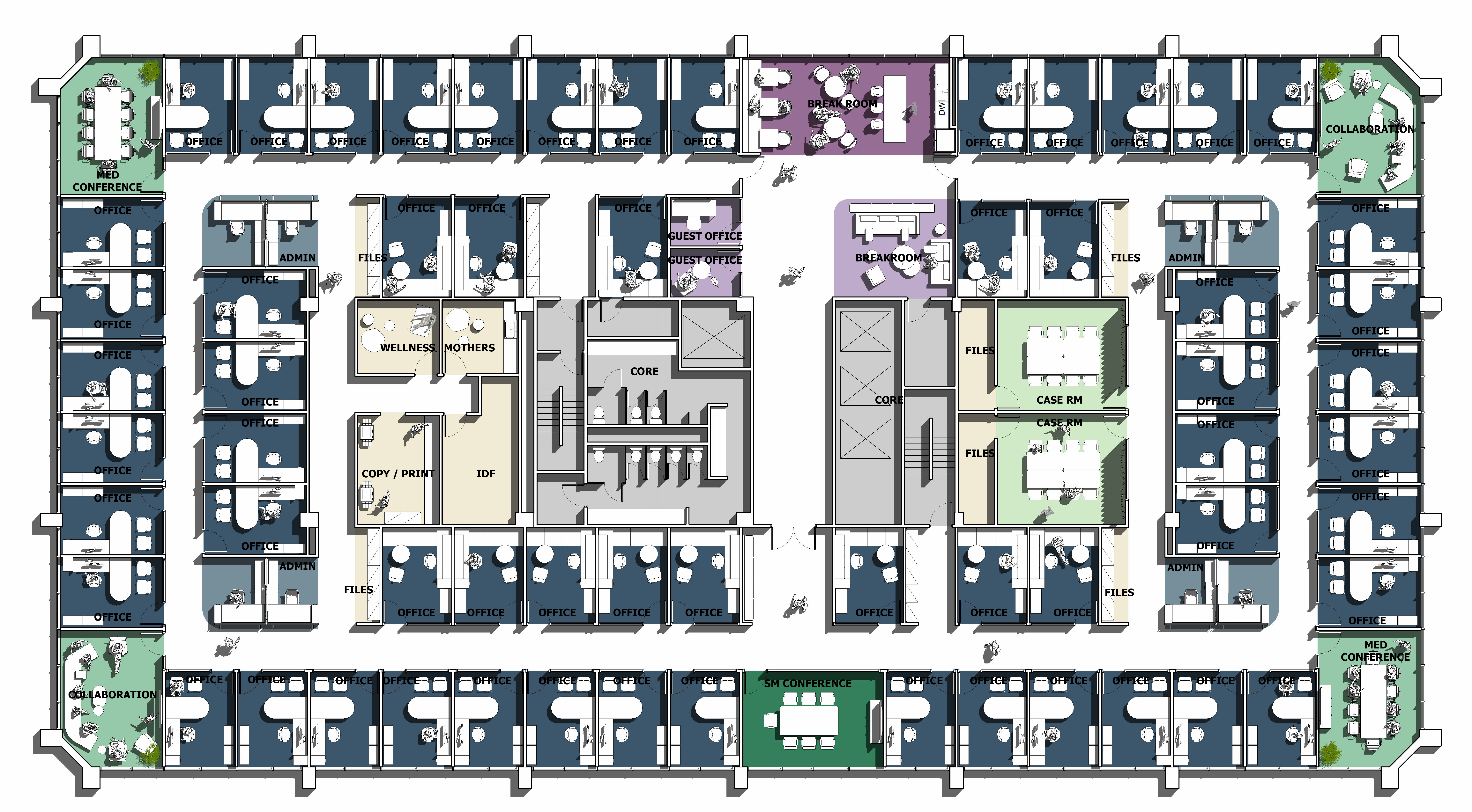
This plan represents a typical practice floor for a multi-floor law firm:
- Universal office sizes
- Increase in conference space, especially in corner spaces
- Workstations with access to natural light
- Increase in amenity spaces for employees, as well as clients outside of secure areas
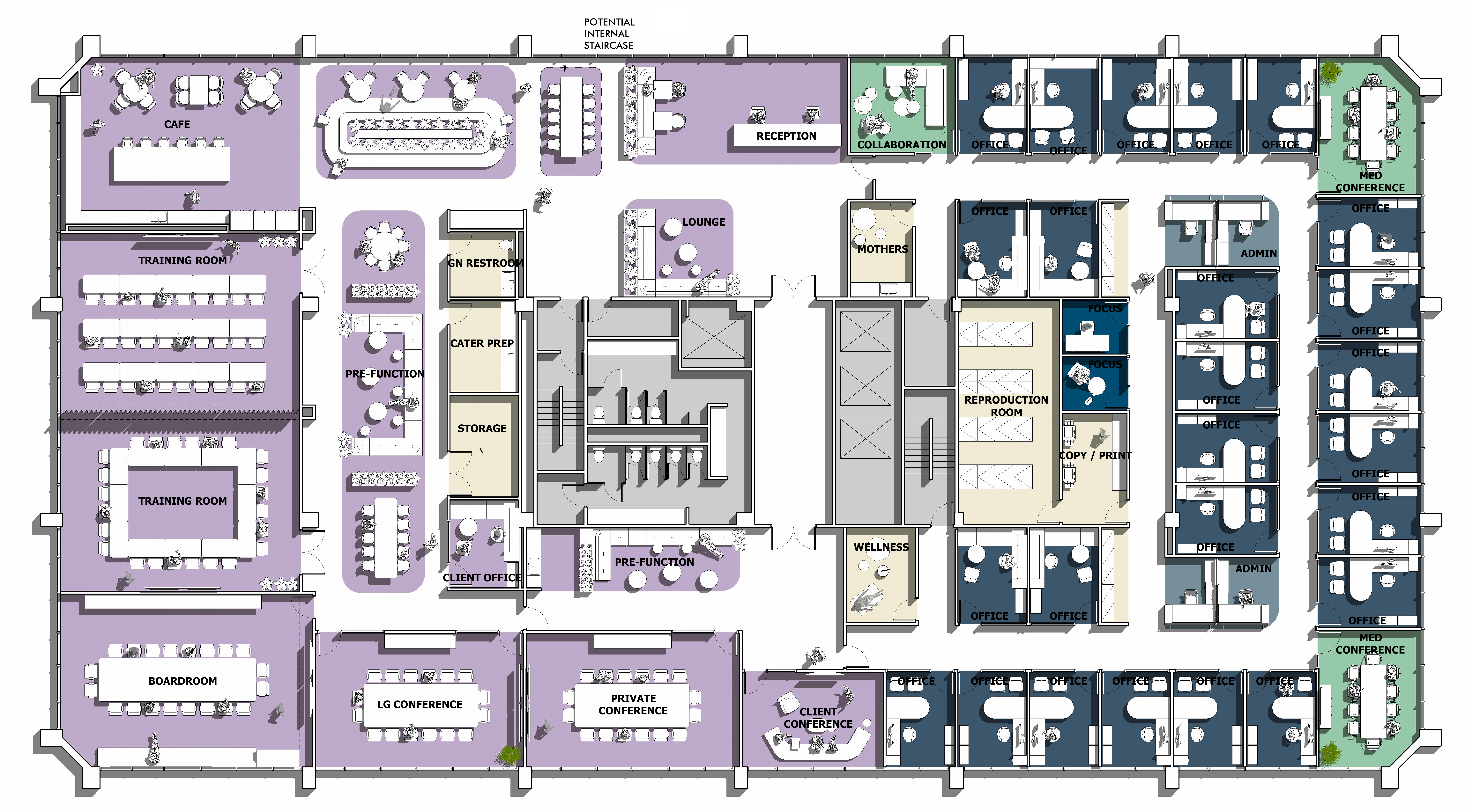
This plan represents a typical conference floor for a multi-floor law firm:
- Variety of meeting room types and sizes
- Multi-purpose room with reconfigurable furniture and walls
- Pre/post function spaces with catering support and layout space
- Adjacent practice areas
Cost Breakdown
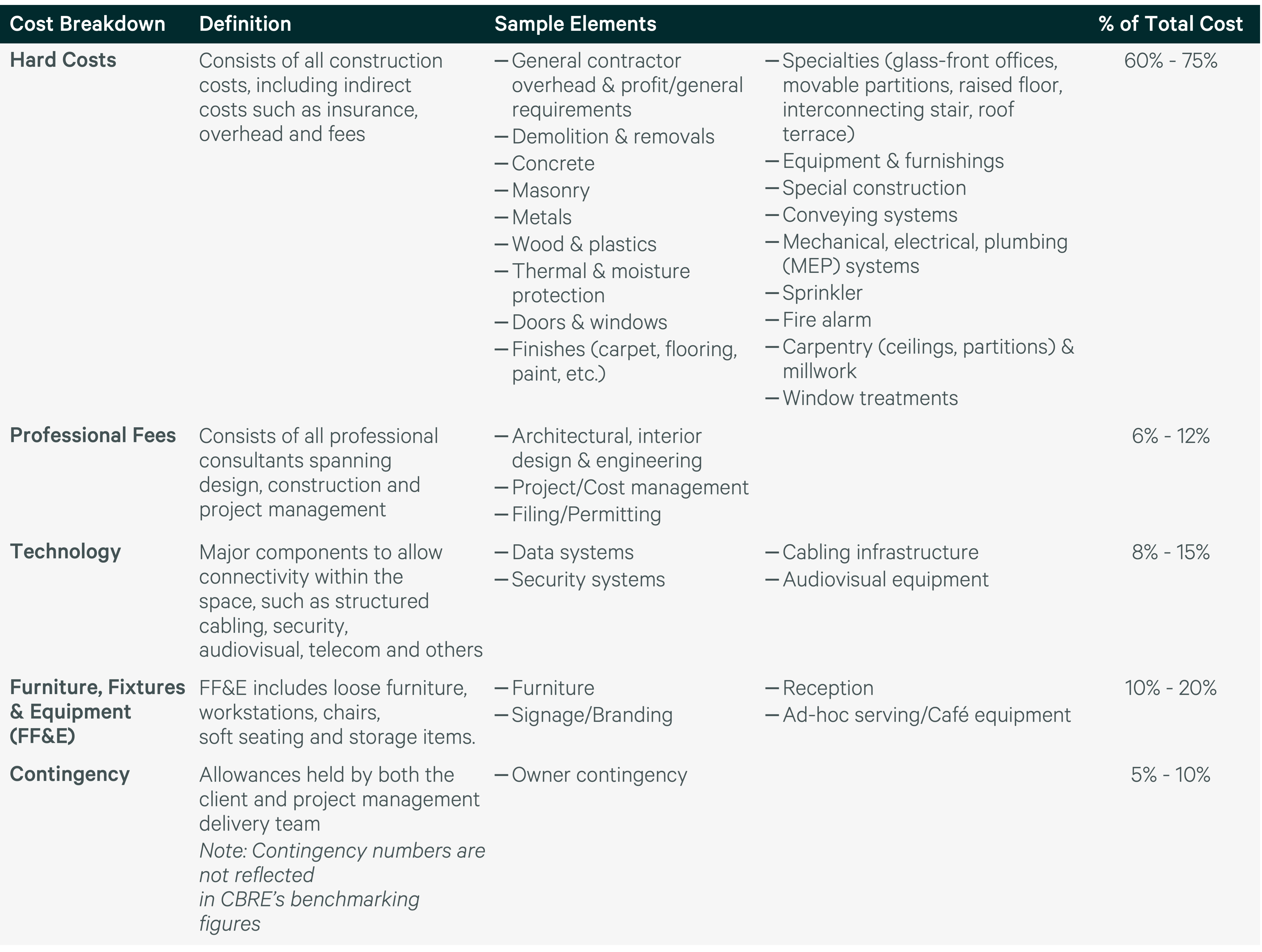
Cost Breakdown & Data Graphics
Breakdown chart demonstrates the spend for each city within the specified cost categories for a low to high range (construction, professional fees, FF&E, technology). Each city includes the range of total project costs for law firms.
Figure 1: Total Cost Breakdown
Source: CBRE Research, Turner & Townsend Research, 2025.
Related Services
- Industries
Law Firms
Develop real estate and business strategies for your law firm using our comprehensive, proprietary market research and decades of experience advising ...
- Design & Build
Cost Advisory
We empower clients to plan and control spending, estimate project costs, manage risk, eliminate waste, and identify tax and procurement process savings.
- Design & Build
Project & Program Management
Deliver projects seamlessly with an integrated team that manages everything from schedules and budgets to the entire construction process.
- Design & Build
Design
Create intentional spaces that fit your vision, brand and culture—and deepen connections between people and the built environment.
Related Insights
-

180+ corporate real estate leaders share their perspective on portfolio strategies and office attendance policies.
-

Law firm workplace priorities are shifting. High office attendance is expected while cost savings and talent retention drive real estate decisions.
Contacts
Josh Bank
President, Occupier Account Management, Law Firm Practice Group Leader

Emily Botello
Managing Director, Americas Consulting